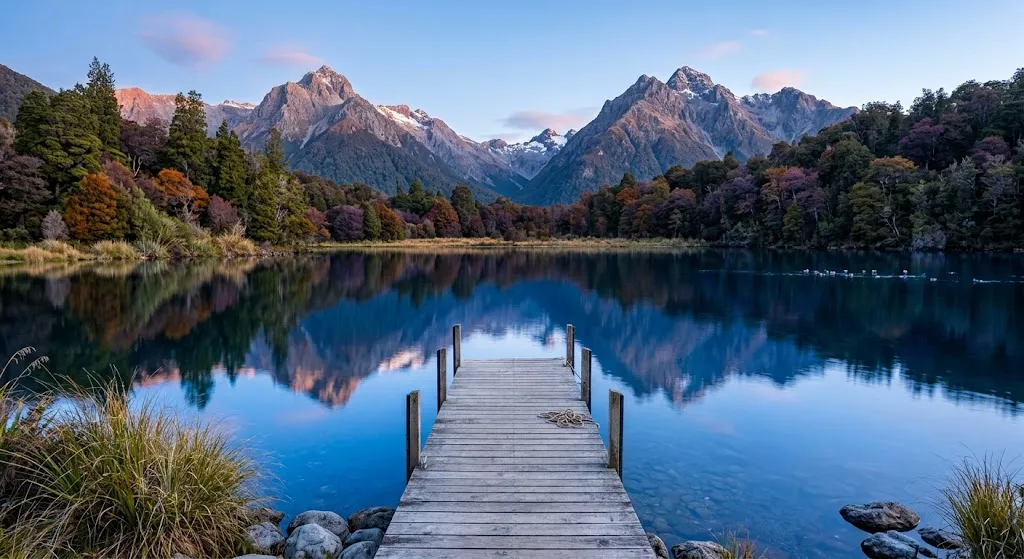
How to Tell if Your Lake Has Turned Over (And What to Do for the Next Two Weeks)
Every turnover article explains the physics. None of them tell you how to tell if your lake has turned over this week. Here's the surface-to-bottom temperature test, the four field signs worth trusting, and what to do with the two or three unsettled weeks that follow.
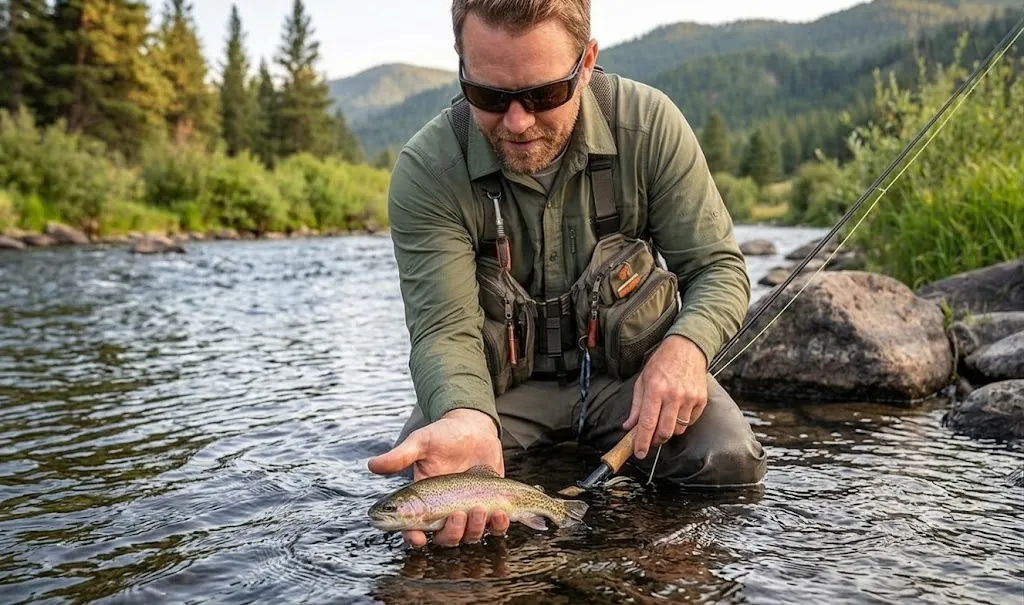
Best Polarized Fishing Sunglasses Under $100 (2026)
Ready to step up from budget shades? Our guide to the best polarized fishing sunglasses under $100, plus copper vs gray lens-tint advice for sight-fishing.
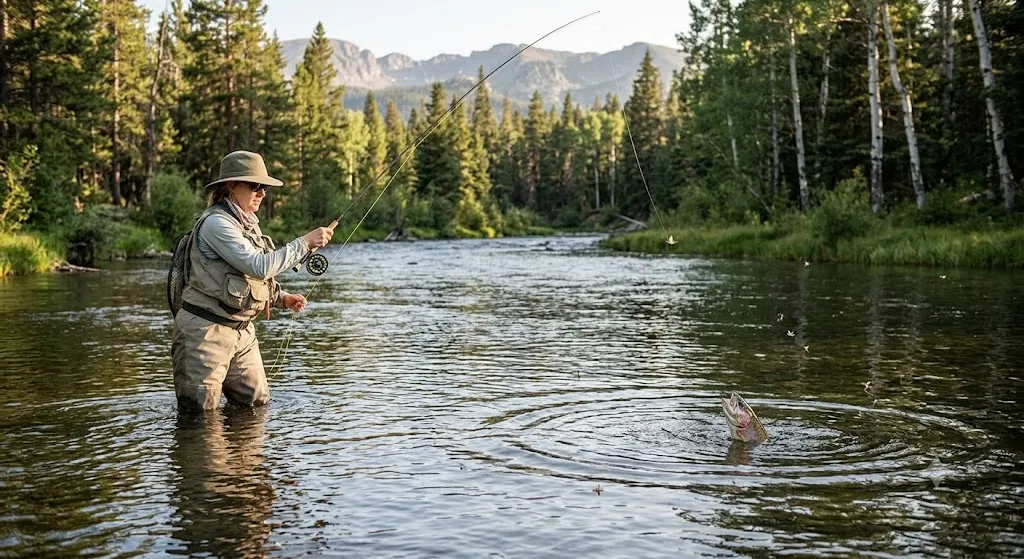
Flying Ant Falls: The Overlooked Late-Summer Trout Event
A flying ant fall is the most reliable dry-fly window of late summer once the mayfly hatches fade. Learn to recognize the trigger, why trout drop their guard, and how to fish cinnamon and black ant patterns in foam lines with 5-6X tippet.
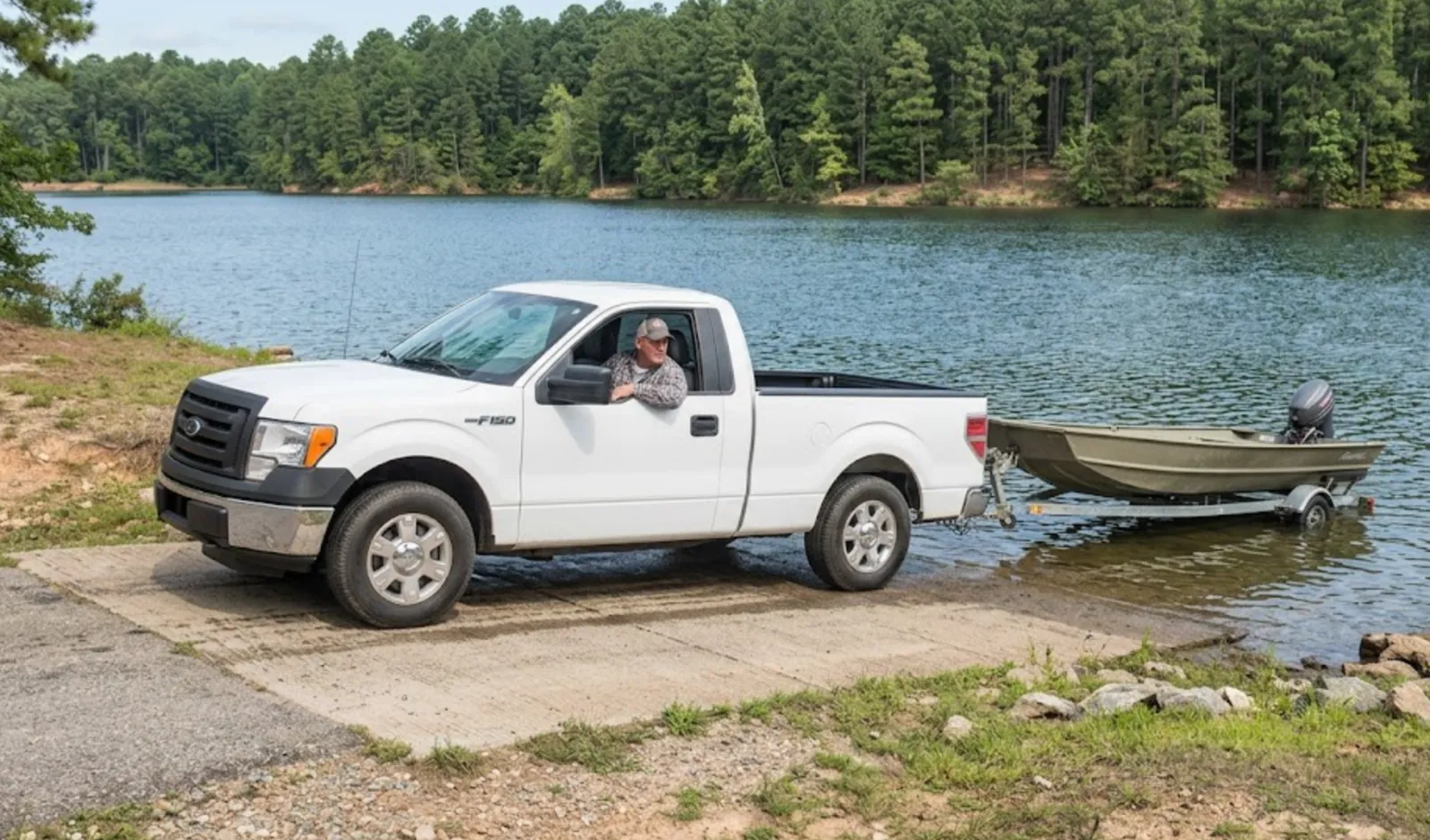
How to Fish a New Lake: A First-Trip Playbook for Breaking Down Unfamiliar Water
Most anglers blow their first trip to a new lake by fishing the first pretty bank they see. Here's how to fish a new lake the systematic way: map homework before you launch, reading the water on arrival, a search-bait approach to eliminate dead zones, and logging every fish so the lake gets easier every trip.
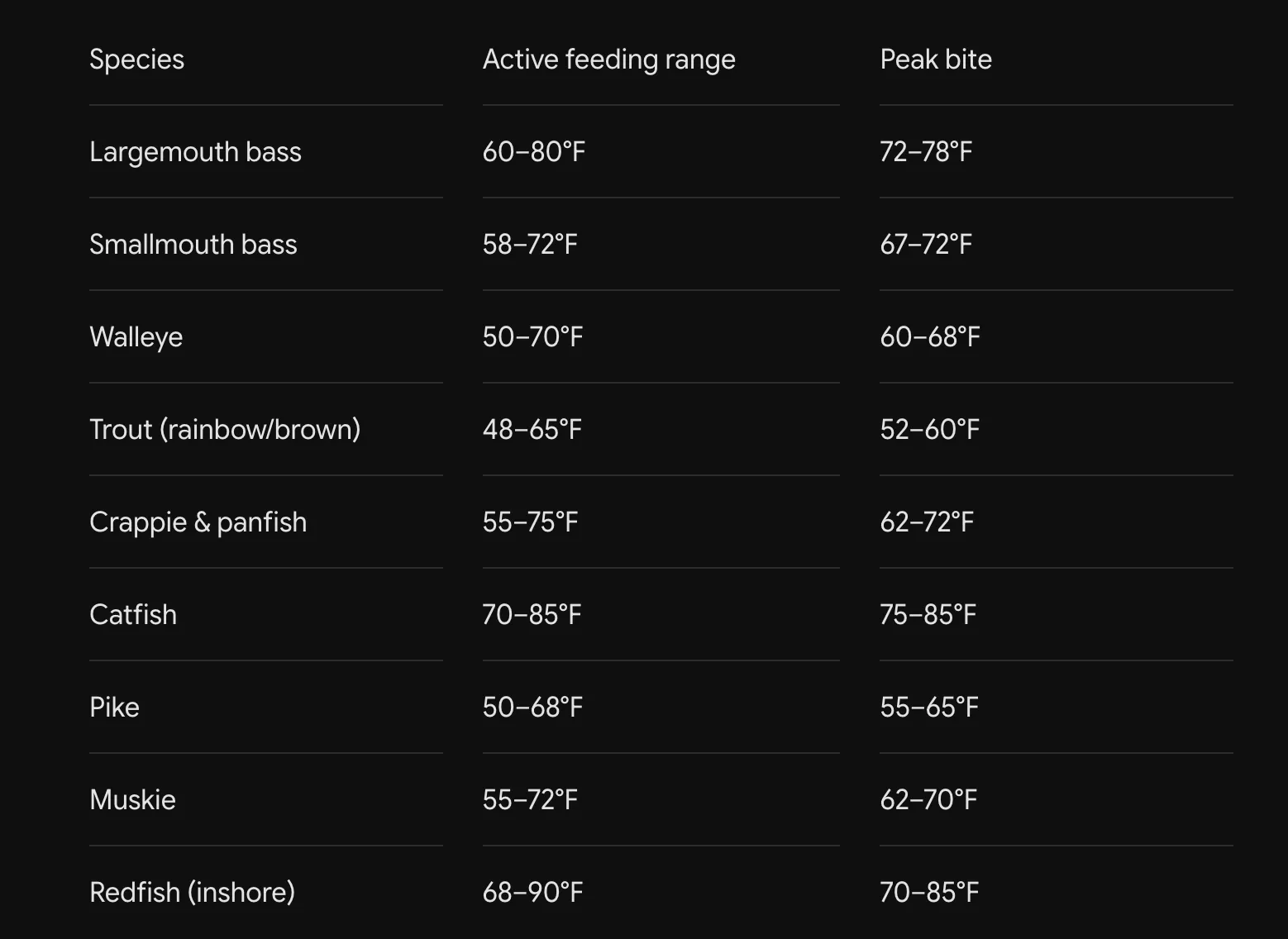
Best Water Temperature for Fish to Bite: A Multi-Species Chart
A scannable chart of the best water temperature for fish to bite across nine species, with every number either tied to a named agency source or flagged as the angler rule of thumb it is, plus how the fall cooldown rewrites the windows.
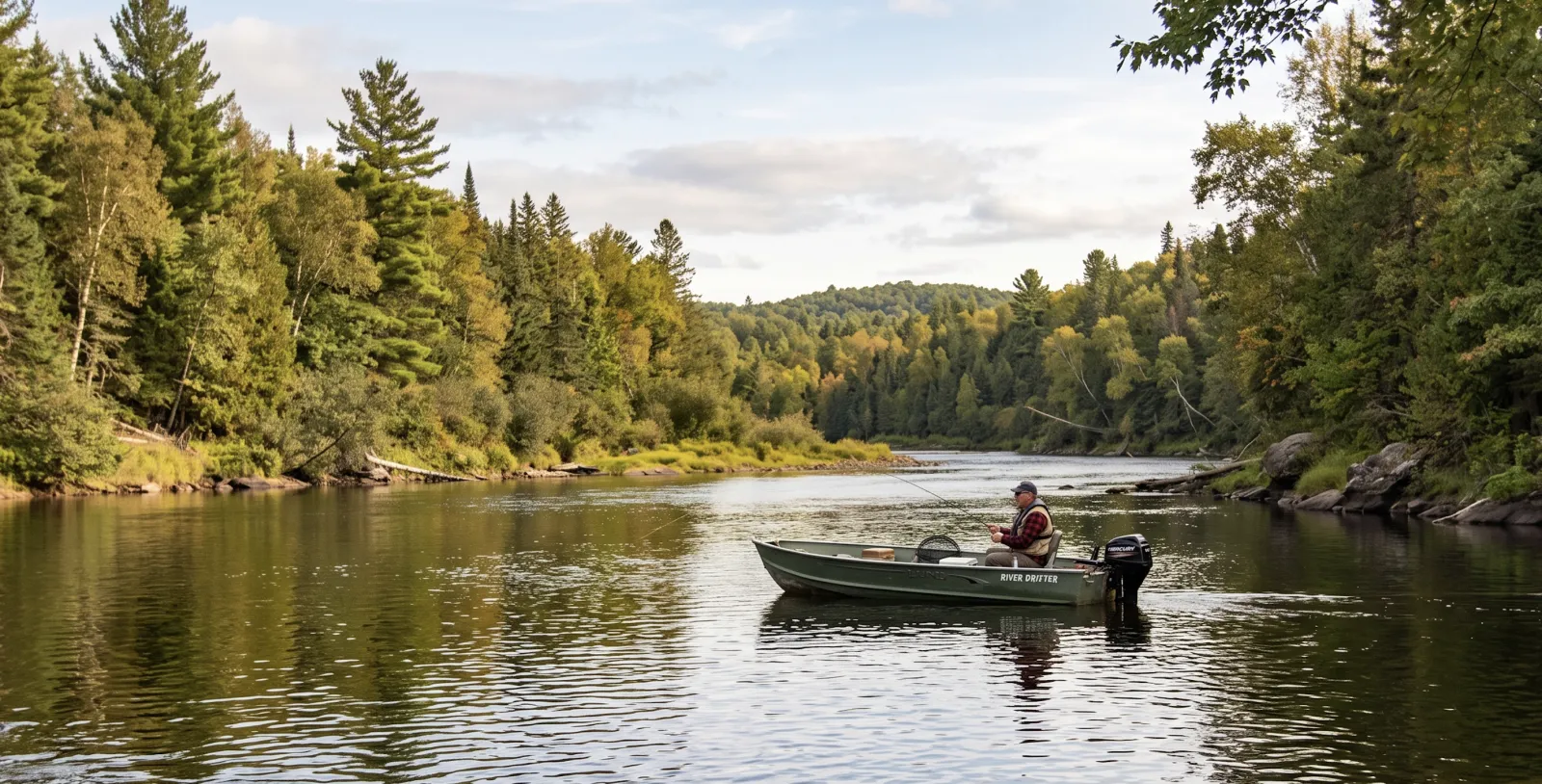
Summer River Smallmouth Bass: Fishing Current, Boulders, and Eddies When Lakes Get Hot
Lake bass go catatonic in August. Summer river smallmouth bass do the opposite: they pile into oxygenated current behind boulders and feed all day. Here's how to wade, read seams, and pick between a tube, a Ned, and topwater.
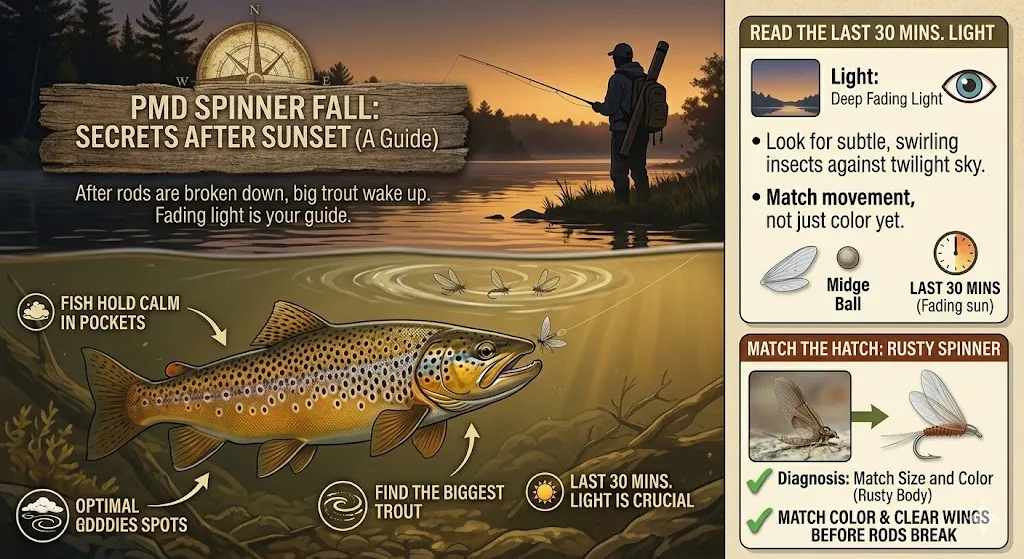
How to Fish the PMD Spinner Fall: The Evening Window Most Anglers Miss
The PMD spinner fall happens after most anglers have already broken down their rods. Here's how to read the last 30 minutes of light, find where spent spinners collect, and catch the biggest trout of the day on a rusty spinner pattern.
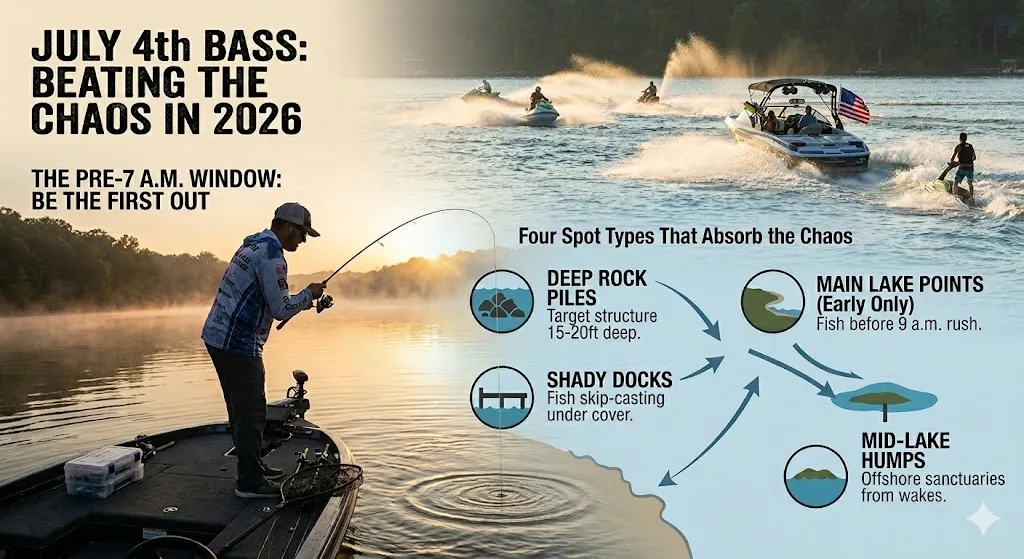
Bass Fishing July 4 Weekend: Why They Stop Biting (And 4 Spots That Still Produce)
Bass fishing July 4 weekend feels broken: jet skis at 9 a.m., wakeboard boats at 10, and the bite dies. But four spot types absorb the chaos better than the rest, and a tight pre-7 a.m. window still puts fish in the boat. Here's the game plan for the Saturday holiday in 2026.
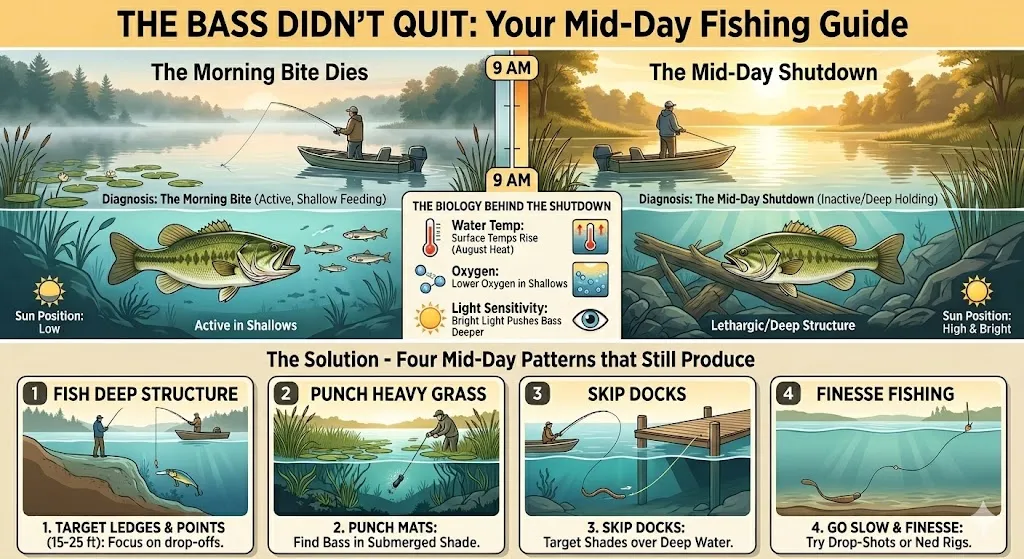
Why the Bass Stopped Biting at 9 AM: Reading the Summer Daily Window
The bass stopped biting at 9 AM, but they didn't quit. A diagnostic guide to why the morning bite dies, the biology behind the shutdown, and the four mid-day patterns that still produce bass through August.
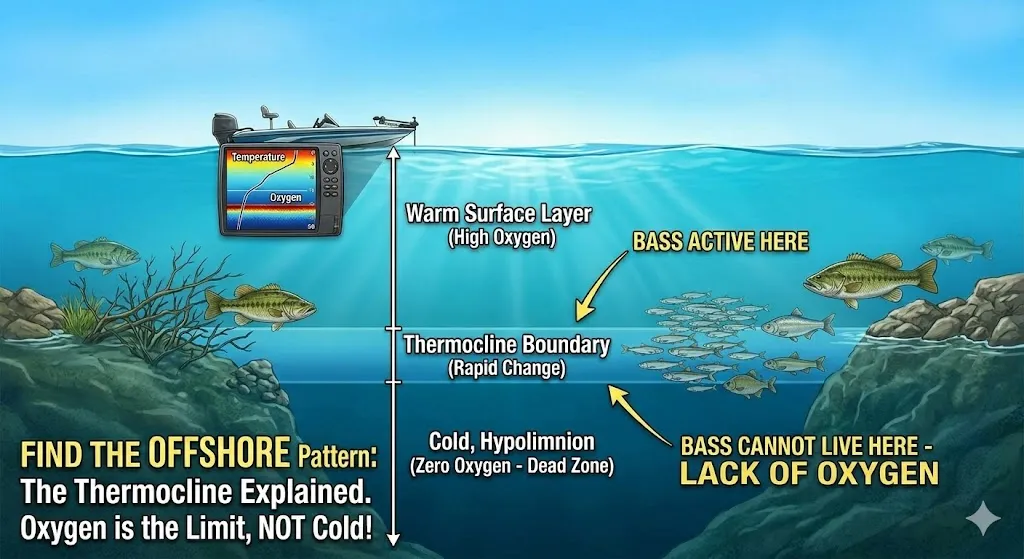
Why Bass Won't Live Below the Thermocline (And How to Find the Layer on Your Lake)
Bass won't live below the thermocline because oxygen runs out down there, not because it's too cold. Find that layer and you've found the floor of every offshore summer pattern on your lake.