Flying Ant Falls: The Overlooked Late-Summer Trout Event
 Cameron Spanos
Written by Cameron Spanos
The last good mayfly hatch of the summer is behind you. The PMDs have thinned, the Tricos are down to a whisper, and by mid-morning the river feels dead. Then the air over a slow bend gets thick with something small and winged, the trout start eating with a sloppiness they never showed during the spring hatches, and you realize you walked into a flying ant fall. This is the most reliable dry-fly window nobody plans for, and it happens roughly late July through September on warm, humid afternoons, usually a day or two after rain.
A flying ant fall is when a whole watershed's ant colonies release their winged reproductives at once, and enough of them end up on the water that trout start eating them off the surface. It happens on warm, humid afternoons, roughly late July through September, usually a day or two after rain.
Most anglers lump ants into a general terrestrial box with hoppers and beetles and fish them the same way. That's a mistake. A flying ant fall is a discrete, calendar-timed event with its own trigger, its own trout behavior, and its own presentation. Miss the difference and you'll throw a hopper at fish that want a size 18 cinnamon ant.
What triggers a flying ant fall?
Flying ants aren't a separate bug. They're alates, the winged reproductive males and queens a mature colony produces once a year for a mating flight. According to the Natural History Museum, colonies time these nuptial flights to a specific mix of conditions: warm temperatures (generally above 22 to 24 degrees C, so mid-70s Fahrenheit and up), low wind, high humidity, and recent rainfall. The rain softens the ground so new queens can burrow afterward, and the calm humid air lets the swarm find each other.
Here's the part that matters for you: colonies over a whole watershed cue off the same weather, so they launch more or less together. That's why an ant fall isn't a trickle. It's a flood. Thousands of ants in the air at once, and a chunk of them end up on the water.
The recipe you're watching for is simple, and heading into fall 2026 it's worth having dialed. Look for a muggy afternoon in August, storms that rolled through yesterday, and little wind. If you feel like you're wearing the humidity, check the air over the river around midday to early afternoon. You'll see them stacking up before you see the first rise.
Why do trout drop their caution during an ant swarm?
Ants are loaded. High in fat and protein, and once they're on the film they can't do anything but drift, wings splayed, waiting to get eaten. A river full of helpless high-calorie food flips a switch. Trout that spent July inspecting every Trico spinner like a jeweler will slash at ants with their guard down.
Rick Hafele once found a trout whose stomach held four or five black flying ants for every mayfly, on a day he hadn't even noticed ants on the water.
That's Hafele, the fly-fishing entomologist and co-author of Nymph-Fishing Rivers and Streams, and the point stands: the fish keyed on the ants before the angler did. It happens constantly during ant falls. The bugs are small and dark and easy to miss from the bank, so you'll often read the rise forms before you ID the food.
There's one caveat that becomes the whole game some days: feeding hard is not the same as feeding carelessly. When ants are the only thing on the menu, trout can get locked in tight, and they'll refuse a beetle or a mayfly dun sitting right in the seam. Winged ants especially: fish will reject a wingless pattern once they've been eating the flying version. So the recklessness is real, but it's recklessness about ants specifically.
How to tell an ant fall from a hopper or beetle day
All three are terrestrials, all three peak in late summer, and anglers mix them up constantly. They fish differently enough that guessing wrong costs you.
Start with the bug in the air. Hoppers don't cloud up over the river. They clatter out of the streamside grass one at a time, usually where the bank meets a hay field, and they land hard. You basically never see beetles swarming. So if the air over a slow pool looks hazy with small winged insects on a humid afternoon, that's an ant fall, full stop.
You might also enjoy: How to Release Fish in Summer Heat So They Survive
Then read the rise form. Hopper eats are violent and splashy because the target is big and often still kicking. Ant and beetle rises are quieter sips, sometimes just a dimple, because the fish knows the bug isn't going anywhere. A pool full of soft, repeated dimples in the foam line is your ant tell.
Finally, watch where the fish are holding. Hoppers get eaten along grassy banks and current tongues. Ants collect where anything floating collects: foam lines, eddies, the slow inside seams of a bend. If fish are working the middle of a soft eddy rather than the bank, think ants before hoppers.
When you're genuinely unsure, do what Hafele suggests and look closely, or run a small seine through the surface film. Four black specks a quarter to a half inch long with wings settles the argument fast.
Reading the water: foam lines and eddies
Ants can't swim. Once they're down they go wherever the current takes them, and the current concentrates them in predictable places. Learn to read those and you've done most of the work.
Foam lines are the obvious one. That ribbon of bubbles marks the seam where the surface current funnels everything floating into a narrow lane. Bugs pile up there, so trout hold right under it and pick them off without moving. Fish the foam line and you're fishing the buffet line.
Eddies are the sleeper. The back-swirl of a slow eddy traps ants and spins them in lazy circles, and a trout parked in that soft water can eat all afternoon on almost no effort. Eddies are also where drag gets tricky, because the surface is moving three directions at once. More on that below.
Don't ignore the banks either. Plenty of ants tumble in right at the edge, and some fish set up in inches of water against the grass just to intercept them. The Fly Fisherman notes the best ant water tends to be less than two feet deep with moderate current and some cover on the bottom or bank. Short, precise drifts tight to the shore catch fish other anglers walk past.
Flies, tippet, and presentation
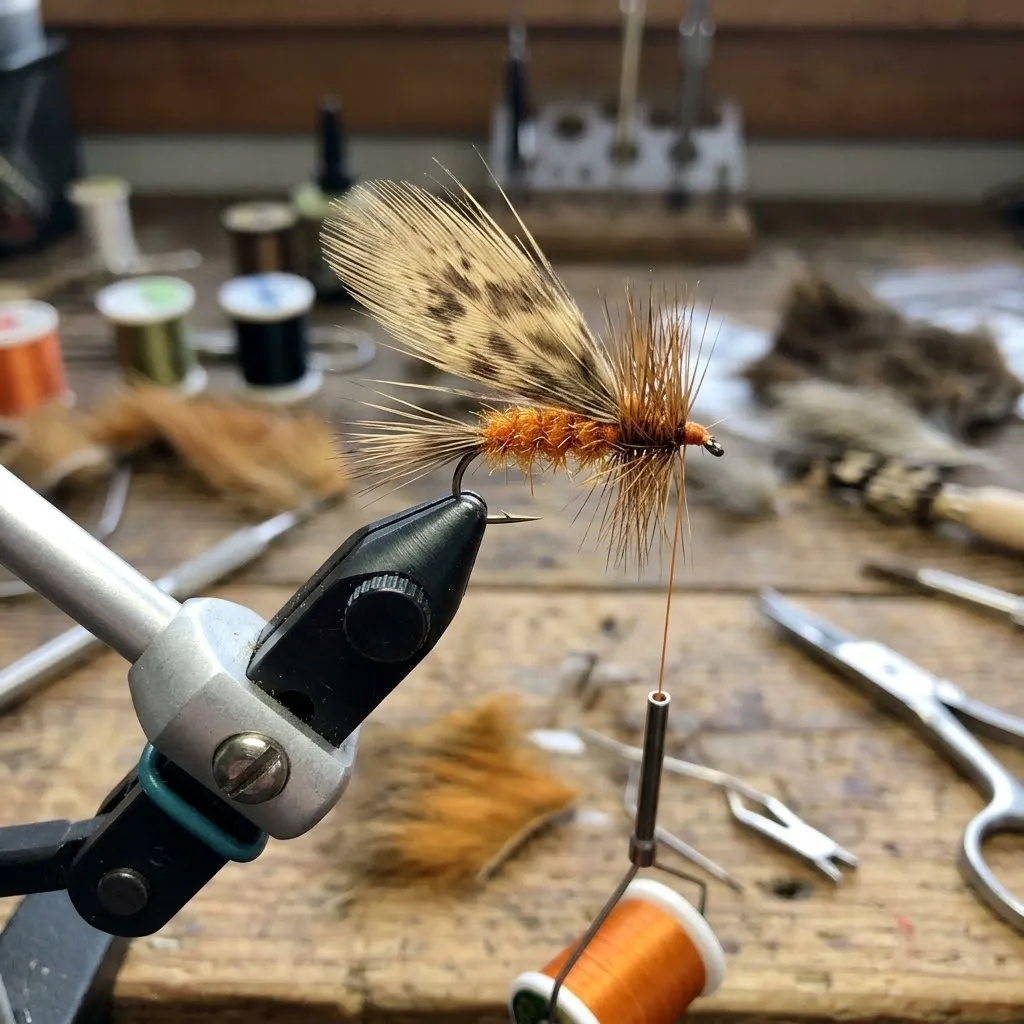
Keep the box simple. You want cinnamon and black flying-ant patterns in a range of sizes, because real ant falls come mixed. The Fly Fisherman describes typical fall ants as red, brown, and black, a quarter to a half inch long, which maps to hook sizes roughly 12 through 20. Carry a few in each color from about 14 down to 18, and have a couple of tiny 20s for when they're eating pinheads.
My take, and it's a little contrarian: don't overthink the pattern and do obsess over the wings. During a flying-ant fall the wings are the trigger, and fish will snub a wingless fur ant that would have crushed on a normal day. A simple foam-and-CDC flying ant with a clear splayed wing out-fishes a fancier wingless tie when the naturals have wings. Match the silhouette, then match the color, then stop fiddling.
You might also enjoy: Trico Spinner Falls in July: The 7 AM Window Every Tailwater Angler Should Plan Around
On rigging: fish light. Go to 5X or 6X tippet, and don't be shy about a 7X dropper if the water's flat and the fish are picky. A 12- to 14-foot leader helps you land the fly softly and drift it clean in the slow water where ants collect. The whole point of tippet this fine is a drag-free drift, which matters more with ants than almost anything because they sit dead-still on the surface and any skate reads as fake.
Step 1: Position for a drag-free drift
Get into a spot where your leader, not your fly line, lands over the fish. In an eddy that usually means casting from the side or below so you're not dragging line across the conflicting currents. The less line on the water, the less drag.
Step 2: Cast short and above the target
Ant water rewards precision over distance. Drop the fly a foot or two upstream of a working fish and let it feed down into the seam. Long casts in swirling eddies just guarantee drag. Keep it tight.
Step 3: Let it dead-drift, and resist mending
If you set up right, you shouldn't need to mend at all. Constant mending twitches the fly and spooks fish in slow clear water. Let it ride the foam line untouched. A motionless drift is the whole presentation.
Step 4: Solve the visibility problem
A size 18 black ant in a foam line is nearly impossible to see. Two fixes: fish a small bright indicator, either a bit of yarn or a visible dry, within a foot of the ant, or drift the ant as a dropper 6 to 8 inches behind a slightly larger hopper or a high-vis parachute. Watch the visible fly, and if anything rises anywhere near your ant, set. You'll miss fewer takes than you'd think you would guessing.
Why this is the dry-fly window to plan around
By late summer the marquee hatches are done on most trout water. The mayflies have petered out, the water's warm, and a lot of anglers quietly write off dry-fly fishing until fall. That's exactly when the ant fall shows up to fill the gap. Fly Fisherman calls the autumn fall of winged ants a period that rivals the best hatches of spring, and on the right muggy afternoon that's not hype.
The catch is that a given fall is often a one-day event. Colonies launch on their day, not yours. But the trigger is readable enough that you can play the odds: watch the forecast for warm humid afternoons a day after rain from late July into September, and be on the water midday. If you log your outings with the conditions attached, patterns show up fast. Note the date, the air temp, the humidity, and whether ants were on the water, and after a couple of seasons you'll practically predict your home water's ant days. That's the kind of thing try Bushwhack is built to surface, turning a season of scattered notes into a read on when the good windows actually happen.
Skip the hoppers for once. When the air goes thick and humid after an August rain, tie on a small cinnamon ant, find a foam line, and fish the window the rest of the river forgot about.
Get fishing tips in your inbox
New guides, seasonal tactics, and gear picks — about once a month, no spam.