Best Polarized Fishing Sunglasses Under $50: 5 Picks (2026)
 Cameron Spanos
Written by Cameron Spanos
Polarized lenses do one job better than anything else in your tackle bag: they cut the glare bouncing off the surface so you can actually see into the water. The good news for anyone shopping for polarized fishing sunglasses is that you don't have to spend $200 to get lenses that genuinely kill glare and reveal structure. The budget market has caught up. The bad news is that plenty of cheap pairs on Amazon are barely polarized at all, and the listing won't tell you which.
Here's the part most roundups skip: lens color matters nearly as much as the polarization itself. A smoke lens that's perfect on a bright bluebird day offshore will leave you half-blind on an overcast dawn at the pond. Below are the five pairs worth owning for under $50 right now, plus a plain-English guide to picking the right tint for where you actually fish, so you get it right the first time.
Quick Picks: Best Polarized Fishing Sunglasses Under $50
| Product | Best For | Price | Rating |
|---|---|---|---|
| KastKing Skidaway | Best Overall | $25.49 | 4.4★ |
| Strike King S11 Rogue | Step-Up Pick | $49.99 | 4★ |
| Flying Fisherman Maverick 7812 | Best Fishing Brand | $24.26 | 4.2★ |
| TOREGE TR26 | Best Saltwater Value | $25.99 | 4.2★ |
| Duduma TR90 | Best Ultra-Budget | $22.99 | 4.3★ |
Quick test: are they actually polarized? Hold one lens up to an LCD screen and slowly rotate it. If the screen darkens toward black at one angle, the polarization is real. If nothing changes, send them back. Do this the day any cheap pair arrives, while you can still return them.
How These Picks Were Chosen
No paid placement. These five were chosen on the things that actually decide whether budget fishing glasses are worth wearing: genuine polarization, lens material and coating, frame durability, and the weight of real angler feedback (several carry thousands of verified ratings). Every Amazon price, rating, and stock status below was re-checked in August 2026.
That refresh also cut the $30-to-$50 tier down to a single pick, because nothing else in that band could back up its numbers. Four of the five picks now sit under $30, and the fifth is the $49.99 Strike King S11 Rogue, which I bought and have in hand.
KastKing Skidaway: Best Overall Fishing Sunglasses Under $50
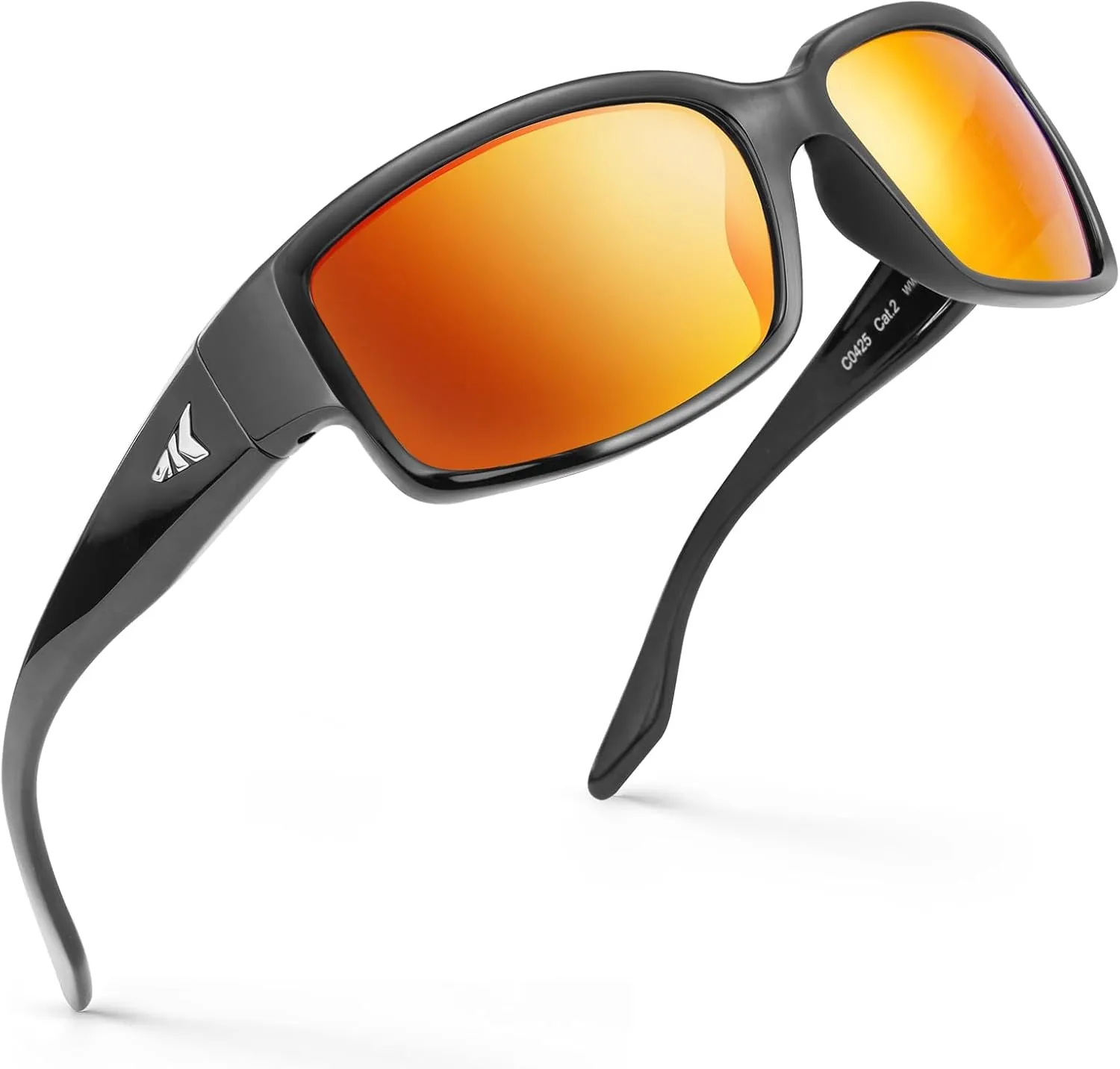
The KastKing Skidaway is the pair to beat, and the case just got stronger. As of our August 2026 price check it's down to $25.49, which puts a Grilamid TR90 frame, the same lightweight, flexible material used in glasses that cost three or four times as much, comfortably under the $30 line.
What sets it apart at this price is KastKing's PuriVex scratch-resistant coating. Cheap lenses are notorious for going hazy after a season of riding loose in a tackle box; the PuriVex coating holds up better, and the lenses carry full UV400 protection with strong glare reduction. It holds a 4.4-star average across more than 9,800 ratings, so this isn't a gamble on an unknown.
Who It's For
Beginners who want one reliable pair for freshwater and light saltwater. The Skidaway comes in several lens colors, so you can choose copper for sight fishing or smoke for bright offshore days. If you only buy one pair, this is it.
Pros & Cons
- Pros: Grilamid frame (light and durable), PuriVex scratch-resistant coating, multiple lens colors, strong glare reduction, 9,800+ ratings at a 4.4 average
- Cons: Runs slightly large on narrow faces, rubber nose pads can slip when you're sweating hard, no hard case included
Price: $25.49. Check price on Amazon
Strike King S11 Rogue: The Step-Up Pick
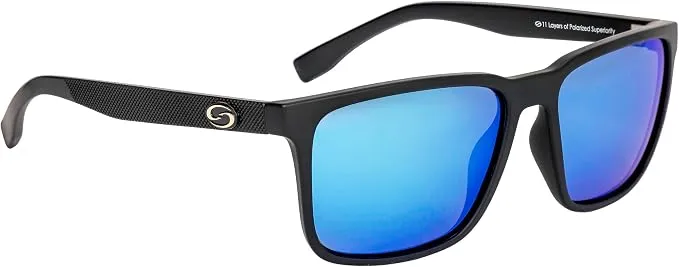
The Strike King S11 Rogue runs $49.99, and that price puts a hard case, a micro-fiber cloth, and a retainer in the box with the glasses. It's the only pick here that isn't under $30.
Strike King's published spec sheet claims a lens built up from eleven layers of polarized film, a bi-gradient mirror treatment, and a hydrophobic coating meant to shed water spots. It also specs an anti-reflective coating on the back of the lens, so light bouncing up off your cheek doesn't wash out the view. Those are the manufacturer's claims, not measurements of mine. What I will say from wearing them is that the frame is stiff and cleanly finished, with none of the hinge slop that gives away a bargain pair, and the retainer that comes in the box is a real one rather than an afterthought.
One caveat on the numbers: the Amazon listing carries a 4-star average off just four ratings. Treat that as noise, not signal. There's no meaningful feedback history behind this pair the way there is behind the KastKing's 9,800.
Who It's For
Anglers who already know polarized lenses earn their keep and would rather buy once. If you've clouded or snapped a couple of cheap pairs and you're willing to roughly double your spend for a better frame plus a case and retainer that come included instead of costing extra, this is the step up. Skip it if $50 is a stretch, and skip it if sight fishing is the whole reason you're buying, because green mirror is a split-the-difference tint rather than the copper you'd want for picking fish off a flat.
Pros & Cons
-
Pros:
- Hard case, micro-fiber cloth, and retainer included in the box
- Eleven-layer polarized lens with a bi-gradient mirror and anti-reflective rear coating, per Strike King's spec sheet
- UV protection confirmed on a bench UV tester
- Stiff, cleanly finished frame with no hinge slop
-
Cons:
- Roughly twice the price of the four other picks here
- Green mirror is a compromise tint rather than a sight-fishing copper
- Only four Amazon ratings, so there's no real feedback history to lean on
- No on-water review from me yet
Price: $49.99. Check price on Amazon
Flying Fisherman Maverick 7812: Best From a Fishing-First Brand
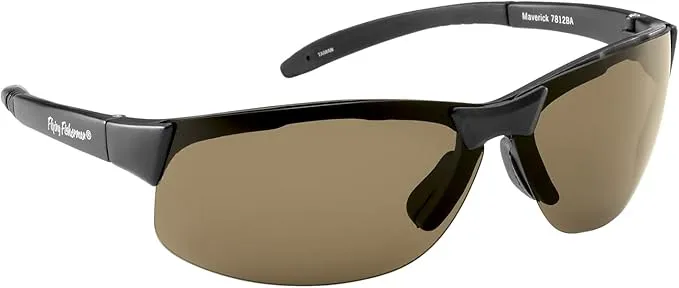
Flying Fisherman has built sunglasses for anglers for over 35 years, and the Maverick 7812 reflects that focus. At $24.26 these are designed by a fishing company, not a fashion brand stamping "sport" on the label. The AcuTint lens enhances contrast on the water, which makes it easier to pick out the color changes that flag drop-offs and weed edges.
The wrap-around frame blocks peripheral light well. Stray light leaking in from the sides is what wrecks your subsurface visibility, and the Maverick's full-coverage shape cuts that down.
Who It's For
Anglers who want lenses tuned specifically for reading water. The AcuTint tint genuinely improves contrast over generic polarized lenses, which helps on rivers and streams where spotting subtle current breaks matters.
Pros & Cons
- Pros: AcuTint lens for enhanced water contrast, 35+ years of fishing-specific design, excellent peripheral light blocking, under $25
- Cons: Fewer lens-color options than competitors, more functional than fashionable, its 4.2 rating average trails the KastKing and Duduma
Price: $24.26. Check price on Amazon
TOREGE TR26: Best Saltwater Value
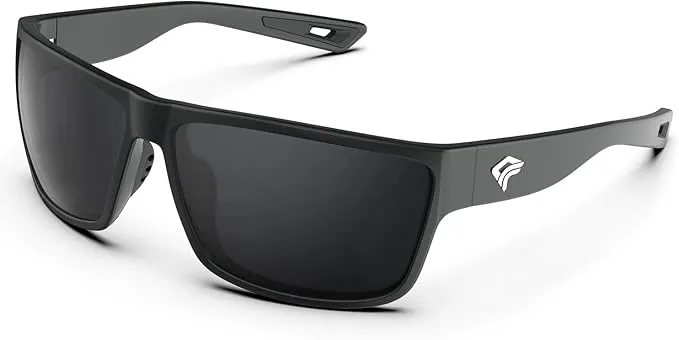
Salt spray is what destroys cheap sunglasses. The TOREGE TR26 fights back with a DSX-SR hydrophobic coating that sheds water and resists salt buildup on the lens surface. At $25.99 with a lifetime warranty, it's the budget saltwater pick most likely to survive the environment instead of clouding over after a couple of trips to the surf.
The flexible TR90 frame stays comfortable over long days on the boat and is tough enough to survive getting sat on in the truck. A lifetime warranty on sunglasses this cheap is a sign the brand trusts its own build.
You might also enjoy: Best Inline Spinners for Fall Stocked Trout Under $20 (2026): Buy or Skip on 4 Classics
Who It's For
Anyone fishing saltwater on a budget. The hydrophobic coating is a real functional advantage, not marketing fluff. It's also a smart choice if you're hard on gear, because that lifetime warranty lets you fish without babying your sunglasses.
Pros & Cons
- Pros: DSX-SR hydrophobic coating handles salt spray, lifetime warranty, flexible TR90 frame, 6,600+ ratings, excellent price
- Cons: Hydrophobic coating wears down over time, lens clarity slightly below the KastKing, average nose-pad fit
Price: $25.99. Check price on Amazon
Duduma TR90: Best Ultra-Budget Pick
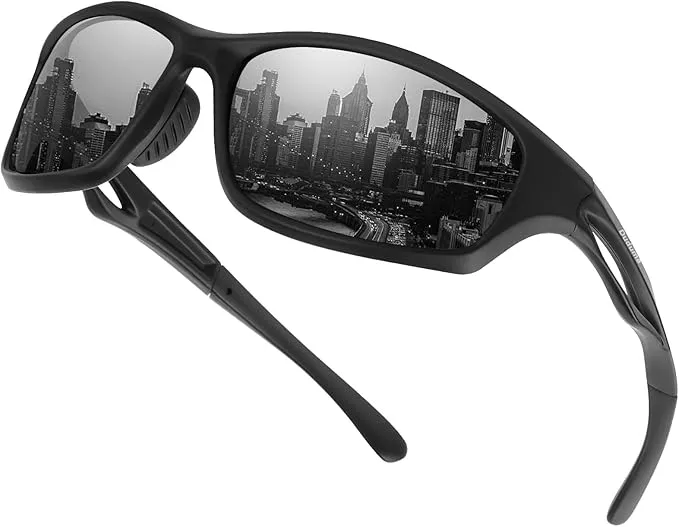
At $22.99, the Duduma TR90 proves you don't need to spend much for functional polarization. It's the cheapest pair on this list and also the most-rated, with over 12,700 ratings at a 4.3-star average, so plenty of anglers are happy with what twenty-three bucks buys. The TR90 frame keeps them light and reasonably durable.
It makes a smart first pair, or a backup to leave in the truck. Cheap enough that losing one overboard doesn't ruin your day, functional enough that you'll still see what polarization does for you.
Who It's For
Brand-new anglers testing the waters (literally), kids, or anyone who wants a reliable backup pair. Also a solid option if you want polarized lenses for occasional trips but don't fish often enough to justify spending more.
Pros & Cons
- Pros: Cheapest pick on this list at $22.99, most-rated pair here with 12,700+ ratings, lightweight TR90 frame, effective basic polarization, multiple color options
- Cons: Lens clarity noticeably below the KastKing, minimal scratch resistance, no specialized coatings, hinges feel less robust
Price: $22.99. Check price on Amazon
The Best Fishing Sunglasses Under $30
Four of the five picks here sit under $30 as of August 2026, so a $30 ceiling still leaves you a real choice. The KastKing Skidaway at $25.49 is the best fishing sunglasses under $30, full stop. Since its price dropped below $26 there's no longer a trade-off between the best pick and the affordable pick; they're the same pair of glasses.
If the Skidaway doesn't fit your face, the order of the rest depends on where you fish: TOREGE TR26 ($25.99) for salt, Flying Fisherman Maverick 7812 ($24.26) for reading rivers and streams, Duduma TR90 ($22.99) if the only thing you care about is the number on the tag. Cheap and polarized beats expensive and left at home.
You might also enjoy: Dog-Days Redfish & Speckled Trout: The Shallow-Early, Deep-Midday Playbook
So the category is lopsided in a useful way: the best value sits under $30, and paying more mostly buys you a better frame and the accessories rather than dramatically better glass. If you stay under $30, spend the difference on a retainer strap and a hard case, or put it toward tackle. And if sight fishing is your priority, get the Skidaway in copper and pocket the change.
Which Lens Color Should You Choose for Fishing?
Lens color is the most important decision after polarization itself, and it's where most beginners go wrong. Here's the breakdown that'll keep you from buying the wrong tint.
Copper/Brown lenses are your best all-around fishing choice. They boost contrast against green and brown backgrounds, exactly what you're looking at in most freshwater. Copper is the top pick for sight fishing because it makes fish, rocks, and submerged wood pop against the bottom. Buying one pair for bass fishing? Go copper.
Amber/Yellow lenses shine in low light: overcast days, dawn, dusk, and heavily shaded streams. They brighten your field of view and lift contrast when light is scarce. Amber sits on the border of the copper family, so it also works as an all-arounder in mixed light, but trout anglers fishing canopied mountain streams should look hardest at it, and it's great for early-morning topwater sessions.
Smoke/Gray lenses are the bright-sun specialist. They cut overall brightness without shifting colors, which makes them ideal for open water on bluebird days: offshore trips, big open lakes, and beach surf casting. If you fish saltwater or big water in direct sun, smoke is your lens.
Green mirror lenses split the difference between copper and smoke. They work reasonably well in both bright and moderate light, which makes them a decent one-pair-does-everything option, though they won't beat a purpose-matched tint in any single condition. That's the tint on the S11 Rogue above, and it's why I framed that pair as a build-and-durability step up rather than a sight-fishing tool.
Frame Materials and Fit: What Actually Matters?
Three things matter in a fishing sunglass frame: material, coverage, and grip. The rest is cosmetic.
Grilamid TR90 is the gold standard in this price range. It's light, flexible, and holds up to heat and UV. The KastKing, TOREGE, and Duduma all run TR90 or Grilamid frames, and that's no accident. It's the frame material to look for under $50.
Wrap-around coverage matters more than style. Light leaking in from the sides destroys your ability to see below the surface. When you try on fishing sunglasses, check for light gaps at the temples and above the brow.
Rubber grip points on the nose pads and temple tips keep your glasses put when you sweat or lean over to net a fish. Glasses that slide down your nose every five minutes are glasses you stop wearing. Make sure your pair has rubberized contact points, or add aftermarket grips for a few bucks.
Fit tip: if you're between sizes, go larger. You can add a retainer strap to keep them out of the lake, but you can't fix a frame that pinches your temples after three hours.
Our Pick: The One Pair Most Beginners Should Buy
The KastKing Skidaway at $25.49 is the best polarized fishing sunglasses under $50 for most beginners, and now that it sells for under $30 the decision got even easier. It pairs a Grilamid frame, the PuriVex scratch coating, and genuinely strong glare reduction with a price that leaves plenty of room in your gear budget. Get a copper lens for all-around freshwater, or smoke if you're mostly on open saltwater.
If you'd rather buy once and you can stretch to the top of the budget, the Strike King S11 Rogue at $49.99 is the step up: better frame, plus a hard case and retainer in the box. Take my read on it for what it is, though. If you can stretch past $50, the glass-lens pairs in our guide to the best polarized fishing sunglasses under $100 are the real jump in optics. Fit, build, and a bench UV check, with the on-water verdict still to come.
On the tightest budget, the Duduma TR90 at $22.99 gets you functional polarization for the price of a pack of swimbaits. And with fall trips and the gift season ahead, any pair on this page makes an easy present for the angler who still squints at the water; every Amazon price here was re-checked in August 2026.
Whichever pair you choose, the thing that matters most is having polarized lenses on the water. Once the subsurface world opens up (the weed lines, the drop-offs, the shadow of a bass sliding off a bed) you won't fish without them again. Pair them with Bushwhack to log your catches and you'll start connecting the dots between conditions, visibility, and which spots actually produce.
Get fishing tips in your inbox
New guides, seasonal tactics, and gear picks — about once a month, no spam.