Pineview Reservoir Ice Fishing: Perch, Tiger Muskie Rules, and the Drawdown Winter
 Hudson Reed
Written by Hudson Reed
If you've searched for Pineview Reservoir ice fishing this winter, you've probably found two answers to the one question everybody asks: can you keep a tiger muskie? One page says every tiger has to go back. Another says one fish over 40 inches. Both were right, at different times in 2026, and neither is the biggest news. Pineview was drained to roughly 2% of capacity this fall so Ogden City could replace a pipeline under the lakebed, and that changes everything about how this winter plays out.
Can you keep a tiger muskie at Pineview?
It depends on the date. Through December 31, 2026, yes: a DWR emergency change allows one tiger muskie over 40 inches per day at Pineview. From January 1, 2027, the 2027 Utah Fishing Guidebook governs. The standing 2026 rule, before the emergency change, closed Pineview to tiger muskie possession entirely.
That standing rule in the 2026 Utah Fishing Guidebook reads "CLOSED to the possession of tiger muskie. All tiger muskie must be immediately released." It's been the Pineview rule for years, and it's why the older forum threads and Visit Utah blurbs all say catch-and-release.
Then on July 2, 2026, the DWR filed an emergency change for Pineview: 12 largemouth or smallmouth bass combined, 1 tiger muskellunge over 40 inches, and no limit on all other species. The notice says the change is "effective July 2, 2026 and will remain in effect until December 31, 2026," and that "all other rules established in the 2026 Utah Fishing Guidebook remain in effect." The reason given was the drawdown. The Division wanted anglers to thin the fish out so more of the remaining fish would survive the low water.
That end date is the part to watch. Once the emergency change lapses, don't assume either version carries over. The 2026 standing rule was catch-and-release only, so if you're on the ice in January, confirm the Pineview line in the 2027 guidebook before you put a tiger on the sled.
The "1 over 40 inches" number also appears in the 2026 guidebook's statewide daily limits table under tiger muskellunge, which is likely where some sites picked it up without checking Pineview's own listing. DWR publishes a fresh guidebook every calendar year, so pull up the current guidebook before your first trip and read the Pineview entry yourself.
The other Pineview rules people miss
Two more lines in that same Pineview entry matter for ice anglers. The standing crappie limit is 20, and the yellow perch limit is the statewide 50. Through December 31, 2026, though, the emergency change sets no limit on species other than bass and tiger muskie, perch and crappie included. The standing limits return when the emergency ends, subject to whatever the 2027 guidebook says. The bait rule never went away, because the emergency notice keeps every other 2026 rule in effect: it's "unlawful to use whole fish for bait. Cut baitfish must not be larger than one inch in any dimension and no more than one piece per hook." Pineview is on the short list of waters where dead yellow perch can be used as bait, but only as that one-inch piece.
The drawdown winter: what's actually out there
This fall Ogden City pulled Pineview down to roughly 2% of capacity so crews could replace the half-century-old drinking water pipeline that runs under the reservoir, part of a roughly $100 million project. Lakebed that's normally under dozens of feet of water is now open mud with heavy equipment on it.
The timeline matters for anyone planning a January trip. Work across the lakebed runs from about November into January to February 2027, depending on which update you read, with Ogden City saying equipment should be off the bed by February. Refill after that depends on this winter's snowpack, coming off a dry 2025-26 water year. Nobody can promise you a full Pineview by spring.
Here's my take, and I'll own it: skip Pineview this January. A January trip lands right in the middle of active lakebed construction. Even if the remaining pool freezes, you're looking at a small body of water with crews and machinery working in it, shoreline that's now hundreds of yards of mud, and access points that were already closed before the drawdown. The perch and crappie that are left are crammed into a fraction of their normal water, and the DWR's own reasoning for the liberal limits was about improving survival for those fish. Pounding them through the ice in a pool that size doesn't do the fishery any favors. Go fish a reservoir that's full and come back when Pineview is.
If you drive up to look anyway:
You might also enjoy: Eskimo QuickFish 3 vs Clam Hub (2026): The Clam You Remember Is Gone, So Which QuickFish?
- The Port Ramp and Pineview Trail (Windsurfer Beach) were closed for Forest Service reconstruction through 2026, with no public access during construction.
- Anderson Cove was closed to motorized boats once the water dropped.
- Off-highway vehicles are prohibited on the reservoir, and officials have warned that driving on the exposed lakebed hurts water quality and wildlife.
- The exposed mud is sticky and deep in spots.
How Pineview Reservoir ice fishing works in a normal year
This is the playbook for when the water's back, not advice for the drawdown winter.
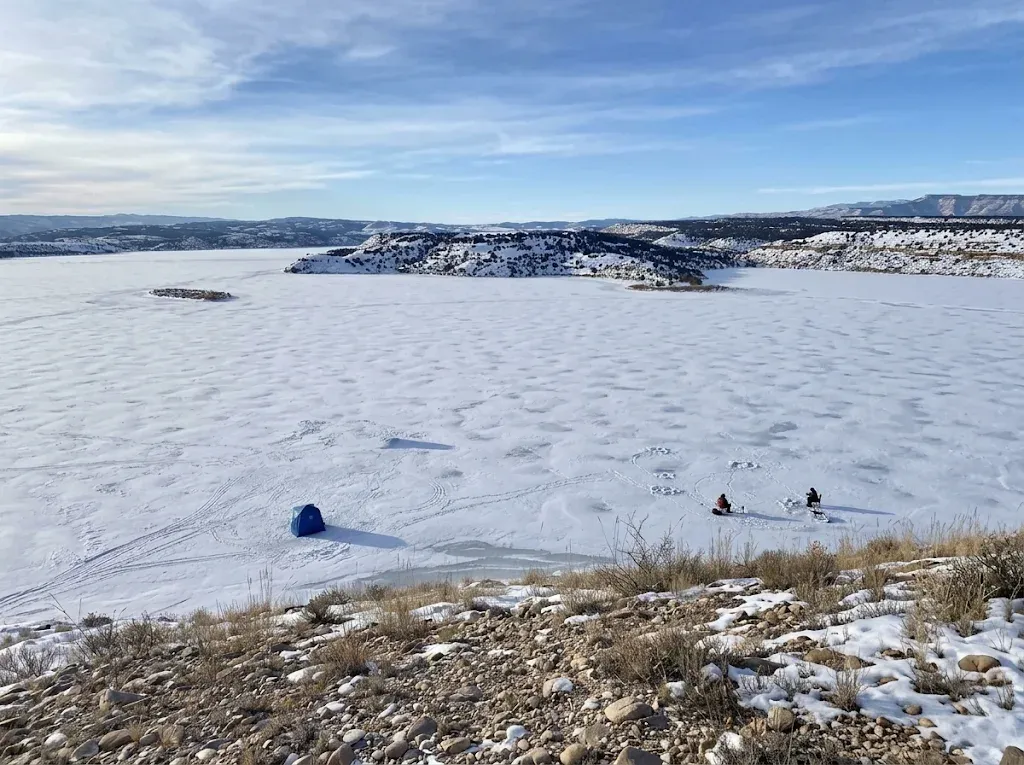
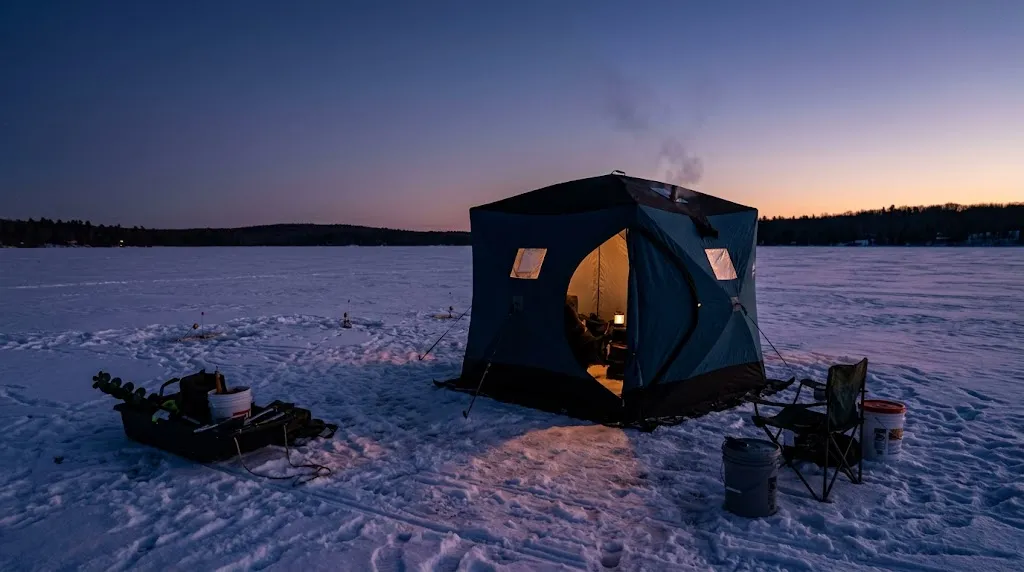
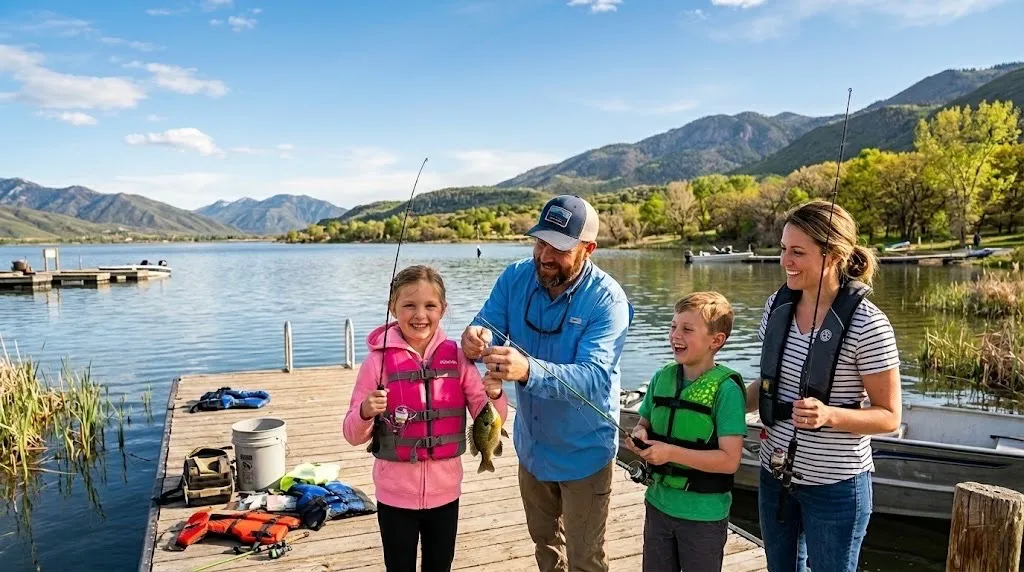
When Pineview is full, it's one of the most popular hardwater spots on the Wasatch Front, mostly because it's a short drive from Ogden and it freezes reliably. Utah's ice fishing roundups have long pointed families at it for yellow perch, black crappie, bluegill and trout, with tiger muskie as the wild card.
Perch are the bread and butter. The best perch bite comes shortly after the reservoir locks up, and again in spring right after ice-off. In between, expect days when they're picky and scattered. Forum regulars on the Big Fish Tackle Utah board have reported their best perch days off Browning Point and Cemetery Point, fishing tight to the bottom in 25-40 feet. Other years the same board complains the perch were small and few.
Finding the schools
Perch at Pineview relate to structure: the drop-offs off the points and old channel edges. The DWR's own project notes describe placing artificial structure in deep water specifically to shelter young yellow perch, because the shoreline habitat they'd normally use gets wrecked by big level swings. Find those edges with a flasher, drill a line of holes across the depth change, and move until you see fish come up off the bottom.
What to tie on
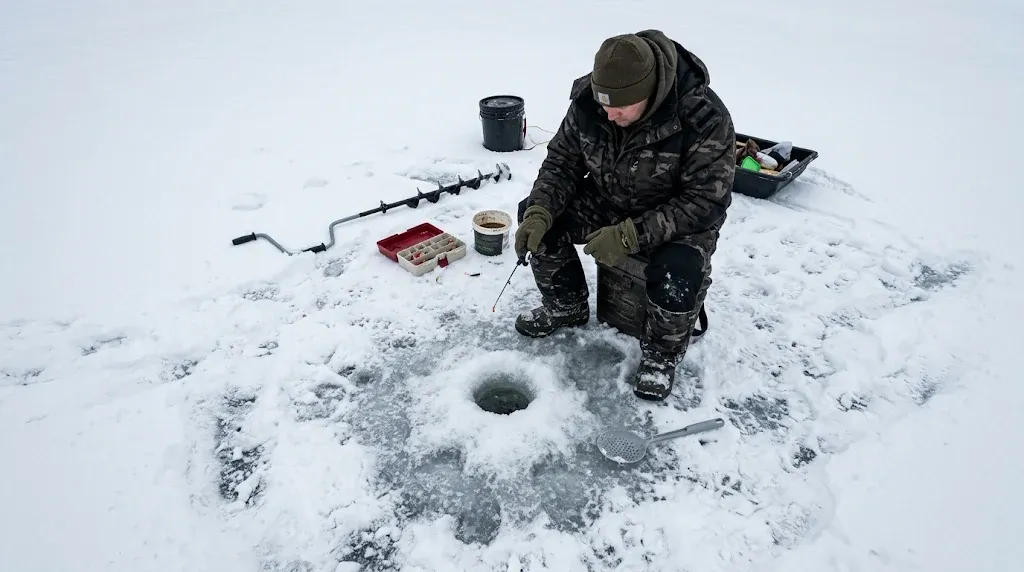
Small tungsten jigs tipped with a wax worm or a mealworm will catch Pineview perch all winter. A small jigging spoon with a single perch eye or a sliver of perch meat (one inch or less, one piece per hook) gets the bigger fish to commit when they're sulking. Two-pound to four-pound line on a light rod is plenty for perch, and with a valid license you can run a second pole, which is where the tiger muskie conversation starts.
Why tiger muskies eat perch jigs (and how to land one)
Most Pineview tigers caught through the ice aren't caught on purpose. Somebody's reeling in a 9-inch perch, and a tiger muskie eats the perch, jig and all. KSL Outdoors and the old Red Rock Adventure write-ups both describe it.
Winter reports from Pineview keep putting tigers near submerged trees and logs, roughly 15-25 feet down. That fits how tigers hunt year-round: they sit on cover and ambush. If you're fishing perch anywhere near timber in that depth band, you're fishing in tiger country whether you planned to or not.
If you want to fish for them deliberately, set it up like this:
- Rig your second pole or tip-up with a wire leader. KSL's tiger muskie advice, which cited the DWR, recommends a wire leader because tigers will bite through monofilament. Twelve to eighteen inches of wire is a common length.
- Bait it legally. At Pineview that means a cut piece of perch no bigger than one inch, or an artificial. The Midwest pike move of hanging a whole dead sucker under a quick-strike rig is illegal here, and the whole-fish rule doesn't care what species you're after.
- Set it near the timber in 15-25 feet, a few feet off the bottom, and stay within 100 feet of it. Utah's definition of a second pole requires it to be within sight and no more than 100 feet away.
- Keep the hole skimmed so the line runs free. KSL's piece specifically warned that a hole skinning over with ice is how you miss the subtle pickup on a tiger trap rod or tip-up.
- Use a rod with real backbone on your jigging setup if you're fishing the timber. A noodle perch rod and 2-pound line can't turn a 40-inch fish away from a submerged log, and the fish usually wins that fight.
Releasing a big tiger on the ice
Have the tools out before you start fishing, not after the flag goes up: long needle-nose pliers, jaw spreaders, and something to measure with. Keep the fish's time on the ice short, support its belly for any photo, and get it back down the hole quickly. Every tiger in there took years and DWR stocking dollars to grow. Tigers are a sterile hybrid, so every one in the reservoir got there by stocking; none of them are replacing themselves.
Pineview's tiger muskie record history
Pineview has produced Utah's biggest tiger muskies, which is a big part of why the catch-and-release rule exists. The catch-and-keep state record most often cited is a 49-inch, 33-pound 9-ounce fish caught by Kelly Parry in 2006. The catch-and-release record, a 53-inch tiger from 1998, also came out of Pineview, according to KSL's reporting. A few years back a 51.5-inch tiger caught at Pineview made the news partly because the angler had to put it back.
You might also enjoy: Best Tungsten Ice Jigs for Panfish Under $15 (2026): 4 Packs Sorted by Job
A Utah Watershed Restoration Initiative project summary describes the Pineview tiger muskie fishery as blue ribbon, but notes that angler catch rates and satisfaction had been declining, which is why the DWR funded acoustic-tag research into how many stocked fingerlings actually survive. Add a near-total drawdown on top of that, and nobody knows yet what the tiger population will look like when the water comes back. In a July 2026 KSL Outdoors piece, DWR aquatics program manager Chris Penne laid out the agency's strategy for protecting and rebuilding Pineview's fish populations once construction is complete.
Personally I'd rather see tigers stay strictly catch-and-release at Pineview after the refill, even the big ones. The emergency harvest window made sense for a reservoir about to lose most of its water. It wouldn't make sense for a fishery trying to recover.
Access and parking
In a normal winter, Pineview's ice access runs through a handful of Forest Service sites and roadside pullouts. A December 2025 DWR report listed Anderson Cove, BOR/Salamander, the Old Highway site, Pelican Beach, Browning Point and the pullouts along State Route 39 as open to ice anglers, with Cemetery Point open but only a small number of parking spots. The Port Ramp and Windsurfer Beach were closed for construction.
Parking is the real headache. Forum posts going back years describe people parking on road shoulders, getting stuck, and blocking gates. Some practical rules that keep you from getting towed or plowed in:
- Don't block gates, driveways, or fire hydrants on the residential streets around the lake.
- Get there early on weekends. The small lots fill fast, and when Cemetery Point's lot is limited the overflow lands on SR 39.
- Bring a shovel and assume you'll need four-wheel drive to get off a plowed shoulder after a storm.
Expect this list to change after the refill. The Forest Service has been rebuilding the Pineview recreation sites.
Is Pineview ice safe to walk on?
Treat it with more suspicion than most Utah reservoirs. Utah State Parks' ice safety guidance calls for at least four inches of clear ice before you walk out and six or more for a snowmobile or ATV. White, cloudy ice is roughly half as strong, so it takes about eight inches of it to match four inches of clear.
Pineview adds a few problems of its own. Three forks of the Ogden River feed it, and ice near any inflow runs thinner than the ice a few hundred yards out. It's also one of the busiest ice fisheries in northern Utah, which means old holes everywhere, some of them skimmed over and dusted with snow. And a reservoir whose level is moving (dropping during a drawdown or rising during a refill) can leave ice hanging over air or cracked along the shoreline, so the first ten feet off the bank can be the worst ice on the lake.
Drill and check as you walk out. Wear ice picks around your neck, carry a throw rope, and don't go alone. If the edge looks like broken plates or slush over mud, turn around. No perch is worth it.
Keeping track of a lake that's about to change
The next couple of seasons at Pineview are going to be strange. Spots that held perch for twenty years may be gone, new structure may be exposed and then flooded, and the tiger population is anyone's guess. The anglers who figure out the new Pineview first will be the ones writing down where they drilled and what came up, and Bushwhack lets you log every hole and spot so you can see which patterns actually repeat once the water's back.
Until then, check the guidebook, watch the reservoir level, and give Pineview the winter off. It's earned it.
Going fishing? Write it down.
Bushwhack is a free fishing log that fills in the weather, moon and pressure for you, then shows which spots, flies and conditions actually produce. Blank days included.
Get fishing tips in your inbox
New guides, seasonal tactics, and gear picks, about once a month, no spam.