Post-Spawn Panfish in May: The Family Fishing Season Is Just Getting Started
 Hudson Reed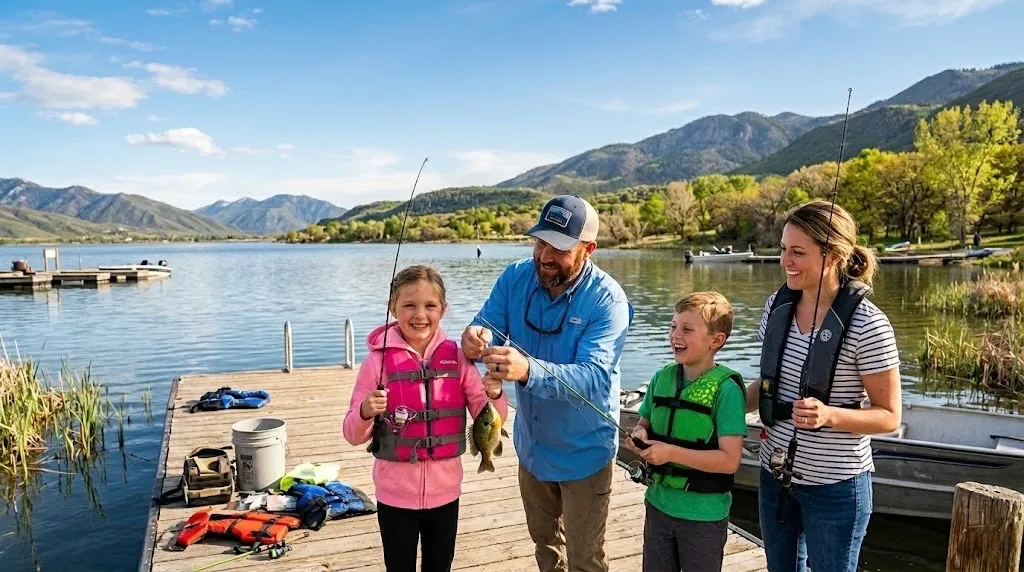
Written by Hudson Reed
Most fishing content focuses on the spawn itself: finding bluegill beds, targeting crappie in the shallows, pulling perch from staging areas. But here's what nobody tells you: the post-spawn panfish bite in May is arguably better than the spawn. Fish are recovering, feeding hard, and distributed throughout accessible water. And unlike the spawn, this is a window that's ideal for families, kids, and beginners: long days, warm weather, and fish that bite fast.
Understanding where each species goes after spawning, and how to follow them, keeps you catching panfish through June and into summer.
Understanding the Post-Spawn Transition
Each panfish species has a slightly different timeline and post-spawn behavior, but the broad pattern is consistent: after spawning in the shallows, fish gradually move toward deeper water, cooler temperatures, and denser cover. They don't vanish. They transition. The angler who follows them through that transition has some of the easiest, most productive fishing of the year.
Spawn timing by species in most of the Midwest and Mid-Atlantic:
- Crappie: Spawn in late April-early May at 58-65°F, transition out by mid-May
- Yellow Perch: Spawn in early to mid-April in most northern states; by May, fully recovered and actively feeding
- Bluegill: Spawn latest of the three: late May through June as water hits 68-72°F; the biggest bluegill may still be on beds in late May while others have moved off
Post-Spawn Crappie: Following the Deep Slide
Crappie are the most dramatic movers after the spawn. Once water temperatures push toward 70°F, spawned-out crappie abandon the shallows almost entirely, often within 7-10 days. They move out along creek channels, drop-offs, and any submerged wood or brush piles that connect the spawning flat to deeper water.
Key locations for post-spawn crappie in May:
You might also enjoy: Spring Crappie Fishing Tips: Ice-Out to Spawn
- First drop-off adjacent to spawning areas: Look for 8-15 feet of water with brush, stumps, or dock pilings nearby. Crappie suspend at mid-depth, not sitting on the bottom.
- Bridge pilings and dock structures: Shade and structure in deeper water are magnets for summer crappie. Fish vertically along the pilings from top to bottom.
- Creek channel edges: Crappie follow channels back toward deeper habitat. Target the edge of the channel, not the middle.
Technique: A small tube jig or crappie minnow under a slip bobber, set 4-8 feet deep, covers the water column where suspended post-spawn crappie hold. Work the bobber slowly along a dock row or wood edge. The key adjustment from spawn fishing: go deeper. Post-spawn crappie ignore presentations in 1-2 feet of water that caught fish two weeks ago.
Post-Spawn Bluegill: The Deep Weed Line Is Your Friend
Bluegill are the last to spawn and the most accessible to families because even post-spawn fish don't go far. After the spawn, larger bluegill move to the deep edge of the weed line (typically 4-8 feet in most lakes) where they spend the summer. Early morning and evening brings them shallower to feed; midday they sit tight to weeds and cover.
This is the ideal family fishing scenario: find a dock, pier, or bank access near a weed edge, rig a small hook or tiny jig with a worm, and lower it to 4-6 feet. Bluegill will be there. You don't need a boat, specialized gear, or precise technique. A basic bobber setup catches post-spawn bluegill reliably from the bank all through late May and June.
Best baits for post-spawn bluegill:
- Red worm or nightcrawler piece: Classic and consistently deadly: thread a small piece onto a size 8-10 long-shank hook
- Waxworm or cricket: Irresistible to bluegill; good option if live worms are unavailable
- Tiny tube jig (1/32 oz, white or chartreuse): Fished below a small bobber, this is the most efficient bluegill bait for catching numbers quickly
Log your productive bluegill spots in Bushwhack. The same weed lines and dock pilings that hold fish in late May will hold fish all summer long.
Post-Spawn Yellow Perch: Go Deep and Slow
Yellow perch spawn early and are fully recovered by May, making them one of the most catchable fish in the lake throughout the month. Post-spawn perch school tightly near the bottom in 10-20 feet of water, often over sand, gravel, or hard bottom near weed edges.
You might also enjoy: How to Catch More Fish After a Bad Trip: Turn Slow Days Into Data
Unlike crappie and bluegill, perch feed primarily near the bottom, not suspended. A small split-shot rig with a live minnow or nightcrawler on a size 6-8 hook, dropped straight to the bottom, is the classic and reliable perch setup. When you find a school, you can catch them fast: drop to the bottom, lift 6 inches, wait. Perch bites are subtle: a slight heaviness or the line going slack as the fish picks up the bait and rises slightly.
The Best Family Fishing Setup for Panfish
This is the time of year when panfish fishing is at its most accessible for families with kids or adults who are brand new to the sport. The ideal setup:
- Rod and reel: A 5-6 foot ultra-light spinning rod with a 1000-2000 size reel (every pick in our best ultralight spinning reel roundup falls in that range), light enough for kids to handle, sensitive enough to feel small panfish bites
- Line: 4-6 lb monofilament, easy to manage, enough strength for any panfish you'll encounter
- Rig: A small bobber, one split-shot weight, and a size 8-10 hook with a piece of worm or tiny jig. That's it.
- Location: Public dock, fishing pier, or bank access near any weed edge or structure on a warm-water lake or pond
Have your kids log each fish they catch in Bushwhack. Tracking species, size, and location builds observation skills and makes the data meaningful over time. Kids who log their catches often fish more strategically even at a young age.
Morning and Evening Are the Power Windows
Post-spawn panfish are most active during low-light periods in May and June. Once the sun is up, a pair from our best polarized fishing sunglasses under $50 roundup cuts the glare so you can actually see the beds and the fish holding over them. The first two hours after sunrise and the last two hours before dark consistently produce the best action, as fish move shallower to feed. Midday fishing is still productive, especially for crappie near shade, but if you're fishing with kids and you want consistent action, plan to be on the water at sunrise or in the early evening.
The Season Nobody Talks About
Everyone talks about the panfish spawn like it's the only window of the year. But post-spawn panfish fishing in May and June is arguably more enjoyable: fish are spread throughout accessible water, they bite faster on lighter tackle, and you don't have to wade through crowds targeting bedding fish. Get out in late May with a simple setup, find a weed edge or dock, and spend a few hours with family. You'll remember it long after the tally of fish is forgotten.
Get fishing tips in your inbox
New guides, seasonal tactics, and gear picks — about once a month, no spam.