Best Slip Floats & Bobbers for Crappie and Panfish (2026)
 Hudson Reed
Written by Hudson Reed
Here is the mistake almost everyone makes with a slip float for crappie and panfish: they buy too much float. A 3/4-inch round bobber will hold up a 1/16-ounce jig forever, but a slab crappie will feel that resistance, spit the jig, and you will never see it on the surface. The float is not just a bite indicator. It is a tiny scale, and you want it barely winning the argument with your bait.
That single idea drives almost every good decision in this guide.
Slip floats earn their keep in summer, when panfish slide off the shallows into deeper water. A fixed bobber works fine when fish are three feet down. Past about seven feet a fixed float becomes nearly impossible to cast, because you are flinging a rod-length of dangling line. A slip float fixes that. It slides freely until it hits a bobber stop you set at any depth, so you can fish twelve feet down and still cast it like a two-foot rig. For mid-summer crappie holding on brushpiles, deep weed edges, and the shaded end of a dock, that is the whole game.
I have a bias up front. For most panfish work I would rather fish a weighted balsa or foam stick float than a fat round bobber, and I will explain why below. But first, the picks.
Quick picks: best slip floats and bobbers for crappie and panfish
| Float | Best for | Price range | Rating |
|---|---|---|---|
| THKFISH Weighted Foam Oval Slip Bobbers | All-around summer crappie and bluegill, beginners | $12-$14 | 4.4 / 5 |
| Dr.Fish Weighted Balsa Spring Floats | Tiny jigs and live bait, no split shot needed | $10-$12 | 4.2 / 5 |
| QualyQualy Lighted LED Slip Bobbers | Night crappie and low-light dock fishing | $17-$19 | 4.2 / 5 |
Three floats, three jobs. None of them is expensive. Now the details, including the stuff the spec sheets leave out.
Slip vs fixed vs weighted: which float actually fits your fishing?
A fixed float clips or springs onto the line and stays put. A slip float threads onto the line and slides up to a bobber stop, letting you fish deep and still cast clean. A weighted float has a little lead built into the stem so it casts farther and cocks upright on its own, even with a feathery 1/64-ounce jig that could not pull line through an unweighted cork.
That last category is the one beginners overlook and veterans live on.
Lindy Little Nipper jigs in 1/64 and 1/32 ounce, or Bobby Garland Itty Bit heads in 1/48 and 1/64 ounce, are deadly on summer panfish. They are also too light to pull line through most slip corks on their own, which is why guides add a split shot above the jig or build a tandem rig. A weighted slip float skips that hassle. The lead is already in the float, so a micro-jig fishes clean and the cork sits up the moment your bait reaches depth. If you fish tiny baits, buy weighted.
Oval vs pencil stem: shape matters more than color
Most anglers obsess over float color and ignore the part that actually changes your catch rate: the body shape.
An oval or teardrop body casts well, handles chop and current, and is forgiving when you twitch a jig. A long pencil or stick stem is the sensitivity king. In dead-calm water with a finicky bluegill mouthing a waxworm, a thin pencil float telegraphs a bite a fat oval will swallow whole. It pulls under with almost no resistance, which matters because crappie are notorious for dropping a bait the instant they feel weight.
You might also enjoy: Where Do Crappie Go After the Spawn? A Summer Brush Pile Depth Guide
You might also enjoy: Best Fishing Coolers 2026: Hard vs Soft for Truck, Boat, and Kayak
My rule: oval when there is wind or I am moving the bait, pencil or stick when it is glass-calm and the bite is light. If you only buy one shape, get the slim stick style. You give up a little casting ease and gain a lot of bites.
Balsa vs foam: does the material change anything?
Balsa is the traditional choice and for good reason. It is dense enough to cast, buoyant enough to hold a jig, and a quality balsa float rides low and twitchy. Foam (EVA) floats are tougher, cheaper to produce, and shrug off the dings that crack a painted balsa finish. The honest answer is that for panfish at panfish ranges, the difference is small. Balsa edges out foam on pure sensitivity in calm water. Foam wins on durability and price.
One real-world note: balsa floats from several brands have a reputation for finish that chips and cracks where the line passes through. Toss your floats loose in a tray and foam holds up better. Store them carefully and want the most sensitive ride, and balsa is worth the fuss.
THKFISH Weighted Foam Oval Slip Bobbers
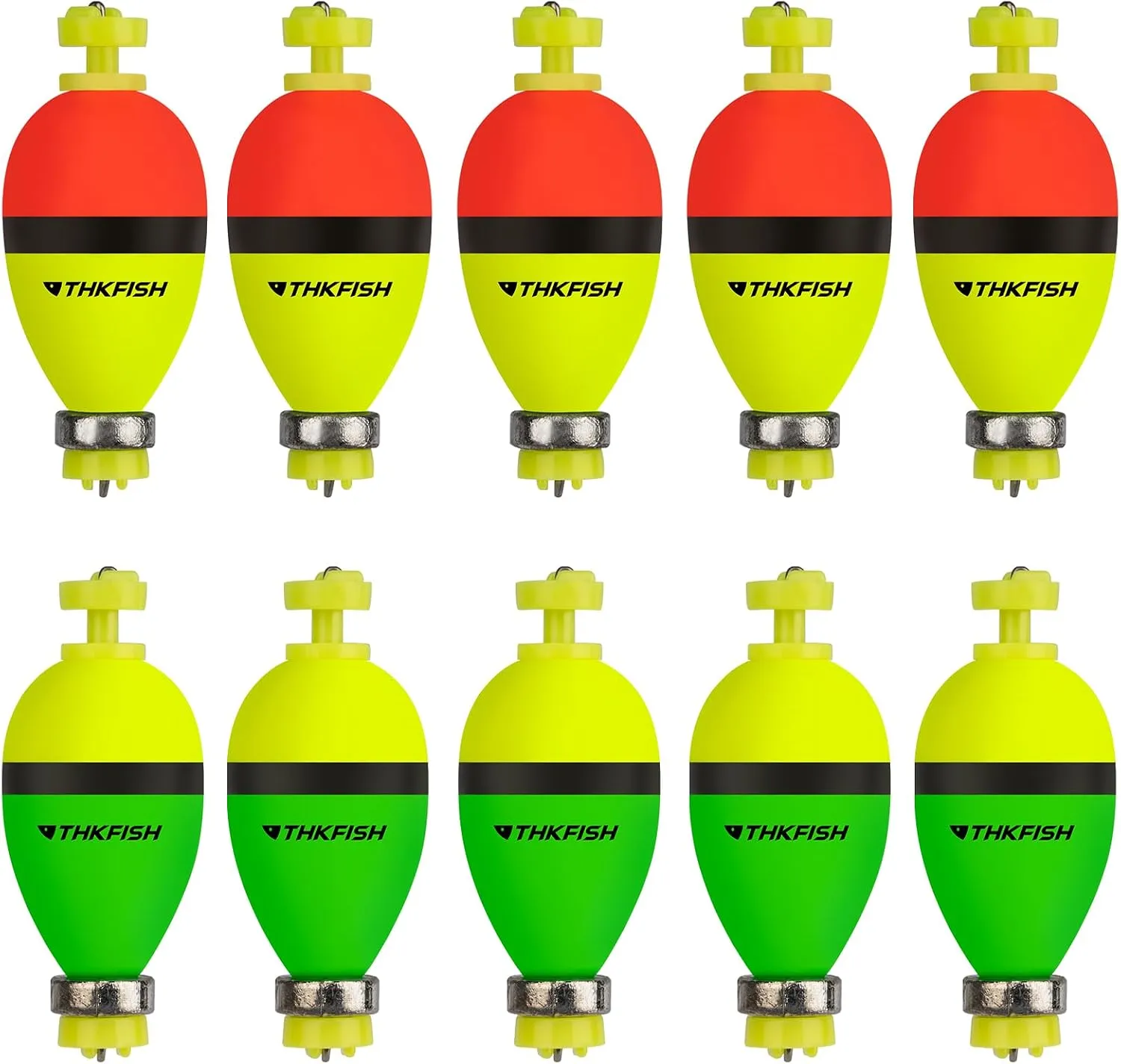
This is the float I would hand a new crappie angler and the one I reach for when I do not want to think too hard. The body is a classic oval foam shape, it comes weighted so it casts and cocks on its own, and the 10-pack arrives in three sizes (1, 1.5, and 2 inch) so you can match buoyancy to whatever jig is tied on.
Who it's for
- Beginners who want a forgiving, do-everything summer float
- Anglers fishing 1/32 to 1/16-ounce jigs or a minnow under a cork
- Anyone who beats up their gear and wants foam durability
Pros and cons
- Pro: Weighted stem casts well and self-rights, no split shot fiddling
- Pro: Three sizes per pack covers shallow to deep presentations
- Pro: Foam shrugs off rough handling
- Con: The oval body is less sensitive than a thin stick on dead-calm days
- Con: Hi-vis paint is fine, not premium
It runs about $13.49 for the 10-pack on Amazon, which is a season's worth of floats for the price of two name-brand corks.
Dr.Fish Weighted Balsa Spring Floats
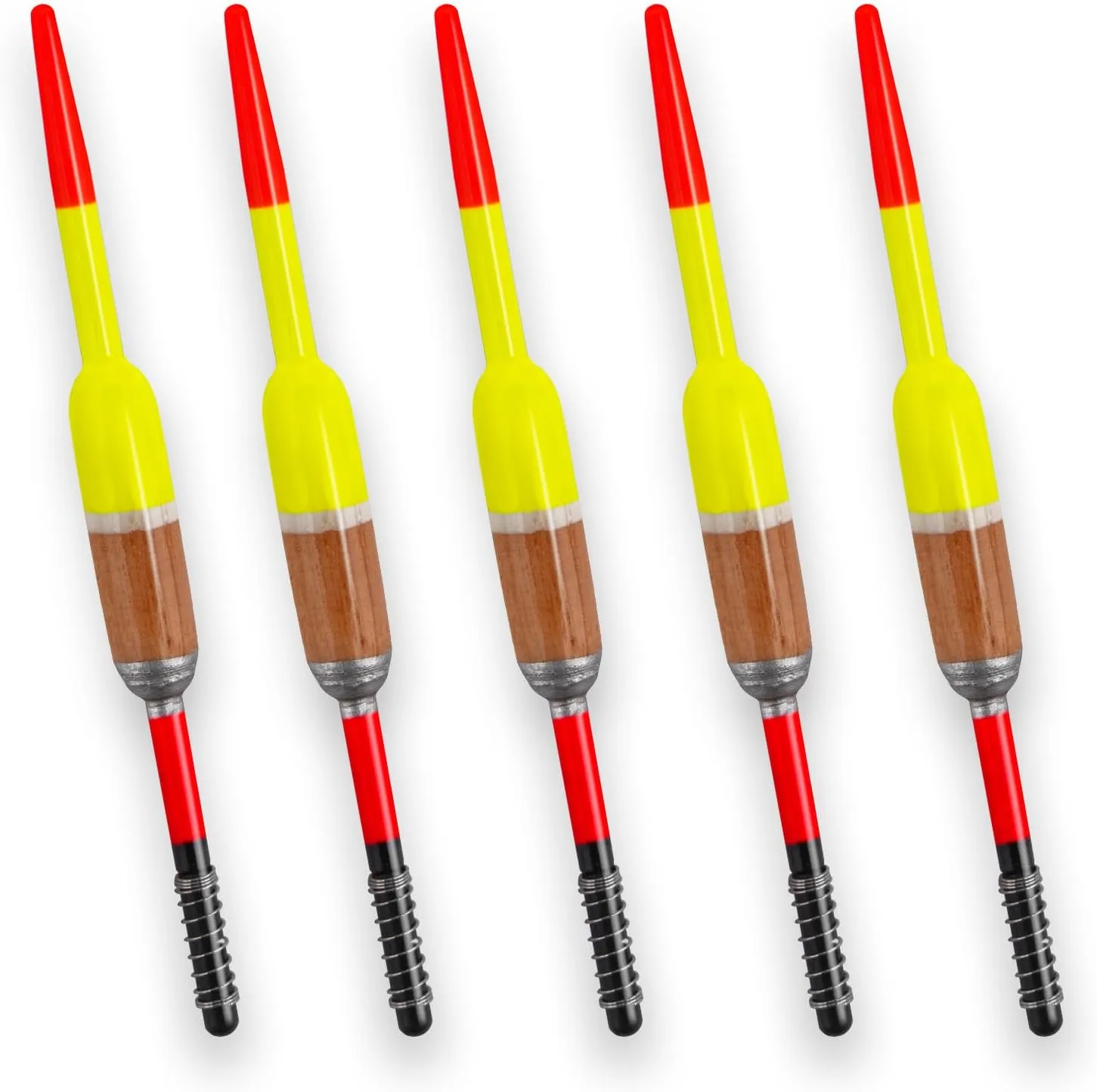
If the THKFISH is the everyman pick, the Dr.Fish balsa spring float is the finesse specialist. It is a weighted balsa cylinder with a spring system, so you can run it as a slip float or lock it as a fixed float, and the built-in weight means you do not need to pinch a split shot onto your line to fish a tiny bait. That keeps your rig clean and your bait moving naturally, which is exactly what a suspicious summer bluegill wants.
Who it's for
- Anglers throwing 1/64 to 1/48-ounce micro-jigs and live bait
- Calm-water situations where balsa sensitivity earns its keep
- Folks who want a slip-or-fixed float in one body
Pros and cons
- Pro: Weighted balsa casts a feather-light jig with no added shot
- Pro: Converts between slip and fixed in seconds
- Pro: Sensitive, low-riding balsa ride
- Con: Newer listing with a thin review history so far
- Con: Balsa finish needs gentler storage than foam
About $11.04 for a 5-pack on Amazon. Buy these if you fish small and fish calm.
QualyQualy Lighted LED Slip Bobbers
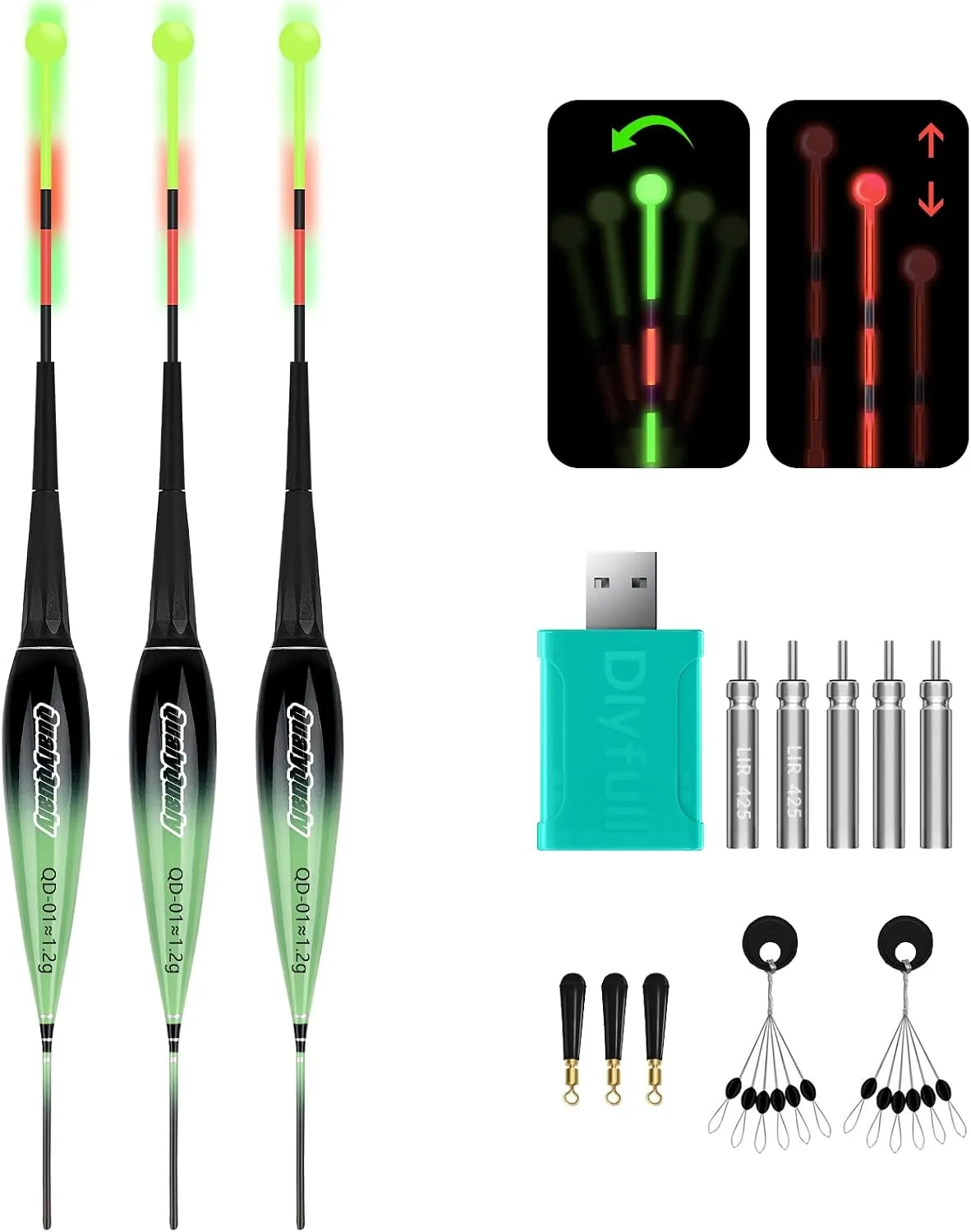
Crappie feed hard at night in summer, and a lighted float turns dock-light fishing from guesswork into a real bite indicator. This QualyQualy set is a rechargeable LED slip bobber (it comes with a charger and runs three floats), and the color-change glow is genuinely easy to track across a dark slick. It is the only float here built for one specific job, and it does that job well.
Who it's for
- Night crappie anglers fishing dock lights or lantern light
- Low-light dawn and dusk sessions when a hi-vis float disappears
- Anyone who has squinted at a dark bobber and missed the bite (a pair from our best polarized fishing sunglasses under $50 roundup helps here too)
Pros and cons
- Pro: Bright, rechargeable LED you can actually see at night
- Pro: Slides freely as a true slip float for deep summer fish
- Pro: Comes with charger, no battery hunting
- Con: Bulkier and heavier than a plain cork, less finesse
- Con: Most expensive option here, and overkill in daylight
Around $18.49 for the rechargeable 3-pack on Amazon. A niche tool, but if you fish nights it pays for itself fast.
You might also enjoy: Chatterbait vs Swim Jig for Summer Grass: Which One to Tie On and When
You might also enjoy: Yellow Sally and Golden Stonefly Dry-Dropper for June Trout
How do you set up a slip float rig for crappie?
The rig is simpler than it looks, and you only need four things on the line besides your bait.
- Slide a bobber stop onto your line first, then snug it down at the depth you want to fish. Most stops come on a small tube: thread your line through the tube, slide the knot off onto your line, tighten lightly, and discard the tube.
- Add a small bead below the stop. The bead keeps the knot from pulling through the top of the float.
- Thread your slip float onto the line, top to bottom, so it rides above the bead and slides down to it.
- Tie on your jig or hook. If your float is not weighted and your jig is light, pinch one small split shot a foot above the bait so the float can cock upright.
To change depth, just slide the bobber stop. That is the entire advantage of the system: you fish two feet or fifteen feet with the same setup, and you cast it the same either way. Run it on a 1000-size reel from our best ultralight spinning reel roundup and the whole rig stays light enough to feel a crappie lift the float. The Minnesota DNR's crappie guide recommends a slip bobber for the same reason: the bait falls to any preselected depth and the rig still casts easily.
What size slip float should you use for panfish?
Use the smallest float that will still suspend your bait and cock upright. That is the whole rule. A smaller float means less resistance when a fish bites, which means fewer dropped baits and more hooksets.
In practice: a 1/16 to 1/8-ounce float range handles most crappie and bluegill work with 1/32 to 1/16-ounce jigs. Go up a size when wind or current demands it, or when you hang a minnow that wants to drag your float under on its own. Go down whenever the bite gets light. If your float is riding high and proud with the bait on, it is too big. You want it sitting low, barely floating, ready to disappear at the faintest tap.
The float should win the buoyancy contest by an inch, not a mile.
Matching the float to the rest of your kit
A float is one piece of a panfish system. The jig under it matters just as much, and if you run minnows, a working aerator keeps your bait frisky instead of floating by noon. Once you start dialing in which docks and depths produce, log it. You can try Bushwhack to track your spots and depths, so next July you are not starting from scratch.
Our pick
For most anglers chasing summer crappie and panfish, the THKFISH Weighted Foam Oval Slip Bobbers are the float to buy first. They cast well, cock on their own with light jigs, come in three sizes per pack, and cost almost nothing. They cover ninety percent of what you will face on the water.
If you fish tiny baits in calm water and want maximum sensitivity, add the Dr.Fish weighted balsa floats for the finesse days. And if you chase crappie after dark, the QualyQualy lighted slip bobbers are worth every dollar. Match the float to the job, keep it small, and let the bobber do the talking.
Get fishing tips in your inbox
New guides, seasonal tactics, and gear picks — about once a month, no spam.