Yellow Sally and Golden Stonefly Dry-Dropper for June Trout
 Cameron Spanos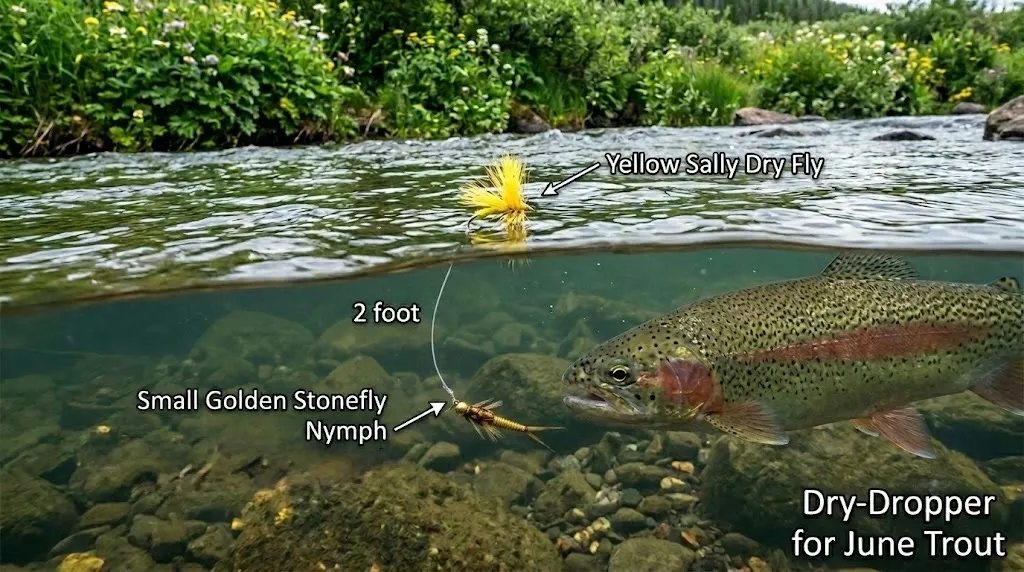
Written by Cameron Spanos
The last salmonfly of 2026 hit the willows on the lower Madison around June 18. Two days later I floated the same stretch and watched a 17-inch brown crush a lime chubby in the seam behind a midstream boulder. He wasn't looking for a Pteronarcys anymore. He was eating yellow sallies and golden stones drifting on top while a soft-hackle pheasant tail bounced eighteen inches below.
That's the handoff. Most anglers chase the salmonfly hatch like it's the only show on the freestones, then disappear when the bugs do. They miss the better month.
From roughly June 15 through the second week of July across the Northern Rockies, a properly rigged yellow sally and golden stonefly dry-dropper outfishes anything else on freestone water. The adults are too sporadic for trout to key on, but the nymphs migrate to the banks daily, and a buoyant foam stone with a beadhead pheasant tail covers both food sources in one drift.
Why this is the most underrated week in western fly fishing
Salmonflies get the magazine covers. They shouldn't.
Pteronarcys californica nymphs only crawl out to molt once. The window is loud and short. Goldens and sallies behave differently. They keep coming. Hesperoperla pacifica, the golden stone, lives two to three years as a nymph and emerges in waves from late May into early September on most western freestones, with peak adult activity in June and July (Troutnut species records show 34% of adult specimens collected in July, 25% in June). Yellow sallies (mostly Isoperla species out west) overlap and extend the party into August.
So while the salmonfly crowd is packing up after a frantic ten days, you have six weeks of dependable big-fish-on-foam water and almost nobody else fishing it.
The trout know this too.
What does a yellow sally and golden stonefly dry-dropper rig actually look like?
Here is what I tie up every morning in late June, with no apologies for being specific:
- Nine-foot 4X leader, butt section heavy enough to turn over foam. I cut about 18 inches off the tippet end of a fresh 9' 4X so the leader is stout to the dry.
- Top fly: Lime or olive chubby chernobyl, size 10, foam body, white poly wing for visibility. This is your golden stone surrogate. Tan works. Yellow works. Lime works better on the Madison and Big Hole in my experience, especially overcast afternoons.
- Off the bend of the chubby, tie a tag of 4X or 5X fluorocarbon. Length depends on water depth: 18 inches in pocket water, 24 to 30 inches in waist-deep runs, up to 4 feet on the Yellowstone in July.
- Dropper: Soft-hackle pheasant tail, size 14, bead optional but useful. This eats as both a sally nymph and a golden stone emerger pattern. The soft hackle moves. Standard hard-bodied pheasant tails work too but the partridge fibers earn their keep when trout are flashing without committing.
That is the rig. One knot to the dry, one knot off the bend, one knot to the dropper. If a guide hands you something more complicated in late June he's either showing off or upselling indicator nymphing.
When to switch from a #6 golden stone to a #14 sally
The shorthand: fish the bigger bug early, the smaller one later.
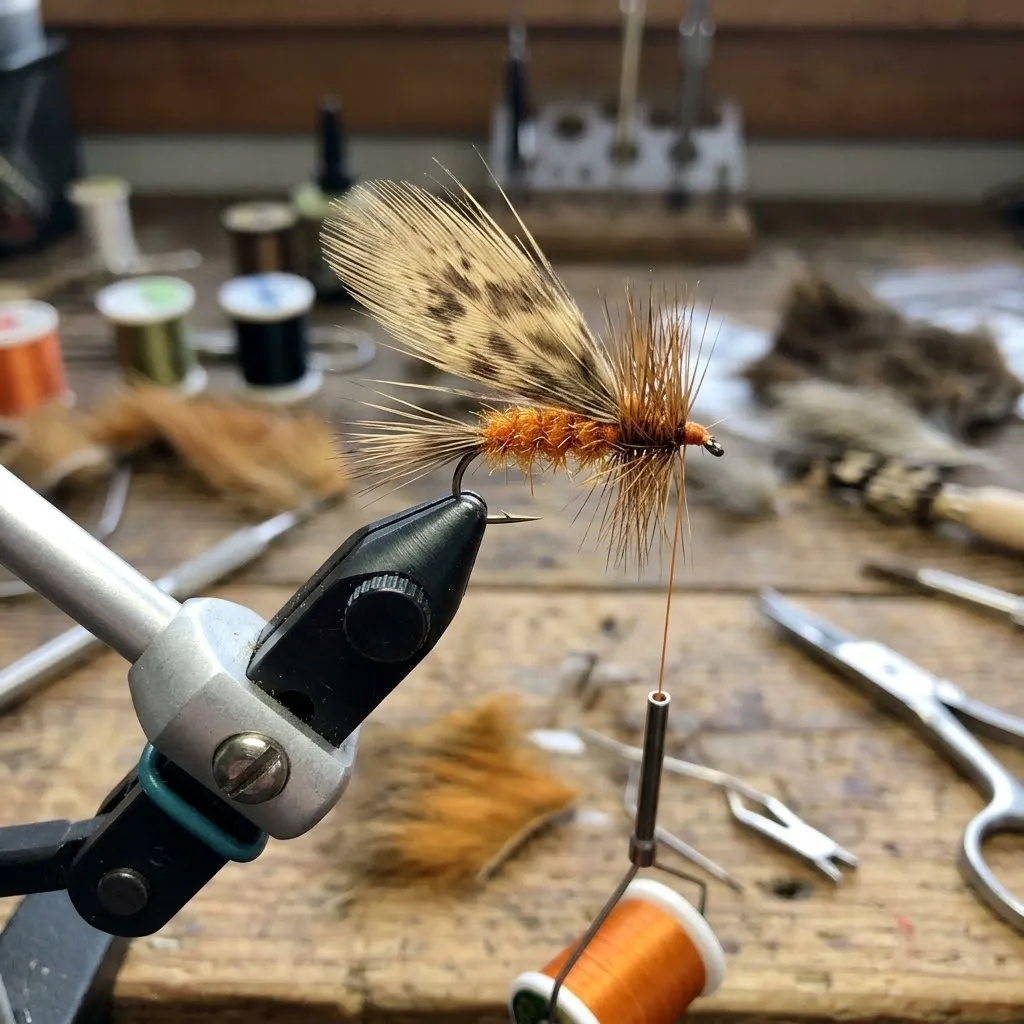
First two weeks after salmonflies wind down, trout still have the memory of mouthfuls. A size 6 or 8 golden stone dry (Henry's Fork foam stone in gold, or a Rogue stone) gets crushed. Use it through about July 5.
After that, the calendar tips. Adult goldens thin out, yellow sallies are everywhere, and a size 6 chubby starts spooking fish in shallow water. Drop to a size 10 lime chubby or, for the most refined eaters, a size 14 yellow sally stimulator. Switch the dropper to a size 16 sparkle pupa or a small mercer's micro stone if the pheasant tail goes cold.
One contrarian take: I almost never fish a true adult yellow sally pattern on top. Trout rarely key on the adults. The females are sporadic egg-layers, not concentrated like a caddis flight. The lime chubby is doing yellow sally duty by silhouette and color, and the real eats are coming on the dropper anyway.
How to read the bank for stonefly water
This is where most anglers misfire. They float the middle.
You might also enjoy: Middle Provo River Wade Fishing: Access, Parking, and Hatches Mile by Mile
Both Hesperoperla and Isoperla nymphs are clumsy swimmers (Troutnut: "nymphs associate with cobble and fast water, and they are clumsy swimmers"). When they migrate shoreward to molt, plenty of them get swept into the current and pinballed downstream right along the bank. That's the buffet line.
What you are looking for from the drift boat or the wading lane:
- Cobble bank, not silt. Fist-sized to volleyball-sized rock. Stoneflies cannot live in soft bottom.
- A current seam within a rod-length of shore. The fish sit on the slow side, the bugs ride the fast side. The dry-dropper bridges both.
- Overhanging willows or grass. Doubles as terrestrial cover later in the season.
- Water you can see the bottom in: three to five feet works. Deeper than that and you'll need to lengthen the dropper or add a tungsten bead.
Skip the slow inside corners with sand bottoms. They look fishy. They are not stonefly water.
How close to the bank is close enough?
Within a foot. Sometimes within six inches. If your chubby is not occasionally hanging up on grass you are not close enough. The single most common mistake I watch sports make in the bow of my friends' boats is laying the fly two feet off the rocks because they're nervous about the back-cast. Push it in there. Eat the snag.
River-by-river timing for 2026
Runoff this spring has been near-normal across most of the Northern Rockies after a slightly above-average snowpack, so 2026 looks like a textbook stonefly handoff calendar. Adjust by 5 to 7 days if your local water is still high and brown.
Madison River, Montana
Goldens overlap salmonflies starting in late May and ramp through June. Per Montana Angler's June fishing report for the Madison, anglers see goldens, caddis, and PMDs through the back half of June. Prime dry-dropper window: June 20 through July 20. Upper Madison between Quake Lake and Lyons Bridge fishes goldens longer because of cooler water out of Hebgen. The Beartooth Flyfishing report from early July 2025 confirmed the upper river was on a chubby-and-rubberlegs program by then. Same script expected for 2026.
Big Hole River, Montana
Earlier than the Madison by about a week. Peak: June 15 to July 5. The Big Hole gets hit hard during salmonflies and then empties out. The week after the salmonfly traffic leaves is one of the great quiet weeks in Montana. Cover the cobble banks below Wise River with a size 8 golden chubby and a size 14 PT dropper.
Yellowstone River, Montana
The long one. The Yellowstone holds goldens and sallies on the Paradise Valley stretch from late June through late July, often into early August on the cooler upper reaches near Yankee Jim Canyon. Best window: July 1 to July 25. Below Livingston the water warms and trout get pushed into morning windows by August.
Henry's Fork, Idaho
Different beast. The Box Canyon and Cardiac Canyon stretches fish goldens hard from mid-June through early July, and the fish are technical. Big Sky Anglers' "Henry's Fork micro golden stone" pattern exists because Henry's Fork fish reject anything that looks like a foam life raft. Drop to a smaller, sparser dry and a size 16 dropper here. Window: June 18 to July 10.
Green River, Utah (A-section)
The Green's stonefly population is real but the river fishes more like a tailwater. Goldens show through June and the cicada hangover keeps fish looking up. Window: June 10 to July 5. Lighter tippet (5X), smaller chubby (size 12), and a size 16 dropper. The fish have seen everything by July.
"The mating flight of Western golden stones over a Colorado riffle is really a spectacle to see."
(Ernest Schwiebert, Matching the Hatch, 1955)
Seventy years later it is still the most accurate sentence ever written about June stoneflies. If you have ever floated through a golden stone egg-laying flight in the evening you know exactly what he meant.
Why does the soft-hackle pheasant tail beat a standard nymph as a dropper?
Two reasons.
You might also enjoy: Fly Fishing Utah for Beginners: 5 Forgiving Rivers
First, both yellow sally and small golden stone nymphs swim badly when they are dislodged. The partridge fibers on a soft hackle pulse with every current change and imitate that flailing motion. A bead-only hard pheasant tail is dead in the water by comparison.
Second, the soft hackle doubles as an emerger when goldens are actually hatching. Hesperoperla doesn't emerge in the surface film the way mayflies do. They crawl out on rocks. But the smaller Isoperla yellow sallies do emerge in the water column, and a wet soft-hackle PT in size 14 to 16 is one of the best yellow sally emerger imitations in your box. You're covering two life stages with one fly.
I'll fish a frenchie or a perdigon as a dropper in colder water early in the morning. But once the sun is on the water, the soft-hackle PT goes back on. It has earned its spot.
What about the dead afternoon?
Two to four in the afternoon. Sun overhead, water warm, no bugs visible, no fish rising. This is when most anglers give up or switch to streamers.
Don't. This is when the dry-dropper earns its money.
The dropper is the whole point of the rig. It lets you cover the bank during the lull, picking up fish that won't eat on top but will still take a #14 nymph drifted past their face. Drift it tight to structure. Bigger fish often eat in the lull because the smaller fish that pestered them all morning have stopped pestering. Log every fish that eats during the 2-4 window for a season and you'll see the pattern. They trend bigger than the morning fish.
Should I switch flies if I'm not getting eats?
Probably not. Switch positions before you switch flies. Walk 200 yards. Cross to the other bank. Lengthen the dropper. Add a tungsten bead. The rig isn't broken if the river isn't fishing. Most days the lull is real and you just have to wait for the four o'clock shadow.
The fly box is where worried anglers go to procrastinate. Confidence in two patterns beats panic across thirty.
One more piece: the second drift
The second drift through a seam is where the eats happen. The first drift wakes the fish up. The second drift, with a slightly different angle or a slightly longer dropper, gets the take.
Most anglers move on after one drift. Stop doing that. If the water looks right, fish it three times before you walk. The chubby is a high-floating, low-cost ticket to keep covering good water without rerigging.
Mid-June through mid-July is the most reliable big-fish window on western freestones, and the yellow sally and golden stonefly dry-dropper is the cleanest way to fish it. Skip the sixteen-fly box. Tie on a lime chubby, drop a soft-hackle pheasant tail off the bend, and go find a cobble bank.
If you want to track which rivers turned on and when across the 2026 season, Bushwhack lets you log the rig, the water temp, and the bug you matched to the eat. By next June you'll know your home water's handoff calendar better than the guides do.
Get fishing tips in your inbox
New guides, seasonal tactics, and gear picks — about once a month, no spam.