Best Catfish Rod and Reel Combos Under $100 for 2026
 Hudson Reed
Written by Hudson Reed
Most catfish buying guides treat all three species like the same fish wearing different hats. They are not. The rod that lobs a chunk of cut shad to eating-size channels in a calm pool is the wrong tool when a 30-pound flathead drags a live bluegill straight into a logjam. So before we get to the combos, understand this: the best catfish rod and reel combo under $100 for you depends almost entirely on which whiskered fish you're after and how much wood and rock you're fishing around.
I've sorted the three picks below by exactly that. Species. Bait size. Snag tolerance.
That's the part Outdoor Life's tested roundup leaves out entirely. Their picks are solid hardware, but they never tell you how bait size and cover should drive the buying decision. Let's fix that.
Quick picks: the best catfish combos under $100
| Combo | Best For | Price | Rating |
|---|---|---|---|
| Ugly Stik Catfish Spinning Combo (7') | All-around channels and eating-size blues | ~$70 | 4.5 / 5 |
| Zebco Big Cat Spinning Combo (size 60) | Bank anglers slinging cut bait on a budget | ~$56 | 4.4 / 5 |
| KastKing Centron Combo | Stepping up for bigger blues and flatheads | ~$85 | 4.4 / 5 |
All three come in well under $100, which leaves room in the budget for the part that actually loses fish: line and terminal tackle. More on that later.
How does bait size change which combo you should buy?
This is the question nobody answers, so here it is up front. Match the rod to the bait, and the bait to the species.
Channel cats eat almost anything with a strong scent: nightcrawlers, chicken livers, prepared stink baits, and small cut bait on a #2 to 4/0 hook. That's light, compact bait. You don't need a broomstick to cast it, and a medium to medium-heavy rod handles channels up to 10 pounds without overpowering the bite.
Blues crave fresh cut bait: gizzard or threadfin shad, skipjack, big chunks or whole baitfish heads on 6/0 to 10/0 circle hooks. That's a heavier payload sailing on heavier line, and a soft-tipped rod will fold under the cast. You want medium-heavy with a backbone that loads and launches a half-pound of bait and sinker.
Flatheads are the outlier. They want live bait, and they want it big. A 5 to 7 inch bluegill, a bullhead, a fat creek chub, fished on an 8/0 to 10/0 circle hook. According to bait guides at Cast & Spear, trophy flathead anglers run baits between 5 and 8 inches. A live bluegill that size pulls drag on its own and a flathead hits it like a truck, so you need a rod that won't pop on the hookset and a reel with enough drag and capacity to turn the fish before it buries you in timber.
So the buying logic, in one line: small scent baits and channels, lighter combo. Big cut bait and blues, mid combo. Live bluegill and flatheads, the heaviest combo you can afford with a drag you trust.
Ugly Stik Catfish Spinning Combo: the do-everything pick
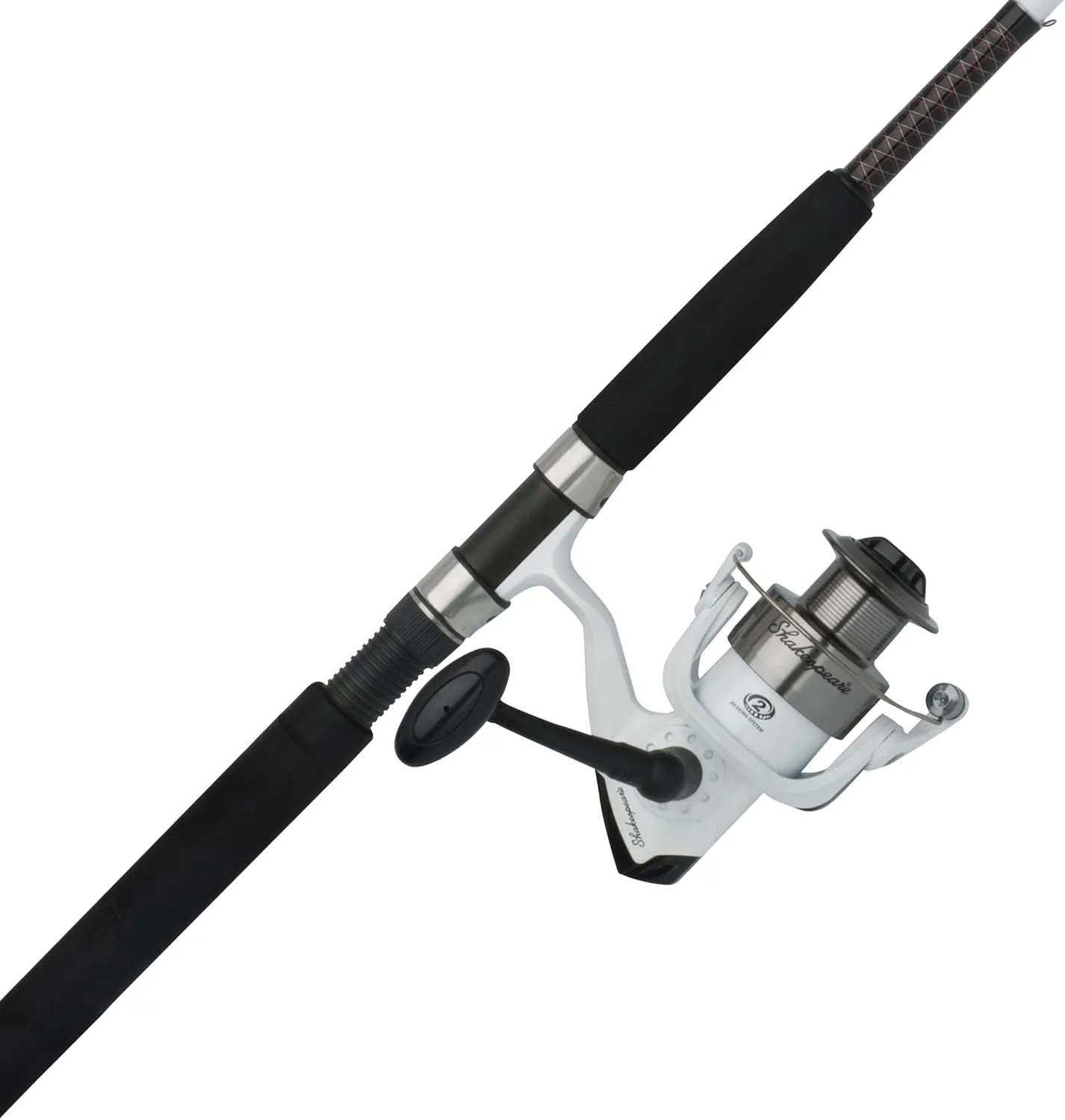
If you fish a little of everything and don't want to own three rods, this is the one. The Ugly Stik Catfish Spinning Combo runs about $70 and carries a 4.5-star rating across more than 600 reviews, which for a sub-$80 catfish rig is a genuinely strong track record.
The blank is the reason. Ugly Stik's glass-and-graphite Clear Tip construction is famously hard to break. It bends into a deep, forgiving load instead of snapping when a fish surges, and that forgiveness is exactly what cushions a circle hook so it rolls into the corner of the jaw instead of getting yanked out.
You might also enjoy: Chatterbait vs Swim Jig for Summer Grass: Which One to Tie On and When
You might also enjoy: Best Fishing Coolers 2026: Hard vs Soft for Truck, Boat, and Kayak
Who it's for
The angler chasing channels and eating-size blues who wants one rod that does most jobs well. Cut bait, stink bait, a live shiner now and then. It's the rod I'd hand a buddy who fishes catfish a dozen times a year and doesn't want a quiver.
Pros and cons
- Pros: Nearly indestructible blank, deep forgiving action, real proven review history, comfortable 7-foot length for bank or boat.
- Cons: The 7-foot length is on the short side if you bank-fish high riprap and need a high line angle. The included reel is honest but not buttery.
At around $70 it's the safe answer for most people, and it's the combo I'd point a beginner at after they read our summer bank angler's guide to catfishing.
Zebco Big Cat: the bank angler's budget workhorse
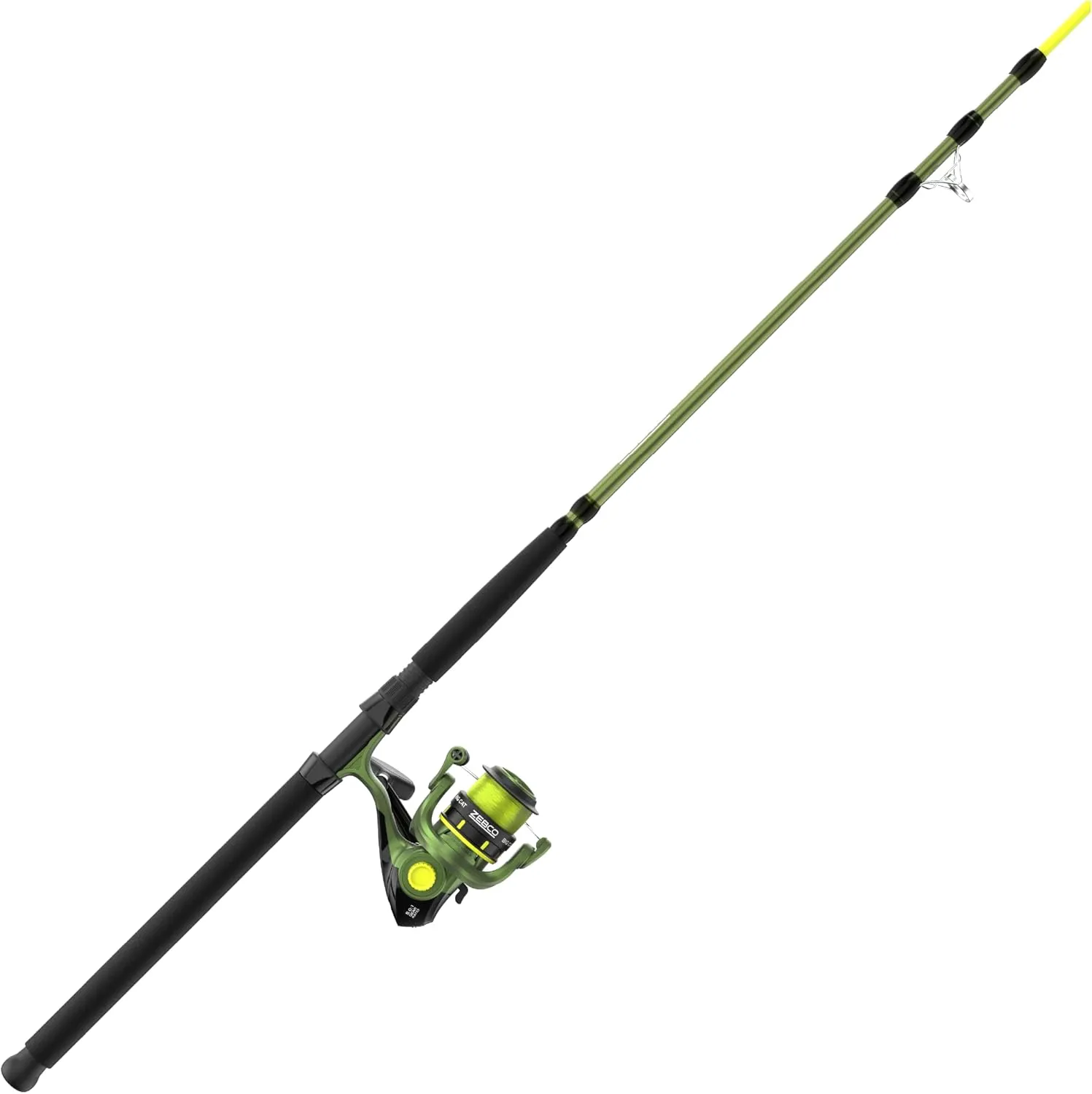
The Zebco Big Cat Spinning Combo in the size 60 runs about $56 and holds a 4.4-star rating. Outdoor Life actually named the Big Cat their best overall, and for $56 it's hard to argue.
What makes it a bank pick specifically is the reel. Zebco's spec sheet lists all-metal gears and a multi-layered drag stack in a composite body. A size 60 spinning reel holds a lot of line, and line capacity is what keeps you from getting spooled when a good blue makes its first run down a channel edge. You sit on the bank, sling a fist-sized chunk of cut shad as far as you can, prop the rod in a holder, and wait.
Here's my contrarian take: do not buy three of these to fill a rod spread and then cheap out on line. The single biggest mistake budget catfishermen make isn't the combo. It's spooling a perfectly good $56 reel with bargain-bin mono that frays on the first rock and breaks off the fish of the year.
Who it's for
Bank anglers, multi-rod spreads, and anyone who wants the most line capacity per dollar. If you fish from shore and soak cut bait, start here.
Pros and cons
- Pros: Biggest line capacity of the three, lowest price, capable of handling solid blues, comes ready to fish.
- Cons: Drag is the weakest of the three picks. Not the rod for a live bluegill and a flathead in heavy wood.
KastKing Centron: when you want to step up for the big ones
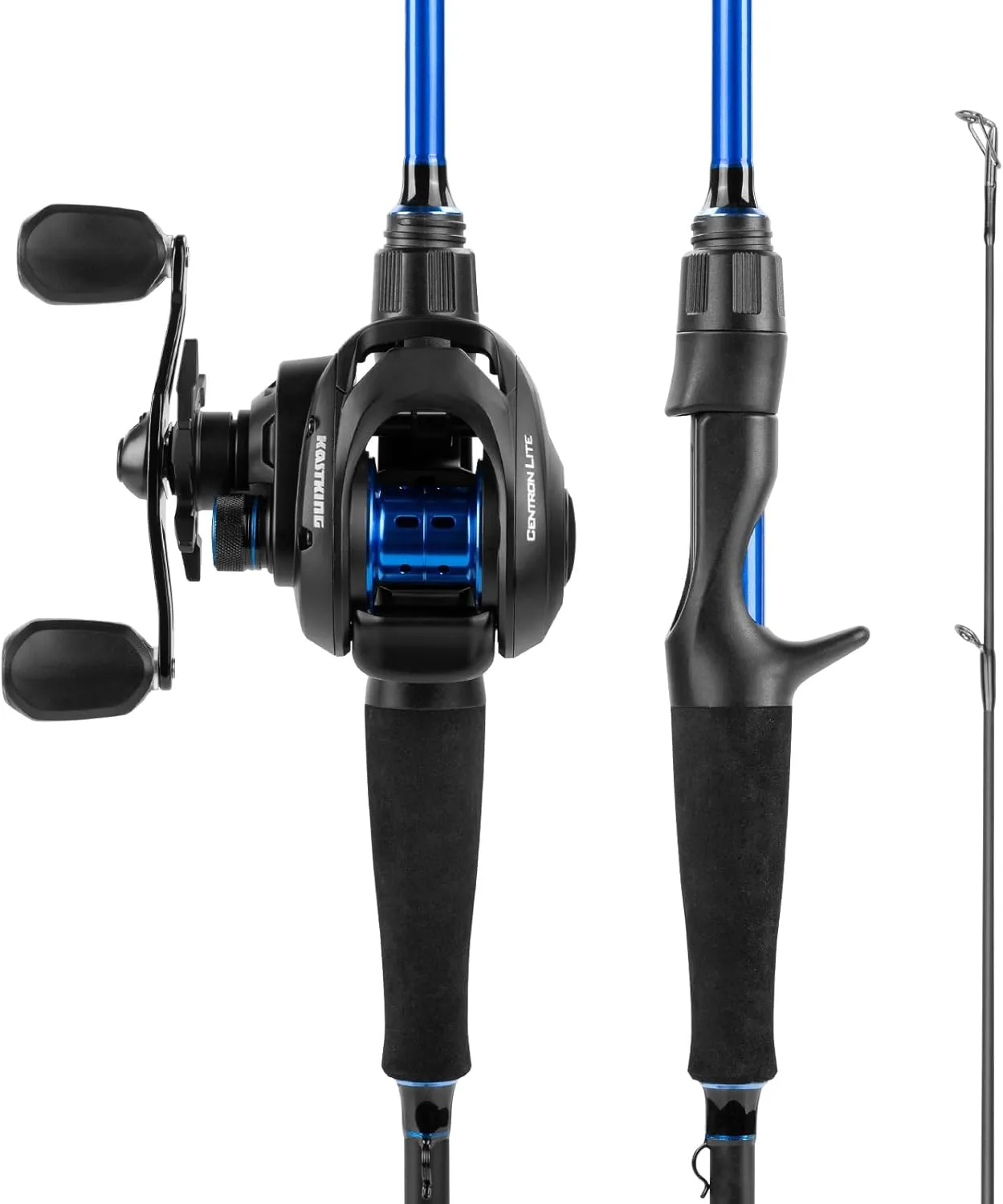
The KastKing Centron Combo sits around $85 with a 4.4-star rating built on over 2,500 reviews, the deepest review history of anything here by a wide margin. That volume of feedback matters: it means the drag and the blank have been stress-tested by thousands of anglers, not a few dozen.
The drag is the headline. It's noticeably smoother than the other two, and smooth drag is what saves you when a big blue or a flathead makes that first unstoppable run. A jerky, sticky drag is how you pop a leader. A smooth one bleeds off pressure and lets the rod and line do their job.
This is the combo I'd reach for when bait size goes up. Big cut bait for blues, or a live sunfish for flatheads. It's the most versatile of the three because it handles those heavier presentations without complaint while still being civil with a smaller channel-cat rig.
Who it's for
Anglers targeting bigger blues and flatheads, or anyone who wants one combo that scales from a nightcrawler up to a 7-inch live bluegill.
You might also enjoy: Best Line Counter Trolling Reels for 2026 (Walleye, Salmon & Lake Trout)
You might also enjoy: How to Fly Fish From a Drift Boat: A First-Timer's Guide to Your First Guided Float
Pros and cons
- Pros: Smoothest drag of the three, massive proven review base, genuinely versatile across bait sizes.
- Cons: Costs more than the other two. If you only ever fish small channels, you're paying for capability you won't use.
What gear do you actually need in snag-heavy water?
Catfish live in the worst structure available: laydowns, riprap, submerged timber, rock ledges. That's where the bait is and that's where they break you off. None of the three buying guides I checked while researching this said a word about it, so here's the part that matters more than which combo you pick.
Line is your abrasion budget. Around rock and timber, run a heavy braided mainline for zero stretch and cut resistance, then add a 40 to 60 pound monofilament leader. The mono leader is the sacrificial layer that takes the abrasion against shell and rock so your mainline survives. FishUSA's rig guides make the same point: braid mainline plus a heavy mono or fluoro leader is the standard cover setup for a reason.
Rig choice matters just as much. A three-way rig with a light dropper line to the sinker lets you break off just the weight when it wedges in rock, saving the hook, the bait, and the fish. And a Santee Cooper rig, which pegs a small float above the hook to lift the bait off the bottom, dramatically cuts how often you hang up in the first place. Slinky and pencil-style weights slide over snags where a flat sinker would wedge.
The combo's job in cover is to move the fish before it reaches the wood. That favors the heavier two picks. The KastKing's smoother drag and the Zebco's line capacity both buy you a beat to turn a fish, where a sticky budget drag just hands it the structure.
If you're still learning to tell what you've hooked, our breakdown of channel vs blue vs flathead identification will help you match the right bait and rod before you ever cast.
How to choose: the buying guide in plain terms
Three things decide it. Get these right and the specific brand barely matters.
- Rod power, matched to species. Medium to medium-heavy for channels. Medium-heavy for blues. Medium-heavy to heavy for flatheads. A moderate action protects the hookset on circle hooks across all three.
- Reel size and capacity. A 50 to 60 size spinning reel covers nearly all freshwater catfishing. Bigger isn't always better, but more capacity keeps you from getting spooled by a running blue. Bank anglers should lean to the bigger end.
- Drag quality over drag numbers. A smooth 14-pound drag beats a jerky 20-pound one every time. This is where the KastKing earns its extra money.
Our pick
For most people, the Ugly Stik Catfish Spinning Combo is the buy. It's tough, it's around $70, it does channels and eating-size blues all day, and you'd have to try hard to break it.
But match the tool to the job. If you bank-fish cut bait and want the most line per dollar, the Zebco Big Cat at $56 is the value play. And if you're serious about bigger blues and flatheads on live bait in nasty cover, spend the extra and get the KastKing Centron for the drag alone.
Whichever you pick, log where and on what you catch them. Patterns in bait, water, and structure are the real edge, and tracking them is exactly what Bushwhack is built to do.
Get fishing tips in your inbox
New guides, seasonal tactics, and gear picks — about once a month, no spam.