Strawberry Reservoir Shore Fishing: The Complete Bank Angler's Guide
 Cameron Spanos
Written by Cameron Spanos
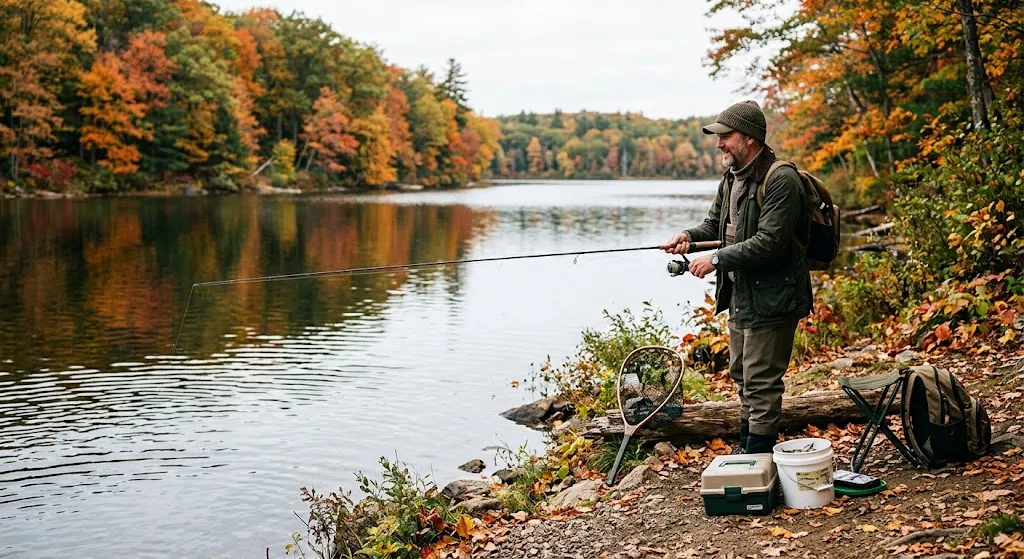
Nearly everything written about Strawberry Reservoir assumes you own a boat. Dodgers, downriggers, sonar screens, a slip at the marina. But Utah's flagship cutthroat water sits at roughly 7,600 feet with miles of open public bank, and Strawberry Reservoir shore fishing is legitimately productive if you fish the calendar instead of fighting it. Twice a year, the angler on foot isn't settling for leftovers. You're standing exactly where the fish are.
The rest of the year, the bank goes quiet while the trout sit over deep flats a half mile out. Knowing which season you're in matters more than any lure you'll tie on.
Can You Fish Strawberry Reservoir from Shore?
Yes. Strawberry is open to fishing year-round, and both Bear Lake strain cutthroat and rainbow trout get caught from the bank in real numbers, mainly from ice-off through June and again from late September until the lake caps over with ice. The Utah Division of Wildlife Resources manages Strawberry as its premier cutthroat fishery, and those cutthroat were put there with a job: eat Utah chubs. Chubs live on the warm, shallow edges. When water temperatures allow it, the predators patrol those same edges, often inside casting range of your boots.
Kokanee salmon are the exception. They roam open water over the deep basins and catching them is a trolling game, so if kokanee are the goal, you need a boat, and that's the last this guide will say about them.
So the honest answer isn't just "yes." It's "yes, in windows." At this elevation the water stays cold enough that trout use the shallows for months at a stretch, far longer than they do at lower reservoirs along the Wasatch Front.
The Named Shore Areas Worth Knowing
Strawberry has developed day-use sites scattered around its shoreline, including Haws Point, Mud Creek, Chicken Creek East and West, Soldier Creek Bay, and the Soldier Creek Dam area. The general rule for picking among them: find bank where the depth builds quickly. A flat that stays knee-deep for 80 yards is dead water most of the year. A point or riprap edge that drops into 15 feet within a cast is a travel lane.
Soldier Creek Dam Day-Use Area
The dam corner of the Soldier Creek arm puts deep water closer to the bank than almost anywhere else you can walk to, and on calm days you can sometimes watch trout suspending off the rocks. It's also the most family-friendly bank on the lake, with easy parking and restrooms. One clarification that trips people up: the Strawberry River below Soldier Creek Dam is a separate tailwater fishery with its own character, not part of the reservoir at all.
Chicken Creek East and West
These two day-use areas sit on gradual banks with creek-mouth contours that warm early in spring. Chicken Creek West shows up regularly in DWR weekly fishing reports for rainbows, and it's a natural fit for bait rigs. The flats here are gentle, so a pair of waders buys you meaningful casting distance.
Haws Point
Points are structure, and Haws Point is the best-known one a walk-in angler can reach. The drop-off swings close, cruising cutthroat round the point in both directions, and in winter this becomes the busiest shore-accessible ice fishing area on the reservoir. Old local advice says to walk south from the restrooms instead of fishing the water nearest the parking area, and it's still good advice. Most anglers won't carry gear ten minutes. Be the one who does.
Renegade Point
The rocky shoreline around Renegade holds fish early, and spring reports regularly call it out for cutthroat pushing bait at ice-off. The Forest Service runs Renegade Campground right there, which makes it the obvious base for a camp-and-fish weekend where you're on the water at first light without driving anywhere.
Strawberry Bay and the Marina Area
This is the services hub. Per the Forest Service directions, you take US-40 east from Heber City for 23 miles to the Strawberry Bay junction, then about 5 more miles in. The visitor center has interpretive displays and a working fish trap and egg collection station, the marina rents boats, and the bay itself offers plenty of walkable bank. Spring reports frequently name the marina area for ice-off cutthroat.
You might also enjoy: Trico Spinner Falls in July: The 7 AM Window Every Tailwater Angler Should Plan Around
One warning before you go exploring on foot. Several tributaries are closed to fishing year-round under the 2026 guidebook, including Indian Creek and its tributaries, Squaw Creek, Co-op Creek from the Strawberry River confluence up to US-40, and the Strawberry River from the reservoir upstream to USFS Road 124. Above that road, the river runs catch-and-release, artificials only, and closes entirely from May 15 through 6 a.m. on the second Saturday of July. Fish the lake, not the inlets.
What Is the Slot Limit at Strawberry Reservoir?
You can't keep any cutthroat trout between 15 and 22 inches. That's the short version, and it's the regulation every bank angler at Strawberry has to know cold. The 2026 Utah Fishing Guidebook entry reads:
"Limit 4 trout or kokanee salmon (a combined total). No more than 2 may be cutthroat trout under 15 inches, and no more than 1 may be a cutthroat trout over 22 inches. All cutthroat trout from 15 to 22 inches must be immediately released. Trout and salmon may not be filleted, and the heads or tails may not be removed in the field or in transit. Anglers are encouraged to voluntarily release all cutthroat trout. Any trout with cutthroat characteristics (not necessarily jaw slashing) is considered to be a cutthroat trout."
Read that last line twice. If a fish looks even partly like a cutthroat, the state treats it as one. The slot exists because those 15-to-22-inch fish are the working predator class that keeps the Utah chub population suppressed, and the whole fishery leans on them. Carry a tape measure. A 14.5-inch cutt and a 15.5-inch cutt look identical flopping wet on the rocks, and guessing wrong is an expensive conversation with a conservation officer.
On tackle: the Strawberry entry itself carries no bait or gear restriction, so standard statewide rules apply on the reservoir. Dough baits, nightcrawlers, spoons, and flies are all legal from the bank. The special-water restrictions live on the tributaries, not the lake. Check the full entry in the Utah rules for specific waters before you go, since regulations can change between seasons.
Bank Rigs and Tactics That Produce
Spoons and spinners for cruising cutthroat
A gold Kastmaster or a silver-and-black minnow profile imitates the chubs these cutthroat hunt, and casting hardware is the fastest way to cover bank water. Fan your casts along the drop edge rather than straight out. Let the spoon sink on a count before starting a medium retrieve, and vary the count until you find fish. Spring reports out of the Renegade and marina areas consistently mention Kastmasters and small jigging spoons when cutthroat are pushing bait shallow.
The white tube jig behind a bubble
This is the signature Strawberry shore rig, and if you fish only one thing from the bank, fish this. Run a clear casting bubble half-filled with water for weight, a 3-to-4-foot leader behind it, and a white tube jig in the 1/16-to-1/8-ounce range. Twitch it, pause, let it fall. The bubble solves the bank angler's real problem, which is distance, and the slow-falling tube is close enough to a wounded chub that the cutthroat don't ask questions. A slip float over the same jig works where you need to hold a depth instead of covering water.
Bait rigs for rainbows
Rainbows are the bank angler's eating fish here, since they carry no slot. A sliding egg sinker above a swivel, an 18-to-24-inch leader, and a floating dough bait or inflated crawler riding 1 to 2 feet off the bottom is the standard presentation in nearly every shore report on this lake. If a slot cutthroat takes the bait instead, get it measured, get it wet, and get it back fast.
Fly rod from the bank
An olive or black leech under an indicator, cast off any of the points at ice-off, is quietly one of the deadliest presentations on the whole reservoir. Size 8 to 10, set 4 to 8 feet deep, and let the wind chop do the jigging. When the fish slide a little deeper, an intermediate line with a slow-stripped wooly bugger along the drop covers the same fish. Wind that annoys the bait crowd is your friend, because it pushes food and fish toward the bank you're standing on.
Month by Month: When Strawberry Reservoir Shore Fishing Is Actually Good
January and February
Prime ice season, and reports out of Visit Utah and local shops routinely call these the two best ice fishing months on the lake. Walk-out access from Haws Point and the marina area puts you over fish without a machine. Treat the ice with respect, verify thickness as you go, and never trust a snowmobile track as proof of safe ice.
March
The worst month. Rotting ice, slush, mud, and a lake that's neither hard nor open. Stay home or hit a lower-elevation water.
You might also enjoy: Mousing at Night for Big Brown Trout in Summer
Late April through May: ice-off
The best bank window of the year. At 7,600 feet the ice typically lets go in late April or early May, and the retreating sheet pulls big cutthroat and rainbows tight to the banks chasing chubs and fresh forage in the warming shallows. Expect muddy banks, fickle mountain weather, and afternoon wind that can turn glass into whitecaps in an hour. Fish it anyway. This stretch is why the tube-and-bubble rig exists.
June
Still strong, with mornings and evenings clearly better than midday. Fly anglers start seeing damselfly and Callibaetis activity on the flats, and the points keep producing on hardware early and late.
July and August
Skip it. That's the honest advice, and almost nobody writing about Strawberry will say it plainly. The trout slide down to cooler water beyond comfortable casting range, and the bank game shrinks to the first hour of light off the steepest points. If you must come in summer, come at dawn, fish deep-dropping structure, and be done by nine.
September
The turnaround. Cold nights start pulling surface temps back down, fish creep shoreward, and by the end of the month the bank is a real option again instead of a hope.
October to ice-up
The second prime window, and the better one if you value solitude. Heavy cutthroat patrol the banks again, spoons and streamers shine, and you'll share water that was a boat parade in July with a handful of trucks. An angler on foot in late October will out-fish a mid-July troller on quality cutthroat more often than either crowd would admit.
November and December
The edges skim over, then the bays, then the lake. Early ice is the most dangerous ice of the year, so let it build. Most seasons offer walkable ice somewhere on the lake by late December, which loops the calendar back to the top.
Do You Need a Boat at Strawberry Reservoir?
No. Not for cutthroat and rainbows, and not during the two windows that matter. A boat buys you kokanee, midsummer consistency, and the ability to chase suspended fish in July. It doesn't buy you much in early May or late October that a pair of boots and a spoon box can't match.
If you want one upgrade, make it a float tube or pontoon. A tube launched off the Chicken Creek flats or Renegade Point covers the mid-depth water bank anglers can't reach, stretches your season a few weeks on each end of summer, and costs less than a single boat payment. That's the whole upgrade path. You don't need more.
What you do need is your own record of when the windows open, because ice-off shifts by two or three weeks from year to year. Log every Strawberry trip with the date, water conditions, and what the fish ate, and after a couple of seasons you'll hold a private ice-off calendar no fishing report can match. That's exactly the kind of pattern Bushwhack is built to surface from your own logs.
Pick a point, watch the temperatures, and be standing there the week the ice lets go.
Get fishing tips in your inbox
New guides, seasonal tactics, and gear picks — about once a month, no spam.