Catfish Fishing for Beginners: The Summer Bank Angler's Complete Guide
 Hudson Reed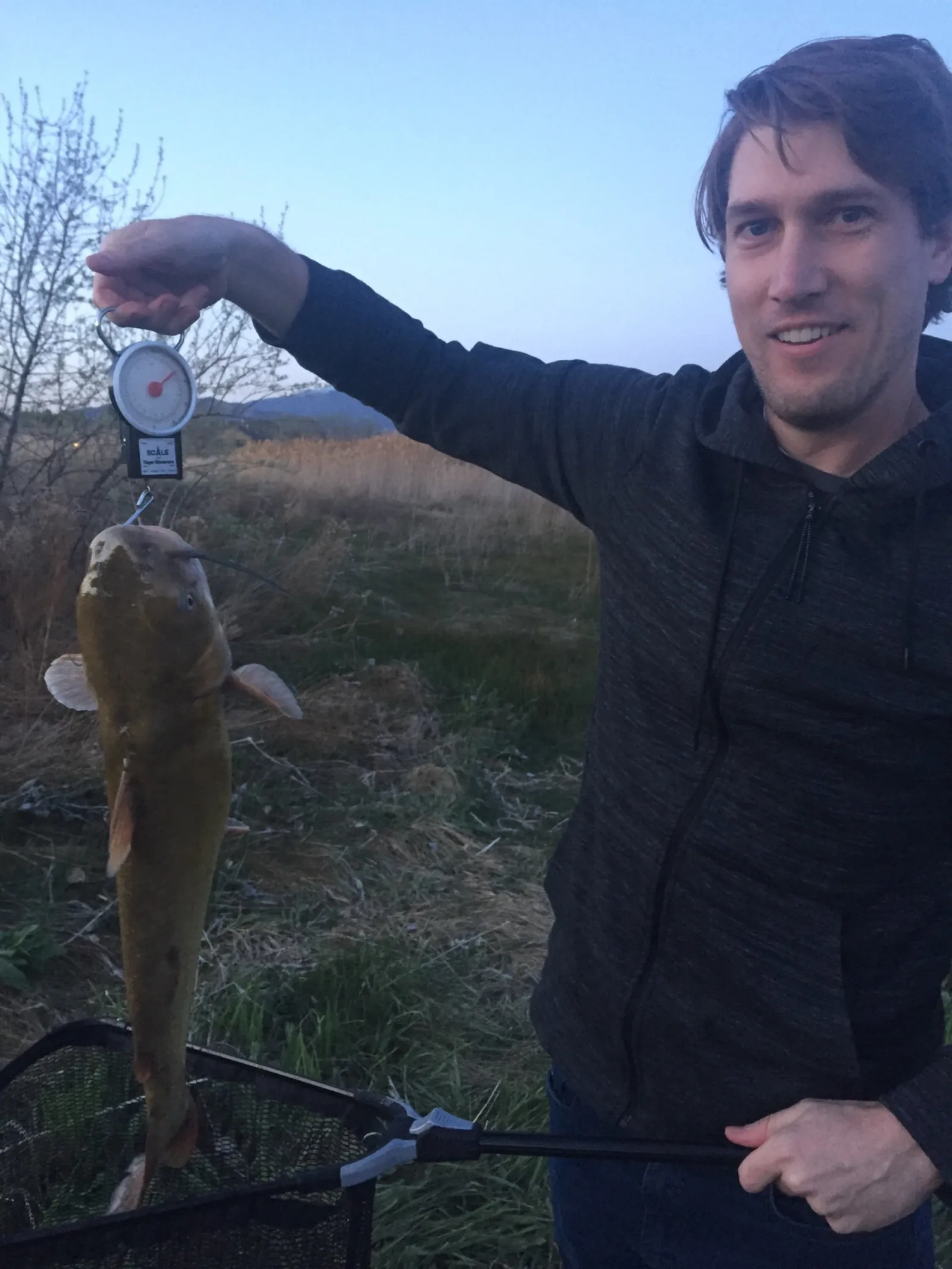
Written by Hudson Reed
If you want to catch fish this summer without a boat, without expensive electronics, and without years of experience, catfish fishing for beginners is the single best place to start. Channel catfish are the most-targeted freshwater fish in the country, roughly 8 million anglers chase them every year (source: gitnux.org), and for good reason. They hit hard, fight strong, and will absolutely eat a cheap bait you picked up at the gas station. I've been fishing catfish from the bank since I was ten years old, and I'm here to tell you the basics aren't complicated. Let me walk you through everything.
Why Channel Catfish Are the Perfect Beginner Fish
Channel catfish are the easiest of the three major catfish species to target, full stop. They're opportunistic, they're widespread, and they're not picky. While blue catfish can be selective and flathead catfish almost exclusively eat live fish, a channel cat will cheerfully eat chicken liver, a nightcrawler, a hot dog, or a commercial dough bait you squeezed off the shelf. They're found in ponds, lakes, rivers, and reservoirs across nearly every state in the continental US.
The other two species you'll hear about, blue catfish and flathead catfish, are worth knowing by sight, but I'd steer beginners toward targeting channels first. Blue cats get enormous (common over 40 pounds, record fish over 100), and flatheads are more of a specialist's game. Channel cats, on the other hand, average 1 to 5 pounds in most bodies of water, go nuts on simple baits, and put up a great fight on light-to-medium tackle. Once you've got a few dozen channel cats under your belt, moving on to blues or flatheads feels natural.
How to Tell the Three Species Apart
You don't need to be a biologist, but knowing what you caught helps. Here's the quick version:
Channel catfish have a deeply forked tail, olive-brown to slate coloring, and spots on younger fish. Their anal fin has 24-29 rays with a rounded edge. This is almost certainly what you're catching if you're a beginner fishing lakes and ponds.
Blue catfish look similar to channels but are slate-colored with no spots. Their anal fin has 30-36 rays with a straight, flat edge. Blues are the giants: the kind of fish that will spool a light reel if you hook a big one unexpectedly.
Flathead catfish are unmistakable: their head is literally flat and wide, the lower jaw juts out past the upper, and the tail is only slightly notched rather than deeply forked. Flatheads prefer live bait and are largely nocturnal.
Why Summer Is Prime Time for Bank Catfishing
Summer gets a bad reputation for fishing because bass go deep and trout get lockjaw in warm water. Catfish are a completely different story. Summer is when bank catfishing peaks, and there are two reasons for it.
First, warm water makes scent travel farther. Catfish are built around their sense of smell (they have taste buds all over their barbels and body), and the physics of warm water mean scent disperses faster and farther than in cold water. That means your bait is advertising itself to a wider radius of fish. Second, summer catfish move shallow to feed at night, which puts them right in range of a bank angler. You don't need to reach deep water. You just need to be there after sunset.
The magic window is roughly two hours before dark through two hours after sunrise. The absolute peak is typically between 10 PM and 2 AM on warm nights with little moon. I've had some of my best catfish sessions just sitting in a lawn chair with a couple rods propped in rod holders, listening to the cicadas and waiting for a bite. It's one of the most relaxed forms of fishing there is.
What Gear Do You Actually Need?
Keep it simple. Here's what works:
Rod and reel: A 7-foot medium-heavy spinning rod paired with a 3000-4000 size spinning reel is about as versatile as it gets for bank catfishing. You want enough backbone to move a stubborn fish away from snags, and a spinning setup is easier to manage than a baitcaster when you're first starting out. Spool it with 15-20 lb monofilament or 30 lb braid.
Hooks: Circle hooks are the move for catfish. A 2/0 to 4/0 circle hook is the right size for channel cats. Circle hooks are beginner-friendly because you don't set them hard. You just reel down and let the hook find the corner of the fish's mouth on its own. Fewer gut-hooked fish, easier releases if you're practicing catch-and-release, and a higher hook-up rate once you stop trying to swing on every bite.
Rod holders: Get them. Cheap bank sticks or spike rod holders let you prop two rods at once and actually enjoy the evening instead of standing there holding a rod for hours. Most big catfish take the bait gently at first, so you want to see the rod load up before you pick it up.
You might also enjoy: Spring Crappie Fishing Tips: Ice-Out to Spawn
Headlamp: Non-negotiable for night fishing. You need both hands free to handle fish, swap baits, and untangle line.
The Two Rigs Every Bank Catfisher Should Know
You don't need six different rig setups. Start with these two and you'll be covered in 90% of situations.
The Slip Sinker Rig: This is the bread and butter of catfishing. Thread an egg sinker or no-roll sinker onto your main line, tie a barrel swivel, add an 18-24 inch fluorocarbon leader, and tie on your circle hook. The sinker slides freely on the line so when a catfish picks up the bait, it doesn't feel resistance. It's the essential catfish rig for all species and the right place for a beginner to start.
The Santee Cooper Rig: Think of this as a slip sinker rig with one important upgrade: a small peg float or cigar float added to the leader about 2-3 inches above the hook. That float lifts your bait off the bottom and into the scent zone where catfish are actively searching. It was invented on the Santee Cooper lakes in South Carolina and has spread everywhere because it flat-out works. Leader length is typically 18-24 inches, same as the slip rig. This is my go-to for summer channel cats in lakes and reservoirs.
What's the Best Catfish Bait for Summer?
The honest answer: a lot of things work. But here's what I'd actually put on my hook.
Chicken liver is the classic and it earns its reputation. It's cheap, it's available at every grocery store, it smells strong, and catfish love it. The downside is it's soft and can fly off the hook on a hard cast. A mesh bait bag or tying it with thread solves that problem.
Nightcrawlers are arguably the most versatile bait in freshwater fishing, and catfish are no exception. Thread two or three onto a circle hook and let them hang naturally. Night crawlers work especially well in rivers and streams where channel cats are hunting along the current.
Cut shad or skipjack is the upgrade bait once you're ready for it. Oily, bloody, and incredibly aromatic, cut shad is what serious catfishers use when they want to target bigger fish. If you can find shad at a bait shop or catch your own, give it a try.
Commercial stink bait or punch bait is a summer-specific weapon. The warm water makes scent carry farther, and these concentrated prepared baits exploit that physics to the fullest. They're messy to use, but they're deadly on channel cats from June through August. Punch bait specifically is designed to load onto a treble hook by punching it in and pulling it out, and it sticks to the hook and slowly dissolves in the water, creating a scent trail.
Budget tip: a hot dog soaked overnight in a mix of Kool-Aid and garlic powder makes a surprisingly effective DIY bait that has put many channel cats on the bank. Don't knock it until you've tried it.
Where to Set Up on the Bank: Does Location Actually Matter?
Yes, location matters more than almost anything else. The biggest mistake beginners make, according to every catfish guide I've read and my own experience, is fishing from the most convenient bank spot rather than the most productive one.
What you're looking for is a transition: a place where shallow water drops into deeper water nearby. Catfish spend their days in deeper, cooler, more oxygenated water and move onto the flats and shallows to feed at night. The bank spots that produce fish are the ones where that transition happens close to shore.
Specific features to look for:
You might also enjoy: How to Catch More Fish After a Bad Trip: Turn Slow Days Into Data
- Bends in rivers: the outside of a bend scours a deep hole; fish stack there during the day and move onto the shallow inside bend to feed at night.
- Points and humps on lakes: any structure that gives catfish a quick path from deep to shallow.
- Below dams and spillways: current concentrates baitfish, baitfish concentrate catfish. This is one of the most reliable bank spots for summer catfish anywhere in the country.
- Riprap banks (rock-lined dam faces, bridge abutments): rock holds heat and attracts baitfish, and catfish know it.
Use Google Maps in satellite view before your trip. Look for depth changes, river bends, and structure from the comfort of your house. It takes ten minutes and makes a real difference in where you set up.
Night Fishing Safety and Setup Tips
Most of the best summer catfishing happens in the dark, so let's talk about doing it right.
Set up during daylight. Arrive at your spot an hour before dark, get your rods rigged, pick your bank spots, and get settled before you need a headlamp to tie a knot. This makes everything easier and safer.
Tell someone where you're going. Night fishing solo is common and totally fine, but let a friend or family member know your location and when you expect to be back.
Watch your footing. Riverbanks and lake shores get slippery at night, especially after rain. Wear boots with grip, not flip-flops.
Keep your setup simple. Two rods max. One bait type to start. The goal is to be relaxed and attentive, not juggling gear in the dark. Catfish bites can be subtle at first: a slight tick of the rod tip, a slow load, before the fish turns and the rod bends hard. You want to be paying attention, not fumbling through a tackle box.
How to Handle and Release Catfish Safely
Catfish don't have scales, and they do have spines: three of them, on the dorsal fin and the two pectoral fins. These spines are sharp and can puncture skin. They're not venomous in the true sense, but bacteria on the spine can cause a wound to swell and get infected, so take them seriously.
The right way to hold a channel catfish: wrap your hand around the fish from the top, with your thumb and forefinger on either side of the dorsal spine. The pectoral spines point outward and down, so if your palm is on top of the fish, they can't get you. It feels awkward the first time, but after a few fish it becomes second nature. Larger catfish (anything over 3 pounds) can be lipped like a bass or held in a two-handed grip around the body.
If you're releasing fish, keep them in the water as much as possible during the unhooking process. Circle hooks make this much easier: most of the time the fish isn't deeply hooked and pops off with a quick flick. Wet your hands before handling any fish you plan to release.
Your First Summer Catfish Setup at a Glance
Here's the quick-start version for anyone ready to go this weekend:
- Rod: 7-foot medium-heavy spinning rod
- Reel: 3000-4000 spinning reel, 15-20 lb mono or 30 lb braid
- Rig: Santee Cooper rig with 1 oz egg sinker, 20 lb fluorocarbon leader, 3/0 circle hook
- Bait: Chicken liver, nightcrawlers, or commercial punch bait
- Location: River bend, riprap bank, or below a dam. Look for depth transitions near the bank
- Time: Start 1-2 hours before dark, fish through 2 AM
- Extras: Rod holders, headlamp, lawn chair
That's the whole playbook for a beginner. You don't need a boat. You don't need sonar. You don't need to spend more than $50 on gear to get started. What you need is a decent bank spot, smelly bait, patience, and a willingness to stay out past your bedtime. The channel cats will do the rest.
If you want to log your sessions, track what baits worked on which nights, and start building a picture of your local catfish patterns over time, Bushwhack was built for exactly that. Keep a record, and the patterns will surprise you.
Get fishing tips in your inbox
New guides, seasonal tactics, and gear picks — about once a month, no spam.