Muck Arctic Sport vs Baffin Impact vs Kamik NationPlus: Which Boot for Standing on Ice All Day
 Hudson Reed
Written by Hudson Reed
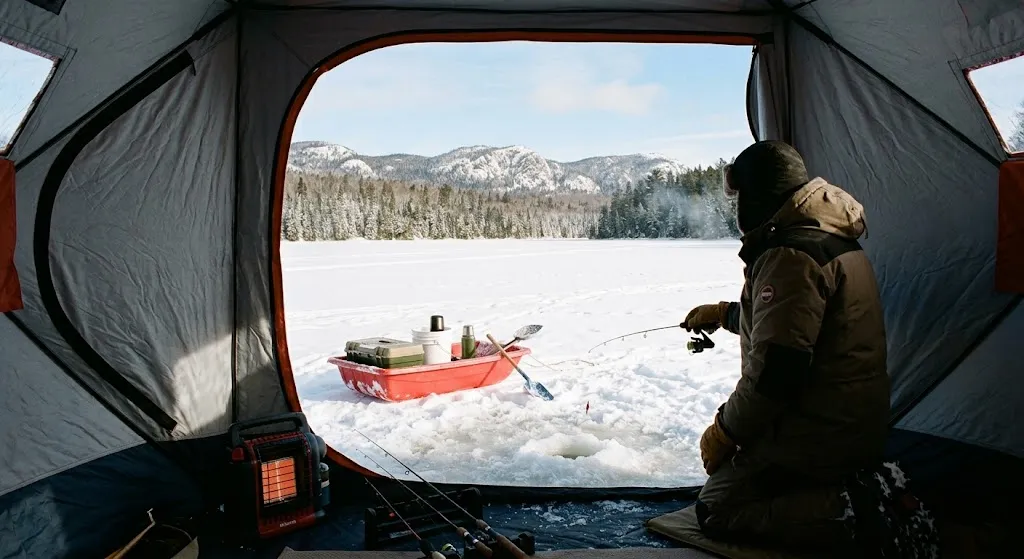
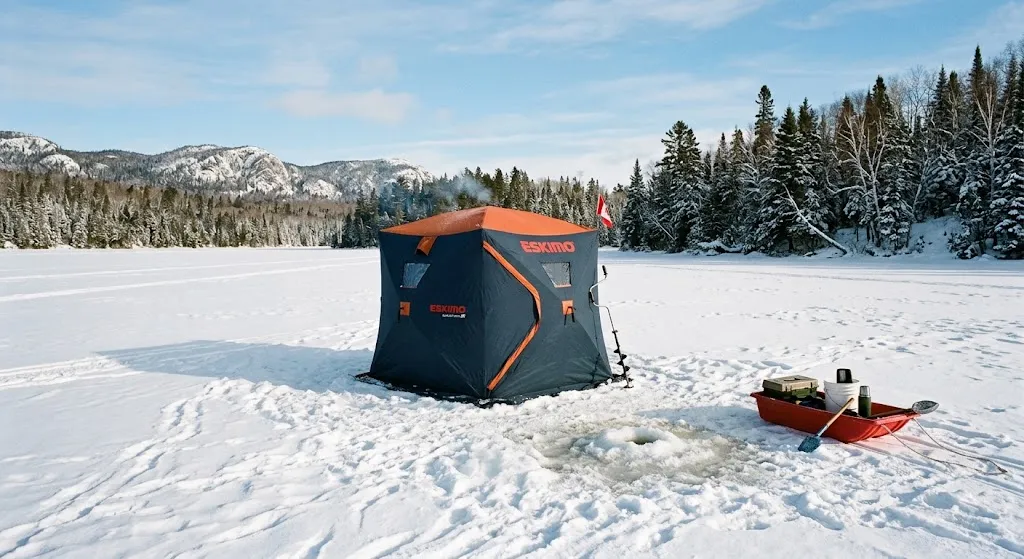
Every winter boot review I read was written by somebody who walked in them. That's the wrong test for ice. You drill your holes in the first twenty minutes and then you stand, or sit, on a slab of frozen water until dark, and a boot that felt fantastic on a snowshoe loop turns into a heat sink the second you stop making heat. So when anglers argue Muck Arctic Sport vs Baffin Impact in forum threads, they're usually arguing past each other. One guy runs and guns across a mile of lake. The other parks on a school of crappies and doesn't move a foot for six hours.
Three things decide whether your feet make it to dark: how much material sits between your sole and the ice, whether the liner comes out so you can dry it, and whether the outsole still grips once the ice goes wet and polished. Everything else on the box is copywriting.
Quick picks
| Boot | Best for | Price | Amazon rating |
|---|---|---|---|
| Kamik NationPlus | Most anglers, most days | $99.99 | 4.3 (517 ratings) |
| Kamik Greenbay 4 | Budget pick, sitting still | $73.50 | 4.5 (5,220 ratings) |
| Clam Sub-Zero X | Wet, slushy shack floors | $179.99 | 4.3 (71 ratings) |
| Muck Arctic Sport Tall | Walking, slush, moderate cold | $175.00 direct | Buy direct (see below) |
| Baffin Impact | Sitting still in brutal cold | $278.00 direct | Buy direct (see below) |
About those last two rows: I only put an Amazon link on a listing I've checked myself for stock, rating and recency, and neither the Arctic Sport nor the Impact has one that clears that bar right now. Both are very much in production, so those names point at the manufacturers instead. For the record, the Amazon links pay me a commission and the manufacturer links don't, which is exactly why I'd rather send you to Muck and Baffin than to a listing I can't stand behind.
Why standing still wrecks a boot that hikes fine
Your foot loses heat to ice by conduction, and conduction doesn't care how many grams of insulation are wrapped around your ankle. It cares about the stack under your heel and how much warm blood you're pushing down there. Walk and the calf pump keeps delivering. Sit on a bucket and that pump shuts off.
Baffin is unusually blunt about it. The brand's own Impact page says the boot "is appropriate for extended periods of time in extreme cold weather, snow and/or ice-covered environments, where activity level may be low to moderate." Low to moderate. That's a boot for somebody who isn't generating much heat of his own, and it weighs what that implies: Baffin publishes 7.42 lbs for the pair at a men's 9.
Muck comes at it from the other end. The Arctic Sport Tall spec page lists a 5mm neoprene bootie, fleece lining, 2mm of thermal foam under the footbed and an EVA midsole, at an average 2.50 lbs for a men's 10. Flexible and walkable, and that flexibility is exactly why it goes cold on you when you stop.
Muck Arctic Sport vs Baffin Impact: where the money goes
About $100 separates them at list, and nearly all of it buys two things. The first is the removable inner boot: the Impact's pulls out, while the Arctic Sport's neoprene bootie is bonded into the shell, so there's nothing to remove. The second is stack height, because a pac boot liner brings its own footbed and puts another layer of foam between skin and ice.
My read, and it isn't a hedge. Walk more than a quarter mile in a session, or fish that miserable 25 to 33 degree slush window, and the Muck wins. If your day is a shelter, a heater and a hole, the Baffin earns the extra hundred and still earns it in five years, because you replace the liner instead of the boot. Baffin sells replacement liners as their own product category, which tells you how the company expects these to be used.
What neither one is: a good compromise. They're two answers to two different days.
Kamik NationPlus: best all-day boot for most ice anglers
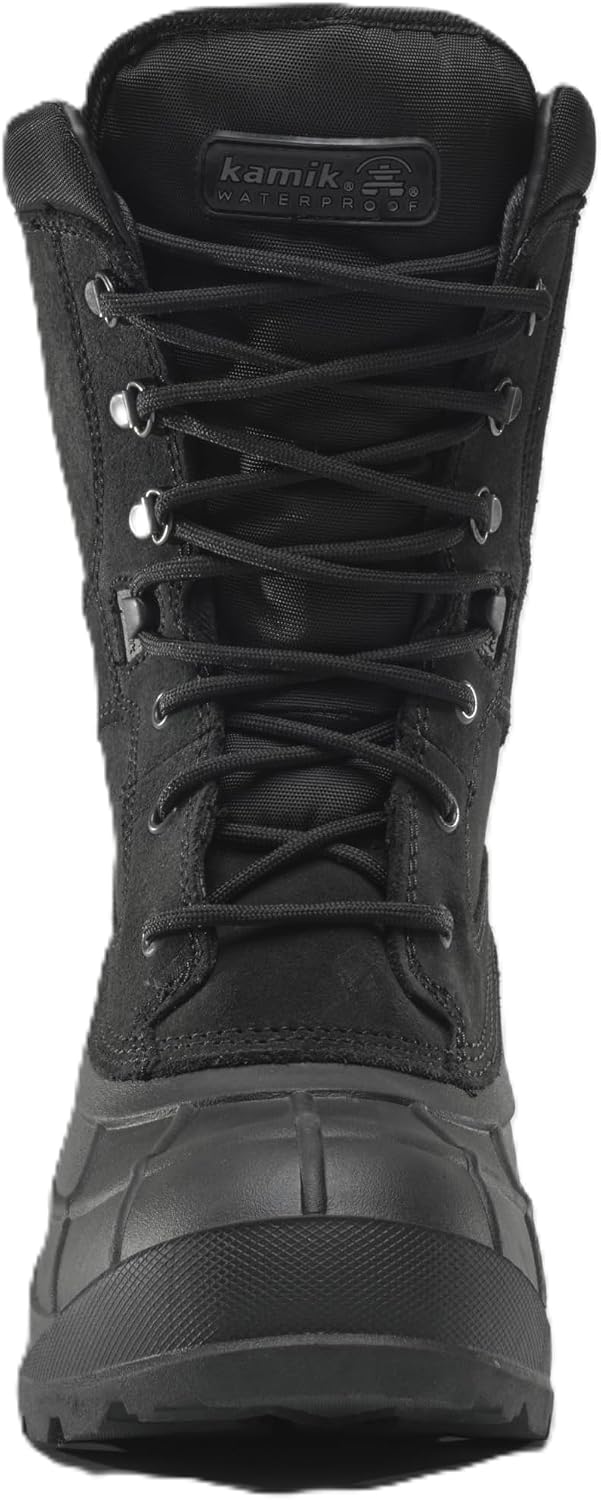
This is the boot that fits the most anglers, because it splits the difference the other two refuse to split: a removable liner in something light enough to walk in. Kamik's current NationPlus page lists a 145G HeatMX removable liner, a 600D nylon and suede upper, a seam-sealed waterproof base, a GRIP XT outsole and 3.6 lbs at a men's 9. Heads up: some Amazon copy still describes an 8mm Thermal Guard liner, which is the older build.
Who it's for
The angler who drills his own holes, moves twice a day, and wants one boot that covers the driveway and the lake.
Pros and cons
- Liner pulls out, so it can dry overnight
- Light enough to hike in at 3.6 lbs a pair
- Shaft circumference is only 12.25 inches, tight over heavy bibs
- 145G is modest insulation for a boot rated to -40
Price: $99.99 at the time of writing, though size and color move it. Check the current price on Amazon, where it sits at 4.3 stars across 517 ratings.
You might also enjoy: Best Time of Day to Fish in Fall (By Species): The Cooling-Water Timing Table
Kamik Greenbay 4: best budget pick
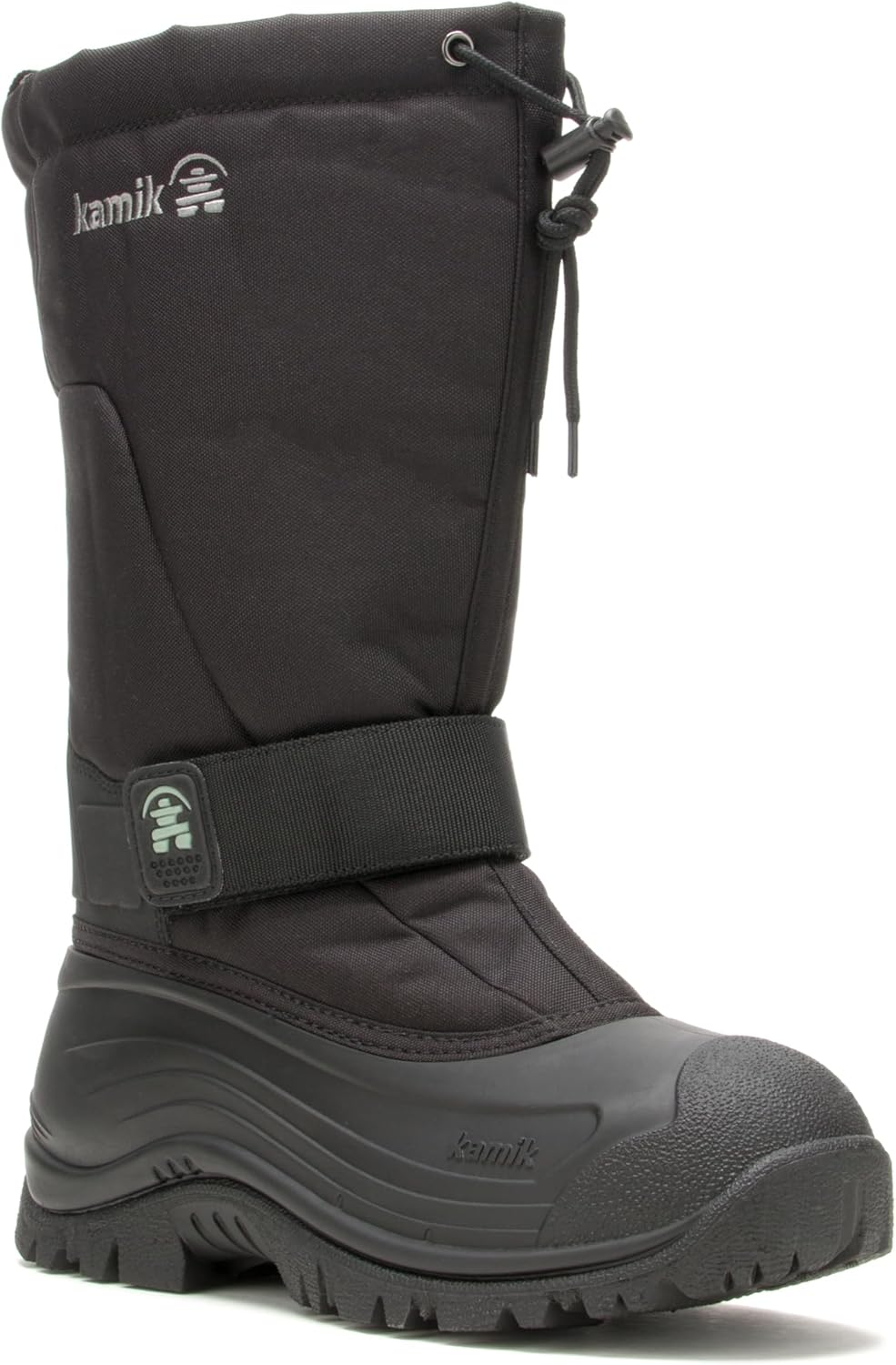
Contrarian take: for somebody who sits, the cheaper Kamik is the better ice boot. The Greenbay 4 carries an 8mm Thermal Guard removable liner against the NationPlus's 145G, stands 13.75 inches instead of 11, and opens to a 17 inch shaft that goes over bibs without a fight. It's 4.07 lbs at a men's 9, half a pound more than the NationPlus and about three and a half pounds less than the Baffin.
The midfoot hook and loop strap is the sleeper feature here. You can cinch it or dump it wearing gloves, which matters more at 5 a.m. than it sounds like it should.
Who it's for
First-season ice anglers, anyone outfitting a kid or a buddy, and shelter fishermen who want a thick removable liner without spending a hundred dollars.
Pros and cons
- Thick 8mm removable liner for well under a hundred bucks
- Wide shaft swallows bib cuffs
- Nylon upper soaks up slush and dries slower than rubber
- Walks like a pac boot, which is to say clumsily
Price: $73.50 recently. Check the current price on Amazon; it holds 4.5 stars across 5,220 ratings, easily the deepest review pool of the three listings I verified.
Clam Sub-Zero X: best rubber shell for a wet shack floor

If you fish out of a flip-over, your floor is wet. Slush comes up the hole, the heater drips condensation, and a nylon upper wicks all of it. This is a rubber shell with a removable insulated liner, a combination a fabric pac boot can't give you, and Clam's listing calls out a slip-resistant sole sized for people who stand in one place a long time.
The second thing it gets right is the step-in. Clam builds it as an ergonomic mid-calf boot you can get into and out of with gloves on, which is the difference between pulling boots at the truck and deciding it can wait until you're home in damp foam.
Who it's for
Flip-over and hub shelter anglers, early-ice slush, and anyone who'd rather hose a boot off than brush it.
Pros and cons
- Rubber shell wipes clean and can't soak through
- Liner still comes out to dry
- 71 ratings is a thin sample next to the Kamiks
- Rubber breathes less, so a sweaty walk in has consequences
Price: $179.99 recently, at 4.3 stars from 71 ratings. Check the current price on Amazon.
How much material sits between your foot and the ice?
Less than you'd guess, and it's the cheapest thing on this list to fix. Buy a closed-cell foam insole and slide it under the factory one. Twelve dollars of foam does more for a stationary foot than the hundred-dollar step from a mid boot to a polar boot, because you're attacking conduction directly instead of paying for loft around your ankle. Baffin sells a thermal insole for $30 if you want the branded version.
Then stop standing on bare ice. Put your feet on the sled runner, a scrap of foam, the edge of the shelter floor. Anything with air in it beats a slab at 32 degrees.
You might also enjoy: Fall Bass Fishing for Beginners: Follow the Bait, Not the Map
Can you really dry a liner overnight in the truck?
Yes, if it comes out. No, if it doesn't. That one sentence is the strongest argument for pac boots over neoprene shell boots on multi-day trips, and it's an argument the Arctic Sport loses on structure rather than quality.
Pull the liners at the truck, not at the cabin, because wet foam in a warm cab with the defrost running gets most of the way there on the drive. Stuff them in a tote and deal with them at midnight and you're starting day two in damp foam, which is a boot rated to nothing at all. If you're running a Mr. Heater Little Buddy or Portable Buddy in a hub, hang liners near the heat and never on it. Foam scorches well before it feels hot to your hand.
Two sets of liners is the move on a four-day trip. Cheaper than a second pair of boots, and it's the only way to guarantee a dry start every morning.
What about traction on wet, polished ice?
Your outsole is doing less than you think, and the way footwear gets tested is part of why. Researchers at the KITE Research Institute at Toronto Rehabilitation Institute compared mechanical slip testing against a human walking test called Maximum Achievable Angle, which measures the steepest slope a person can walk up and down without a two-foot slip. Their published comparison of those methods used two surfaces: dry cold ice with the floor at -5.5 C and no visible water, and wet melting ice with the floor at -1.5 C, warm air above, and a thin film of water on top.
Two numbers are worth carrying onto the lake. A minimum MAA of 7 degrees, corresponding to a coefficient of friction of 0.12, is treated as the safety standard for icy surfaces. And the mechanical and human tests agreed far better on wet ice (R = 0.95) than on dry ice (R = 0.34), which is a polite way of saying wet ice is the surface that sorts footwear out.
Wet polished ice is late-ice, the pressure ridge, and the access where fifty trucks have glazed the snow. I wouldn't trust a stock outsole there, these five included. Cleats are the answer, so budget for them the same day you budget for the boots. We already worked through coil vs chain vs spike ice cleats under $40 in their own piece, and nothing here changes that advice.
Sizing, socks and shaft width
Size up. Baffin says so outright on the Impact page ("Runs small. Choose one full size up."), and the same logic applies to any boot with a liner you'll wear over a real sock. A boot that fits snug in the store is a cold boot on the ice, because compressed insulation isn't insulation.
One good merino sock, not two.
Then check shaft circumference against your bibs. The NationPlus opens to 12.25 inches, the Greenbay 4 to 17.0, and the Arctic Sport's stretch-fit topline is built around a 16.5 inch calf. If you wear bibs over the boot, that spread decides your purchase faster than any temperature rating will.
The pick, and why price per degree is a junk number
I was asked to work out a price-per-degree verdict here. I'm not going to, because the degrees aren't real. There's no shared test standard behind winter boot temperature ratings. Muck lists a comfort range of -40 F to 40 F. Kamik rates both of its boots to -40 C. Baffin calls the Impact polar rated. Those numbers came out of different rooms under different assumptions about whether the wearer is moving, so dividing dollars by them is arithmetic on a scale that doesn't exist.
A metric that survives contact with a lake: dollars per hour you can sit still. On that one the Kamik Greenbay 4 is the value play, and the Kamik NationPlus is the one most people should own, because at 3.6 lbs it walks in like a boot and sits still like a pac. Take the Clam Sub-Zero X if your shack floor is a swamp by noon, the Baffin Impact direct if you genuinely sit at -20 for six hours, and the Muck Arctic Sport Tall direct if your season is more slush than deep freeze.
Then find out which one is actually keeping you out there. Log the boot, the air temp and how long you lasted for a dozen trips and the pattern shows up fast. Bushwhack tracks that alongside the fish, so after a couple of winters your gear arguments turn into data. See what it logs.
Get fishing tips in your inbox
New guides, seasonal tactics, and gear picks — about once a month, no spam.