Best Strike Indicators for Winter Nymphing (2026): Pick by the Run
 Cameron Spanos
Written by Cameron Spanos
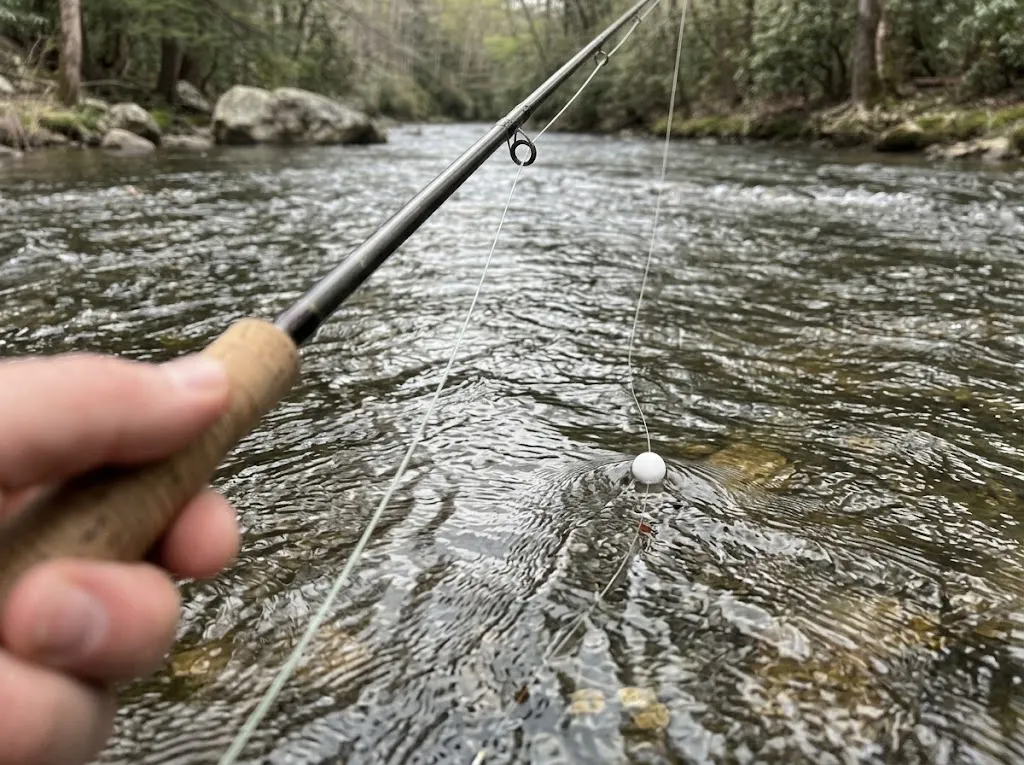
Most winter nymphing rigs don't have a fly problem. They have an indicator problem. A size 20 midge drifting through a January tailout on the Provo or the Green moves at walking pace, the takes are a quarter-inch twitch, and a fat 1-inch air bubble sitting on top of all that will hide most of them. The best strike indicators for winter nymphing are smaller, quieter, and matched to the water in front of you, so this guide picks four by job: fast riffles, slow tailouts, spooky clear water, and wind.
Prices and ratings below come from each product's Amazon listing as of November 3, 2026, and they change.
| Product | Best For | Price (Amazon, Nov 3, 2026) | Amazon Rating |
|---|---|---|---|
| Oros Strike Indicator 6-Pack (X-Small, White) | Slow winter tailouts, small midges | $22.50 | 4.8 (997 ratings) |
| WestWater Thingamabobber 3/4" (5-pack) | Fast riffles and heavier rigs | $13.05 | 4.4 (236 ratings) |
| New Zealand Strike Indicator Wool, Stealthy White | Spooky fish in clear, flat water | $11.00 | 4.6 (79 ratings) |
| Loon Outdoors Biostrike Putty (Pink/Yellow) | Wind and constant depth changes | $9.00 | 4.3 (83 ratings) |
Matching the best strike indicators for winter nymphing to the water
Winter tailwater trout sit in soft water, eat what drifts into their lane, and barely open their mouths to do it. In July you need an indicator that floats a heavy double-nymph rig through pocket water. In January you need one that shows you a fish that ate a size 22 zebra midge and spat it a second later.
So pick by the run, not by habit:
- Fast riffles and deep chutes: a hard-shell bubble like the Thingamabobber.
- Slow tailouts and flat glides: a small foam indicator like the Oros X-Small.
- Clear water and educated fish: a tuft of white New Zealand wool.
- Wind: something small and dense, like putty, that won't kite like a big bubble.
My contrarian take: on most winter days, indicator size matters more than indicator brand. If you're running the same 1-inch bobber you used on spring runoff, swap it before you swap flies.
Oros X-Small White: Best Overall for Winter Tailouts

The Oros is a two-piece foam ball. You unscrew the halves, lay the leader in the slot, and screw it back together until it stops. Per Oros's own size chart, the X-Small is 0.4 inches (11 mm) and weighs 0.23 grams, and the company pitches it for ultralight setups, spring creeks, and technical presentations. That's a pretty fair description of a Provo tailout in January.
It's built for the water where most winter fish actually live. Slow, soft, and a little deeper than it looks.
White blends with a pale winter sky on a flat glide and still shows up fine to you. If you need more float for two flies and a tungsten bead, step up a size.
Who it's for
Anglers fishing one or two small midges and light split shot through slow tailwater runs, and anyone who's tired of retying because a loop-style bobber kinked their 6X.
Pros & Cons
- Pro: screw-on attachment, so you slide it for depth without retying
- Pro: Oros says the design minimizes kinking
- Pro: tiny footprint for slow, clear water
- Con: the threads can freeze below 32°F unless you grease them (more on that below)
- Con: X-Small won't hold up a heavy rig in fast water
- Con: the priciest pack in this guide
Price: $22.50 for a 6-pack. Check the Oros X-Small White on Amazon.
Thingamabobber 3/4 Inch: Best for Fast Winter Riffles

The Thingamabobber is a hollow plastic bubble with a stem you loop the leader through. It plops. But dredging a fast riffle with a couple of split shot, it stays on top while a wool tuft gets pulled under.
The 3/4-inch size is the right winter call. The 1-inch is overkill for midge rigs, and the 1/2-inch gets swamped in the same fast water you'd want a bubble for in the first place.
Who it's for
Anyone fishing broken water and deep chutes, and beginners, since a bobbing bubble is easy to read.
You might also enjoy: Best Beginner Fly Rod and Reel Combo Under $200 (2026): 5 Picks by Price Tier
Pros & Cons
- Pro: floats heavy rigs in fast water
- Pro: cheap per indicator in the 5-pack
- Pro: doesn't absorb water, so no icing up
- Con: loud landing that spooks fish on flat water
- Con: the loop attachment can leave a kink in your leader
- Con: tends to slide on thin tippet if the loop isn't snugged down
Price: $13.05 for a 5-pack of the 3/4". The 236 ratings are a total for the whole Thingamabobber listing, which includes the 1/2" size. Check the Thingamabobber 3/4" on Amazon.
New Zealand Wool in Stealthy White: Best for Spooky Clear Water

If the fish are holding in gin-clear, knee-deep water and bolting every time a bobber lands, this is the answer. The New Zealand system pinches a tuft of wool into a small loop of silicone tubing on your leader. The maker's site calls it 100% knotless with no kinks and no slip, and describes the white wool as looking like an air bubble on the water. It lands with almost no sound, and you can trim it down to a speck for the most technical water.
One catch: the link here is the bulk wool refill. You also need the New Zealand tool and tubing, which the maker sells as a tool kit on its own site.
Who it's for
Sight-fishing to rising or nymphing fish in slow, clear water, and anglers who already own the NZ tool and just need wool.
Pros & Cons
- Pro: very quiet landing on flat water
- Pro: trim to any size, from a speck to a big puff
- Pro: knotless attachment, so no kink in the leader
- Con: needs the separate tool and tubing
- Con: soaks up water and needs floatant
- Con: gets pulled under in fast water
Price: $11.00 for the bulk wool pack. Check the New Zealand wool on Amazon.
Loon Biostrike Putty: Best for Wind and Fast Depth Changes

Biostrike is a tin of floating putty. Per Loon, you roll a ball with wet fingers, press it onto the leader wherever you want it, and pinch it off and drop it back in the container when you're done. It comes in a 1 oz tin and Loon describes it as reusable and biodegradable.
Why it earns a spot for wind: a small, dense ball of putty casts like a split shot, not a sail. On those January afternoons when the wind picks up down the canyon and a bubble indicator keeps blowing your drift off the seam, putty keeps casting. It's also the fastest way to change depth. Pull it off, squish it back on two feet higher.
Who it's for
Anglers who change depth constantly or fish windy canyons.
Pros & Cons
- Pro: any size you want, in seconds
- Pro: casts well into the wind
- Pro: lowest price of the four
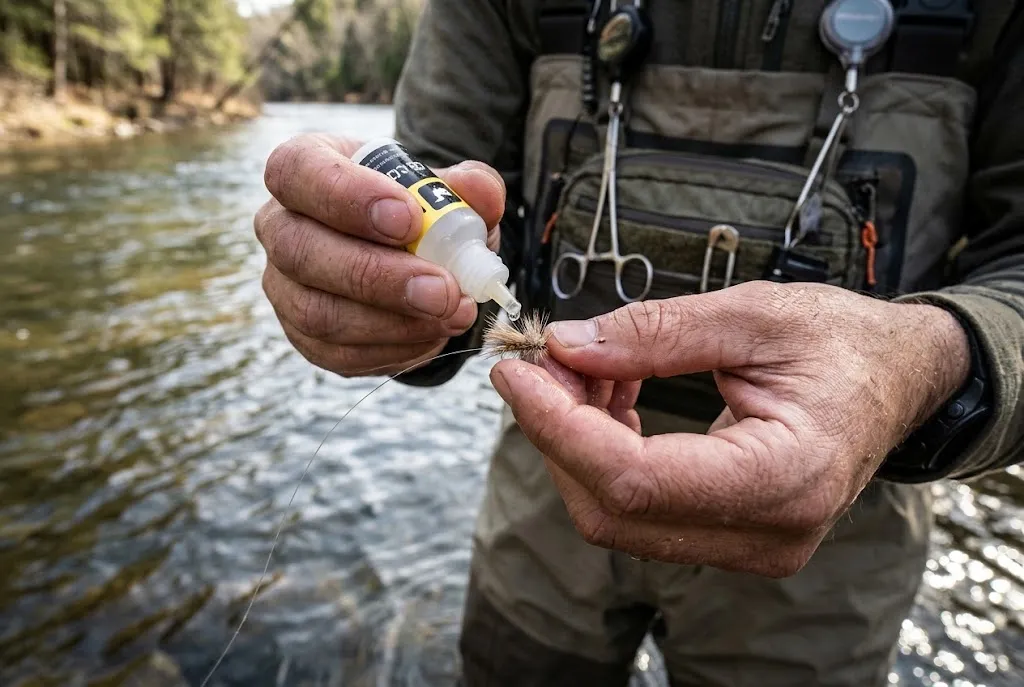
- Con: easiest to work when it's warm, so keep the tin in an inside pocket
- Con: can slide on a slick leader unless you seat it on a knot
- Con: limited float for heavy rigs
Price: $9.00 for a 1 oz tin. Check Loon Biostrike on Amazon.
A note on the Airlock: you'll see Airlocks on a lot of tailwater nymph rigs, and it's a solid foam indicator with a screw-down knob. We left it out because the Oros covers the same slow-water job in a smaller size. If you already fish Airlocks, grease the knob in freezing weather the same way you would the Oros threads.
How does cold weather change each indicator?
This is what actually ruins a winter morning, and each type fails differently.
Foam with threads (Oros, and the Airlock's knob): water gets into the threads, then freezes them shut while you're walking between runs. Oros's own care guidance says that at 32°F or below you should put a little lubricant, like lip balm or wax, on the threads so they don't freeze and adjustment stays smooth. A tube of lip balm in your chest pack fixes it.
You might also enjoy: Winter Midge Fishing: Larva, Pupa, or Cluster Dry? Read the Rise First
Wool: wool's catch is water. Once a tuft is soaked and the air is below freezing, it stiffens with ice between drifts and starts riding low. Treat it with floatant before it gets wet, not after. The New Zealand Strike Indicator company recommends Loon's Aquel on its site and says it won't harden in the cold.
Putty: putty is easier to roll and press on when it's warm, so keep the tin in an inside pocket rather than on the outside of your pack, and work the ball in your fingers for a few seconds before you put it on. Seat it over a knot so it can't slide.
Hard plastic bubbles (Thingamabobber): the least fussy in the cold, since there's nothing to soak or freeze. The trade-off is your leader. Cold monofilament and fluorocarbon hold kinks more stubbornly, and the loop attachment is where you'll get them, so stretch the leader out after you move the indicator.
What matters most when buying a winter indicator?
Four things, in this order.
Size against your rig weight. Use the smallest indicator that holds your flies and shot up without dragging under. On winter midge rigs that's usually a lot smaller than people run.
Landing noise. Slow, clear water punishes a loud indicator. Wool and small foam are quiet; a big plastic bubble isn't.
Attachment. You'll move it with cold, wet hands. Screw-on foam and putty are easy; loop-style bubbles are fiddly.
Color. White for clear water, bright colors for distance. The New Zealand maker suggests black when glare turns the surface silver.
Then log which indicator and depth produced fish. Winter patterns repeat by flow and time of day, and Bushwhack lets you look back at what worked the last time the river ran the same.
Our pick, and the cheap two-piece winter kit
If you buy just one, buy the Oros X-Small White. Most winter fish sit in slow water, and that's the water it's built for.
If you want the cheapest kit that covers almost every winter run, buy these two: the Thingamabobber 3/4" for riffles and fast chutes ($13.05) and a tin of Loon Biostrike for slow water, wind, and quick depth changes ($9.00). Putty stands in for the Oros on a budget because you can roll it as small as the slow water needs; you give up the screw-on convenience, not the small footprint. That's $22.05 at today's Amazon prices for a setup that handles fast water, slow water, and wind. Add the wool later if you start chasing spooky fish in clear water.
Get fishing tips in your inbox
New guides, seasonal tactics, and gear picks — about once a month, no spam.