Winter Midge Fishing: Larva, Pupa, or Cluster Dry? Read the Rise First
 Cameron Spanos
Written by Cameron Spanos
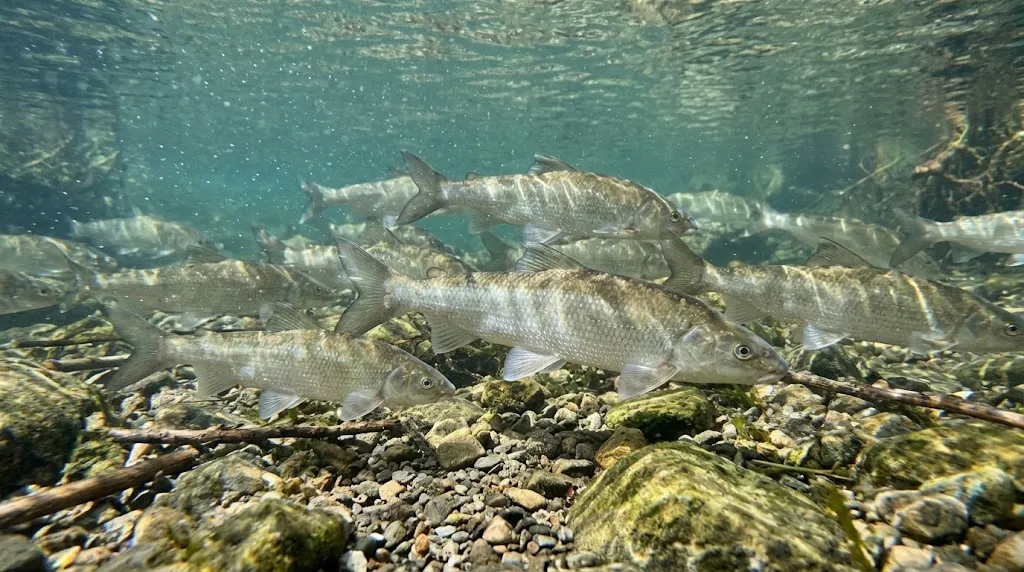
A pod of rainbows is working the flat tailout below the dam. Every few seconds something breaks the film, and the most common response on any winter tailwater is to tie on a Zebra Midge, pinch on a split shot, and drop it four feet under an indicator. Those fish aren't eating four feet down. They're eating in the top inch. Winter midge fishing isn't really a fly selection problem, it's a reading problem: the rise form tells you which stage of the bug the fish are eating, and the stage tells you the fly, the depth, and the tippet.
So this isn't a list of forty midge patterns. It's a decision guide. Look at the water, decide whether you're seeing no rises, bulges, or sips, and rig for that.
Why midges run the winter menu
Midges are true flies (Chironomidae), and unlike most aquatic insects a lot of them don't shut down when the water gets cold. Researchers at the University of Minnesota's winter-active Chironomidae program report at least 11 species of Chironomidae that emerge during the winter in Minnesota alone, with the cold-adapted genus Diamesa the most commonly encountered. Diamesa mendotae, one of the species they study, is most abundant in groundwater-dominated streams that hold a steady cool temperature. That sounds a lot like a bottom-release tailwater in January.
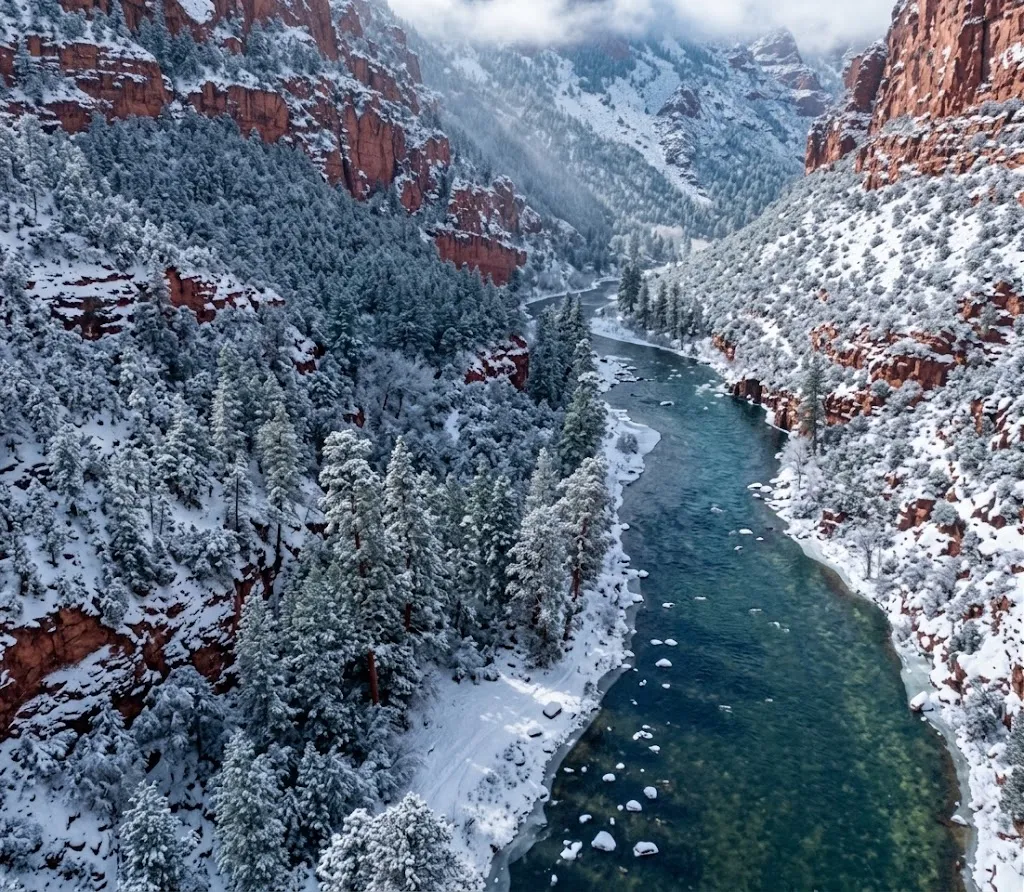
That matters because when the mayflies and caddis go quiet, midges are what's left in the drift on the Green below Flaming Gorge, the San Juan below Navajo Dam, the Provo, the South Platte, and pretty much every other famous tailwater in the West. The fish know it.
A midge goes through four stages: egg, larva, pupa, adult. Trout get a crack at three of them. The larva is a thin, segmented worm living in the silt and weed on the bottom. The pupa rises from the bottom to the surface, hangs in the film, and splits its shuck. The adult rides the surface for a moment, and on cold days adults often clump together into little floating mats. Each stage lives at a different depth, and each one produces a different kind of feeding.
How do you read the rise in winter midge fishing?
Before you tie anything on, stand still and watch one piece of slow water for five minutes. Winter fish feed on a tight rhythm when they're on midges, and what they show you sorts into three buckets.
| What you see | What they're eating | What to tie on | Tippet |
|---|---|---|---|
| Nothing on top, fish holding deep or flashing near bottom | Larvae | Bead-head midge (16-18) with a size 20-24 larva on the tag | 5X-6X fluorocarbon |
| Bulges, swirls, backs and tails, but no nose through the film | Pupae just under the surface | Unweighted pupa or emerger (20-24) under a small dry or high in the column | 6X |
| Delicate sips, noses showing, little bubble left behind | Emergers in the film and adults on top | Griffith's Gnat or cluster dry (18-20) with a 22-26 trailer | 6X to the dry, 7X to the trailer |
The middle row fools people the most. A bulge looks like a rise, so they throw a dry, and the fish keeps eating six inches under it. If you can see a back or a tail but never a nose, the fish is turning on something below the surface. Watch for the bubble, too. A true surface take sucks in air and leaves a tiny bubble in the ring. A subsurface eat pushes water up without breaking through.
No rises at all? Fish the larva near the bottom
This is the default for the first couple hours of most winter days, and it's where you'll catch most of your winter fish. Fish sit in the slow, deep water below riffles and along the soft seams, and they won't move far. You have to put the fly in their face.
The standard rig is two flies about a foot apart. A heavier bead-head on the point (a black or red Zebra Midge in 16 or 18 does the job) gets the rig down, and a smaller, slimmer larva in size 20 to 24 rides on a tag above it. Brassies, Disco Midges, WD-40s, and a simple thread-body larva all work. Size and profile matter more than color.
Under an indicator, set the depth at roughly one and a half times the water depth, then adjust. If you're not ticking bottom every so often, you're too shallow. Add a small split shot above the top fly before you add a bigger bead, since the shot is easier to change as you move from a run to a flat.
On slow, clear tailwater flats a tight line beats the indicator for a simple reason: a winter take on a size 22 larva is barely a pause, and a bobber riding a riffled surface hides half of them. If the water is shallow enough to tight-line (roughly four feet and under), try it. If you're fishing deep, wide runs from the bank, the indicator wins.
You might also enjoy: Best Ultralight Spinning Rod for Trout and Panfish Under $100 (2026): 4 Picks by Job
One more thing on larva rigs. The bead-head on the point is mostly a delivery vehicle. On a lot of tailwater days the small unweighted fly on the tag catches the bulk of the fish, so don't skimp on it to save time retying.
Why are trout bulging but refusing your dry?
Because they're eating pupae, and pupae are under the film, not on it. When the bugs start moving off the bottom (usually late morning as the water warms a degree or two) fish slide up in the water column and start intercepting pupae on the way up. That's the bulging stage, and it's where most anglers lose an hour throwing dries at fish that won't look up.
Get the fly into the top foot. The easiest way is a small, visible dry with 8 to 14 inches of 6X tied to the bend and an unweighted pupa on the end. Mercury Midges, Top Secret Midges, Black Beauties, and RS2s all ride well there. Glass-bead pupae are good because they suggest the gas bubble a real pupa carries without sinking the fly fast.
If the fish are bulging in the middle of the column instead, go back to your nymph rig, take the shot off, and shorten the depth until the flies swing up through the zone at the end of the drift. A pupa that lifts at the bottom of the swing looks exactly like a natural heading for the surface, and the take is often hard and obvious compared to everything else about winter fishing.
Sipping fish want a Griffith's Gnat with a trailer
Once noses are breaking the film in a steady rhythm, the dry fly is on, and this is the best fishing of the winter. Rises to midges are small and rhythmic, often just a dimple that you only notice because the fish does it again in the same spot three seconds later.
Here's an opinion plenty of fly shop guys will argue with. A lone size 26 dry is a bad idea for most anglers in most light. You can't see it, so you can't tell when it drags or when the fish eats it, and you end up setting on every rise near your fly. Fish a Griffith's Gnat or a cluster pattern (a Grizzly Cluster or a Buzzball) in size 18 or 20 instead. Adults bunch together on cold water, so a cluster imitates something real, and a bigger fly floats better in a film full of foam.
Then tie 12 to 18 inches of 7X to the bend of the cluster and add a size 22 to 26 emerger or single adult: a Parachute Adams, a Griffith's Gnat in the smallest size you can tie on, or a hatching midge pattern with a bit of CDC. The cluster becomes your indicator. When a fish rises within a foot of it, set.
Presentation matters more than the pattern here. Cast slightly upstream and a little to the side of a single rising fish so only the tippet crosses its window, never the fly line. Line one fish in the pod and the whole pod goes down for ten minutes.
5X, 6X, or 7X tippet?
Go as heavy as the drift allows, not as light as you can stand. Small tippet doesn't win you much by being invisible to fish. It wins because a tiny fly on a stiff, heavy tippet drags and hangs wrong, and fish notice the drag long before they notice the diameter.
- Larva rigs: 5X fluorocarbon to the point fly, 6X to the tag. The shot and bead do the work, and deep fish rarely care about the diameter. 7X on a weighted nymph rig mostly buys you breakoffs on the bottom.
- Pupa rigs: 6X. Fluorocarbon if the fly needs to sink a little, nylon if you want it hanging in the film.
- Dry and trailer: 6X nylon to the cluster, 7X nylon to the trailer. Nylon floats better and is easier to keep in the film than fluoro.
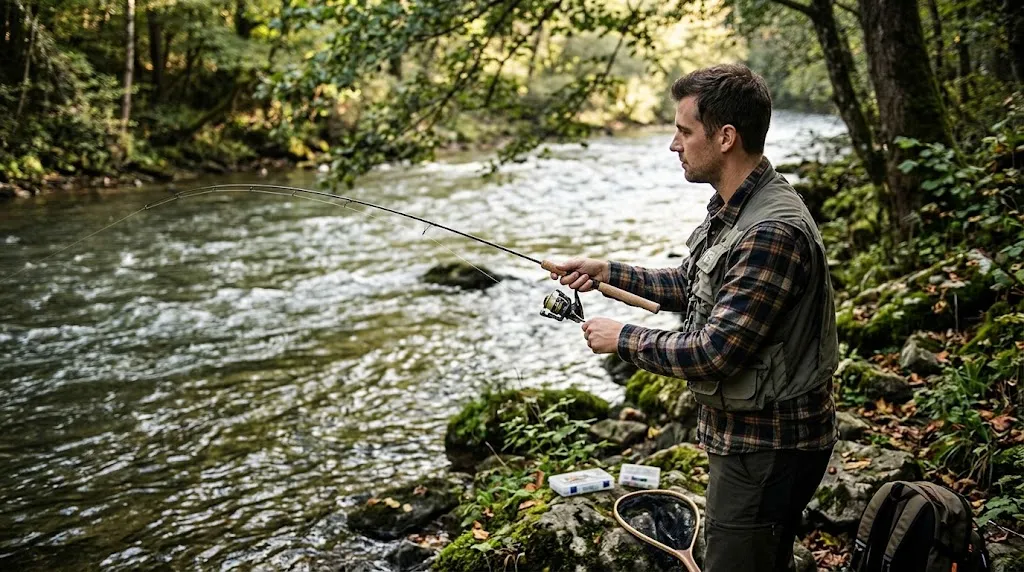
Use a soft rod tip and a light drag setting. A 4-weight is plenty. A size 24 hook has a tiny gap, and most lost fish are pulled off on the hookset or in the first run, not broken off. Set low and to the side with a firm pull, not a big upward lift, and don't horse the fish once it's on.
You might also enjoy: Panguitch Lake Ice Fishing: Shallow Tigers, Cutthroat, and the Slot That Runs Backwards
Why does the take come on the twentieth drift?
This is the part of winter midge fishing that breaks people. You see a fish feeding. You put nineteen good drifts over it. Nothing. Then the twentieth drift gets eaten, and the fly never changed.
There are a few reasons. Cold fish barely move: in 38 or 40 degree water a trout might slide only a few inches to take a bug, so its feeding lane is narrow, maybe the width of your hand. Most of your drifts are close, not in it. On top of that, a size 22 fly is a tiny target among thousands of naturals, and the fish is eating on a rhythm. Your fly has to show up in the lane at the moment it's ready for the next bite. All of that adds up to a game of repetition, where the right drift is a matter of numbers rather than a better fly.
So fish it like a system. Give one lane 15 to 20 clean drifts. If nothing happens, change one variable at a time: depth first, then a slightly different lane, then the trailer fly. Don't change everything at once, or you'll never know what fixed it. And resist rotating flies every five casts. More good winter fish are caught by the angler who made thirty drifts with the right fly than by the one who tried ten flies.
When is the midday winter window?
Late morning through mid-afternoon, give or take. Roughly 11 to 3 on a lot of western tailwaters, shifted later on shaded canyons and earlier on rivers that catch full sun. That's when the water is at its warmest for the day and when emergence usually peaks. Overcast, calm days with light snow are some of the best dry-fly days of the year. Wind kills it.
A typical day moves through the stages in order:
- Start at mid-morning with a larva rig on the bottom of a slow run, because fish feed on larvae all day and nothing else is happening yet.
- Watch for the first bulges as the water warms, and shorten up to a pupa in the top foot or under a small dry once you see backs and tails.
- Switch to a cluster dry with a 7X trailer when noses start breaking the film in a steady rhythm, usually somewhere around midday.
- Drop back to the pupa or larva rig as the sun leaves the water and the rises taper off, because the fish don't stop eating just because they stopped rising.
A couple of mild days in a row usually beats one warm afternoon after a cold snap. If a river has a USGS gauge, check water temperature and flow on the USGS Water Data site before you drive. A tailwater coming off a flow change can be off for a day while the fish resettle.
Famous tailwaters often carry special regulations (artificial-only sections, barbless hooks, catch-and-release stretches), and they change. On the Green or the Provo, check the Utah Division of Wildlife Resources; on any other river, check that state's agency before you go.
Log the stage, not just the fly
Most anglers log a winter day as "midges" and leave it there. That's not useful next January. What helps is writing down which stage worked, at what time, at what water temp, and what the rise looked like when it started. After a few seasons you'll have the right rig tied before the first back shows. You can try Bushwhack to see how that kind of record stacks up over a season.
Read the rise. Rig for the stage. Then make twenty more drifts than feels reasonable.
Get fishing tips in your inbox
New guides, seasonal tactics, and gear picks — about once a month, no spam.