Best Wading Boots 2026: Felt vs Rubber Sole
 Cameron Spanos
Written by Cameron Spanos
Before you compare brands, before you look at price, before any of it, pick your sole. That single choice decides more about how the best wading boots for 2026 perform on your home water than the logo stamped on the heel. Felt grips slick freestone rock like nothing else. Rubber travels legally everywhere and dries fast enough to not move invasive species between rivers. The boots below are split exactly along that line: one felt, two rubber, all three currently in stock and verified.
For most anglers in 2026, a quality rubber sole is the right default. It is legal in every state, it sheds invasive algae far faster than felt, and modern compounds grip well enough for typical wading. Choose felt only if you fish slime-covered freestone rock all season and never cross state lines with the same boots.
I'll say the unpopular part out loud. Felt is not the king it was fifteen years ago. The traction edge is real but narrower than felt loyalists claim, and it comes with a genuine cost to the rivers we all fish. If you're buying your first serious pair, start with rubber and add carbide studs if you want bite. Studs close most of the gap.
Quick picks at a glance
| Boot | Sole | Best For | Price | Rating |
|---|---|---|---|---|
| Paramount Outdoors Stonefly | Felt | Best value, slick freestone rock | ~$89.99 | 4.6 / 5 |
| Simms Men's Freestone | Rubber | Best overall, travel-legal everywhere | ~$169.95 | 4.8 / 5 |
| Redington Aurora (Women's) | Rubber | Best women's-specific fit | ~$111.26 | 4.2 / 5 |
Felt vs rubber sole: which wins in 2026?
Felt still owns one job: gripping wet, algae-slimed rock in moving water. Nothing rubber does quite matches that sticky, planted feel on a mossy boulder field. That's not nostalgia, it's physics, and guides who fish technical pocket water still reach for felt.
Rubber wins almost everything else. It grips grass, mud, snow, and gravel better, it hikes in without collecting half the trailhead, and critically it dries. That last point isn't a convenience thing. It's the whole regulatory story.
Felt is a sponge. The fibers hold water, mud, and microscopic organisms for days. One study cited by state agencies found that after 36 hours of drying, rubber soles carried effectively zero didymo cells while felt still held 296. That algae, "rock snot," can smother a streambed. It's the reason felt got banned in the first place, and the reason I lean rubber for anyone who fishes more than one watershed.
Redington's own brand manager has been candid about why the industry shifted:
"Felt was first in popularity. Rubber gained popularity in 2008 to 2010 because of invasive species talk."
(Josh Prestin, Brand Manager, Redington)
Where are felt soles actually banned?
This is the part too many gear roundups skip, and it's the part that can cost you a citation. Felt soles are banned outright in six states: Alaska, Maryland, Missouri, Nebraska, Rhode Island, and South Dakota. Maryland was first in 2011; the rest followed by 2013, according to state fish and wildlife agencies.
Yellowstone National Park added its own felt ban beginning in the 2018 season, citing aquatic invasive species risk. So if your trip includes the park, leave the felt at home regardless of which state you sleep in.
One reversal worth knowing: Vermont rescinded its felt ban effective July 1, 2016, after deciding enforcement wasn't moving the needle on invasives. So Vermont is legal for felt again. The map isn't static, and regulations change. Always check the current rules with the state agency before a trip, because a banned boot can mean a fine and a confiscated pair.
You might also enjoy: How to Fly Fish From a Drift Boat: A First-Timer's Guide to Your First Guided Float
The simple move? Buy rubber and the question disappears. You can fish all 50 states and Yellowstone without thinking about it.
Paramount Outdoors Stonefly: the value felt pick
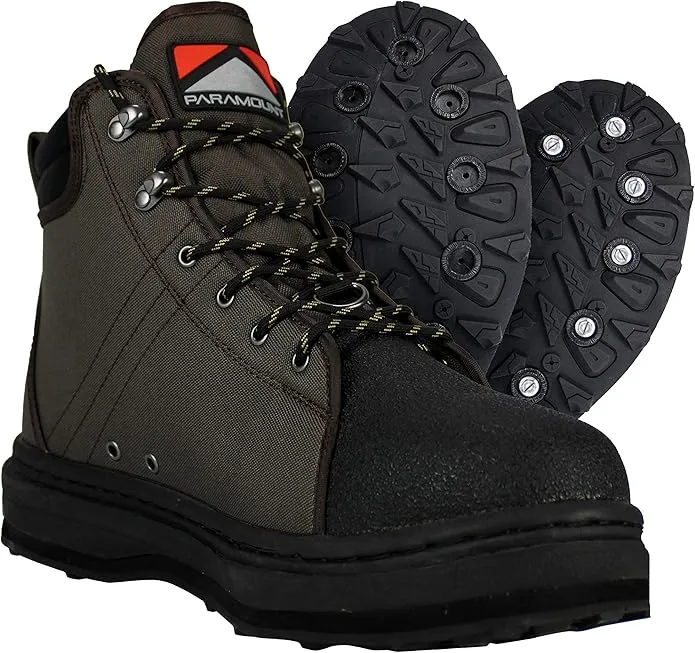
If you've already confirmed felt is legal where you fish and you want maximum grip per dollar, the Paramount Outdoors Stonefly is the easy call. At around $89.99 it undercuts premium felt boots by a wide margin while delivering the thing you bought felt for: that planted, sticky bite on mossy rock in moving water.
It's sized as a unisex boot, so men, women, and youth all fit by choosing the right size rather than a gendered last. Reviewers like the synthetic upper and the lacing, and it carries a 4.6-star rating across 402 reviews. For a budget boot, that's a strong showing.
Who it's for
- Anglers fishing slick freestone and tailwater rock where felt's traction genuinely matters
- Single-watershed anglers who aren't constantly hopping between rivers and states
- Anyone who wants felt traction without a $200 price tag
Pros and cons
- Pros: Excellent grip on slime, genuinely affordable, unisex sizing, solid 4.6-star track record
- Cons: Felt is illegal in six states and Yellowstone, slow to dry, picks up trailhead debris on hikes
At ~$89.99 on Amazon, it's the best felt value I'd point a new angler toward, with the legality caveat firmly attached.
Simms Freestone: the best overall rubber boot
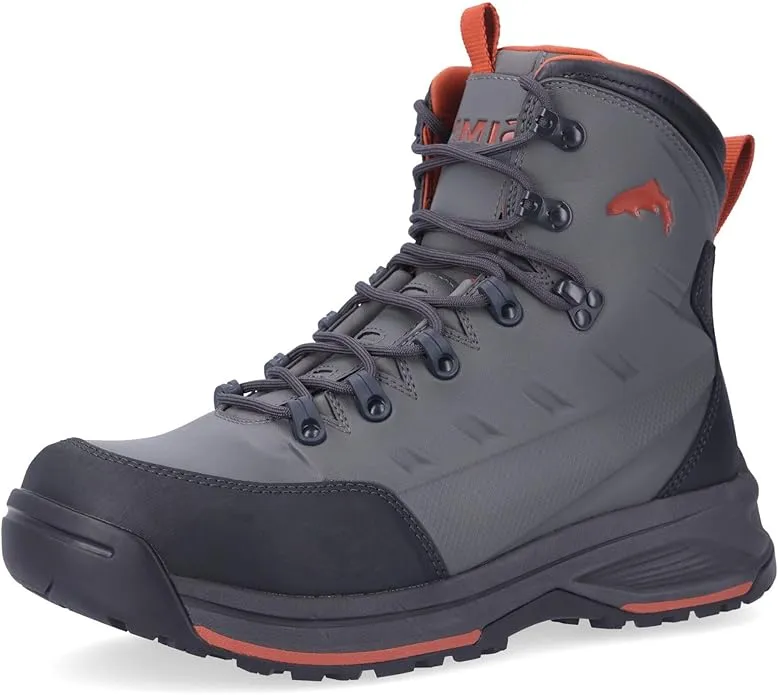
This is the one I'd buy. The Simms Men's Freestone is a rubber-soled boot from a brand that has earned its flagship reputation in waders and boots, and at ~$169.95 it sits right in the sweet spot between budget and boutique.
The Vibram-style rubber sole is legal in all 50 states and inside Yellowstone, which means one purchase covers every trip you'll plan. The build is where the price shows: a supportive last, a lacing system that actually holds, and the kind of durability that gets Simms boots resoled rather than thrown out. It carries a 4.8-star rating across 924 reviews, the highest in this lineup by a clear margin.
Want felt-level bite on slick rock? Thread in a set of carbide studs. The Freestone takes them, and studded rubber closes most of the traction gap that used to be felt's whole argument.
Who it's for
- The angler who fishes more than one state and refuses to own two pairs
- Anyone who hikes to water and wants a boot that grips the trail, not just the river
- Buyers who'd rather spend once on something that lasts and can be resoled
Pros and cons
- Pros: Travel-legal everywhere, top-tier 4.8-star rating, premium build and support, accepts studs
- Cons: Priciest pick here, bare rubber still trails felt on the slimiest rock until you add studs
At ~$169.95 on Amazon, it's the boot I'd hand someone who only wants to make this decision once.
Redington Aurora: the best women's-specific fit
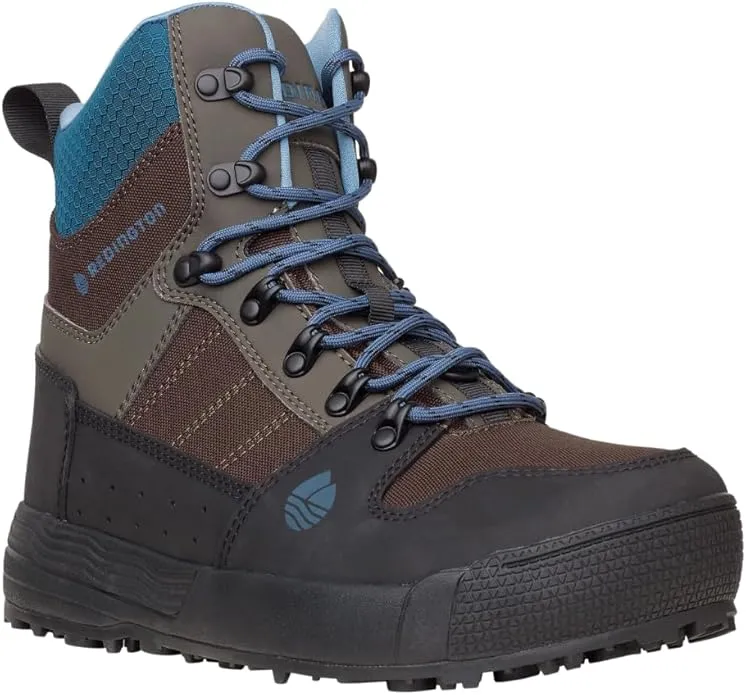
Plenty of women fish for years in unisex boots sized down, and it mostly works. But a boot built on a women's last fits the heel and instep differently, and that matters on a long day of wading. The Redington Aurora is a women's-specific rubber boot at around $111.26, and it's the pick I'd steer women toward over a downsized men's boot.
You might also enjoy: Yellow Sally and Golden Stonefly Dry-Dropper for June Trout
The sticky rubber sole keeps it legal everywhere, same as the Simms, so there's no regulatory homework. It's newer to market with a smaller review base and a 4.2-star rating so far, but the fit-focused design and Redington's reputation make it a sound choice. Add studs if your water runs slick.
Who it's for
- Women who want a boot shaped for a woman's foot rather than a shrunk-down men's model
- Anglers wanting rubber's all-state legality at a mid-tier price
- Anyone prioritizing all-day comfort and fit over maximum bare-sole grip
Pros and cons
- Pros: True women's fit, travel-legal rubber sole, reasonable price, takes studs
- Cons: Smaller review base than the others, 4.2 stars trails the field, bare rubber wants studs on slime
At ~$111.26 on Amazon, it fills the women's-fit gap that most boot roundups ignore entirely.
How to choose: the specs that actually matter
Forget the marketing spec sheet. Four things decide whether a boot earns its keep.
Sole material and legality. This is the first filter, not the last. Confirm what's legal where you fish, then pick felt for pure slick-rock grip or rubber for everywhere else. If you cross state lines, rubber is the only answer that travels.
Stud compatibility. A rubber boot that takes carbide studs is a rubber boot that can fish like felt when you need it to. All three rubber-capable boots here accept studs. I'd budget for a set on any rubber sole headed to freestone water.
Fit and support come next. A boot that pinches at hour two ruins a day no matter how well it grips. Try them on with the wading socks and waders you actually fish, sized to leave room for neoprene bootie thickness. And drainage matters more than people think: a boot that drains and dries fast is lighter on the hike out and far less likely to ferry algae to the next river.
Track what you catch and where, and patterns emerge fast. If your log shows you're fishing three different drainages a month, that's your answer: buy rubber and stop worrying about the boot police. Bushwhack makes that kind of pattern obvious once your trips add up.
Our pick for 2026
If you buy one boot, buy the Simms Freestone. It's legal in every state and Yellowstone, it's built to outlast cheaper boots and can be resoled, it carries the best rating in this group at 4.8 stars across 924 reviews, and a $15 set of studs gives it felt-grade traction on the worst rock you'll fish. One purchase, zero regulatory homework, done.
Buy the Paramount Stonefly if you've confirmed felt is legal on your home water and you want maximum slick-rock grip for under $90. Buy the Redington Aurora if you want a rubber sole built on a true women's last. Three honest picks, one decision: felt or rubber. Make that call first and the rest is easy.
Get fishing tips in your inbox
New guides, seasonal tactics, and gear picks — about once a month, no spam.