Best Side-Mount and Flush-Mount Rod Holders for Boats (2026)
 Hudson Reed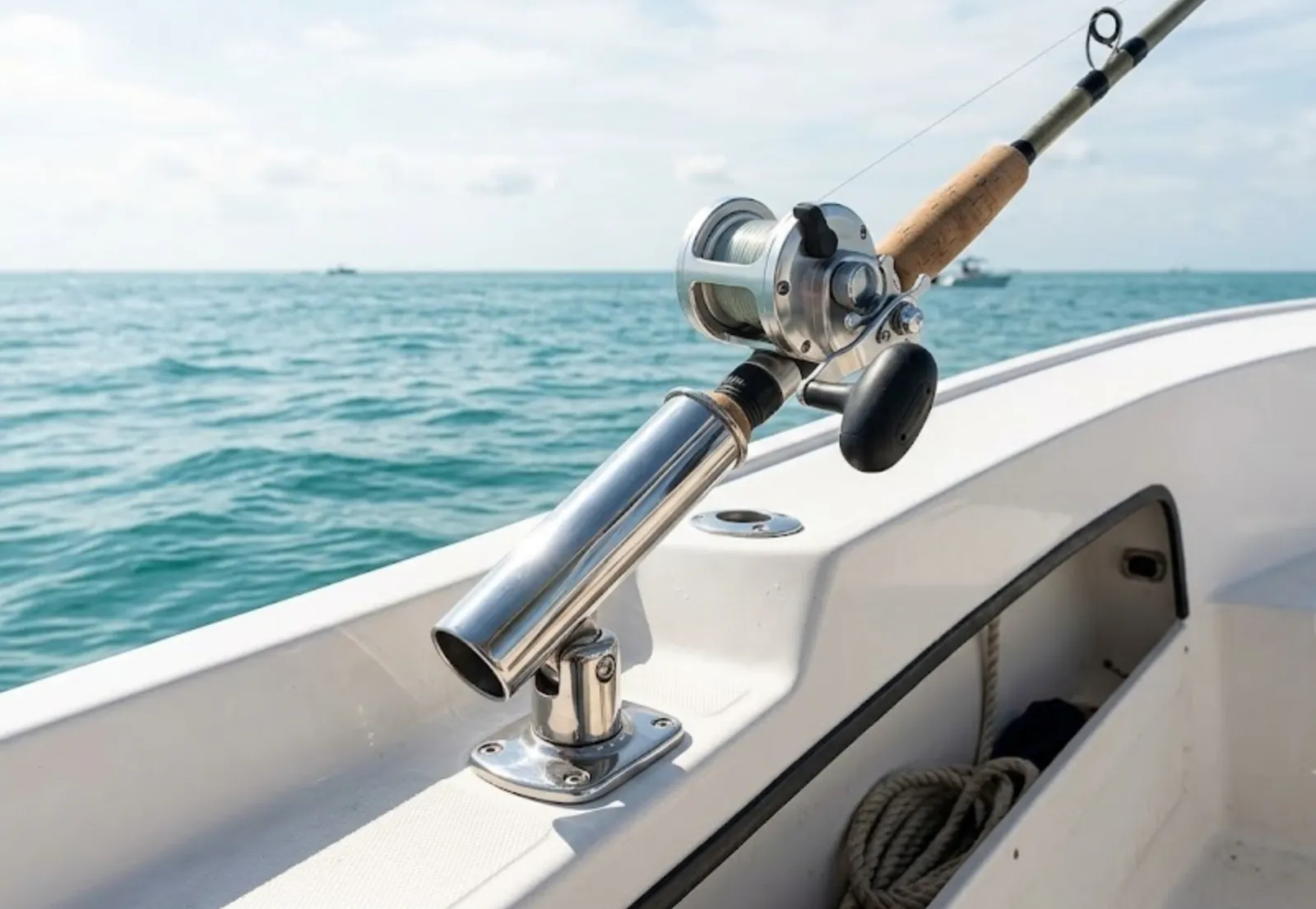
Written by Hudson Reed
A rod holder that flexes under load is worse than no rod holder at all. It lets a $300 outfit pivot a few degrees, slip the rod butt, and feed your reel to the lake the first time a striper loads up while you're tying on the next line. So when anglers ask for the best side-mount and flush-mount rod holders for boats, the honest answer starts with one filter: does it hold solid, drain water, and survive five seasons of UV and salt spray? Everything else is preference.
Side-mount holders bolt to a flat surface, gunwale, or rail and let you aim the rod. Flush-mounts drop into a drilled hole and disappear into the deck for a clean look and a fixed angle. Most serious boats run both. The picks below are all current, in-stock Amazon listings I checked against real ratings and review volume, leaning on the brands that actually hold up: Scotty and Amarine Made.
| Rod Holder | Mount Type | Best For | Price | Rating |
|---|---|---|---|---|
| Scotty 280 w/ 241 Side/Deck Mount | Side / deck | Freshwater all-rounder | ~$23 | 4.5 / 5 |
| Scotty 281 w/ 244 Flush Mount | Flush | Adjustable flush setup | ~$38 | 4 / 5 |
| Amarine Made 316 SS Flush (90°, 4-pk) | Flush | Saltwater vertical storage | ~$60 | 4.5 / 5 |
| Amarine Made 316 SS Flush (30°, 4-pk) | Flush | Trolling spread on a budget | ~$40 | 4.5 / 5 |
| Amarine Made Clamp-On Rail Mount (4-pk) | Side / rail | No-drill rail boats | ~$44 | 4.5 / 5 |
Side-mount or flush-mount: which do you actually need?
Flush-mount is the cleaner choice when you're committing to a permanent layout and you don't mind cutting a hole in the gunwale. The rod holder sits below the rail, nothing snags your line, and the angle is locked. Most flush units come in a fixed 0, 15, 30, or 90 degree flange, so you pick the angle when you buy, not when you fish.
Side-mount and rail-mount holders trade that clean look for flexibility. You can aim them, swing them out of the way, and on a clamp-on version you don't drill anything at all. That matters a lot on an aluminum boat or a rental you can't modify.
Here's the take most listicles won't give you: buy your flush-mounts at 30 degrees, not 90, unless you're only using them as vertical rod storage. A 90-degree holder sticks the rod straight up, which is great for parking rods at the ramp and terrible for trolling, because there's nothing for the rod tip to load against when a fish hits. The angled holders put tension in the blank and signal a strike. Run a couple of 90s for storage and the rest at 30 for fishing.
Scotty 280 with 241 Side/Deck Mount: the freshwater default

If you fish a walleye boat, a tin can, or a center console under 22 feet in freshwater, this is the one I'd hand most people first. At around $23 it's the cheapest pick here, and the 241 combination mount bolts to either the top of the gunwale or the side, so you can adjust placement after you've lived with it for a season. The holder rotates and locks on geared splines, so once you set the angle it stays put.
The body is UV-stabilized nylon, not stainless. That's the trade. It's lighter, it won't corrode, and it's a fraction of the price, but glass-filled and UV-treated polymers do eventually get brittle from sun exposure, typically in the 3 to 5 year range if the boat lives uncovered. On a trailered freshwater rig that's barely a concern. On a saltwater boat that sits in the slip year-round, I'd spend up for stainless.
Who it's for
- Walleye, bass, and panfish anglers on trailered boats
- Anyone who wants to reposition holders without committing to a hole
- Budget builds where you need four or six holders without spending $300
Pros and cons
- Pro: Cheapest entry here, holds 1,500-plus ratings averaging 4.7 stars
- Pro: Cushioned cradle fits both baitcasters and spinning reels with trigger grips
- Con: Nylon, not stainless, so it's not the forever pick for hard saltwater duty
Price runs about $23.29. Check current price on Amazon.
Scotty 281 with 244 Flush Mount: flush, but you keep the angle dial

This is the clever middle ground. The 244 base flush-mounts into the deck and seals with a splash cap when the holder's out, so you get the clean disappearing look. But the 281 rod holder still pivots and locks, which a fixed-flange stainless holder can't do. You drill once and keep adjustability.
It's nylon again, so the same saltwater caveat applies. The reason it earns a spot over a pure stainless flush-mount is that you can drop the rod angle for trolling and pull the whole holder to flush the deck clean. The 4.0 average rating is lower than the others here, and the common gripe in reviews is the splash cap can pop loose over time, so check it before you launch.
You might also enjoy: Best UPF 50+ Neck Gaiters for Fishing (2026)
Who it's for
- Anglers who want a flush deck look but still troll at varying angles
- Boats already running Scotty gear (the 244 base accepts any Scotty post-mount holder)
Pros and cons
- Pro: Adjustable angle from a flush base, which stainless flush units can't do
- Pro: Sealed base with a splash cap keeps water out of the deck cavity
- Con: 4.0-star average; the splash cap is the recurring complaint
Price is about $37.75. Check current price on Amazon.
Amarine Made 316 Stainless Flush Mount (90°, 4-pack): the saltwater workhorse

When the boat lives in salt, 316 stainless is the answer. It doesn't crack in UV, it doesn't corrode the way 304 or aluminum eventually will, and it survives being stepped on, leaned on, and used as a grab handle. This Amarine Made four-pack is solid cast 316, runs about $60 for the set, and includes a drain tail so rainwater doesn't pool in the tube and back up into your gunwale cavity. That drain is not optional gear on an exposed gunwale. Skip it and you'll find a swamped tube and a stained deck.
These are the 90-degree version, which I'd run as vertical rod storage along the gunwale rather than as a trolling holder. The flange footprint is about 4-1/4 by 3-3/8 inches, so make sure you have backing room behind the gunwale before you cut.
Who it's for
- Saltwater and inshore boats that need corrosion-proof holders for the long haul
- Anyone wanting clean vertical rod storage along the rail
Pros and cons
- Pro: Solid cast 316 stainless, the gold standard for saltwater longevity
- Pro: Built-in drain tail and rubber liner; four holders for about $60
- Con: 90-degree angle is storage-oriented, not ideal for trolling strikes
Price runs around $59.99 for the four-pack. Check current price on Amazon.
Amarine Made 316 Stainless Flush Mount (30°, 4-pack): the trolling angle, done right

Same 316 stainless build, same brand, but laid back at 30 degrees and a little cheaper at around $40 for four. This is the set I'd actually buy for a trolling spread. The angle loads the rod tip so it bends under the drag of the bait, and when a fish eats, the whole rod surges. You see the strike before you hear the reel scream.
The kit ships with a cap, a PVC liner, and a gasket, which is the right combination: the gasket seals the flange against the deck so water doesn't seep into the cavity, and the cap keeps spray out when the holder's empty. At a 4.5-star average across 400-plus ratings, it's the highest-rated flush option here. If you're rigging a walleye or salmon boat for a planer-board and lead-core spread, buy these and one set of 90s for after-trip storage.
Who it's for
- Trollers running flat lines, planer boards, or downriggers
- Saltwater boats wanting stainless durability at a lower price than the 90-degree set
Pros and cons
- Pro: 30-degree angle is the correct trolling angle for strike detection
- Pro: 316 stainless with gasket, liner, and cap included; cheaper than the 90-degree pack
- Con: Fixed angle, so it's a one-job holder once it's installed
Price is about $39.99 for the four-pack. Check current price on Amazon.
Amarine Made Clamp-On Rail Mount (4-pack): no drilling required
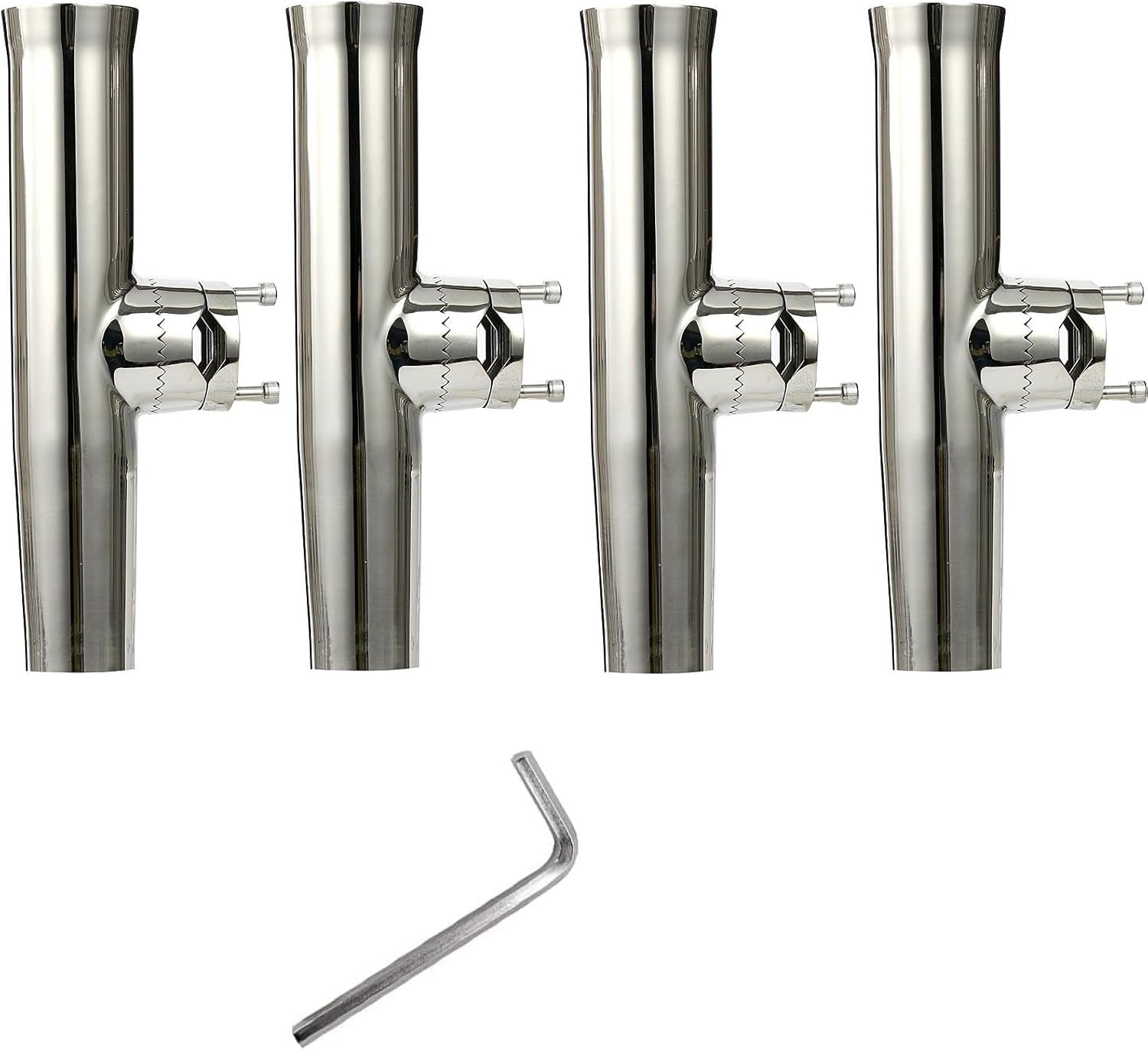
Not every boat owner wants to drill holes, and not everyone should. Renters, aluminum-boat owners worried about cracking a thin gunwale, and pontoon anglers are all better served by a clamp-on rail mount. This Amarine Made tournament-style set clamps to rails roughly 7/8 to 1 inch in diameter and adjusts to dozens of angles, so you can re-aim them through the day.
You might also enjoy: Chatterbait vs Swim Jig for Summer Grass: Which One to Tie On and When
At 4.7 stars across 800-plus ratings, it's the highest-rated and most-reviewed product on this list. The catch is obvious: you need a rail to clamp to. But if you've got bimini supports, a pontoon fence, or a grab rail, this is the fastest way to add four rod holders to a boat with nothing but the included hardware. Snug the clamp bolts down hard, then re-check them after the first trip, because anything clamped to a vibrating boat backs off a little.
Who it's for
- Pontoon, aluminum, and rental boats where drilling isn't an option
- Anglers who want to add holders fast without permanent modification
Pros and cons
- Pro: No drilling; clamps to existing rails in minutes
- Pro: Highest rating and review count here; adjusts to 32 positions
- Con: Requires a 7/8 to 1 inch rail; bolts need re-checking after the first outing
Price runs about $43.99 for the four-pack. Check current price on Amazon.
How do you choose the right rod holder for your boat?
Four things decide it. Get these right and the rest is taste.
Material. 316 stainless is the gold standard for saltwater; it shrugs off corrosion and UV for the life of the boat. Nylon and UV-stabilized polymer are lighter and far cheaper, survive plenty of freshwater seasons, but eventually crack from sun exposure, usually in 3 to 5 years on an uncovered boat. Match the material to where the boat lives.
Angle. 30 degrees for trolling and strike detection. 90 degrees for vertical storage at the ramp and the slip. Flush-mounts lock the angle in at purchase, so decide the job before you buy. Side-mounts and Scotty's adjustable holders let you change your mind later.
Drainage. Any holder mounted in an exposed gunwale fills with rainwater. The good flush-mounts include a drain hole or drain tail. The cheap ones don't, and you'll regret it the first wet week the boat sits at the dock.
Mounting reality. Drilling a flush-mount means cutting a 1.75-inch hole and reaching backing material behind the gunwale. If you can't get behind it, or you can't drill at all, a clamp-on is the only honest answer.
Do flush-mount rod holders need drain holes?
Yes, if they're mounted anywhere rain or spray can reach, which is almost everywhere on a gunwale. A holder without a drain becomes a six-inch cup that fills with water, and that water either pools against your rod butt or seeps down into the gunwale cavity through the mounting hole. Over a season that means a swamped tube, a stained deck, and sometimes rot in the core. Every flush-mount on this list except the 90-degree storage application either drains through a tail or pairs with a sealing gasket. Buy the drain. It costs nothing extra and saves the deck.
Our pick
For most boats, the answer is a combination, not a single holder. Run a set of the Amarine Made 30-degree 316 stainless flush-mounts for your trolling spread, add a couple of 90-degree stainless holders for vertical storage, and you've covered the boat for under $120 in holders that'll outlast the hull.
Tight on budget or fishing freshwater off a trailer? The Scotty 280 with the 241 side/deck mount does almost everything for about $23 a holder, and you can move it around until you find the perfect spot. Can't drill at all? The Amarine Made clamp-on rail mount gets you four holders with zero holes.
Whichever way you go, once your spread is set, start tracking which holder position and rod angle actually puts fish in the boat. Log the trolling speed, the lure, and the rod that fired, and patterns show up fast. You can try Bushwhack to keep that data in one place, or see all of Bushwhack's features for logging trips and spots.
Get fishing tips in your inbox
New guides, seasonal tactics, and gear picks — about once a month, no spam.