Best Rubber Mesh Landing Net for Bass and Boat Fishing (2026)
 Hudson Reed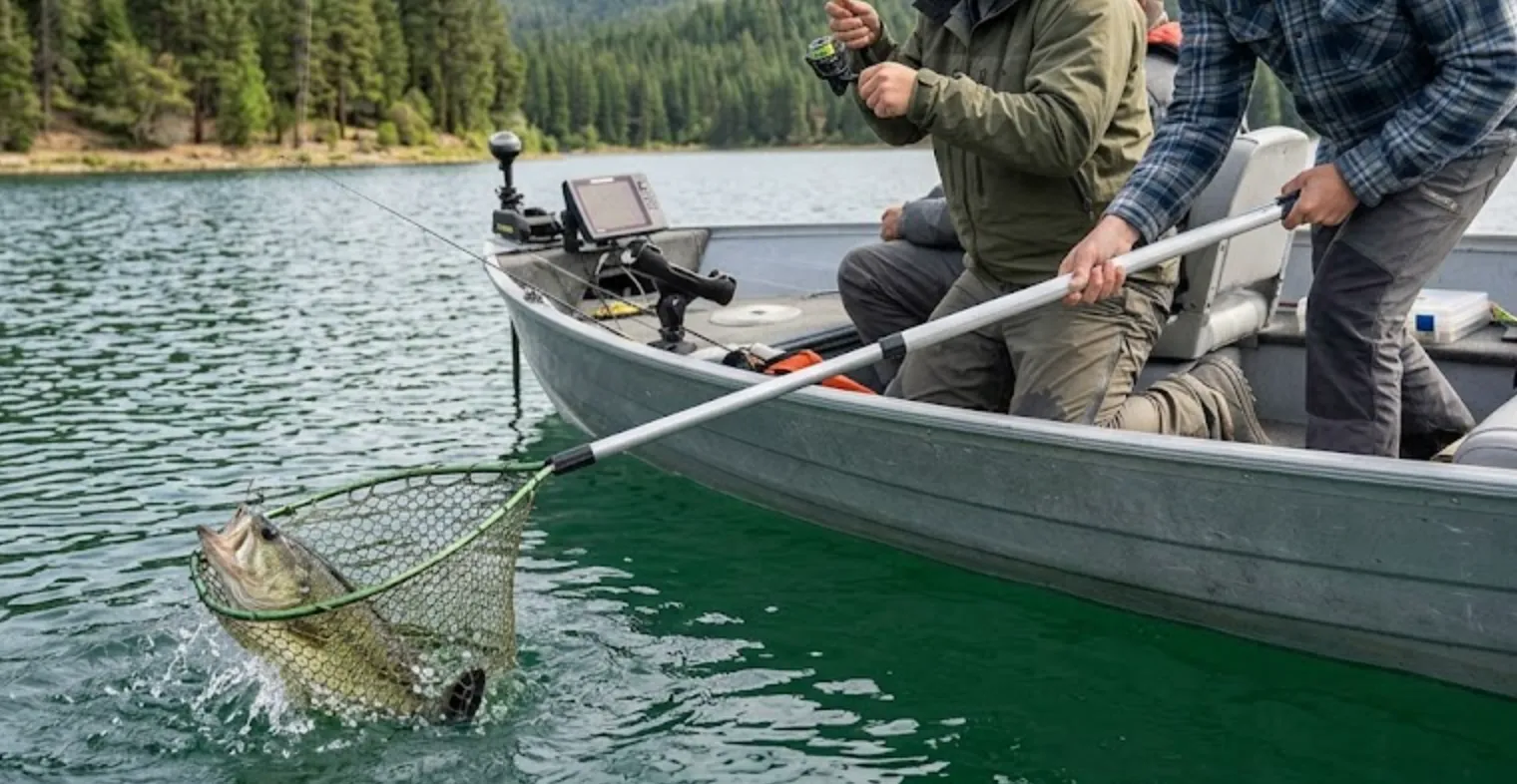
Written by Hudson Reed
A 6-pound largemouth bouncing on a slack jig at the side of the boat is exactly the moment a cheap nylon net loses you the fish. The treble snags a mesh knot, the bass thrashes, and the hook pops free a foot from the gunwale. After watching that happen one too many times, I went all-in on rubber. If you want the short version: the best rubber mesh landing net for bass and boat fishing is one with a hoop wide enough to swallow a fish you don't have to aim at, a handle long enough to reach over the trolling motor, and knotless rubber that won't strip slime or grab your hooks. Below are five that actually clear that bar in 2026, all of them currently in stock with real review history.
Rubber mesh matters more on a boat than people think. You're netting bigger fish, often green and rolling, frequently with a second treble swinging loose. Knotless rubber sheds hooks instead of catching them, and it doesn't sand the protective slime coat off a fish you plan to release. That's the whole argument. Nylon is cheaper and dries faster, but for catch-and-release bass and boat work, rubber wins.
Quick picks: the best rubber mesh landing nets at a glance
| Net | Best for | Price | Rating |
|---|---|---|---|
| Frabill Conservation Camlock 20x23 | All-around bass boat net | ~$85 | 4.5/5 |
| Facikono Large Rubber XL | Biggest fish, deck boats, saltwater crossover | ~$66 | 4.4/5 |
| Frabill Conservation Telescoping 23x26 | Premium big-hoop reach | ~$119 | 4.4/5 |
| PLUSINNO Floating Rubber Net | Best value, floats if dropped | ~$21 | 4.5/5 |
| KastKing Brutus | Budget backup net | ~$25 | 4.5/5 |
Prices move around on Amazon, so treat those as ballpark. Now the details, starting with the one I'd hand a buddy who only wants to buy a net once.
Frabill Conservation Camlock 20x23: the one I recommend first

This is the net that lives in my boat. The 20-by-23-inch teardrop hoop is the sweet spot for largemouth and smallmouth: big enough that you're not threading a needle on a hot fish, not so big it's a sail in the wind. The clear knotless rubber mesh is genuinely hook-resistant. I've netted fish with a jerkbait still flailing and never had the back treble bury into the bag. The Camlock telescoping handle is the real selling point though. Cheap telescoping handles develop slop where the sections meet, and that wobble is what bends fish off at the worst moment. The cam lock clamps each section tight, so the whole thing feels like one rigid pole when you scoop.
It runs about $85 with a 4.5-star average across roughly 668 reviews, which is a lot of anglers agreeing it holds up.
Who it's for
- Bass anglers in a boat or kayak who want one net for the next decade
- Anyone who's had a fish throw the hook on a wobbly net handle
- Catch-and-release folks who care about the slime coat
Pros and cons
- Pro: Camlock handle stays rigid, no slop
- Pro: Knotless clear rubber sheds trebles
- Pro: Hoop size dialed for bass
- Con: Not the longest reach if you fish a high-deck bass boat
- Con: Heavier than the budget nets
Buy it on Amazon for around $85. If you only read one section of this post, this is the net.
Facikono Large Rubber XL: when the fish are genuinely big

Sometimes 20 inches of hoop isn't enough. If you're chasing trophy largemouth, stripers, catfish, or you run a tall deck boat where the water is four feet below your feet, this Facikono is the move. The hoop is roughly 28 by 24 inches and the handle telescopes from about 72 all the way out to 94 inches. That is a long reach. You can net a fish for someone standing across the boat without anyone leaning over the rail.
The rubber-coated mesh dries fast and stays snag-free, and the heavy aluminum frame doesn't flex under a real fish. It even ships with a few soft swimbaits, which is a goofy bonus but whatever. At around $66 with a 4.4 rating over 122 reviews, it's a lot of net for the money. The tradeoff is obvious: this thing is big and not something you want to stow on a tiny kayak.
Who it's for
- Anglers targeting fish that genuinely outgrow a standard bass net
- Deck boats and pontoons with a long drop to the water
- Folks who fish freshwater and inshore saltwater and want one net to cross over
Pros and cons
- Pro: Huge hoop and up to ~94 inches of reach
- Pro: Stout frame, handles real weight
- Con: Too bulky for kayaks or tight cockpits
- Con: Long handle can feel unwieldy for quick close-in scoops
Grab the Facikono on Amazon if your fish are bigger than your current net can handle.
You might also enjoy: Chatterbait vs Swim Jig for Summer Grass: Which One to Tie On and When
You might also enjoy: Best Digital Fishing Scales for 2026 (Bluetooth & Tournament-Ready)
Frabill Conservation Telescoping 23x26: premium reach without the slop

Think of this as the bigger, fancier sibling of the Camlock pick. The teardrop hoop runs 23 by 26 inches with a deep 22-inch bag, and the handle extends from 35 to 60 inches. The tangle-free micromesh is the gentlest netting Frabill makes, and the bag depth means a thrashing fish settles to the bottom and stays put instead of flopping back over the rim. If you fish tournaments or just hate losing fish at the boat, the extra hoop area and depth genuinely buy you margin.
It's the priciest pick here at around $119 (4.4 stars, about 101 reviews). You're paying for build quality and the bigger conservation-friendly bag. I wouldn't call it overkill, but it's more net than a casual weekend angler strictly needs.
Who it's for
- Tournament anglers who can't afford to lose a fish at the net
- Anyone netting fish solo who wants a forgiving big target
Pros and cons
- Pro: Deep 22-inch bag cradles and holds fish
- Pro: Soft micromesh, very fish-friendly
- Con: Priciest option here
- Con: Micromesh is gentler but slightly less hook-shedding than firm rubber
It's on Amazon around $119.
PLUSINNO Floating Rubber Net: the value champ

Here's a take that'll annoy the premium crowd: most anglers do not need to spend $100 on a net. This PLUSINNO does 90 percent of what the expensive nets do for about $21. Rubber-coated mesh, foldable for storage, and it floats. That last part is underrated. Drop a net overboard from a kayak and a floating net is the difference between an annoyance and a $20 lesson at the bottom of the lake.
It's not as big or as long-reaching as the boat-specific nets, and the handle isn't as rigid as the Frabill Camlock. But with a 4.5 rating across more than 2,600 reviews, it's the most battle-tested net on this list by a wide margin. For kayak anglers, bank guys who occasionally hop in a boat, or anyone who wants a reliable backup net in the rod locker, this is the smart buy.
Who it's for
- Kayak and small-boat anglers on a budget
- Anyone wanting a floating, foldable backup net
- New anglers not ready to drop $85 on netting
Pros and cons
- Pro: Floats and folds flat
- Pro: Absurd value at ~$21
- Pro: Thousands of positive reviews
- Con: Smaller hoop and shorter reach
- Con: Handle flexes more under big fish
Pick it up on Amazon. Hard to argue with the price.
KastKing Brutus: the budget backup

The Brutus is the net I keep as a spare. Around $25, fish-friendly mesh, foldable, lightweight, and it holds up to about 44 pounds of fish. It's not a dedicated rubber-mesh boat net the way the Frabills are, but the coated mesh is gentle enough for release and it won't shred your wallet. KastKing's reputation for budget gear that punches above its price holds true here, with a 4.5 rating over 500-plus reviews.
I'd buy this as a second net rather than a primary, mainly because the hoop is on the smaller side for trophy bass. But if you're outfitting a buddy's boat or want something cheap that won't embarrass you, it does the job.
You might also enjoy: Summer River Smallmouth Bass: Fishing Current, Boulders, and Eddies When Lakes Get Hot
Who it's for
- Anglers needing a cheap, reliable second net
- Anyone outfitting a boat for guests
Pros and cons
- Pro: Cheap and foldable
- Pro: Fish-friendly mesh, holds ~44 lbs
- Con: Smaller hoop, better as a backup
It's on Amazon for about $25.
You might also enjoy: Best Line Counter Trolling Reels for 2026 (Walleye, Salmon & Lake Trout)
What actually matters when buying a rubber net for bass?
Skip the marketing and focus on four things. Get these right and you'll be happy with almost any of the nets above.
Hoop size. For bass, a 18-to-23-inch hoop is the practical range. Smaller than that and you're aiming at a moving target; much bigger and the net catches wind and gets awkward in a boat. Go large only if you're chasing fish that genuinely need it.
Mesh type. Knotless rubber or rubber-coated mesh, full stop. Knotted nylon abrades slime and snags trebles. The two failure modes that lose you fish at the boat are hook snags and a fish rolling out of a shallow bag, and good rubber mesh with some depth solves both.
Handle length and rigidity. Reach matters more on a high-deck boat than a low kayak. But rigidity matters everywhere. A handle with play in the telescoping joints flexes right when you load it with a fish, and that flex is how hooks pop. A cam-lock or solid-lock handle beats a friction-fit one every time.
Storage and weight. Foldable nets stow in a rod locker. Long fixed handles are a pain on small craft. Match the net to your boat, not to a spec sheet.
Is rubber mesh really better than nylon for catch and release?
Yes, and it's not close for fish you're releasing. Rubber and rubber-coated mesh protect a fish's slime coat far better than knotted nylon, which acts like fine sandpaper on a thrashing fish. The slime coat is the fish's first defense against infection, so stripping it raises the odds a released bass doesn't make it. Rubber mesh also doesn't grab hooks, which means the fish spends less time tangled and out of the water. If you keep most of what you catch, nylon is fine and dries faster. For release, rubber is the responsible call. Once you log a season of fish in Bushwhack and see how many you put back, the case for a release-friendly net makes itself.
How long should a bass net handle be?
For most bass boats, a handle that extends to 48 to 60 inches covers you. From a kayak or a low jon boat, you can get away with 24 to 36 inches and you'll appreciate the lighter, less tippy feel. Tall deck boats and pontoons are where the long-reach nets earn their keep, since you might have a four-foot drop to the water. The trap is buying more handle than you need. A 94-inch net is glorious off a pontoon and miserable trying to make a quick close-range scoop from a kayak. Buy for your most common setup.
The bottom line
If you want a single answer, the Frabill Conservation Camlock 20x23 is the best rubber mesh landing net for bass and general boat fishing for most anglers. The hoop is sized right, the cam-lock handle doesn't wobble, and the clear rubber sheds hooks. Spend more on the Frabill Telescoping 23x26 if you fish tournaments, reach for the Facikono XL if your fish are oversized, and grab the PLUSINNO if you want the best net per dollar that happens to float. Whatever you pick, track where those fish come from with Bushwhack so next season you already know which net to bring and where to point the boat.
Get fishing tips in your inbox
New guides, seasonal tactics, and gear picks — about once a month, no spam.