Best Floating Waterproof Phone Pouches for Fishing (2026)
 Hudson Reed
Written by Hudson Reed
The question I get asked more than any other about phone gear isn't "is it waterproof." It's "will the thing actually float my phone, or just keep it dry on the way to the bottom?" Those are two completely different promises, and a lot of anglers find out the hard way that the best floating waterproof phone pouches for fishing are a small subset of all the waterproof pouches on Amazon. A sealed bag with no buoyancy is a sandwich bag that keeps your phone dry while it sinks in 12 feet of water.
So before we get to the picks, let's settle the buoyancy thing, because it's the whole point on a boat or a kayak.
Will a waterproof phone case actually float my phone?
Yes, but only if it's built to. Most "waterproof" pouches just seal out water. Whether they float depends on how much trapped air or foam is inside versus how heavy your phone is. A modern phone in a slim pouch with a tiny air gap will often sink, because a large iPhone Pro Max or Galaxy Ultra runs heavy and there isn't enough displacement to keep it up.
Two designs solve this. Air-cushion pouches (Pelican Marine is the obvious one) build inflated chambers into the case so the whole thing rides high. Foam pouches stitch a closed-cell foam panel into the back, which is the approach CaliCase made famous and TORRAS now uses too. Foam is the one I trust more on moving water, because an air chamber can develop a slow leak and you'd never know until the day your phone goes overboard.
Here's the part the product pages bury: buoyancy is rated by weight. TORRAS lists its foam layer at around 500 grams of buoyancy, and UNBREAKcable's sponge airbag is rated near 360 grams. A current flagship phone weighs roughly 220 to 240 grams. So you've got margin, but not infinite margin. Stuff your pouch with a phone plus keys plus a fat wallet and you can overload it past the float point. Phone only. That's the rule.
Does the touchscreen actually work through the pouch?
On top of the water, mostly yes. The clear TPU windows on every pouch here let you tap, swipe, and shoot photos through the front. Face ID reads through the window on the good ones. Where it falls apart is underwater: capacitive touchscreens read water as a thousand fingers at once, so the second you submerge the pouch the screen goes haywire. That's not a defect in the pouch, that's physics.
The workaround anglers use: set your camera to fire on the volume button before you go under, then press the physical button through the pouch. TORRAS leans into this with a window it markets as underwater-touchable, but honestly, for fishing you're shooting from the surface 95% of the time, so don't overthink the submerged-touch feature.
One more thing that matters on the water and never gets mentioned in reviews: a bright lanyard. A black pouch that slips off the gunwale disappears instantly. The Pelican comes in a hi-vis yellow that you can actually spot floating away, and that alone has probably saved more phones than any IP rating.
The best floating waterproof phone pouches for fishing at a glance
All four below are IPX8 or IP68 rated, currently in stock, and genuinely float a phone on their own. Prices reflect the current Amazon listing and move around, so check before you buy.
| Pouch | Best For | Price | Rating |
|---|---|---|---|
| Hiearcool IPX8 (2-pack) | Best value / buying in bulk | ~$10 | 4.5 / 5 |
| Pelican Marine XL | Big phones + visibility | ~$25 | 4.5 / 5 |
| UNBREAKcable Floating (2-pack) | On-water photos | ~$22 | 4 / 5 |
| TORRAS Double Space | Foam float + extra storage | ~$28 | 4.5 / 5 |
Hiearcool IPX8 Waterproof Pouch: the one to buy if you're not sure
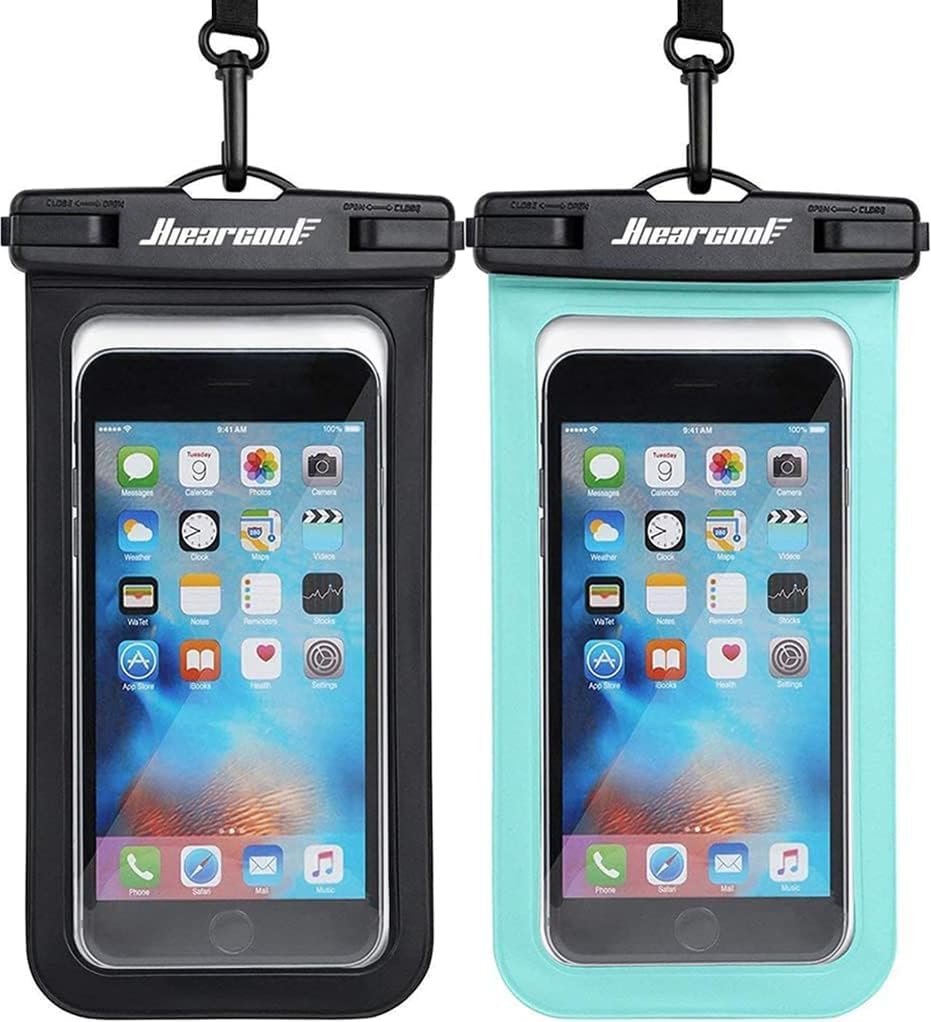
If you fish more than one boat, lend gear to buddies, or just don't want to agonize over a phone pouch, start here. It comes as a two-pack for around ten bucks, it's IPX8 rated, and it has racked up more than 111,000 reviews at a 4.6 average. That review volume is the real story. Cheap pouches with 200 reviews are a coin flip on quality control. This many ratings holding that high means the seal design is consistent.
Who it's for
Anglers who want a reliable, disposable-feeling pouch they can stash in every tackle bag, kayak hatch, and truck console. Buy the two-pack, keep a spare.
Pros and cons
- Pro: Absurd value, two pouches for the price of one premium case
- Pro: Fits phones up to 8.9 inches, so even the biggest Pro Max slides in
- Pro: Clear front and back windows shoot decent photos
- Con: Floats a lighter phone fine, but a maxed-out flagship plus a thick case rides low. Pull your case off first.
- Con: Lanyard is thin and plain black, not the easiest to spot if it goes in
Current price is about $9.99 for the two-pack. Check price on Amazon.
You might also enjoy: Chatterbait vs Swim Jig for Summer Grass: Which One to Tie On and When
Pelican Marine XL: built for big phones and bad days

Pelican earned its reputation on hard cases that survive being run over, and the Marine pouch carries that DNA. It's IP68 rated and uses built-in air cushions for flotation, so the pouch acts as its own little life preserver. The XL size is the one I'd grab, because it swallows a cased phone without forcing you to strip the case off every time.
The hi-vis yellow option is the smart buy for fishing. A black pouch floating ten feet behind a drifting kayak is nearly invisible. Bright yellow you can actually chase down.
Who it's for
Boat and kayak anglers running big phones who want a name brand and a pouch they can spot in the water.
Pros and cons
- Pro: Air-cushion float plus a trusted name in protective cases
- Pro: Hi-vis color makes a dropped pouch findable
- Pro: XL size fits phones with bulky cases left on
- Con: Air-chamber buoyancy can degrade if a seam leaks, so test it every season
- Con: Pricier than the no-name two-packs
Runs about $24.99 for the XL. Check price on Amazon.
UNBREAKcable Floating Pouch: the one for shooting on the water

This one solves the buoyancy problem with a dedicated sponge airbag rated around 360 grams instead of relying on trapped air, so it floats instantly and stays up even with a heavy phone. The transparent front is built for clarity, which matters if you actually want usable photos of that fish before the release instead of a foggy blur.
It ships as a two-pack in the low twenties, which is a sweet spot between the throwaway Hiearcool and the premium options.
Who it's for
Anglers who document their days, post catches, or want clean hero shots from a kayak without pulling the phone out over open water.
Pros and cons
- Pro: Dedicated foam-style airbag, floats reliably with a heavy phone
- Pro: Clear optics for photos and video
- Pro: Two-pack value
- Con: Fits up to 7 inches, so the very largest phones are a tight squeeze
- Con: Slightly fewer reviews than the heavyweights, though the score holds up
About $21.99 for the two-pack. Check price on Amazon.
TORRAS Double Space: foam buoyancy plus a place for your keys

The newest pouch in this group and the one with the cleverest idea. TORRAS gives it two sealed compartments: the main one for your phone, a second smaller pocket for a key, a card, or a few bills, so your truck key isn't scratching your screen all day. The buoyancy comes from a foam cushion layer the company rates at roughly 500 grams, which is the highest float rating here. TORRAS rates it to IP68 and markets it as submersible to about 100 feet.
You might also enjoy: Best UPF 50+ Neck Gaiters for Fishing (2026)
Foam over air is the choice I make for fishing, because there's no chamber to spring a leak. This is the pouch I'd hand someone who fishes hard and wants one thing that does it all.
Who it's for
Anglers who want the best float margin, a touch-friendly window, and somewhere to stash a key or card without a second bag.
Pros and cons
- Pro: Highest rated buoyancy in this lineup at about 500 grams, foam not air
- Pro: Second sealed pocket for keys and cards
- Pro: 2026 design with a window built for surface touch and photos
- Con: Priciest of the four
- Con: Newer listing, so fewer long-term reviews than the Hiearcool or Pelican
About $27.99. Check price on Amazon.
How to choose: what actually matters on the water
Strip away the marketing and four things decide whether a pouch is worth carrying.
Float by design, not by luck. Confirm the listing says it floats and ideally gives a buoyancy weight rating. Then test it at home in a sink or tub with your actual phone before it ever goes in the boat. Drop it, count to ten, watch where it sits. Better to find out over your bathtub than over the channel.
Seal type. Snap-and-lock closures (the kind you fold and clamp) are quick and reliable for surface use. Just make sure you hear and feel both sides click. A pouch is only IPX8 if you actually closed it right, and the most common "my pouch leaked" story is really a "I didn't seal it" story.
Size and fit. Pouches list a max screen size. A 6.7-inch phone in a slim case fits a 7-inch pouch fine. Add a chunky OtterBox and you may need the XL. When in doubt, size up. A loose phone in a big pouch floats better than a phone you can't get sealed.
Visibility and tether. Hi-vis colors and a neck lanyard are not gimmicks. Most phones go overboard during the chaos of landing a fish, when both hands are busy. A lanyard around your neck or clipped to a kayak pad eye means the pouch can't get more than a few feet away even if it floats.
If you're the type who logs every catch, a floating pouch also means your phone survives the day you actually need it. You can keep it sealed and still pull up your data between spots without risking a $1,200 device on a wet deck.
My pick
For most anglers, the TORRAS Double Space is the one I'd put my own phone in. Foam buoyancy with the highest float rating here, a second pocket so your keys aren't gouging your screen, and a window built for surface use. It costs a few dollars more, and it's worth it.
On a tighter budget, the Hiearcool two-pack is the smart call. Two pouches for ten dollars, a six-figure review count behind it, and it'll keep a phone dry and afloat as long as you take your case off and seal it right. Buy it, stash the spare, and stop worrying about your phone every time the water gets close.
Want to track which spots, baits, and conditions actually put fish in the net? That's what Bushwhack is built for, and a floating pouch is what keeps the phone you log them on alive.
Get fishing tips in your inbox
New guides, seasonal tactics, and gear picks — about once a month, no spam.