Utah Lake Algal Bloom and Fishing: How to Read HAB Advisories and Still Catch Fish (2026)
 Hudson Reed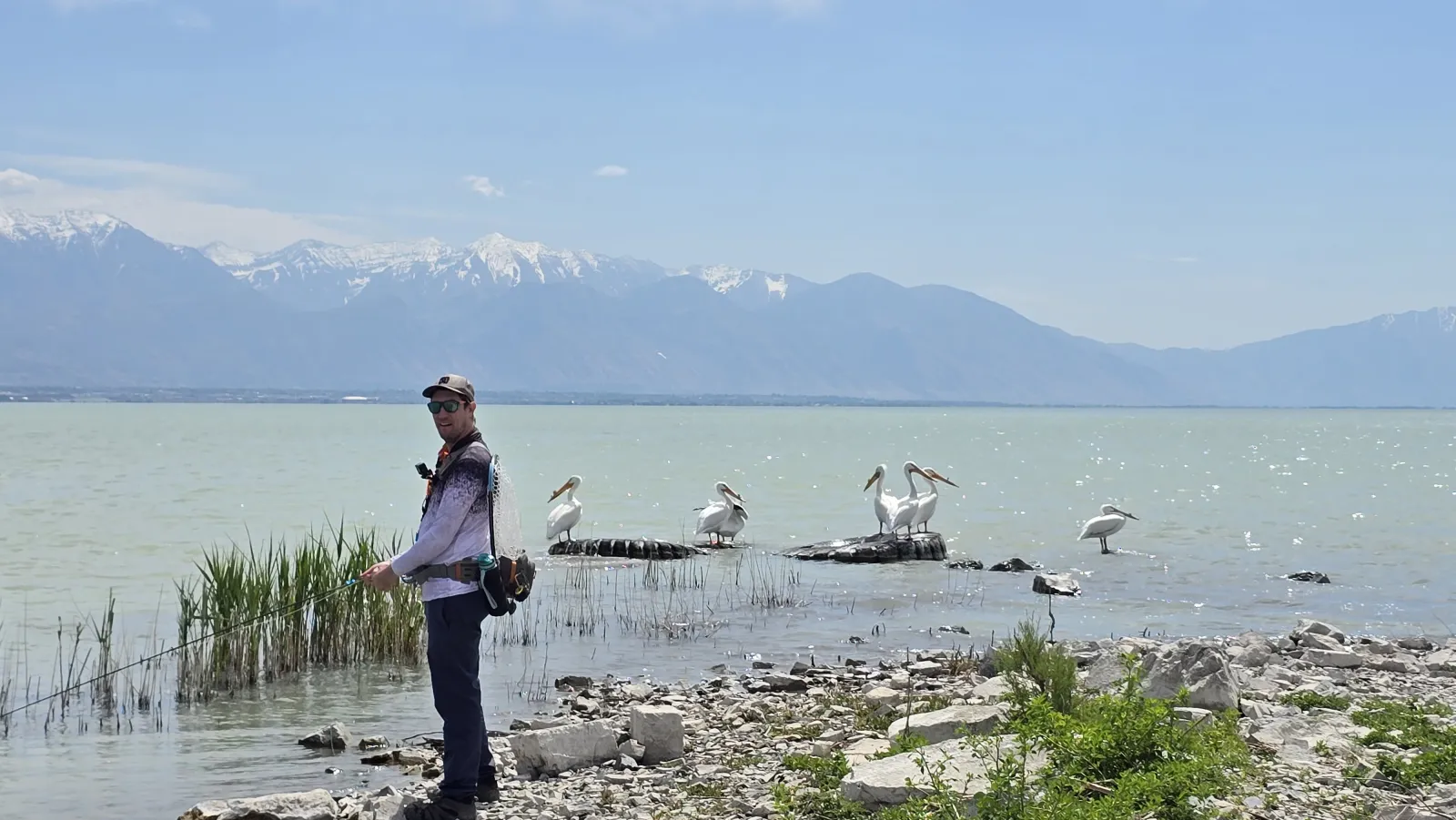
Written by Hudson Reed
You pull into the Lindon boat harbor on an August morning and the water in the corner of the marina looks like somebody dumped a can of latex paint in it. Bright green, streaky, a little foamy where the wind pushed it against the ramp. Every Utah angler who fishes this lake in summer has had that exact moment, standing there staring at a Utah Lake algal bloom and wondering if the trip is over before it started.
It usually isn't. A Utah Lake algal bloom is a real health issue and worth taking seriously, but "the lake is green" and "I can't fish today" are not the same sentence. The difference comes down to where the bloom is, what the current advisory says, and how you handle the fish you catch. Learn to read those three things and you can keep fishing one of the best warmwater fisheries in the state through the exact months most people write it off.
What is a harmful algal bloom, and why does Utah Lake get them?
The green stuff isn't really algae. It's cyanobacteria, and under the right conditions it multiplies fast enough to turn shallow water opaque in a day or two. Some cyanobacteria produce cyanotoxins like microcystins, which is what turns a harmless-looking bloom into a health advisory.
Utah Lake is basically built to bloom. It's huge and shallow, roughly 96,000 acres but averaging only about nine feet deep, so the whole water column heats up fast and there's decades of nutrient-rich sediment on the bottom. Add a hot, calm stretch in July or August and you get the recipe: warm water, plenty of phosphorus, and enough still days for the cyanobacteria to stack up at the surface. The Utah Lake Authority puts it bluntly in their public materials: HABs happen here, most summers, and they'll keep happening.
Blooms tend to show up first and worst in the warm, slow corners. Provo Bay on the east side is a repeat offender because it's shallow, weedy, and barely flushes. The marinas, Lindon and the Utah Lake State Park harbor at Provo, concentrate scum because the breakwaters trap whatever the wind blows in. Open, windier water off the main lake often stays fishable when a back bay is pea soup.
Is it safe to fish during a Utah Lake algal bloom?
Short answer: usually yes, with precautions, unless a Danger advisory is posted for the spot you're fishing.
Fishing itself is not banned during a typical bloom. The Utah Division of Wildlife Resources can close areas to fishing if the health risk warrants it, but that's the exception, not the rule. What the state asks you to do is avoid contact with the scum, keep it off your skin, and handle your catch carefully. According to the Utah Department of Environmental Quality's guidance on fishing during HABs, fish from waters with intermittent blooms are "unlikely to have toxin levels in muscle that present a health concern."
That's the part worth sitting with. The toxin concentrates in the organs, especially the liver, and in fat deposits. The muscle, the fillet you actually eat, carries far less. So the safety question is less "can I fish" and more "how do I clean what I keep," which I'll get to below.
Here's a take that'll annoy some people: writing off the whole lake every time a green scare hits the news is how you miss the single best catfish month of the year. Channel cats keep eating through blooms. The water being ugly is not the same as the water being closed. Learn the advisory system instead of reacting to headlines.
What do the advisory levels actually mean for anglers?
Utah runs its bloom monitoring through the Division of Water Quality and posts everything to a public map. There are two advisory tiers you need to know, and they map to real thresholds, not vibes.
You might also enjoy: Best Rubber Mesh Landing Net for Bass and Boat Fishing (2026)
A Warning advisory (shown in orange on the state map) means a toxic bloom is confirmed. Per Utah DEQ's recreational health advisory guidance, it triggers when samples exceed roughly 100,000 cells per milliliter of toxigenic cyanobacteria, or 8 micrograms per liter of microcystins. At this level the state says to avoid primary contact: no swimming, no waterskiing, no wading. You can still fish. You just keep the water off you and clean your catch well.
A Danger advisory (red) is the serious one. It kicks in at extreme toxin levels, over 2,000 micrograms per liter of microcystins, and the guidance is simply to stay away from the waterbody. That means no swimming, no wading, and don't fish or eat fish caught in that area. If your spot is under a Danger advisory, go somewhere else on the lake or fish a different day.
The key detail anglers miss: advisories are posted by location, not for the whole lake at once. Provo Bay can be under a Warning while the western shoreline is clean. That's exactly why checking the map beats checking Facebook.
How do I check Utah Lake's current bloom status before I go?
Bookmark habs.utah.gov. It's the state's central HAB page, run by the Division of Water Quality, and it hosts the live advisory map plus a photo gallery that helps you tell a real cyanobacteria bloom from harmless pond scum or duckweed. During bloom season the monitoring crews sample regularly and update advisories through the summer, so the map reflects recent conditions rather than last month's scare.
Two habits worth building:
- Check the map the night before or the morning of, not last week. Blooms expand and shrink with wind and heat, and a spot that was clean Thursday can be posted by Saturday.
- Note which arm of the lake is affected. If Provo Bay is orange but you were planning to run the north end anyway, your trip is fine.
Utah DEQ also maintains a dedicated Utah Lake recreational monitoring page if you want the sampling detail behind the advisories, but for most of us the map is enough. Make it a standard line item in trip planning, right next to checking the wind forecast, and log the conditions you actually saw when you got there. When you track your trips in Bushwhack with a note on water color and clarity, you start to see your own pattern of which weeks and which parts of the lake bloom first, which is better local intel than any general summer forecast.
Can I eat fish I catch during a bloom?
Yes, from a Warning-level bloom, if you clean them the way the state recommends. From a Danger advisory, no.
The Utah Department of Health and Human Services and DEQ recommend the same prep whenever cyanobacteria are present in the water: discard the guts and skin, eat only the fillets, and rinse the meat in clean water before cooking. Then cook it thoroughly. The logic follows the biology, since the toxin loads up in the organs and fat, so you're cutting away the parts that hold it and keeping the muscle that mostly doesn't.
A few practical notes. Clean your fish at home with clean water, not by dunking them in the lake. Don't fillet on the tailgate with bloom water on your hands and then eat a sandwich. And if a fish smells off or the water where you caught it was thick green scum, there's no shame in releasing it and keeping the ones from cleaner water instead.
Keep your dog out of it
This is the part that actually kills, and it's dogs, not people. Cyanotoxins can be fatal to pets, and a dog doesn't need to drink much. Swimming through a scum mat and then licking its fur is enough. DEQ's guidance is direct: keep dogs away from the water when a bloom is present, because they can be exposed by drinking it, eating dried algae mats along the shore, or grooming toxin off their coat.
You might also enjoy: Summer River Smallmouth Bass: Fishing Current, Boulders, and Eddies When Lakes Get Hot
If you fish Utah Lake with a dog in the truck, the smart move during bloom season is to leave the dog at home or keep it leashed and dry. If your dog does get into a bloom and then starts vomiting, drooling heavily, staggering, or having seizures, get to a vet immediately. This is not a wait-and-see situation.
How does the bite change when the lake blooms?
Blooms push fish and reshuffle where the bite happens. The water in a heavy bloom can crash oxygen levels overnight when the cyanobacteria die off and decompose, so fish slide toward whatever water is cleaner, cooler, and better oxygenated. That's your map for finding them.
Channel catfish are the least bothered and the most reliable summer target on this lake, where fish commonly run three to eight pounds and trophies top fifteen. They'll keep eating through a bloom. Fish the evening and after dark when the surface scum lays down and oxygen recovers, and lean on cut shad, nightcrawlers, or stink bait near the river mouths and channel edges. The Provo River and Jordan River outlet areas move water, which means better oxygen and often cleaner conditions.
White bass are schooling shad chasers, so follow the bait to whatever water is moving or wind-blown and clearer. Small jigs, spoons, and crankbaits fished fast will still get run over when you find a school. They're less tied to a spot than cats, which works in your favor during a bloom because they'll simply relocate to fishable water.
Walleye already prefer low light, and a bloom only reinforces that. Dawn, dusk, and overcast days are your windows. Work the deeper, cleaner main-lake structure and the wind-blown shorelines with jigs or bottom bouncers rather than grinding a stagnant back bay that's gone green.
Largemouth bass love Provo Bay's weed beds, which is also exactly where blooms get worst. When the bay is posted, fish the outside weed edges and any spot with a little current or wind churn instead of pushing back into the dead, scummy pockets. Spinnerbaits and soft plastics along the cleaner grass lines still produce.
The through-line across all four: current and wind are your friends during a bloom. Anywhere the water is moving is usually cleaner, better oxygenated, and holding more active fish than the calm corner that looks like a pond.
Make checking HAB status part of the plan
The anglers who keep catching fish on Utah Lake all summer aren't lucky. They've just made a two-minute habit out of checking the advisory map, reading which part of the lake is affected, and adjusting where they launch and how they clean their catch. A green marina isn't a closed lake.
Check habs.utah.gov before you go, keep the scum off you and your dog, clean your fillets the way the state recommends, and fish the moving water. Then log what you actually saw, because your own record of when and where this lake blooms is the single most useful planning tool you can build. Bushwhack makes that log easy to keep and easy to look back on next August.
Get fishing tips in your inbox
New guides, seasonal tactics, and gear picks — about once a month, no spam.