Tibble Fork Reservoir Fishing Guide: American Fork Canyon, Utah
 Cameron Spanos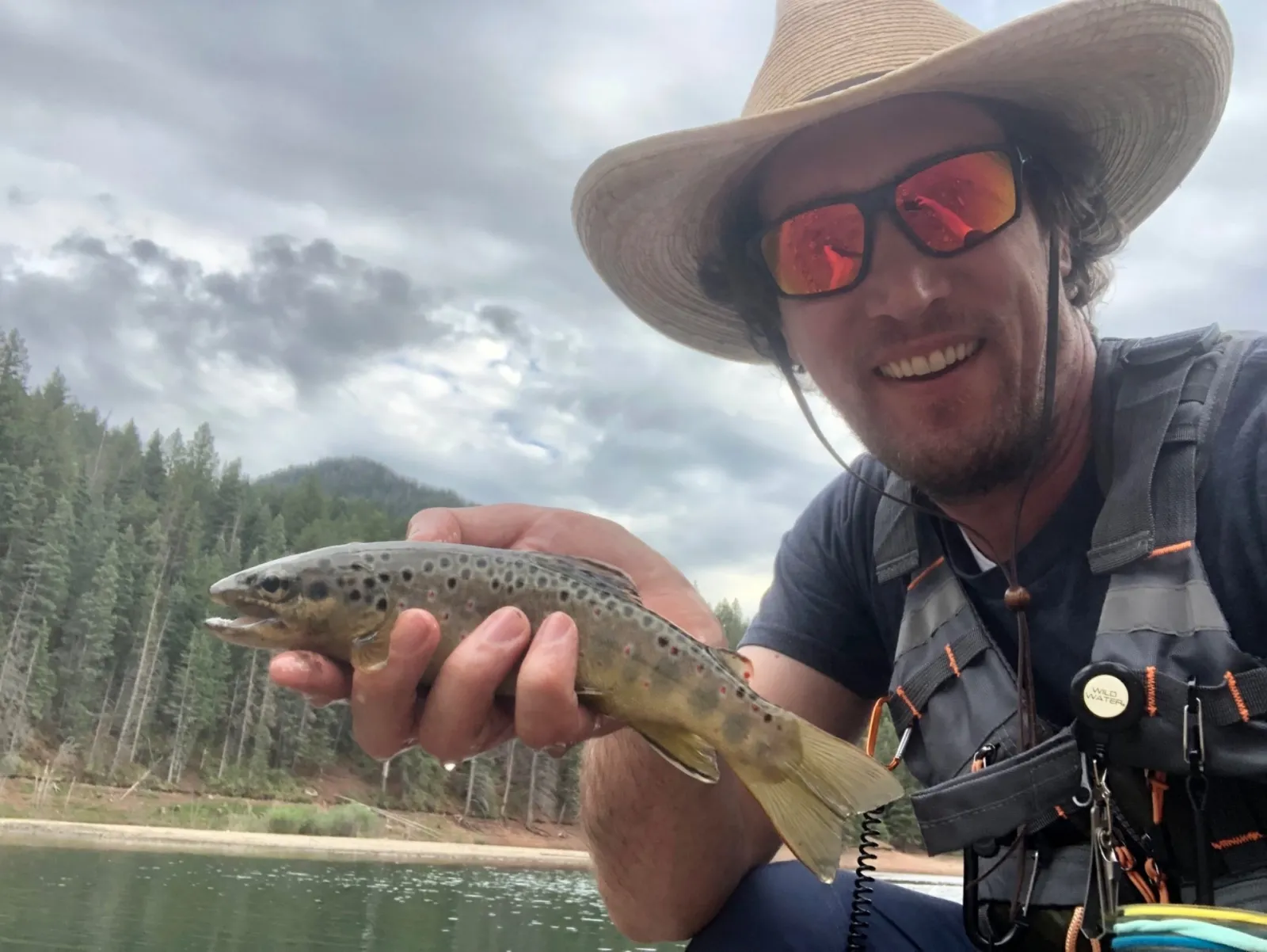
Written by Cameron Spanos
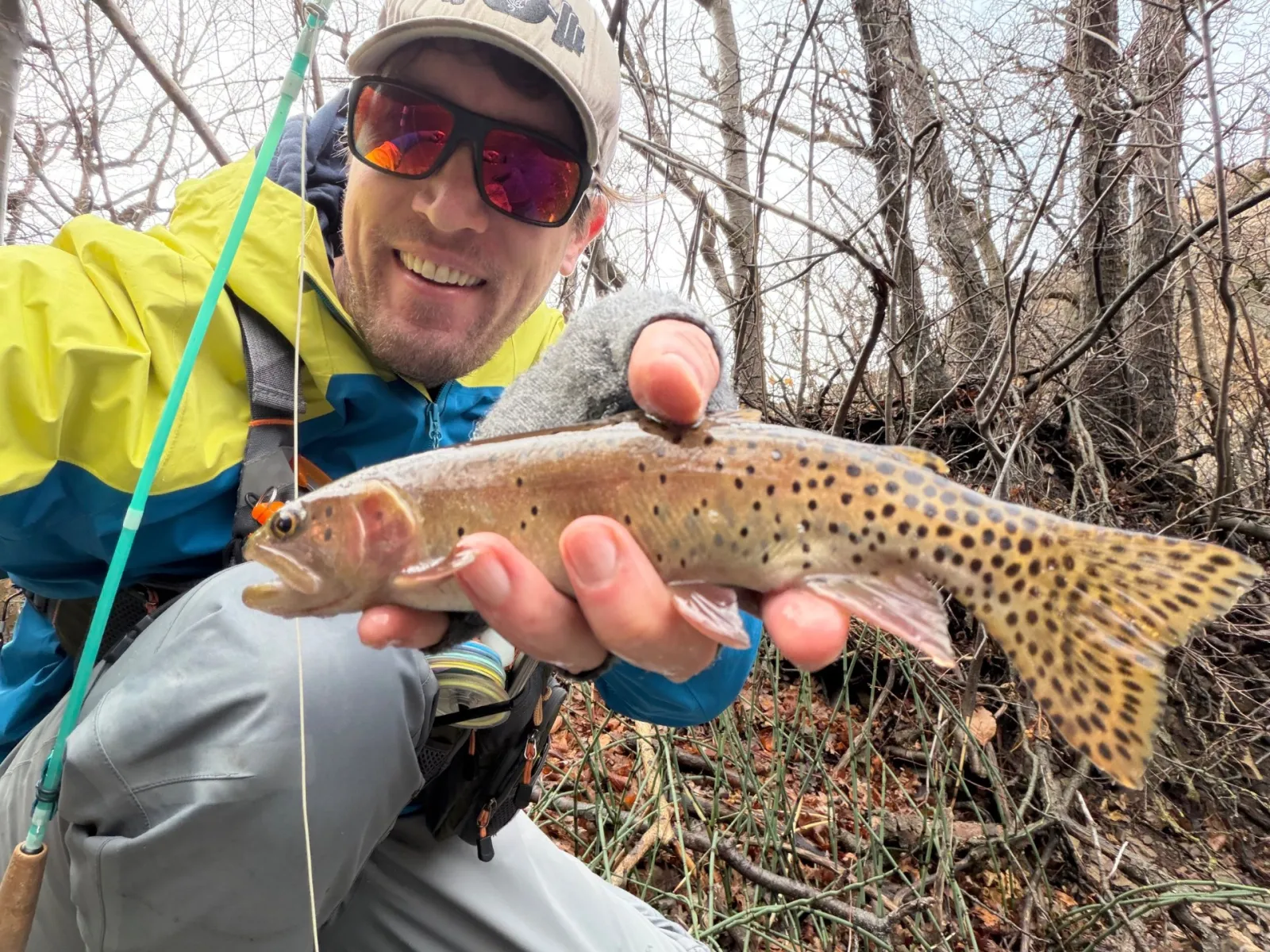
Drive up American Fork Canyon on a July Saturday and Tibble Fork Reservoir is doing its best impression of a city pool. Paddleboards wall to wall, picnic tables claimed by 9 a.m., a golden retriever or three working the shallows. Nearly everyone fishing it is soaking PowerBait for stocked rainbows, and most Tibble Fork Reservoir fishing advice stops right there. My own numbers tell a different story: across eight logged trips from 2024 to 2026 in my Bushwhack fishing log, I landed 25 fish here, and 24 of them were brown trout.
One Bonneville cutthroat. Zero rainbows.
That's not a knock on the rainbow program. Put-and-take stocking works exactly as designed, and it's the right fishery for a seven-year-old with a bobber. But it means most of what's written about this little lake covers half the story. This guide covers both halves, plus the pass fees, parking reality, and ice notes that decide whether your day feels like fishing or like waiting in line at a theme park.
The fish: stocked rainbows on top, wild browns underneath
Tibble Fork is managed by the Utah Division of Wildlife Resources as a put-and-take rainbow fishery. Catchable-size rainbows go in every year and most come back out the same season, which is the whole point. The DWR's Fish Utah page for Tibble Fork also lists brown trout and cutthroat, with an occasional brook trout showing up. Utah's stocking program is enormous (more than 11.6 million fish into 655 waters in 2025, according to the DWR), and small road-accessible canyon lakes are exactly where those trucks go. Before you drive up, check the DWR fish stocking report. A fresh load of rainbows means a hot week for the bait crowd, and it's a better Tibble Fork fishing report than anything an auto-generated report site will give you.
The browns are the underreported story. The DWR describes them as a small but resilient population, and my log agrees with the resilient part more than the small part. They held over through the 2016 dam rehabilitation, which raised the dam 15 feet and more than doubled the lake's surface area to about 21.6 acres, so anything written before 2017 describes a smaller lake than the one you'll fish today. The reservoir sits at roughly 6,400 feet, high enough that the water stays trout-cold all summer.
The brown trout nobody drives up for
The pattern across those trips is boringly consistent. Late August through October. Afternoon into dusk. Overcast beats bluebird. A dry dropper rig did most of the damage.
My two best days both went five browns. On September 19, 2025, a black mosquito dry trailing a dropper took five in an afternoon at 68 degrees, overcast with a light wind. On August 28 that year, a green scud hung under a dry took five more at 64 degrees on a dead-calm evening, and every one of those fish ate at dusk. An Elk Hair Caddis with a dropper accounted for four browns on a mostly cloudy 74-degree afternoon the same week, and back in October 2024 a fixed-line tenkara rod swinging a black wet fly took three in an afternoon, which tells you plenty about how close to the bank these fish hold.
When the dry bite thinned in late September, streamers kept it going. A black leech pattern moved three browns on a clear afternoon, a pink Glo Bug fished as a dropper took three more the same day, and a white Woolly Bugger picked up one last fish at dusk.
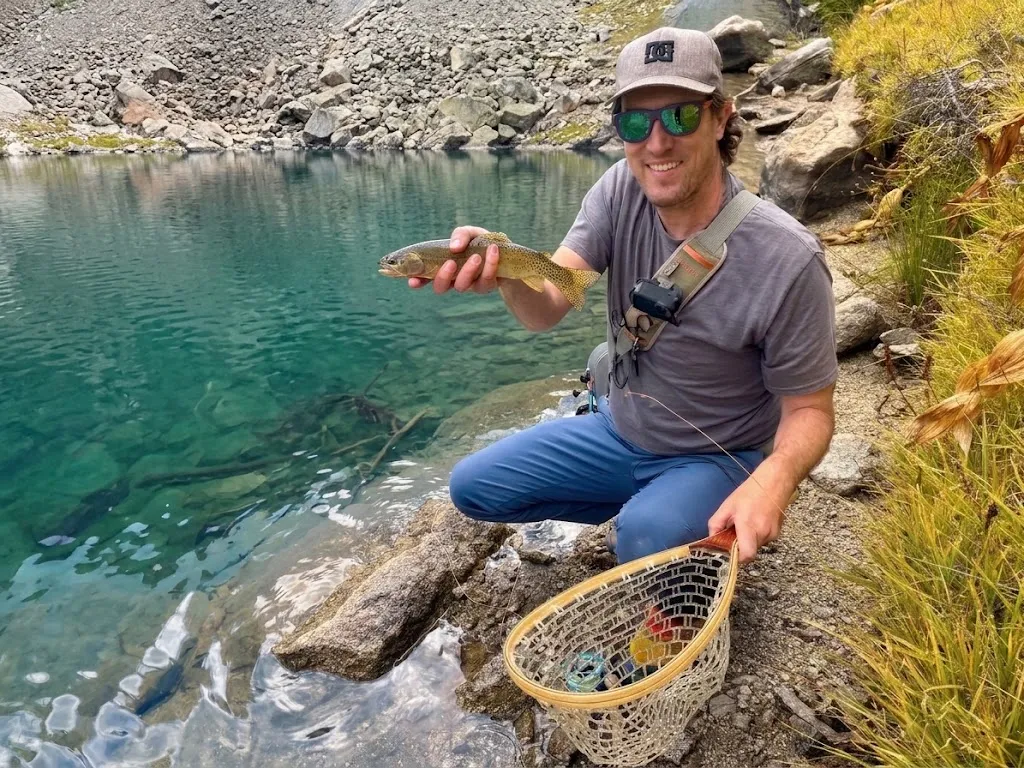
The lone cutthroat was a Bonneville cutthroat that ate a Parachute Adams at dusk on the last day of June, 62 degrees and clear. One fish isn't a pattern. It's still a reminder that Utah's native trout swims here, and it ate the smallest, most delicate presentation in the whole dataset.
You might also enjoy: Trico Spinner Falls in July: The 7 AM Window Every Tailwater Angler Should Plan Around
If you take one tactic from this post, take this one: fish a buoyant dry (an Elk Hair Caddis or a mosquito pattern) with 18-24 inches of tippet down to a small nymph, work the drop-offs and inlet seams from the bank, and don't leave before dusk.
When is Tibble Fork Reservoir fishing at its best?
Late August through October, afternoon into evening. That window produced 24 of the 25 fish in my log, and it's also when the canyon exhales after Labor Day. Here's the part that runs backwards from most stillwater advice: at Tibble Fork, an overcast late-season afternoon out-fishes a prime summer morning. Conveniently, that's also exactly when the paddleboard crowd goes home.
Summer still fishes, but on a summer weekend your day effectively ends by mid-morning. The lot fills early, the water fills with swimmers and boards, and the fish push off the banks. Be rigged and casting before 8 a.m., or show up after 6 p.m. and fish the evening. Midday in July belongs to the families, and honestly, that's fine. Bring your kids for the swimming and stay for the dusk bite.
Spring right after ice-out is the other window worth planning around, since the DWR typically has fresh rainbows in by then and the crowds haven't arrived yet.
Simple tactics for the family crowd
For stocked rainbows, don't overthink it. Floating dough bait fished off the bottom, or a worm under a bobber, along the dam face and near the inlets. Small spoons and inline spinners cover water when the bait soak goes quiet. Morning and evening are the reliable windows, though a sunny stretch can push stockers shallow enough for kids to sight-fish them.
The bank here is genuinely kid-friendly: gentle gravel shoreline, paved paths, picnic tables, and vault restrooms close to the water. You can park, walk 50 yards, and be fishing. Few trout lakes along the Wasatch Front make it this easy to get a small kid onto an actual fish, and a stocked 11-inch rainbow fights hard enough to make a memory.
Do you need a pass for American Fork Canyon?
Yes. Tibble Fork sits inside a Forest Service fee area, and per the Uinta-Wasatch-Cache National Forest recreation page, day use runs $10 per vehicle for a three-day pass, $20 for seven days, or $60 for a season pass. An America the Beautiful interagency pass covers it. You can buy a digital pass through Recreation.gov, and I'd do that before you drive up because cell coverage in the canyon is spotty.
Take the parking rules seriously. The Forest Service requires designated stalls or marked overflow areas only, and enforcement includes ticketing and towing, not just warnings. On summer weekends the main lot fills by mid-morning.
You might also enjoy: Mousing at Night for Big Brown Trout in Summer
Two more logistics notes that matter with kids: there's no potable water at the site, so haul your own, and dogs must stay leashed. Glass, alcohol, and fires are all prohibited.
Can you use a boat on Tibble Fork?
Non-motorized craft only. The Forest Service rule is blunt: no motorized use on the banks or the reservoir. Kayaks, canoes, paddleboards, and float tubes are all fair game.
A float tube is the sleeper option for anglers. Most of the pressure at Tibble Fork happens within casting distance of the parking lot, and a tube gets you over the deeper water and along the far bank where the browns see fewer flies. At 21.6 acres, you can cover the whole lake in an evening without breaking a sweat.
Can you ice fish Tibble Fork?
Yes, and it's one of the closest ice fisheries to the Provo and Salt Lake metro areas. The lake typically caps over in early December. According to the Utah DWR's winter forecast data, ice generally reaches 6-10 inches by the end of December and 16-18 inches by late February, with fair to good winter success on rainbows, browns, and cutthroat. Small ice jigs or vertical jigging spoons tipped with a wax worm or a piece of nightcrawler do the work.
Now the safety part, because it's real here. Moving water enters the lake at the north end, and those inlet areas hold open water or soft, thin ice through much of the winter. Treat any moving-water zone, inlet or outlet, the same way: ice near current can drop from a foot thick to an inch or two over a few steps. Drill or spud-bar test as you go, give the inlets a wide berth, and keep kids close. A short walk out from the dam side onto obviously thick ice covers plenty of catchable fish; there's no reason to wander toward the sketchy zones.
One more winter note: the canyon road is plowed but can be slick, and the pass requirement doesn't take the season off.
Worth the drive?
Tibble Fork will never be a secret. It's 30 minutes from a million people, it's gorgeous, and on an August Saturday it earns every bit of its crowd. Fish it anyway. Go on a gray September afternoon with a caddis and a dropper, stay through dusk, and you'll meet a population of wild brown trout that the PowerBait crowd doesn't know exists.
Eight trips of logged data turned a stocked family pond into a legitimate brown trout fishery for me. That's the whole argument for keeping a log in Bushwhack: patterns you can't see trip to trip show up fast once the numbers pile up.
Get fishing tips in your inbox
New guides, seasonal tactics, and gear picks — about once a month, no spam.