Mousing at Night for Big Brown Trout in Summer
 Cameron Spanos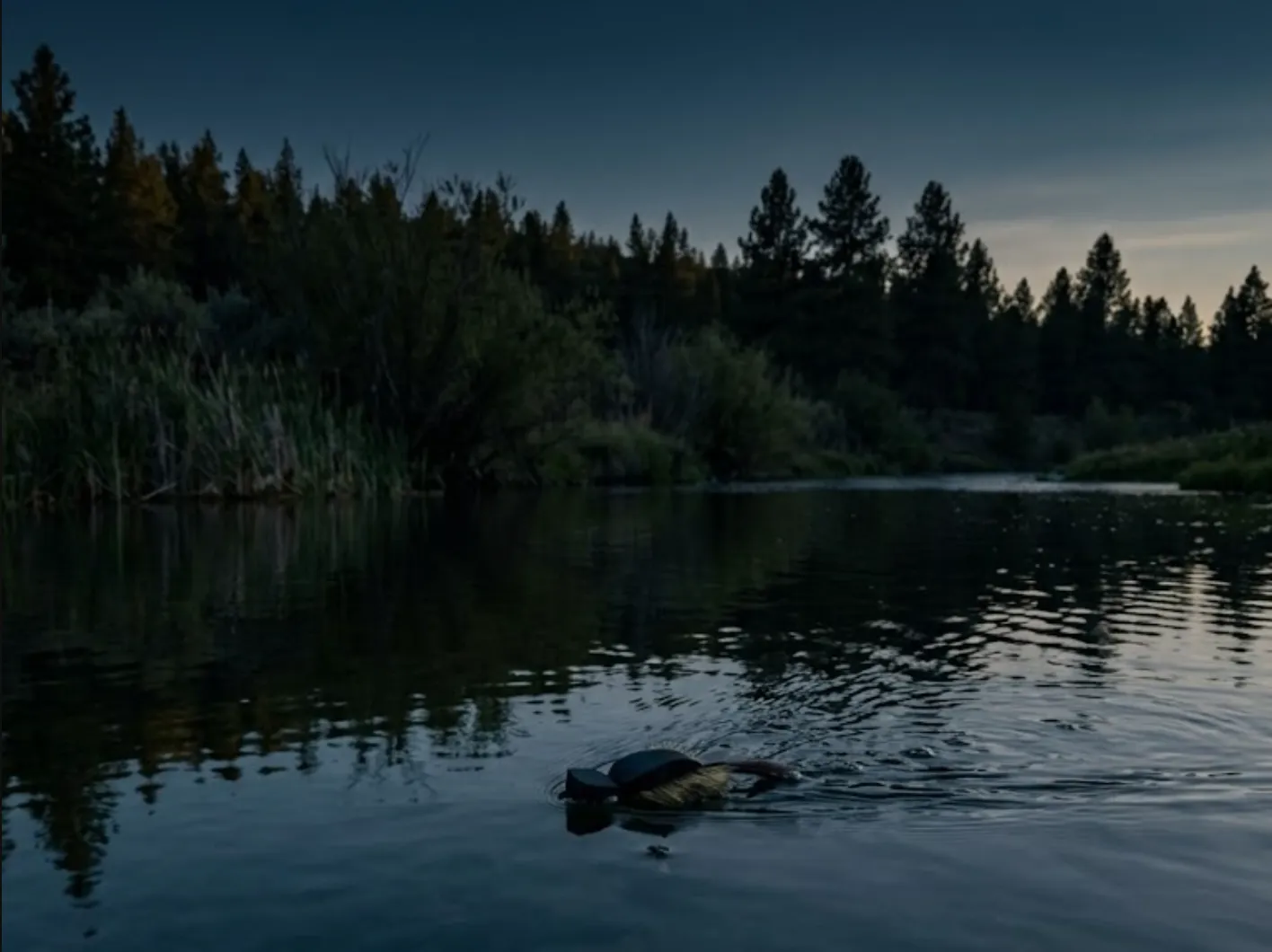
Written by Cameron Spanos
The take doesn't look like a rise. On a black glide with the mouse waking six inches off the far bank, a big brown eating it sounds like someone dropped a cinder block off a bridge. That gut-punch of a sound, followed by a pause and then dead weight on the line, is the whole reason people lose sleep over mousing at night for big brown trout in summer. It's also the smartest way to hunt a trophy when the sun is up and the water is too warm to fish without hurting fish.
Here's the case for it in one line: the hours after dark are cooler, browns feed hardest then, and the biggest fish in the river only drop their guard when it's genuinely dark. If your daytime water is pushing 70 degrees, mousing gives you a real trophy shot without cooking a fish in a long midday fight.
Mouse at night in summer because that's when the river cools into a safe range and big browns turn nocturnal to hunt. Go on dark nights from July through September, ideally near the new moon, and work slow shallow water. It's the ethical trophy shot when daytime water is too warm to fish.
Why mousing beats daytime fishing when the water is too warm
Trout want water in the upper 50s to mid 60s. Once a river climbs past 68 degrees, catch-and-release starts turning into catch-and-kill even when you do everything right. Warm water holds less dissolved oxygen, so a fought fish can't recover, builds up lactic acid, and dies hours after it swims off looking fine.
Wyoming Game and Fish is blunt about the number.
"When water temperatures hit 70 degrees, we recommend anglers stop catching and releasing fish."
Alan Osterland, fish division chief, Wyoming Game and Fish
Their guidance flags 75 degrees as lethal after prolonged exposure and 80 as lethal even briefly.
Now look at what happens after sundown. Air temps drop, the river sheds heat, and by midnight a run that hit 71 in the afternoon might sit at 64. That's the window. You're fishing cooler, better-oxygenated water, and you're fishing it when the apex predators actually hunt. Big browns go close to nocturnal in summer, partly to duck daytime heat and partly to duck the crowds. Subordinate fish shift to night feeding too, spreading out into water they'd never sit in at noon.
Carry a thermometer and check the water when you arrive. If it's still above 68, give it another hour. The fish will tell you when they're ready by how hard they eat.
When should you go? Moon phase and the summer night window
Darkness is the ingredient. The darker the night, the more comfortable a giant brown is cruising shallow water in the open, so the new moon and the nights on either side of it are prime. A bright full moon overhead can push fish down and kill the bite, because moonlight penetrating the surface makes them cagey.
That said, don't write off moonlit nights entirely. Cloud cover that throws the moon on and off can fish beautifully, and a low moon early or late in the night still leaves you a black window. What you're really after is contrast: enough dark that the fish feel safe, but a surface calm enough that your mouse's wake reads like a real animal in trouble.
You might also enjoy: Hopper Season Setup: The Three-Fly Rig That Replaces Your Dry-Dropper in July
Season-wise, July through September is the meat of it, and for the 2026 season that mid-summer stretch is exactly when your home water is most likely to be too warm to fish by day. Peak nightly feeding often lasts only a half hour to an hour and a half, when temperature, cloud, pressure, and bait activity all stack up. Get there before dark and fish the first true darkness hard, then keep working through the night in bursts.
My honest take: obsessing over the perfect moon phase keeps a lot of people home. A humid, overcast, muggy July night with no moon showing beats a "technically perfect" new-moon night that turns clear and cold. Watch the weather as closely as you watch the lunar calendar.
Where the big ones hunt after dark
Forget the deep, obvious holes you'd nymph at noon. At night the biggest browns move up and hunt skinny water, often just 12 to 24 inches deep, sometimes shallower. They slide onto tailouts, prowl the soft edges along the bank, and set up on inside corners of bends where the current eases and prey collects.
Undercut banks are money. A brown will hold tight under a cut all day and slide out to patrol the shelf in front of it after dark. Tailouts, that skinny slick where a pool dumps into the next riffle, are the classic mousing lie because a mouse working across smooth water there is impossible to miss.
The pattern that ties it together: slow, shallow, near structure. Glassy glides and soft inside seams beat fast broken water, because a wake shows up on calm surface and vanishes in chop. If you fished a stretch in daylight and know where the wood, the cut banks, and the tailouts are, you already have your night map. That daytime scout matters more than any fly choice.
How to work the mouse: wake, swing, and the strip that triggers eats
The whole game is making a chunk of deer hair or foam behave like a swimming rodent. Mice push water, and a hunting brown feels that pressure wave on its lateral line before it ever sees the fly. So you fish for the wake, not the drift.
The most reliable presentation is a cross-and-swing. Cast across the current, tight to the far bank or the head of a tailout, and let the fly swing down and across while you feed it just enough motion to throw a V-wake. Pay attention to the back half of the swing as the fly comes tight to your bank or into the slow inside corner. That's where most eats happen.
- Cast across and slightly down, landing the mouse tight to the bank, a cut, or the top of a tailout.
- Immediately tighten up and start a slow, steady wake, either a continuous draw or short popping strips that shove water.
- Let the swing carry the fly across the slick, keeping tension the entire time so the wake never dies.
- Fish the last few feet of the swing all the way to the hang-down before you pick up, because the inside-corner grab comes late.
- Take two steps, cast again, and cover the run methodically. Overlapping swings put the wake in front of every fish holding there.
Speed is a dial, not a setting. Some nights a dead-slow crawl gets crushed. Other nights fish want it moving fast enough to leave a real rooster tail. Change one thing at a time until you get an answer.
The hardest part: setting the hook on sound and feel
This is where people blow it, and it's worth burning into your brain before you go: do not set on the sound. You'll hear the eat, that violent slurp or crash, a full beat before the fish has actually got the fly. If you trout-set on the noise, you rip the mouse right out of the boil.
Wait. Feel for weight. When the line comes tight and you feel the fish pulling, then you strip-set hard and low, sweeping the rod to the side rather than lifting. Big browns often stun prey and come back for it, so a fish that misses on the first swipe will sometimes eat on the very next strip. Keep the fly moving after a swing-and-a-miss.
You might also enjoy: How to Fly Cast in the Wind: 5 Adjustments That Actually Work (Without a Single Haul Lesson)
Fish it with backbone. This is not delicate work.
An 8-weight is the standard mouse rod, matched to a floating line and a short, stout leader ending in 16 to 20 pound mono, or roughly 0X to 2X. Browns aren't tippet-shy in the dark, and heavy tippet lets you land a big fish fast, which matters double in warm summer water. A quick fight, a photo kept short, and a solid release in cool night water is the ethical trophy play.
Is it safe to wade a river in the dark? Read this before you go
Wading water you can't see is the real danger of this whole game, and it deserves more respect than the fishing does. The single best safety move happens in daylight: scout the exact stretch you'll fish. Walk it, note the drop-offs, the slick rocks, the deep slots, the wood, and figure out your entry and exit before the sun goes down. Fishing blind into unfamiliar water at night is how people get hurt.
A few non-negotiables from anglers and safety guides who do this a lot:
- Wear a wading belt, cinched tight. Some night waders run two, one at the waist and one higher up, to keep water out if they go down. Add studs or cleats to your boots and carry a wading staff to feel the bottom ahead of you.
- Carry two lights plus spare batteries. A headlamp with a red mode saves your night vision for walking the bank; you fish with it off. A dead light on a black river is a genuine emergency, so redundancy isn't optional.
- Never wade a river that's rising or higher than you know it. Rain upstream can bump levels fast, and current you'd shrug off in daylight will take your feet out from under you in the dark.
- Bring a partner, or at least tell someone your exact plan. Where you're parking, where you'll fish, and when you'll be back. Night fishing solo is doable, but it's a lot safer, and frankly better, with a buddy.
- Wade slow and feel with your feet. Shuffle, don't step. Keep your weight low and never cross current you wouldn't cross in the light.
If a spot feels wrong in the dark, get out and fish from the bank. No trophy is worth a swim in a cold river at 1 a.m.
Do beginners have any business doing this?
Yes, with guardrails. Mousing is one of the more forgiving night techniques because the take is obvious and the gear is simple, but you should learn a piece of water in daylight first and ideally go with someone who's done it. Start on a stretch you can wade confidently, keep your casts short and controlled, and accept that you'll spend the first night or two just getting comfortable moving in the dark.
Log what works. Track the moon phase, water temp, cloud cover, and where the eats came from so you can build a real picture over a season. If you want a simple way to record spots, conditions, and every fish, you can try Bushwhack to keep your night log in one place.
One honest expectation-setter: you can do everything right and get skunked. Mousing is a low-numbers, high-ceiling game. Some nights you move nothing. Then one glassy tailout under a new moon coughs up the biggest brown of your life, and you're hooked for good. See what else Bushwhack's features can track once you start piecing your night patterns together.
The short version
When your home water is too warm to fish responsibly by day, mousing after dark is the answer. Go on dark nights in July through September, work slow shallow water near banks, tailouts, and undercuts with a waking mouse, wait to feel the weight before you strip-set, and treat night wading with real caution. It's the ethical way to chase a summer trophy, and there's nothing else in trout fishing quite like that crash in the dark.
Get fishing tips in your inbox
New guides, seasonal tactics, and gear picks — about once a month, no spam.