Tenkara Fishing Utah's Uinta Mountains: Brook Trout Water Built for a Fixed Line
 Cameron Spanos
Written by Cameron Spanos
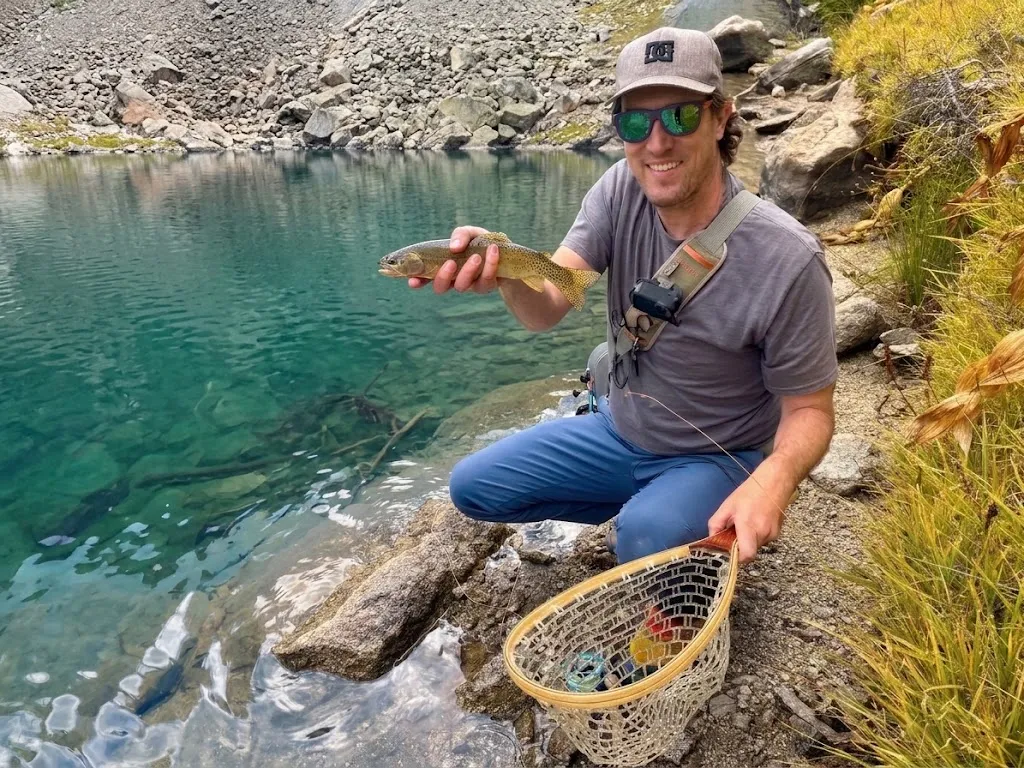
Fifteen brook trout in one July morning, every one of them on the same red wet fly. Air temperature 52 degrees at first light, clear sky, wind flat calm. That's a real entry in my Bushwhack log from a Uinta lake sitting right around 10,000 feet, and it's why I'll argue that tenkara fishing Utah's high country is the most underrated fixed-line game in the lower 48.
I went back the next day with the same fly and logged eight more brookies in an afternoon, 60 degrees under partly cloudy skies.
The Uintas don't get written about this way. The usual coverage is a lake list with a species chart, and the tenkara-specific coverage amounts to a couple of forum threads and a personal blog post old enough to vote. So this is the guide I wish existed: why this range fits a fixed line better than almost anywhere in the country, how to plan a day at the drainage level instead of chasing lake names, and what my own logged catch data says about flies and timing.
Why the Uintas Are Tenkara Water
Scale first. The Utah DWR puts the count at more than 1,000 natural lakes in the High Uintas, most of them above 10,000 feet, and Visit Utah's fishing guide counts over 600 lakes and ponds reachable from 16 trailheads spread along 545 miles of trail. Hundreds of those waters hold fish. Brook trout dominate, with cutthroat, tiger trout, and Arctic grayling mixed in depending on the drainage.
Now look at what a tenkara rod actually wants. Short casts to opportunistic fish. Calm water at a manageable size. A tight weight budget, because everything rides on your back at altitude. High-country brookies check every box. Insect life is thin at 10,000 feet, so the fish cruise the shoreline all day hunting whatever falls in, and they compete for it instead of inspecting it. You don't need 60 feet of fly line to reach them, because the fish come to you along the bank. The little streams connecting these lakes run about five feet wide and shin deep, which is textbook fixed-line water. And a collapsed tenkara rod is 20-some inches long and lighter than your water filter.
This is the water tenkara was built for, even if it was built an ocean away.
Reading a High Lake with a Fixed Line
Lake fish flip the stream script. In a creek, trout hold in one spot and the current delivers food. In a high lake, the fish do the moving, patrolling repeatable circuits along the shoreline. So the first move at a new lake isn't a cast. It's standing still for two minutes with the sun at your back, watching the shallows until you spot a cruiser and learn its route.
Once you know the route, drop the fly 5 or 6 feet ahead of the fish and let it sink. When the fish closes the distance, pulse the fly with short, slow strips around mid-column. A brookie that has spent all morning eating whatever drifts by doesn't pass up something small and alive-looking in its lane.
Structure matters more than it looks like it should on water this uniform:
- Inlets and outlets fish like streams. There's a current seam, fish face into the flow, and your normal dead-drift tenkara presentation works unchanged. These are the highest-percentage spots on any Uinta lake.
- Points and rock outcrops give you height to spot fish plus a lane to cover deeper water.
- On windy days the downwind bank collects everything the breeze knocks onto the surface. Casting a level line into wind is miserable, but that's where the food drifts and the fish stack.
- Favor banks backed by meadow or open talus. A timbered shoreline eats flies on the backcast, and with a 13-foot rod you need room behind you.
Morning and evening, cruisers slide into water barely deep enough to cover their backs, and you'll see fish working ten feet off the bank. Midday still produces up here, which I'll get to below.
Plan at the Drainage, Not the Lake
Every "best Uinta lakes" article hands you a list of names, and I think that's the wrong way to plan a trip. Lakes up here cycle. A shallow one winterkills, a stocked one turns on three seasons after the plane flew over, and the forum post hyping a specific water is often five years stale. The DWR organizes its own Uinta fishing pamphlets by drainage, and that's the level you should plan at too: pick a basin holding a dozen lakes within walking distance of each other, then let the day tell you which ones are on.
You might also enjoy: Trico Spinner Falls in July: The 7 AM Window Every Tailwater Angler Should Plan Around
A rough map of your options, from easiest access to most remote:
- The Mirror Lake Highway corridor. State Route 150 runs 42 miles from Kamas over 10,715-foot Bald Mountain Pass, and the Forest Service's Mirror Lake Scenic Byway page lists the access points. Trial Lake, Washington Lake, Butterfly Lake, and Mirror Lake all sit within a short walk of pavement. More pressure, sure, but for a first tenkara day at elevation there's no better warm-up, and the connecting creeks between these lakes get ignored.
- The Provo and Weber headwaters drain the same corridor. Trails off the byway put you into quieter lake clusters within an hour or two of walking.
- The north slope's Bear River and Blacks Fork drainages trade convenience for elbow room. Longer drives on gravel, far fewer people.
- The south slope, including the Whiterocks drainage, is where you go when you want a basin to yourself for a weekend.
Before you commit to a drainage, spend ten minutes on the DWR's Fish Utah interactive map. It shows species by water, which matters because the mix shifts: the DWR has been treating select Uinta drainages to remove brook trout and restore native cutthroat, so the basin you fished five years ago might be a different fishery now.
When's the best time for tenkara fishing Utah's high lakes?
Mid-July through mid-September is the window, and the back half of July is the cream of it. Lakes above 10,000 feet shed their ice in late June most years, and in big snow years some basins stay locked into mid-July. The Mirror Lake Highway itself is seasonal: UDOT gates the high section each winter, typically opening it in mid-to-late May and closing it again in November, so early-season trips need a road-status check before anything else.
Once the ice is off, the fish are in a hurry. The growing season at that elevation is brutally short, so trout feed hard from ice-out until the first freezes in late September.
Two timing notes from my own log. First, afternoons are fine up there. Valley fishing in July means grinding dawn before the water warms, but at 10,000 feet my logged afternoon outings at 60 to 64 degrees produced 8-fish sessions. You can sleep in, fish 10 a.m. to 6 p.m., and miss nothing. Second, every one of those logged trips happened on a calm or light-wind day, which is no accident when your longest cast is a fixed 20 feet. Wait out the gusts or find a sheltered shoreline.
The non-negotiable is weather. Afternoon thunderstorms build over the Uintas most summer days, and a 13-foot graphite rod on an open shoreline at 10,500 feet is a lightning rod with a cork grip. Watch the sky from noon on, and be willing to sit out an hour in the trees. The storms usually pass as fast as they build.
What 43 Logged Brook Trout Ate
Everything in this section comes straight out of my Bushwhack log, 2024 through 2026. Ten tenkara trips, 55 fish total. Isolate the high-lake outings and it's 7 trips and 43 fish, almost all brook trout, at Uinta lakes right around 10,000 feet.
Two flies did nearly all the damage. A plain red wet fly accounted for 28 fish across 4 lake trips, including that 15-fish July morning. A black wet fly took 15 fish across 3 trips, with a best of 8 brookies on a 64-degree clear afternoon. Those two flies account for all 43. The one bonus outside the fixed-line set: 3 Bonneville cutthroat that ate a black zebra midge under a dry dropper one 61-degree afternoon under part clouds.
Simple, unweighted wet flies outfished everything else I carried.
That result shouldn't surprise anyone who knows tenkara's roots. A soft-hackled wet fished with subtle motion is the whole kebari idea, and a sakasa kebari in size 12 or 14 does exactly what my red wet does: sinks slowly, breathes when you pulse it, and looks alive at mid-column. Color mattered less than presentation in my log. Red and black both worked; the pulse-and-pause retrieve is what got eaten. When fish are rising, a Griffith's gnat or a parachute Adams in size 16 to 20 covers the midge activity, and an ant pattern earns its slot from mid-June on.
You might also enjoy: Mousing at Night for Big Brown Trout in Summer
My honest take: the full western stillwater program, meaning indicator rigs, full-sinking lines, and chironomid boxes in six colors, is solving a problem the Uintas don't have. That system exists for pressured, fertile, low-elevation reservoirs. An aerial-stocked brookie at 10,400 feet sees a handful of anglers a season and has three months to eat a year's worth of calories. Bring one small box and spend the saved weight on a better rain shell.
One more thing about that data. I only know the red fly's numbers because I logged fly, air temp, sky, and wind on every one of those trips, and the pattern only appeared after a couple of seasons. If you want your own version of it, try Bushwhack and start logging conditions with every catch. Your future self will fish smarter than your current self does.
Do you need a special rod for the Uintas?
No. Whatever tenkara rod you already own will catch Uinta brookies, and if you're choosing between trip funds and gear funds, take the trip.
That said, length helps on stillwater. A 12 to 13.5-foot rod keeps more line off the surface and reaches cruisers a wading step farther out, while a zoom rod that shortens for the brushy connector creeks is the best of both. Run a number 3 or 3.5 level line in calm conditions and bump to a 4 when the wind comes up, with a longer 5X tippet when you're sinking wets to cruising fish. I've compared specific tenkara rod models in a separate gear post on this blog, so I won't re-litigate brands here.
Are Uinta lakes stocked?
Yes, and the delivery method is the best trivia in Utah fishing: many of them are stocked by airplane. The DWR has used aerial stocking since 1956, flying low passes and dropping fingerling trout in the 1-to-3-inch range. Fish that small flutter down slowly enough to survive the fall, and a single flight can seed multiple basins in a day. You can look up exactly what got planted where, and when, in the DWR's fish stocking report.
Stocking isn't the whole story, though. Brook trout reproduce naturally in a huge share of Uinta lakes and streams, which is why so many waters stay full of eager 10-inchers without a plane ever passing over. It's also why the DWR's cutthroat-restoration treatments target brookies specifically: they're prolific enough to crowd out the natives. Those 3 Bonneville cutthroat in my log are a small taste of what that restoration work is producing.
Honest Expectations
The typical Uinta brookie runs 8 to 12 inches. If you need a shot at a 20-inch fish to justify a day of fishing, this isn't your water, and I'd rather tell you that now than have you hike in expecting a trophy hunt.
What the Uintas offer instead is volume, willingness, and a setting that makes an 8-inch char feel like a gift. Fifteen-fish mornings happen. Double-digit days are normal once you're dialed in on the cruising game. Some lakes winterkill and sit empty for a season or two, which stings when you hiked to a dud, and it's exactly why you plan at the drainage level: the next lake in the basin is 20 minutes away and probably full of fish.
Pack the rod that fits in a side pocket, pick a drainage, and go find out which lake is on this year. Then log it in Bushwhack so that next July, you're the one holding the data.
Get fishing tips in your inbox
New guides, seasonal tactics, and gear picks — about once a month, no spam.