Scofield Reservoir Fishing Guide: Tiger Trout, Cutthroat, and the Chub Cycle
 Cameron Spanos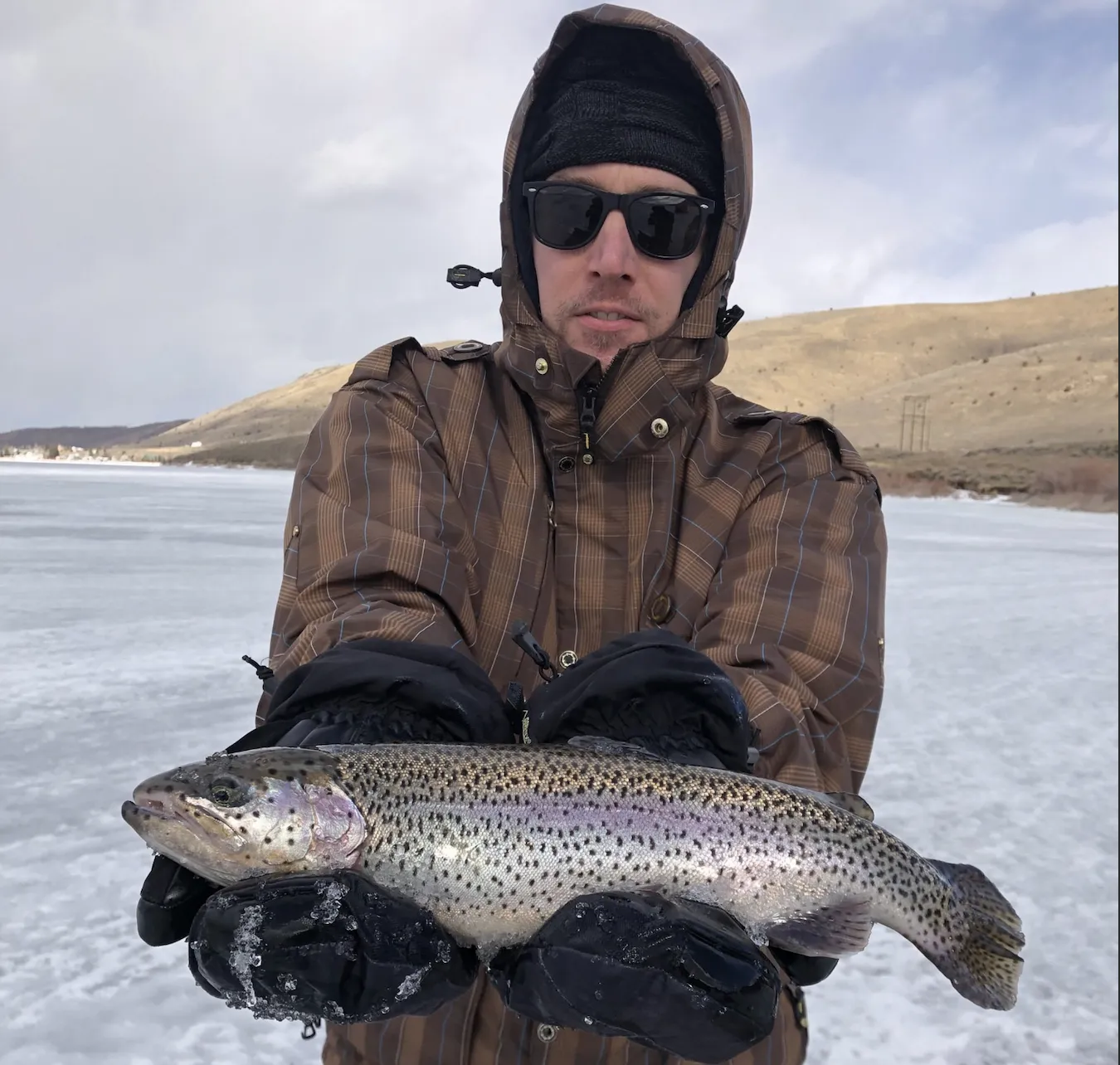
Written by Cameron Spanos
A 32 inch tiger trout pulled through the ice at Scofield in December 2023 was certified as Utah's new catch-and-release state record in 2024, caught by an angler who told Outdoor Life he was following his grandpa's advice about the spot. That one story sums up Scofield Reservoir fishing better than any brochure could: record-class tiger trout, a hard-water culture that treats January like prime time, and fish that got enormous by eating a problem the Utah DWR has been fighting for two decades.
This is a working guide to that fishery. It covers why the tiger trout are here, what the DWR's gillnet surveys say about the Utah chub cycle that drives everything, the exact 2026 regulations (Scofield's are water-specific, and one line in them surprises people), and how to fish the place from ice-off through ice fishing at about 7,600 feet.
Why are there tiger trout in Scofield Reservoir?
Because of Utah chubs. The DWR began stocking tiger trout in Scofield in 2005 with one job in mind: eat down a chub population that was taking over the reservoir and squeezing the life out of the trout fishery.
The Utah chub is a minnow native to other Utah drainages but introduced here, likely by bait bucket, and it explodes in fertile, weedy water. Scofield is both. Chubs outcompete small stocked trout for food, and once they're established, no realistic amount of harvest touches them. After the last chemical treatment knocked the population back, chubs reappeared in the DWR's gillnet surveys in 2005. Biologists netted 19 of them in 2006. The following year it was 54, roughly 30 percent of everything in the nets, according to Deseret News coverage of the surveys at the time.
So the state changed the game. Instead of trying to remove chubs, the DWR stocked predators that convert them into trout: tiger trout and predatory cutthroat, the same chub-control playbook that built Strawberry Reservoir's cutthroat fishery.
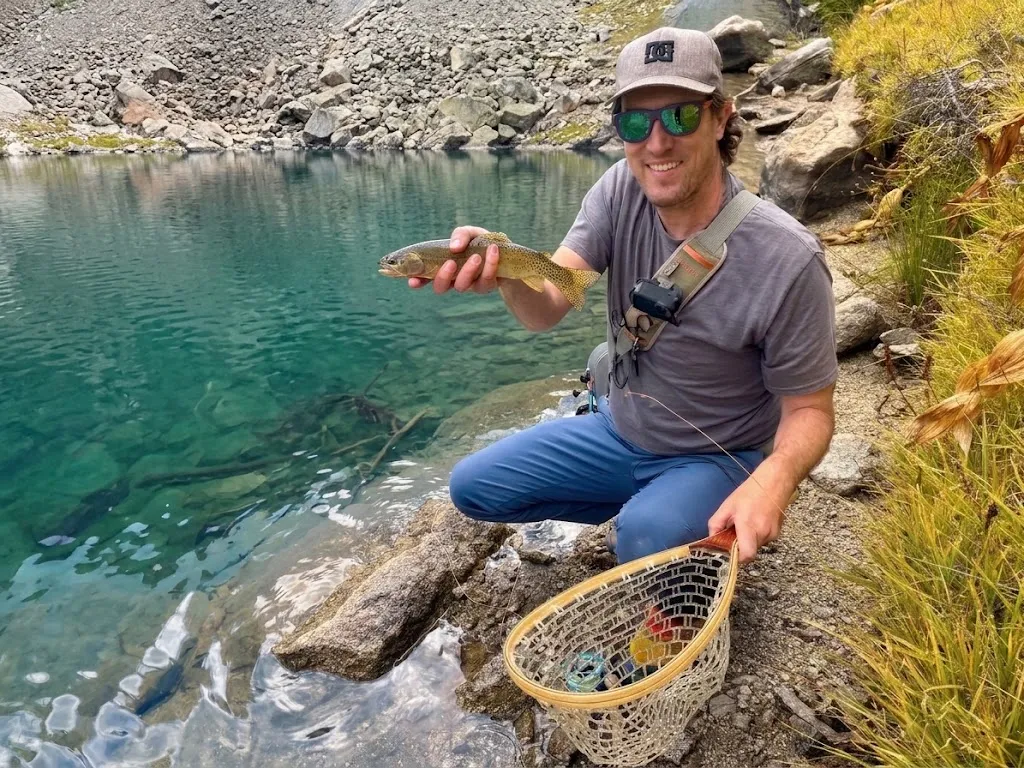
Tiger trout are the interesting half of that equation. They're a sterile cross between a brown trout and a brook trout, which means the DWR controls their numbers precisely since they can't reproduce, and they inherit useful traits from both parents: the brown's fish-eating aggression and the brook's tolerance for cold water. Per the DWR, stocked tigers and cutthroat switch to a fish diet about a year after planting, and once they start eating chub they grow extremely fast. That growth curve is why Scofield tigers keep showing up in the record books.
A chub problem, in other words, is also a trophy program.
What the DWR's gillnets say about the chub cycle
Gillnet surveys are how the DWR keeps score at Scofield, and the results have swung both ways. The 2011 survey turned up record numbers of tiger trout, including plenty of fish in the 2 to 6 pound class. That was strong evidence the predator strategy was converting chubs into exactly the fish anglers wanted.
The catch is that adult chubs outgrow the threat. A big chub is too large for most trout to eat, and chubs are long-lived, so the adults sit in the reservoir producing young for years while the trout crop the juveniles hard. Surveys have shown young chub numbers knocked way down even while the breeding stock persists. The chub situation at Scofield is a cycle to manage, not a war anyone wins.
In 2017 the DWR added new predator species to press the advantage, and anglers relaying the division's netting results on the Utah Wildlife Network forum have noted tiger muskie growing well and even the occasional walleye turning up in the nets alongside healthy cutthroat, tigers, and rainbows.
The practical read for an angler is the part most write-ups skip: trout condition at Scofield tracks the forage. When chub numbers climb, biologists worry and the tigers get fat. If the current Scofield Utah fishing report is full of football-shaped tigers, the chubs are doing their thing, and you should fish like a predator hunter rather than a stocker-rainbow tourist.
What is the limit at Scofield Reservoir?
The limit is 4 trout total, with a protected slot on cutthroat and tiger trout. Here's the exact water-specific rule from the 2026 Utah Fishing Guidebook:
You might also enjoy: Trico Spinner Falls in July: The 7 AM Window Every Tailwater Angler Should Plan Around
"Limit 4 trout (a combined total). No more than 2 may be cutthroat or tiger trout under 15 inches, and no more than 1 may be a cutthroat or tiger trout over 22 inches. All cutthroat and tiger trout from 15 to 22 inches must be immediately released. Trout may not be filleted, and the heads or tails may not be removed in the field or in transit. Any trout with cutthroat markings is considered to be a cutthroat trout."
Source: 2026 Utah Fishing Guidebook, Utah DWR. The DWR put the slot in place in 2009, and the logic maps straight onto the chub program: a 15 to 22 inch cutthroat or tiger is at peak chub-eating efficiency, so those fish go back. You can keep a couple of small ones and one true trophy over 22 inches. Rainbows aren't in the slot; they just count toward the four-fish total at any size.
Two more lines matter. The no-filleting rule exists so officers can measure fish against the slot, so transport trout whole. And "any trout with cutthroat markings is considered to be a cutthroat trout" settles streamside arguments before they start. If it has the slash, it's a cutthroat under the rule, whatever you think it is.
Tributaries are their own story. Scofield's feeder streams in Carbon, Sanpete, and Utah counties are closed from January 1 through 6 a.m. on the second Saturday of July, which protects spawning cutthroat. Don't fish the moving water up top in spring.
One more regulation question worth answering, because people ask it at Scofield specifically: yes, chub meat is legal bait here. Utah bans live baitfish statewide, but dead Utah chub is an allowed bait on waters where bait is permitted, and Scofield's water-specific listing adds no bait restriction. That's not a loophole. It's practically an invitation. Bait rules are water-specific and do change, so verify the bait section of the current guidebook before your trip.
Fish the forage: tactics that imitate a chub
Everything predatory in Scofield eats a 2 to 4 inch minnow with an olive-gold back and a pale belly. Build your whole approach around that profile.
From shore, throw minnow plugs and jerkbaits early. Tiger trout cruise the banks in low light hunting chubs in the shallows, and the first two hours of the day are worth more than the next eight. Work the lure with pauses. Tigers have a habit of tracking a bait and eating it on the stall.
Trolling covers water when fish spread out: small crankbaits and spoons in natural minnow finishes, run along weed edges and contour breaks. Nothing fancy.
Fly anglers should think streamers first. An olive or olive-and-white streamer on a sink tip, stripped slow near the weedlines, is the closest thing to a house bet on this reservoir. In spring and early summer, chironomids under an indicator pick up cutthroat and rainbows when the streamer bite goes quiet.
And the bait crowd has the cheat code: chub meat. A chunk on a jig or a slip-bobber rig outfishes a worm here because it smells like what the fish already eat. Plenty of Scofield regulars catch a chub, keep it for bait, and turn the reservoir's problem into their attractant.
Season by season: Scofield Reservoir fishing at 7,600 feet
Ice-off and spring
Ice-off at this elevation usually lands somewhere between late April and mid-May, and it moves by weeks from winter to winter. When it happens, it kicks off the best shore fishing of the year. Hungry fish push into the warming shallows, the banks are wide open, and a shore angler with a jerkbait or a streamer will outfish the boats for a stretch. If you only bank-fish Scofield once a year, make it May.
Summer
Summer is honest at Scofield: mornings are good, midday is slow, and the water turns green. This is a fertile reservoir, and by mid-to-late summer the algae can bloom hard, sometimes into harmful territory (more on that below). Fish early, work deeper cooler water as the surface warms, and troll when the fish scatter. Plenty of locals just skip the dog days and wait for September. If you split your season with a lower-elevation water like Deer Creek Reservoir, summer is the stretch to spend down there.
You might also enjoy: Mousing at Night for Big Brown Trout in Summer
Fall
Fall is round two for the bank window, and for big tigers it's better than spring. Cooling water puts predators back on the shorelines, they feed with intent ahead of winter, and the crowds thin out. September and October are prime, right up until the weather turns and the reservoir starts thinking about ice again.
Is Scofield good for ice fishing?
Scofield is one of the best tiger trout ice fisheries in Utah, and for a lot of regulars, hard water is the marquee season. The elevation caps the reservoir in most winters and holds fishable ice deep into late winter, and the fish that made this place famous stay active under it. That brook trout half of the tiger's parentage means cold water barely slows them down. Remember, the record tiger came through the ice here, not over a gunwale in June.
The approach is simple. Jig a small spoon or a tungsten jig tipped with chub meat, a mealworm, or a wax worm. Work the low-light hours hardest, stay mobile until you mark fish, and don't ignore water shallower than feels reasonable, because tigers will slide under the ice into surprisingly skinny water to hunt chubs. Rainbows and cutthroat fill in the midday hours between tiger windows.
Standard hard-water caveats apply: check ice thickness yourself, and be extra careful early season, late season, and anywhere near the inlets at the Madsen Bay end.
Is the algae bloom at Scofield dangerous?
It can be, and it's worth taking seriously rather than shrugging off. Scofield has a documented history of harmful algal blooms (HABs), the cyanobacteria that can produce toxins. A bloom closed the reservoir to swimming in 2016, and on September 2, 2025 the Southeast Utah Health Department issued a Warning Advisory for the reservoir. Under a warning advisory, the guidance is don't swim, keep pets out of the water, and use caution when fishing or eating fish.
The good news: as of the Utah DEQ's June 2026 monitoring checks, Scofield has no active advisories, and the state samples the water through the summer season at spots including Madsen Bay and the southwest shore. Before any mid-to-late-summer trip, check the DEQ's Scofield Reservoir monitoring page the way you'd check the weather. It's the same advisory system that covers the Utah Lake algal bloom situation, and the same angler playbook applies: you can usually still fish under a warning, but stay away from visible scum, rinse your hands, clean fish well and discard the guts, and leave the dog home.
Getting on the water: Madsen Bay, Mountain View, and shore access
Scofield sits at the top of Price Canyon in Carbon County, about 35 miles from Price per the Utah DEQ, with State Route 96 running along the water. Scofield State Park operates two developed units, Madsen Bay and Mountain View, with boat ramps and camping. Check the park page for current fees, ramp conditions, and winter access before you commit to a launch.
Shore anglers have real options here, which isn't true of every Utah reservoir. Beyond the park units, there's angler access along the southwest shore off SR-96. The DEQ's own sampling notes reference an angler access point about 0.4 miles north of where the highway crosses Miller Canyon, which tells you exactly what kind of pull-off-and-fish water this is.
The edge most Scofield regulars ignore
Scofield is a cyclical fishery. Chub numbers swing, advisories come and go, ice-off moves weeks between years, and the slot means the fish you can keep changes with the tape measure. That's exactly the kind of water where keeping records pays off. Track your ice-off dates and water temps, plus what the tigers ate each trip, and within two seasons you'll have a private pattern book for the place. If you want a purpose-built way to do it, try Bushwhack and see what your own Scofield data looks like after a year.
The chubs aren't going anywhere. Neither are the tigers that eat them. Learn the cycle, and you'll be the one at the ramp everybody else is asking about.
Get fishing tips in your inbox
New guides, seasonal tactics, and gear picks — about once a month, no spam.