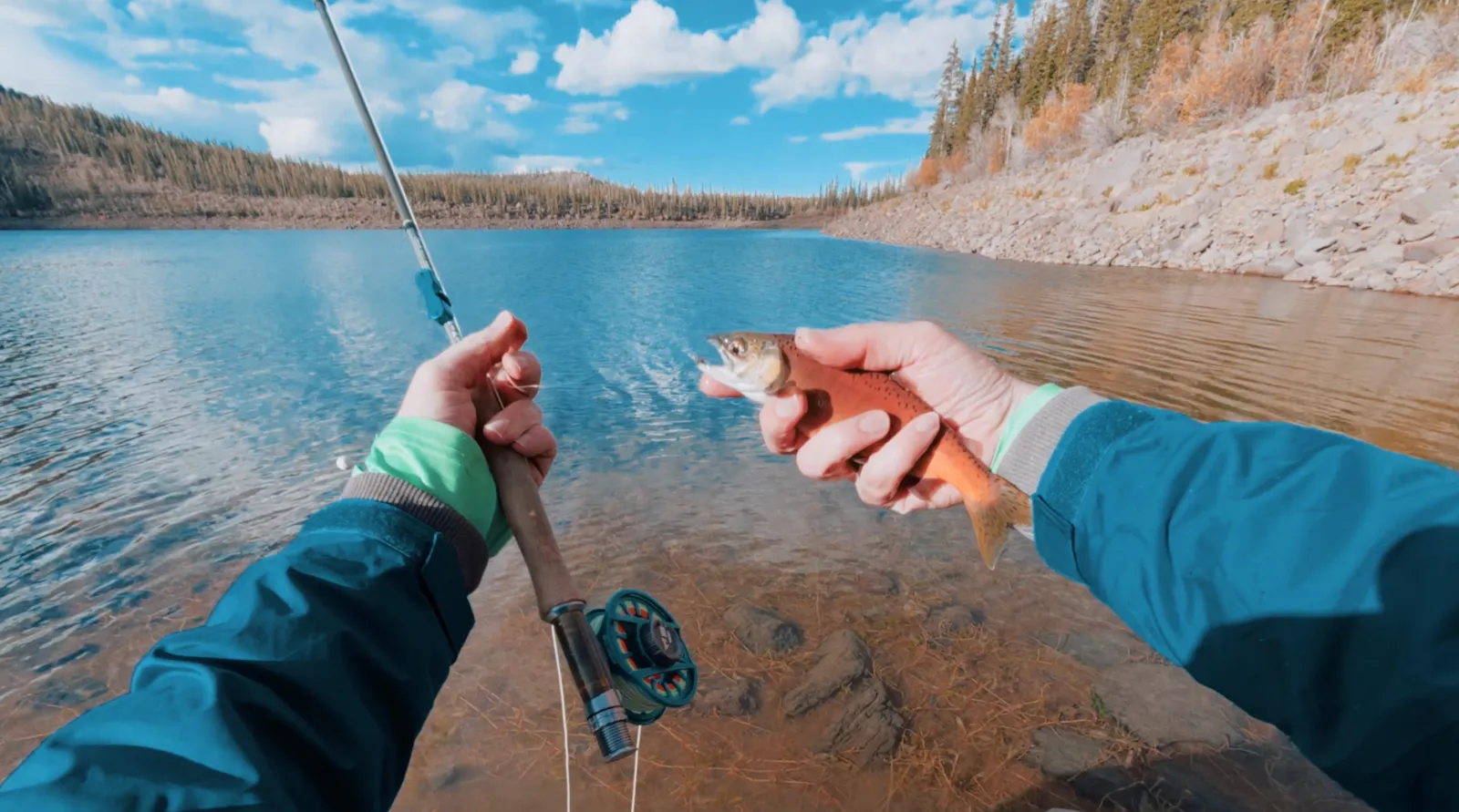
Salmonfly Hatch 2026: A Region-by-Region Timing Guide for the West
 Cameron Spanos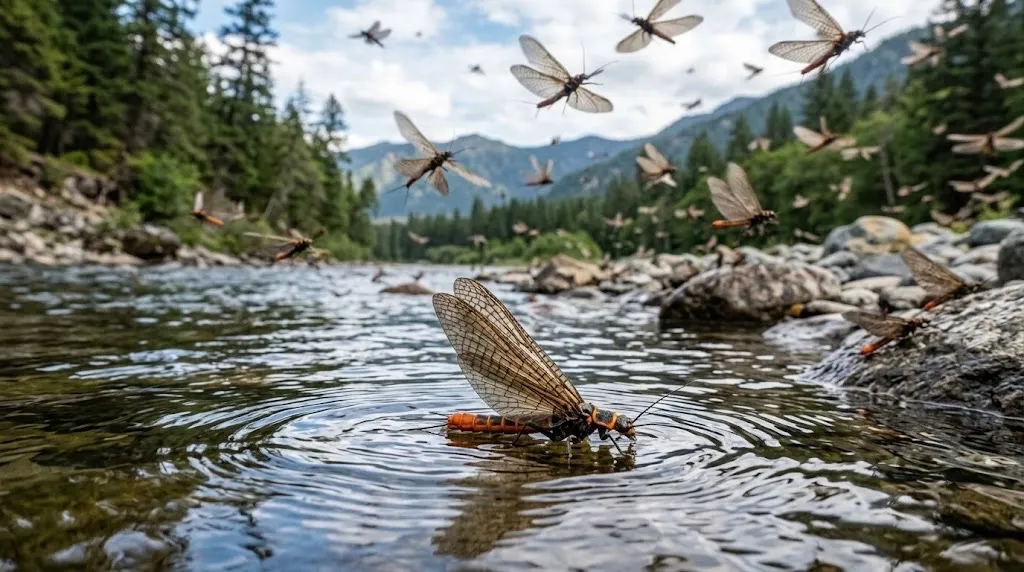
Written by Cameron Spanos
It's May 15, and somewhere on the lower Madison right now, three-inch nymphs are crawling toward the bank rocks in water that's flirting with 54 degrees. In ten days they'll be on the willows. In three weeks the salmonfly hatch will be at West Fork. If you want to be standing on the right gravel bar at the right hour, you need a calendar, a thermometer, and a willingness to drive at 3 a.m.
This hatch is the only one that makes grown men cancel weddings. It's the West's biggest bug, the West's biggest trout binge, and the West's most blown trip when you show up two days late and the willows are bare.
This is the cheat sheet.
What actually triggers the salmonfly hatch?
Water temperature. Full stop. Pteronarcys californica nymphs spend three years tucked under boulders in fast riffles, and they don't crawl out for daylight or calendar dates. They crawl out when the water column sits in the 54 to 56 degree range for several consecutive days, according to multiple Montana outfitters tracking the hatch since the 1980s.
Below 54 and the nymphs stay put. Above 58 and the hatch is already past you, moving upstream toward whatever cold tributary or higher-elevation reach hasn't warmed yet.
Day length helps. Flow stabilization helps. But temperature is the trigger. Buy a stream thermometer.
The upstream progression rule
The salmonfly hatch is not an event. It's a wave. It starts in the lowest, warmest stretch of a river and rolls upstream at a predictable pace.
On big freestones like the Big Hole and Madison, expect roughly 3 to 5 miles per day. On steeper rivers like the lower Deschutes, 2 to 5 miles per day. On Idaho freestones generally, it can clip along at 5 to 10 miles a day in a warm spring.
The single section you're standing in only peaks for 3 to 5 days. That's the whole reason people miss it. They book the trip for "the salmonfly hatch" without picking a mile marker, and then they show up on day six when the bugs are 25 miles upstream and the trout have stopped looking up.
2026 calendar: where to be when
Today is May 15, 2026. Western snowpack came in slightly above average across the Northern Rockies and roughly average in Colorado and Oregon, per the May NRCS SNOTEL summaries. That points to a more or less average hatch. Call it a base case with maybe a 3 to 5 day delay on the snowmelt-heavy drainages (Big Hole, upper Madison) versus the historical mean.
Use these windows as a starting point, then verify with a thermometer and a local fly shop call the morning you leave.
Big Hole River, Montana
The Big Hole is the first major Montana freestone to go off most years, because the lower river below Melrose warms fast once runoff peaks and drops. Bugs typically show below Melrose around June 8 to 10, then push upstream through Wise River and toward Divide over the following two weeks. Track the runoff on the USGS Big Hole River near Melrose gauge.
For 2026 with a slightly above-average snowpack, plan for June 10 through June 22 as your widest reasonable window. Target Melrose to Glen first; chase it up to Wise River by week two.
The Big Hole is famous because it goes off early and the river is small enough to wade-fish the seams between drift boats. It's also famous because in big runoff years the bugs can hatch under chocolate-milk water and you'll never see a rise. Watch the flow.
Madison River, Montana
The Madison is the most reliable salmonfly fishery in the Lower 48 because the river warms in a predictable, staircase pattern from Ennis Lake up to Quake Lake. The hatch typically starts near Ennis Lake around June 20 to 23 and works upstream through the Beartrap Canyon (watch the USGS Madison River below Ennis Lake gauge for the temperature climb), then onto the famous "50-Mile Riffle" between Lyons Bridge and Three Dollar Bridge.
For 2026, expect:
- Lower Madison (Ennis to Greycliff): June 20 to June 26
- Middle Madison (Varney to Lyons): June 24 to July 1
- Upper Madison (Lyons to West Fork): June 30 to July 7
- Upper-Upper (West Fork to Quake): July 4 to July 10
The Madison hatch is so predictable that fly shops in Ennis run a salmonfly hotline. Use it. Adjust your put-in by 10 miles if you need to.
Henry's Fork of the Snake, Idaho
Henry's Fork salmonflies live mostly in the Box Canyon stretch below Island Park Dam, with the heaviest emergence concentrated in that single canyon mile. According to Henry's Fork Anglers, the hatch "moves upriver a mile or so a day," slower than a freestone because the river is tailwater-stable.
You might also enjoy: Middle Provo River Wade Fishing: Access, Parking, and Hatches Mile by Mile
2026 window: June 8 through June 20, with the Box Canyon peak typically falling in the second week of June. The Henry's Fork hatch is shorter, more concentrated, and gets pressured hard. Show up at first light or stay until dusk. Midday in the canyon during peak week looks like a parking lot.
Lower Deschutes, Oregon
The Deschutes salmonfly hatch is the one most worth a flight from somewhere far away, because the bugs come off in absurd numbers and the redsides feed without subtlety. The hatch starts in the lower river near Maupin and pushes upriver toward Warm Springs at 2 to 5 miles per day.
2026 window: May 15 through June 10. That means right now, today, the bugs are already on the willows in the lower stretches if you're reading this in real time. Maupin to Trout Creek is the high-percentage zone for the next two weeks. Past mid-June, push up toward Warm Springs.
One Deschutes-specific note: tribal land closures north of Trout Creek mean you can't wade certain stretches without a guide or tribal permit. Plan the float accordingly.
Upper Colorado River, Colorado
The Colorado salmonfly hatch is the underrated one. It runs from Dotsero through State Bridge and Pumphouse, peaking late May to early June depending on runoff. The hatch can roll upstream from Dotsero to Pumphouse in roughly a week.
2026 window: May 25 through June 15. Start at the lower end (Dotsero and Burns) and work upriver. In heavy runoff years the dry fly window compresses into the first clear days after peak flow.
What about the Green River?
A hot take that will annoy a couple of guides: the Utah tailwater Green River below Flaming Gorge does not have a fishable salmonfly hatch. It's a coldwater tailwater with stable temperatures that never quite trigger Pteronarcys emergence in any meaningful numbers. The Green is a cicada and PMD fishery.
The Colorado-side Green around Browns Park does have some salmonflies, but the better stonefly there is the smaller golden stone. If someone's selling you a "Green River salmonfly trip," ask which Green and which mile marker. It matters.
The two phases and how to fish each
Salmonflies live underwater for three years and above water for about a week. That means 99.5 percent of a salmonfly's life is as a nymph, and 99.5 percent of the time a salmonfly pattern in a trout's diet is also a nymph.
So you fish two completely different games depending on where you catch the wave.
The nymph phase (pre-hatch and shoulder days)
Two to seven days before the bugs come off in a given section, mature nymphs migrate from mid-river boulders toward the banks. They crawl, not swim, and pile up in the bank seams where they can climb out onto willows.
Trout know this. They pin themselves to the bank edges and inhale every black-and-orange bug that drifts past.
Rig accordingly. Pat's Rubberlegs in size 4 or 6, black or coffee-and-black, fished under a big indicator or under a Chubby as the dropper. Get it deep: 1.5 to 3 feet under the bobber depending on water depth. Bang it tight to the bank. If your indicator isn't ticking rocks occasionally, you're not deep enough.
This phase is more consistent than the dry fly phase. It produces fish even in dirty water, and a week before anyone sees an adult bug. If you can't time the dry fly window precisely, target the leading edge and nymph.
The dry fly phase (during and 4-7 days after peak)
When adults are on the willows and trout are looking up, you fish the bank. Period. Not the seams, not the riffle crowns, not the soft inside corners. The bank. Within six inches of dry land.
Adult salmonflies are clumsy. They flop, they flutter, they hit the water hard. Your fly should land the same way. Slap it down. A delicate presentation is wrong here. So is a long, drag-free drift. Twitch the fly every two seconds. Skate it on the swing. The takes are violent and the trout often miss; resist the urge to set on the splash. Wait for weight.
Patterns that earn their keep:
You might also enjoy: Weber River Brown Trout: Where to Find Trophy Browns Below Rockport
- Chubby Chernobyl, orange or salmon, size 6 or 8: the lazy man's salmonfly. Floats forever, visible from 30 feet, good enough.
- Water Walker, size 6: better silhouette, slightly more refined, still floats well.
- Rogue Foam Stone, size 4: for the Deschutes specifically, where the bugs are biggest.
- Clark's Stone: the old-school deer-hair pattern. Sits low, looks dead, picks up the picky fish that have refused six Chubbies.
The trick most anglers miss: the best dry fly fishing is often 4 to 7 days behind the peak, not on the peak itself. Brian McGeehan at Montana Angler has written about this for years. During peak, trout are stuffed. They eat three bugs and digest for an hour. After peak, when adult numbers drop but a few stragglers are still flapping around, the fish are hungry again and there's almost no natural competition for your fly.
If you're picking one day of a trip, pick the trailing edge.
How do you actually fish the bank?
Most salmonfly fishing happens from a drift boat because the prime water is bank-tight. The rower keeps the boat 30 to 40 feet off the bank and slightly downstream-angled. The caster lands the fly inside six inches of the bank, ideally under overhanging willows or against log jams.
If you can't cast accurately at 30 feet under tension, you will burn through 80 percent of the day's opportunities. Practice in the yard. A salmonfly cast is not a pretty cast. It's a punched, low, accurate cast that ends with the fly hitting the water hard and stopping.
Wade fishermen can make this work too, especially on the Big Hole and the upper Madison riffle sections. Fish upstream-and-across. Pound the cutbanks on the far side from a low, profile-minimizing position. Fish eat off both banks; you only need one.
One tip that took me too long to learn: swing the fly at the end of the drift, on purpose. Skate it across the bank seam like a panicked adult trying to fly back to shore. You'll lose a few flies to the willows. You'll also get the eat of the trip.
Gear that actually matters
The single most useful piece of gear for this hatch is a 9-foot 6-weight rod, not a 5. Salmonfly dries are wind-resistant foam grenades. A 5-weight will cast them, but a 6 lets you punch into wind and turn over a 9-foot 2X leader with a size 4 dry on the end.
Leader: 9 feet tapered to 1X or 2X. Yes, 2X. Trout aren't leader-shy when they're chasing three-inch bugs, and fish run big where this hatch happens.
Wading boots with serious tread or studs. The cobble and the willow-root banks are slick.
A thermometer. Did I mention the thermometer?
And a way to log which mile of which river produced fish on which day at which water temperature. Future you will thank present you when you're planning the 2027 trip. We built Bushwhack for exactly this kind of pattern tracking. Log the catches, tag the location, note the temp. Patterns emerge after three years.
The honest assessment
The salmonfly hatch is overrated as an event and underrated as a fishery. The peak-day, willows-loaded version of it happens for maybe 36 hours on any given section, and the odds of being there during those 36 hours are roughly 1 in 8 if you book a week-long trip blind.
The hatch as a 10-day fishery, covering nymph migration, peak, and trailing edge, is enormous. Hundred-fish days happen. Four-pound browns eat foam off the surface.
Pick a river. Pick a mile. Pick a window. Drive west.
When should I book my 2026 salmonfly trip?
If you're flexible: target the Madison from June 28 to July 5, 2026. That window catches the upper-middle Madison at peak and the upper river just behind, which means fishable bugs somewhere in driving distance all week regardless of how the timing slips.
If you can only do one day: pick the trailing edge of whichever section was peaking 5 days earlier, hire a local guide on the river that week, and don't argue about fly choice. They've fished it 40 times this month and you haven't.
If you're in the Northwest right now in mid-May 2026: get to the lower Deschutes this weekend. The bugs are out.
Get fishing tips in your inbox
New guides, seasonal tactics, and gear picks — about once a month, no spam.