Streamers for Pre-Spawn Brown Trout: A Water Temperature Playbook
 Cameron Spanos
Written by Cameron Spanos
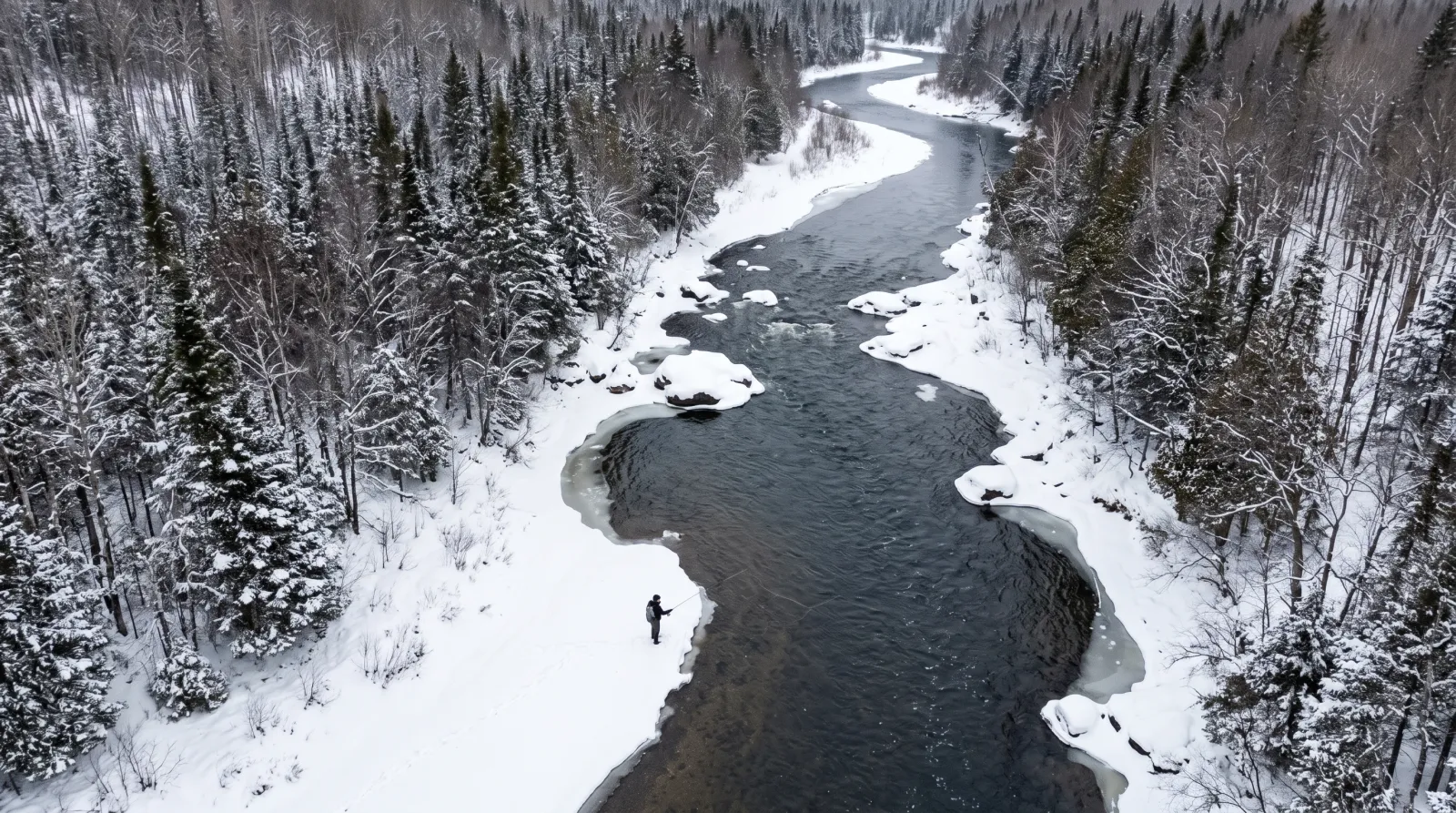
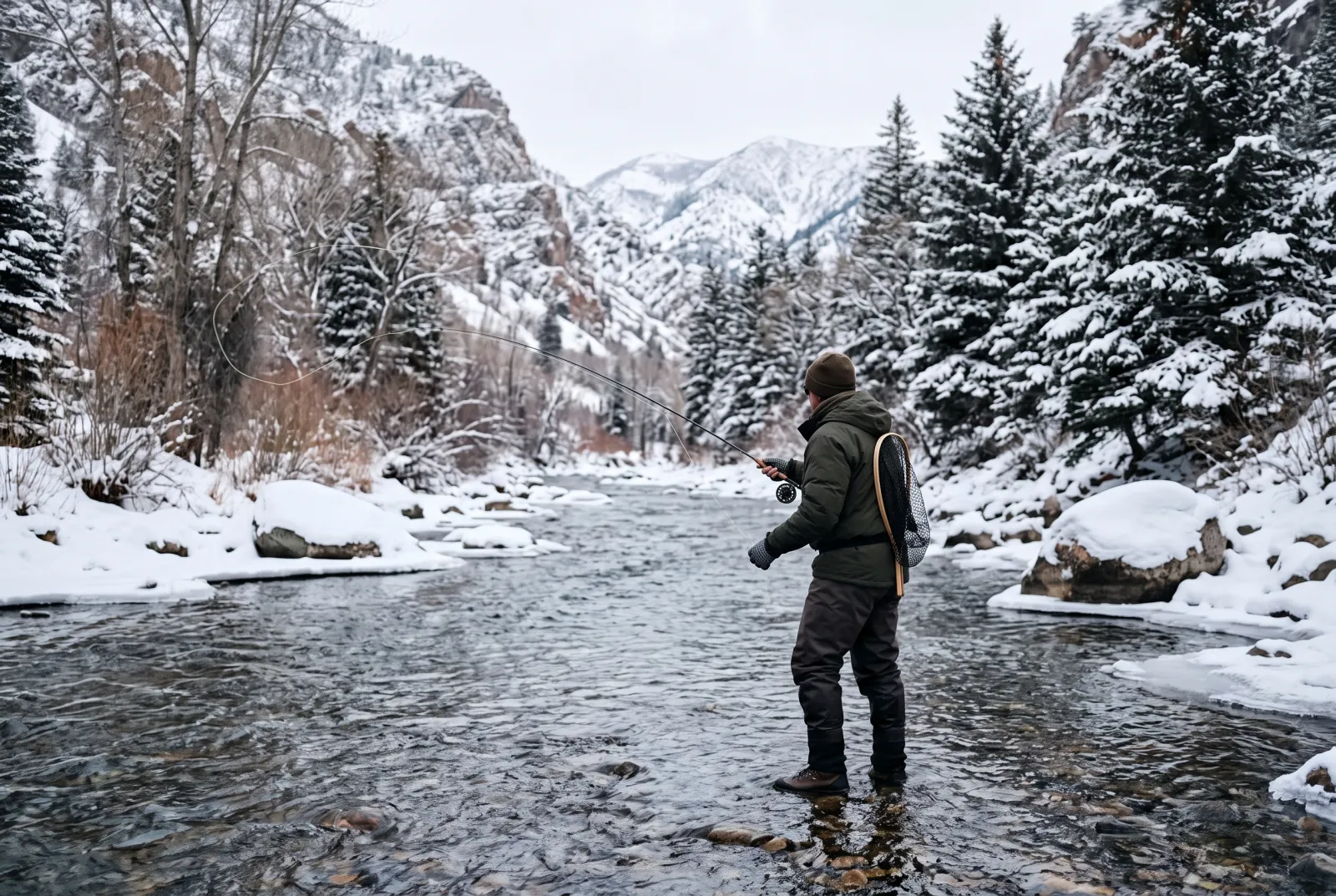
By the time your buddy texts that streamer season is on, the best of it is usually behind you. Pre-spawn brown trout run on a thermometer, not a calendar, and the window that matters (roughly 55F falling through 45F) slides by weeks from one river to the next and one year to the next. Fish it by water temperature and you'll find browns at their most aggressive. Fish it by the internet and you'll show up to paired fish on gravel and a bite that already happened.
This is the technique half of fall brown trout fishing: what to throw, how to move it, and when to quit.
If you want the where, the Lower Provo River in fall and the Weber River brown trout water below Rockport both run this exact script, and we've covered access and flows for both separately so this post doesn't have to.
Why the thermometer beats the calendar
Vermont Fish and Wildlife puts brown trout spawning between late October and December, with an optimum water temperature of 44F to 48F. That's a six-week calendar spread, and the temperature range is the only part of it you can measure while standing in the river. Shortening days start the clock, but water temperature sets the pace, and every river cools on its own schedule. A high-elevation freestone can touch 48F the first week of October. A tailwater forty minutes away can hold 52F into mid-November.
So the same Saturday can be prime pre-spawn on one river and mid-spawn on another.
The fix costs ten dollars: a stream thermometer, checked in the early afternoon once the day's high has soaked in. It's the same logic behind our multi-species chart of the best water temperature for fish to bite, narrowed to one species and one season. And if you log your catches with a water temp attached, two falls from now you'll know within a degree or two when your home river turns on.
When do brown trout spawn?
Brown trout spawn in late fall, typically from late October through December, once water temperatures drop into the 44-48F range that Vermont Fish and Wildlife identifies as optimal. Pre-spawn is the run-up: typically four to six weeks while water falls from the mid-50s through the high 40s and browns feed and stage hard.
A few biology points that matter for tactics. Per the USGS species profile, browns mature at two to four years (a figure USGS gives for landlocked populations) and can spawn across multiple falls, which means the biggest fish in your river have done this before and know exactly where they're going. They push toward tributaries and headwater gravel, sometimes migrating a long way to get there, and Vermont's biologists note that the female digs her redd over several days at the tail of a pool where the gravel stays well oxygenated. Those eggs then sit in the gravel all winter. Hold that thought, because it changes where you should put your boots until spring.
58 to 52F: the fattening window
Vermont pegs the brown trout's optimum temperature range at 53F to 66F, so a river sliding from 58F toward 52F is still square in comfortable feeding water. Nothing about the spawn has taken over yet. What's changed is urgency: days are getting shorter, the caloric window is closing, and the fish that will spawn in a month are eating like it.
You might also enjoy: Best Inline Spinners for Fall Stocked Trout Under $20 (2026): Buy or Skip on 4 Classics
This is baitfish water. Big browns shift toward a fish diet as they grow (Washington's Department of Fish and Wildlife says it plainly: when they get bigger, they prefer fish), so give them one. I fish 3 to 4 inch naturals here: a sculpin pattern, an olive or white bugger, a Sparkle Minnow. Moderate strips at a confident pace, and cover water. The fish are still in their normal lies, banks and buckets and log jams, and the job is showing the fly to as many of them as possible rather than picking one spot apart.
One scheduling note worth stealing from that same WDFW page: in spring and fall, browns feed most actively toward the middle of the day. Sleep in. The 1 p.m. water temperature is the number that decides your afternoon, not the 6 a.m. one.
52 to 48F: the aggressive window
Somewhere in the low 50s the bite changes character, and this stretch, maybe two weeks on most rivers, is the best streamer fishing of the fall. It's over before most anglers tie one on.
My read on what's happening, and I'll flag it as my read rather than agency science: feeding is still on, and territorial aggression starts stacking on top of it. Mature males are getting hostile ahead of the spawn, so a streamer stops being just food and becomes an intruder near water they intend to claim. Eats get harder and more violent. Chases get longer. Fish that ignored a fly at 56F will cross the river to kill it at 50F, and some of them aren't eating it at all, they're evicting it.
This is where I size up to 4 to 6 inches and change how the fly moves. Jerk-strip cadence: two sharp strips, a hard pause, a direction change when the current lets me manage one. The pause is the trigger. Watch a jerkbait fisherman work a cold pond and you'll see the same lesson: the strike comes when the bait stops.
I'll say it plainly: the mended, across-and-down swing is the most romanticized presentation in fall streamer fishing and the least productive one in this window. A swing shows every fish the same thing, a baitfish fleeing at constant speed. Constant is the enemy. A fly that stalls, drops, and bolts gets crushed by the same fish that lets the steady swimmer slide on by. If you love the swing, keep it, but slow it way down and let the fly hang and pulse in the soft water at the bottom of the arc instead of ripping it out for the next cast. That hang is where your swing eats will come from.
48 to 44F: pre-spawn brown trout on the doorstep
Now the river reorganizes. Pre-spawn brown trout stack next to the gravel they'll use: the deep bucket below a tailout, the first real hole inside a tributary mouth, the undercut bank a short drift from a spawning riffle. Mid-river water that fished well two weeks ago goes quiet while the edges of spawning habitat get crowded.
Two adjustments. First, fish the deep water beside spawning habitat, not the shallow gravel itself. Second, slow everything down again. The all-out chases of the low 50s fade as the water approaches the spawn window, and my experience is that eats now come on a slow, low fly with long pauses. This is also where I break with the big-fly crowd: I drop back down to 3 or 4 inches on a sink tip rather than staying huge. A heavy 6-inch articulated fly is a lot to ask a fish to chase in 45F water, and a smaller fly crawled through a staging bucket gets eaten by the same fish that just flashes at the big one. That sizing call is mine, not a study's. Fish yours.
Start watching the bottom. Redds show up as bright, freshly cleaned patches of gravel, noticeably lighter than the surrounding streambed, usually in shallow tailouts with walking-pace current. The first redd you spot is the signal that this window is closing.
You might also enjoy: Tenkara Fishing Utah's Uinta Mountains: Brook Trout Water Built for a Fixed Line
When they're on gravel, you're done
A brown holding on a redd, or paired up beside one, gets left alone. Not fished to carefully. Not "just one cast." Left alone. We've made the full evidence-based argument in our post on whether you should fish near spawning trout redds, so I'll keep the field rules short instead of repeating the lecture.
Don't cast to visibly spawning fish. Don't wade across tailouts and clean gravel from now until spring, because those eggs are alive down there the whole time: Vermont's incubation data runs as long as 148 days at the 35F water typical of their winter streams, which makes a November redd a live nursery in March. When your home water goes full spawn, that's not the end of your season, it's a reassignment. Find a tailwater that's lagging in the low 50s, or spend a month on something that isn't spawning.
Why does the same fly stop working a week later?
Because the fish's motive changed, not the fly. At 56F your streamer is food, and it gets run down. At 50F it's food plus an intruder, and it gets attacked. At 45F feeding urgency fades and the fish have moved, so the fly that provoked river-crossing chases now has to land in a fish's kitchen and move slow to get touched. Same pattern, three different jobs.
Temperature is also just metabolism. The USGS profile lists browns as commonly living in water from about 41F to 77F, and their willingness to chase shrinks toward the cold end of that range. A retrieve speed that read as fleeing prey at 56F reads as unobtainable at 45F.
Change the retrieve before you change the fly.
The playbook on one screen
The temperature bands below lean on the sourced spawn window. The size and speed calls are my judgment from fall fishing, and I'd rather you treat them as a starting point than a spec sheet.
| Water temp | What browns are doing | Streamer play |
|---|---|---|
| 58-52F | Feeding hard in normal lies | 3-4 inch naturals, moderate strips, cover lots of water, fish midday |
| 52-48F | Aggression stacking on top of feeding | Size up to 4-6 inches, jerk-strip with hard pauses and direction changes |
| 48-44F | Staging beside spawning gravel | Back down in size, sink tip, dead slow through deep water next to gravel, never on it |
| 44-48F with fish visible on redds | Spawning | Reel up and find different water |
The anglers who hit the aggressive window every single fall aren't luckier than you. They know their river's cooling curve because they wrote it down, and a couple seasons of logged temps in Bushwhack beats a decade of vibes.
Carry the thermometer. Trust it over the calendar, over the fly shop report from six days ago, and over whatever the feed says the fish should be doing. The browns are reading the same number you are.
Get fishing tips in your inbox
New guides, seasonal tactics, and gear picks — about once a month, no spam.