October Caddis Hatch Guide: The Last Big Dry Fly of the Season
 Cameron Spanos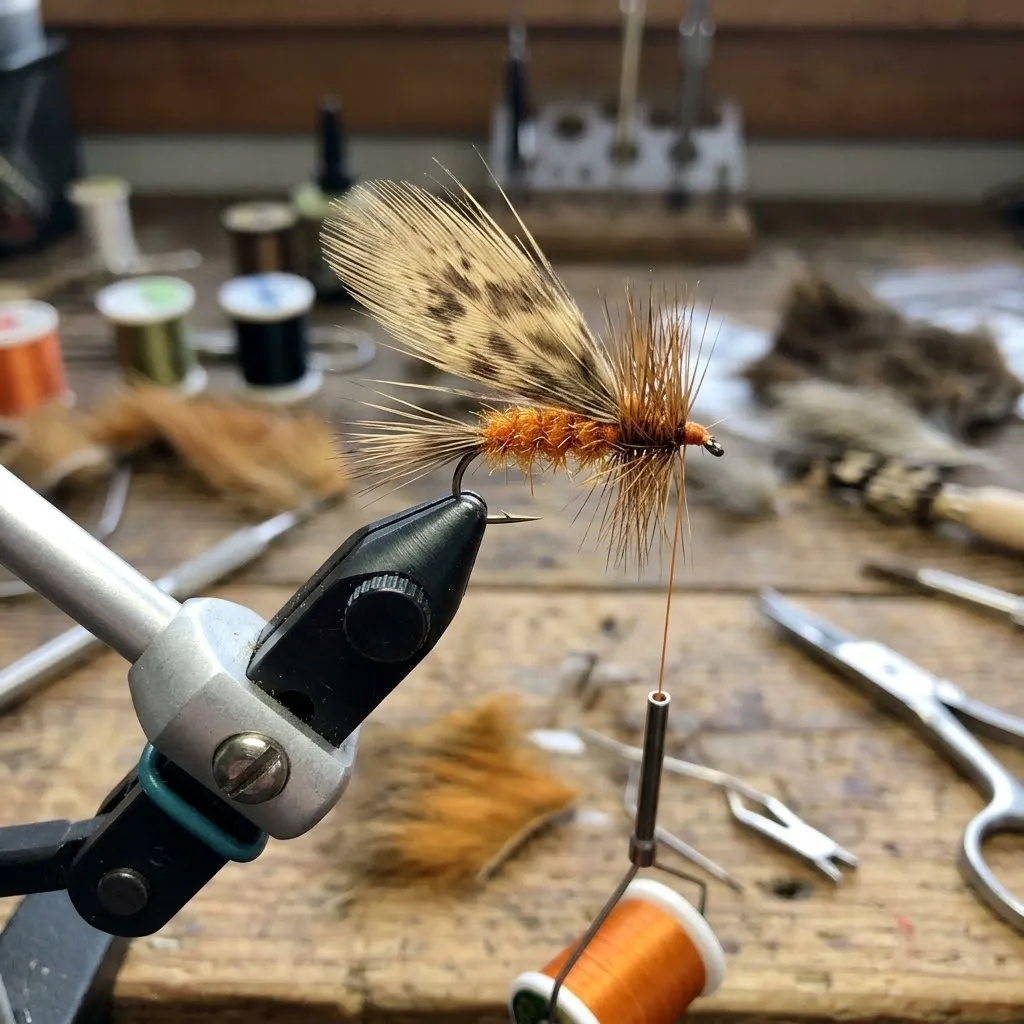
Written by Cameron Spanos
A size 8 dry fly in the middle of October. After a summer of 6X tippet and #20 tricos, that sentence alone should get you loading the truck. The October caddis hatch is the last large dry fly event of the season, a burnt-orange bug the size of a small stonefly that gets big browns looking up right when they're feeding hardest ahead of winter. Gary LaFontaine ranked Dicosmoecus the single most important insect in fly fishing for catching a trophy trout, adding that "the contest is not even close."
And most anglers blow right past it. Not because the hatch is rare (it's on nearly every freestone in the West) but because it never comes off in clouds the way a salmonfly hatch does. You'll see a handful of big orange bugs lumbering around at 3 pm looking like drunk moths, decide it isn't worth re-rigging for, and go back to dredging small nymphs. The fish disagree. Trout key on these bugs for weeks whether or not you ever see a rise.
This guide covers when the hatch happens region by region, where the bugs actually live, and the two rigs that cover a full day of it.
A two-year bug that hatches like a stonefly
The October caddis (genus Dicosmoecus, often called the giant orange sedge) is huge by caddis standards. Adults run around 30mm, per the entomology reference Troutnut, which puts imitations at #8-10. The larva spends roughly two years on the bottom in a case, starting with one built from leaves and wood fiber, then switching to pebbles as it grows and moves into faster water.
In mid-summer the mature larvae seal their cases to rocks and go dormant. Cooling water in late summer triggers pupation on a synchronized clock, which is why the adults show up together in the fall instead of trickling off all season.
Now the part that changes how you fish it. Where exposed rocks are available, many October caddis pupae don't emerge in the surface film like a spring caddis. They swim and crawl along the bottom toward partially exposed rocks, climb out, and split the shuck in open air, more like a stonefly than a caddis. That migration puts big, orange, helpless pupae near the bottom in shallow water for hours, and it's why the subsurface game routinely out-fishes the dry even at the peak of the hatch.
When is the October caddis hatch?
Broadly: mid-September through early November, peaking in early to mid-October on most Western rivers. Troutnut's specimen collection data shows 34% of Dicosmoecus collected in September and another 25% in October, with the daily emergence running late afternoon to dark and egg-laying flights peaking right at sunset.
Water temperature drives the whole schedule. Pupation and emergence key off fall cooling, so the water that cools first hatches first: high-elevation and inland freestones lead in mid-September, and low, mild coastal rivers can still have bugs flying in November. If your river has been running cold at night for a couple of weeks, start looking.
Timing windows by region
Same caveat as any hatch chart: these are windows, not appointments. A warm fall pushes everything later, an early cold snap compresses it.
Montana and the inland freestones
Mid-September through mid-October, tapering by late October. Rock Creek, the Bitterroot, the Blackfoot, and the Clark Fork all carry strong October caddis populations, and Missoula-area shops treat it as the marquee fall hatch. This is also prime streamer season, which means you can fish orange bugs all afternoon and still swing something ugly at dusk.
Oregon and the inland Northwest
Late September through the end of October on the Deschutes, McKenzie, and most central Oregon freestones, with central Oregon shops reporting bugs from as early as late August in some years. The Deschutes canyon in mid-October, with orange bugs bouncing off the basalt at last light, is one of the great scenes in Western fly fishing.
You might also enjoy: Streamers for Pre-Spawn Brown Trout: A Water Temperature Playbook
Northern California
October into early November. The Klamath system, the Trinity, and the McCloud all fish well through this hatch, and the mild climate stretches the back end of the window later than Montana anglers would believe.
Coastal steelhead rivers
Late October into November. Coastal and low-elevation rivers stay warm longest, so they hatch last, and on summer-run steelhead water the timing overlaps with fish that will still move to a skated dry. More on that below.
The East and Midwest
The Western Dicosmoecus doesn't live east of the Rockies, but the great autumn brown sedge (Pycnopsyche) fills the same niche: a big fall caddis hatching from September up north into late October farther south. It emerges mostly by crawling out along the bank in low light, so the dry fly window is narrower, but a #10 orange caddis fished near dark along wooded banks buys you a piece of the same event.
Where do you find October caddis?
Fast, bouldery water. The larvae graze on the tops of large cobbles in moderately quick current, a behavior aquatic entomologists have documented in detail, and the migrating pupae stack up along the edges of that same water.
Fish three lies:
- Fast water edges. The seam where a heavy riffle softens is where migrating pupae get swept off the bottom. Trout sit in the cushion and eat them all morning.
- Tailouts. Egg-laying females skitter and collapse on smooth tailouts at dusk, and the fish slide back into them to eat. This is the dry fly water.
- Grassy banks and streamside brush. Adults live for days after hatching and hole up in the vegetation. On breezy afternoons enough get knocked onto the water that fish hold tight to the bank waiting.
Also check the exposed rocks themselves. Empty orange-tinted shucks on boulders above the waterline are the cheapest intel on the river: the hatch is on, whether or not you've seen an adult.
The morning rig: tight-line pupa
Before the adults get active, fish a #8-10 October caddis pupa (Mercer's Tungsten October Caddis and the Morrish October Caddis Pupa are the standards) on a tight-line or euro rig through riffle edges and the heads of runs. If you've been meaning to learn euro nymphing, this is the hatch to do it on: the flies are heavy, the fish aren't leader-shy in October flows, and 4X tippet is plenty.
Trail a cased-larva pattern behind the pupa if you want a second fly. Tumbling cased larvae are on the menu year-round, and in early fall they're at their biggest.
One adjustment matters more than any fly choice. At the end of each drift, stop the rod and let the flies swing up through the column instead of picking up to recast. That rising swing imitates a swimming pupa, and it converts follows into grabs so reliably that some days the "hang" catches more fish than the drift. No euro rod? An indicator rig works fine; just add the swing at the end anyway.
The afternoon rig: skated dry with a pupa dropper
From roughly 2 pm to dark, switch to a #8 orange Stimulator or a Morrish October Caddis adult with a soft-hackle pupa dropped 24 inches off the bend. The dry covers adults and egg-layers, the dropper covers pupae pushing toward the surface, and between them you're fishing the entire top half of the hatch with one rig.
You might also enjoy: Best Vacuum Sealer for Fish Fillets (2026): What Survives Wet Fish
My honest take: the dead drift is overrated for this bug. Naturals skitter, flutter, and collapse on the surface while laying eggs, and drag, the thing you've spent all season fighting, is now an attractor. Cast down and across the tailout, let the pair swing under light tension, and twitch the rod tip so the dry wakes and skates. Fish 3X so the twitch doesn't become a break-off.
Dead drift the grassy banks, skate the tailouts. That split covers most afternoons.
And don't quit at sunset. Egg-laying peaks at last light, and the biggest surface eats of the day usually come when you can barely see the fly.
Flies worth carrying
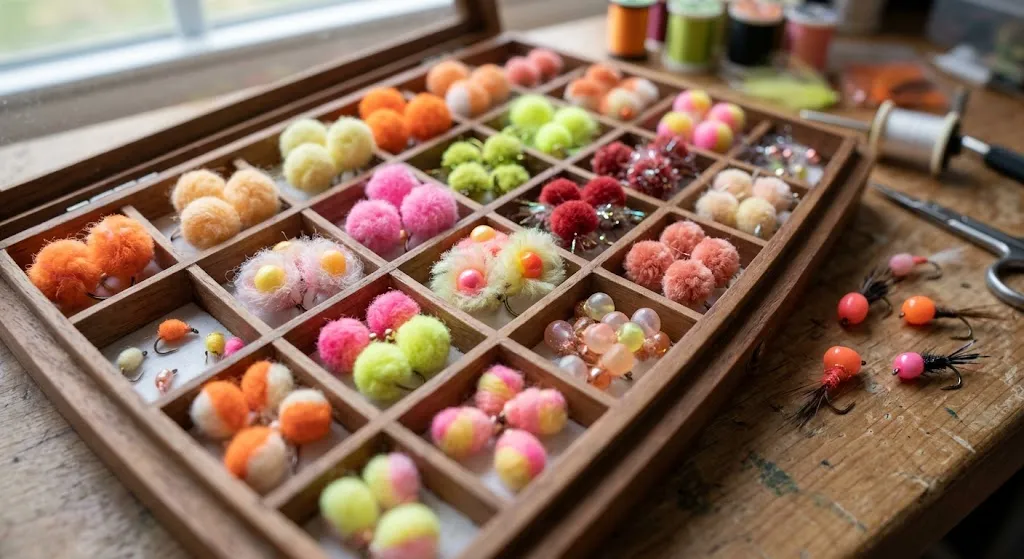
You don't need a dedicated box. Six patterns cover it:
- Mercer's Tungsten October Caddis pupa, #8-10
- Morrish October Caddis Pupa, #8-10
- A brown-and-orange cased caddis larva, #8
- Orange Stimulator, #8
- Morrish October Caddis adult, #8
- An orange soft hackle, #10, for the dropper and the swing
If I could only carry two, it'd be the orange Stimulator and Mercer's pupa. The Stimulator isn't the most accurate imitation, but it floats a dropper, skates beautifully, and doubles as your hopper pattern's retirement party.
Skating for steelhead
On summer-run steelhead rivers in Oregon, Washington, and Idaho, the October caddis window overlaps with prime swing season, and a waking #6-8 orange dry skated across a tailout is a legitimate steelhead tactic, not a novelty. If you're new to those fish, the Oregon Department of Fish and Wildlife's steelhead primer is a good grounding in water types and run timing. Bring a heavier rod and drop the trout expectations. You might swing all day for one pull, but it'll be the pull of the year.
Practically, that means a 7-weight single-hander or a light two-hander, a floating line, and a short leader stout enough to turn over a bushy waking fly. Fish the same water you would swing a wet fly through: the walking-speed tailouts and the soft inside edges of runs, where a fish can hold in reach of the surface without fighting current. Cast down and across, lead the fly with the rod tip so it pushes a visible wake, and keep the swing slow. Early morning and the last hour of light are the highest-percentage windows, and the takes come as a boil or a pulled loop rather than a jolt, so let the fish turn before you tighten.
The hatch rewards a notebook
October caddis timing is stubbornly local. Your river's window depends on its elevation, its source, and how fast it sheds summer heat, and none of that transfers from a hatch chart written about a river 400 miles away. The anglers who hit this hatch at its peak every year aren't luckier; they wrote down the date they saw the first shucks on the rocks last fall.
That's a two-minute habit. Log the date, the water temp, and what the fish ate in Bushwhack this October, and next September you'll know your own river's window to the week. You can try Bushwhack on a demo account first if you want to see how the seasonal patterns surface.
One good afternoon on this hatch will ruin small dry flies for you. Go find the orange bugs.
Get fishing tips in your inbox
New guides, seasonal tactics, and gear picks — about once a month, no spam.