Best Vacuum Sealer for Fish Fillets (2026): What Survives Wet Fish
 Cameron Spanos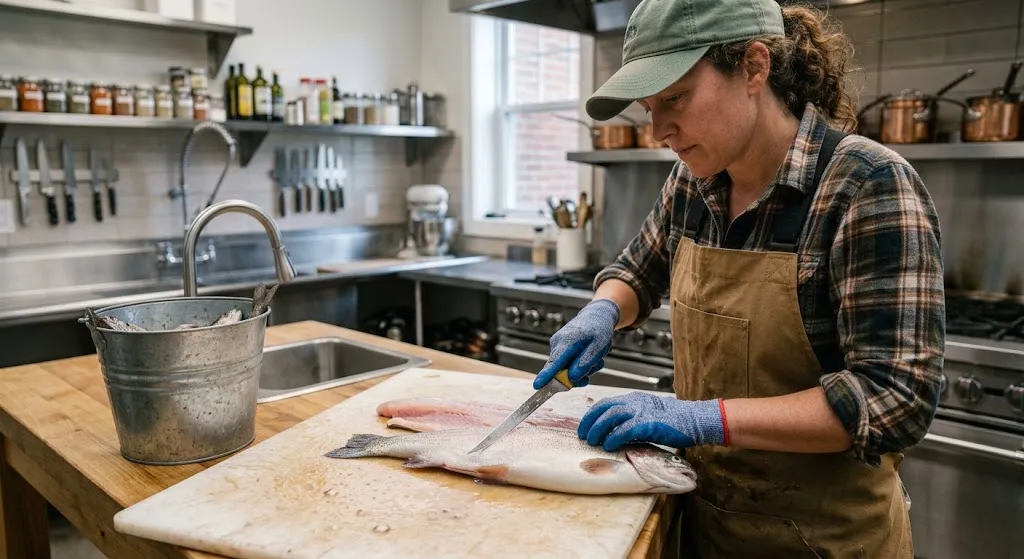
Written by Cameron Spanos
Nine at night, tailgate down, a cooler of walleye and a headlamp. That's when the machine on your counter starts to matter. Most pages ranking for best vacuum sealer for fish fillets were written by somebody who has never stood there, and they'll tell you how the machine handles bananas. They skip the part that decides whether your September limit still tastes like fish in March: a fillet is a bag of water wrapped in skin, and water is what breaks a vacuum seal.
Fall is when that gets expensive. Kokanee come off the reservoirs in September, stocked trout run into November, and walleye pile up once the surface drops into the fifties. Get the machine wrong and you find out in February, when the bags have gone soft.
Five machines, sorted by the job.
| Machine | Best For | Price | Amazon Rating |
|---|---|---|---|
| Gasbye 95kPa Precision Vacuum Sealer | Best overall for wet fillets | $129.99 | 4.7 (1,554 ratings) |
| Inkbird Pro INK-VS04 | Best budget pick with a true liquid mode | $109.99 | 4.2 (654 ratings) |
| FoodSaver VS2150 | Best for easy bag resupply | $137.68 | 4.3 (827 ratings) |
| Nesco VS-22LB Premium | Best labeled presets, if you process more than fish | $229.99 | 4.4 (141 ratings) |
| Avid Armor USV20 | Best chamber sealer for a full limit | $319.00 | 4.7 (1,169 ratings) |
Gasbye 95kPa Precision Vacuum Sealer: Best Overall for Wet Fillets
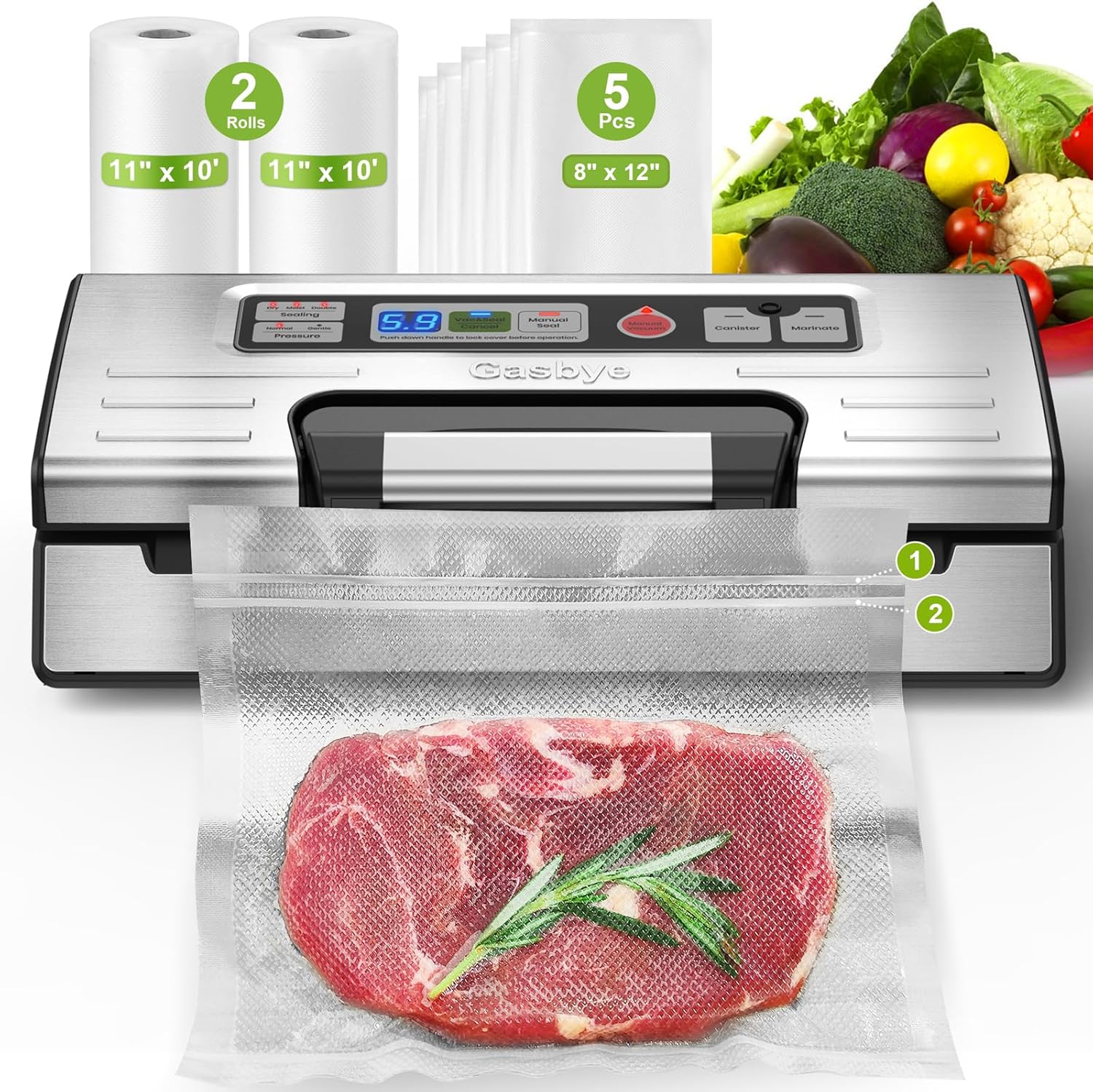
What sells me here isn't the suction number, it's that Gasbye sells the parts that wear out. On their own product page they list replacement foam gaskets, removable drip trays, and built-in cutters, most under $7, and they publish five-year quality coverage on the machine. The gasket is the first thing to fail on any suction sealer, and none of the other four brands here list a replacement gasket on their own pages. That's the reason to buy this one.
The spec sheet backs it up. Gasbye publishes 95 kPa and dual heat sealing strips. Inkbird publishes -80 kPa, Nesco a 250 W motor and no suction figure at all, FoodSaver neither, so 95 kPa is the highest stated figure among these four. The double bar is no Gasbye exclusive though: Nesco publishes a wide double heat seal bar too.
Who it's for
Anglers who fill a freezer two or three times a season and want one machine to cover it.
Pros and cons
- Pro: gaskets, trays, and cutters sold separately, most under $7
- Pro: Gasbye publishes five-year quality coverage
- Con: a suction machine, so wet fillets still need pre-freezing
- Con: no glass lid, so you can't watch the cycle
Price: $129.99 at the time of writing. Check the current price on Amazon.
Inkbird Pro INK-VS04: Best Budget Pick With a Named Liquid Setting

Inkbird publishes Dry, Moist, and Liquid as three separate food settings. That's worth something, because Nesco's published function list has a Liquid mode but no Moist, and fresh fillets sit between wet and merely damp. Also on Inkbird's spec page: a 160 W dual motor and dual pump system, a vacuum speed of 22 to 25 L/min, two power levels (Gentle or Normal), and a removable drip tray rated at 300 ml, about 10 oz. That tray is the only published capacity figure I could find for any machine here, and it matters more than it sounds. Seal fifteen bags of trout back to back and the tray is what keeps bag five's juice off the seal bar.
Who it's for
A first sealer, or a second one for the garage bench by the fillet table.
Pros and cons
- Pro: three food settings where most machines here give you two
- Pro: the cheapest machine here that names Dry, Moist, and Liquid as separate settings in its published spec list
- Con: publishes -80 kPa, the lowest stated suction among the machines here that quote one
- Con: 4.2 stars is the lowest average of these five
Price: $109.99 at the time of writing. Check the current price on Amazon.
FoodSaver VS2150: Best for Easy Bag Resupply

Nobody buys a FoodSaver for the spec sheet. You buy it because it's Sunday, you're out of 11-inch rolls, and every big-box store within twenty miles stocks the bags. FoodSaver publishes Moist and Dry modes, a bag alignment tool, roll storage with a cutter, and a handheld sealer with hose. What you don't get is control: two modes, no adjustable suction, no pulse. Fine for thick walleye loins. For paper-thin stocked trout, pre-freeze harder than you would on the Inkbird.
Who it's for
Anyone who'd rather buy bags in person tonight than own modes they'll never touch.
You might also enjoy: Best Inline Spinners for Fall Stocked Trout Under $20 (2026): Buy or Skip on 4 Classics
Pros and cons
- Pro: bags and rolls stocked almost everywhere, including in person tonight
- Pro: the handheld sealer and hose cover fridge fish you'll eat this week
- Con: Moist and Dry only, no adjustable suction or pulse
- Con: FoodSaver bags cost more per bag than generic embossed rolls
Price: $137.68 at the time of writing. Check the current price on Amazon.
Nesco VS-22LB: Best for Delicate Kokanee and Small Trout
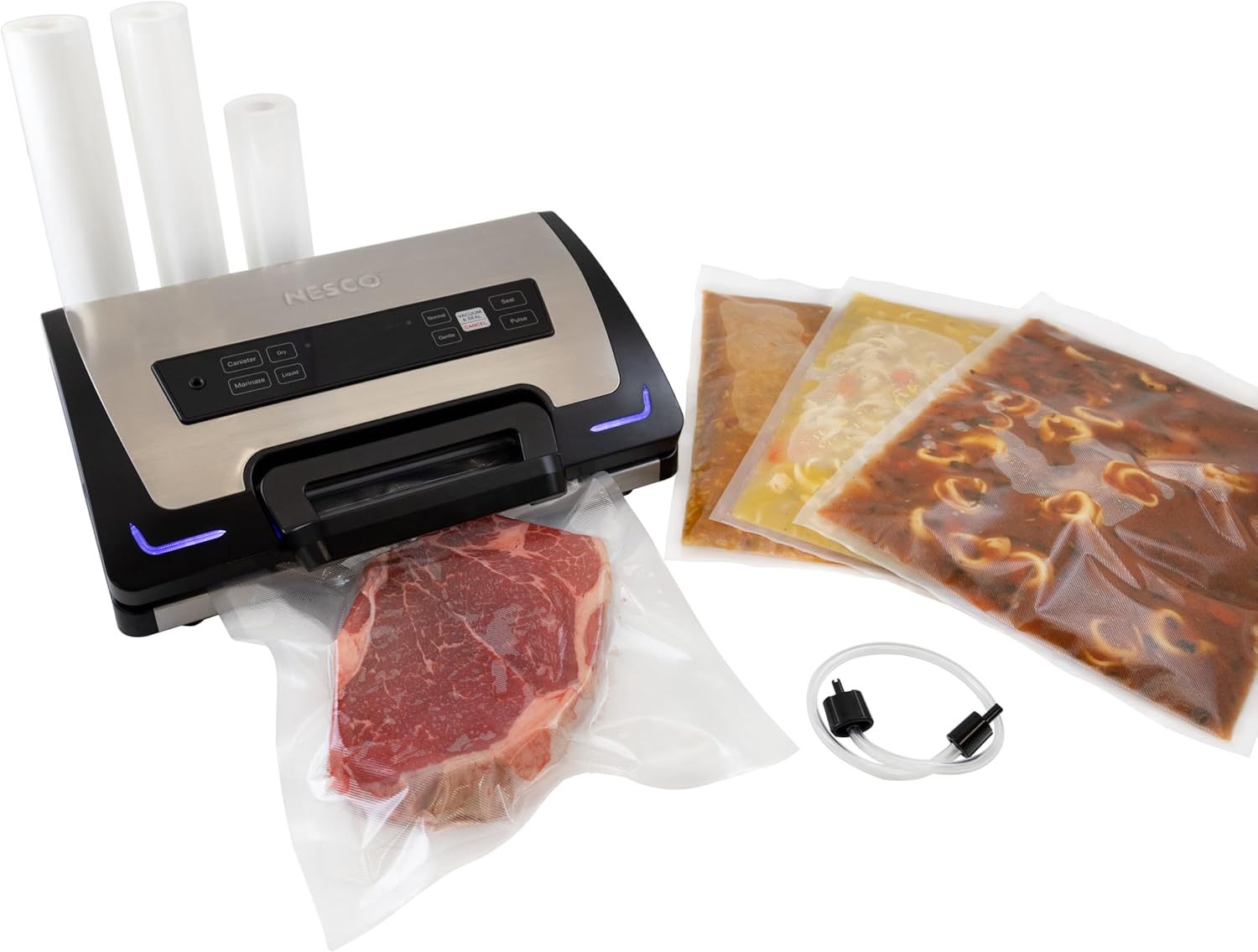
Kokanee are soft. So are 10-inch hatchery rainbows.
Full suction on a soft fillet squeezes juice out of the flesh and straight into the weld, which is the exact failure this post is about. Nesco publishes seven labeled functions for the VS-22LB: Dry, Liquid, Normal, Gentle, Marinate, Canister, and Pulse. Gentle alongside a dedicated Liquid setting is the pairing you want for soft fish, and Nesco states its LiquidLock handling slows liquid movement during sealing.
Being straight with you, though. Gentle is not exclusive. Gasbye publishes a Normal and Gentle pressure setting and Inkbird publishes Gentle or Normal power levels, both for less money, and Inkbird publishes a Liquid mode of its own. At $229.99 you're paying for labeled presets and the Marinate and Canister functions, not for a machine that seals fish better than the two cheaper ones. If all you process is fillets, buy the Gasbye.
Who it's for
Anglers who want to know exactly which setting does what, rather than trusting an unlabeled mode dial or one wet button.
Pros and cons
- Pro: seven functions Nesco names individually, the only fully enumerated set here
- Pro: Gentle plus a dedicated Liquid setting for soft fillets
- Con: most expensive suction machine here, and Gentle is not exclusive to it
- Con: only 141 Amazon ratings, the thinnest record of the five
Price: $229.99 at the time of writing. Check the current price on Amazon.
Avid Armor USV20: Best Chamber Sealer for a Full Limit

Blunt version: if you process fish more than twice a season, a chamber machine is the cheaper choice, and it has nothing to do with sealing power.
A suction sealer pulls air out through the open mouth of the bag, which is why juice climbs toward the weld. A chamber machine pumps the whole chamber down until pressure equalizes inside and outside the pouch, then welds it. Nothing gets dragged toward the seal, so a wet fillet is a non-event.
Then there's bags. Chamber pouches are smooth plastic with no embossed channels and cost less per bag than textured suction bags, which is where the money goes over a few seasons. Avid Armor's USV20 spec table publishes an 11.5-inch seal bar, pouches to 11 x 10 inches, vacuum time adjustable from 15 to 60 seconds, seal time 3 to 9, a weight of 17.55 lb, 17 inches of lid clearance, and a one-year warranty. Note the wording: one year, not a lifetime guarantee.
Longer fillets? The step-up Avid Armor USV32 takes pouches to 11 x 13 inches and rates 4.6 stars across 1,024 Amazon ratings. Avid Armor's own model comparison lists its chamber as stainless steel and every other Ultra Series chamber, the USV20's included, as molded plastic. Both have stainless housings, so this is the chamber rather than the shell. It lists at $529.00, warranty also one year.
Who it's for
Anglers filling a chest freezer who want to stop babysitting seals.
Pros and cons
- Pro: pressure equalization seals wet fillets with no pre-freeze step
- Pro: smooth chamber pouches cost less per bag than embossed suction bags
- Con: Avid Armor publishes 17.55 lb and 17 inches of lid clearance, so it needs its own space
- Con: one-year warranty
Price: $319.00 at the time of writing. Check the current price on Amazon.
You might also enjoy: Tenkara Fishing Utah's Uinta Mountains: Brook Trout Water Built for a Fixed Line
The Pre-Freeze Trick That Stops Juice From Breaking Your Seal
If you own a suction machine, this is the whole ballgame. The pump drags juice up the bag until it hits the heat strip, and a heat strip cannot weld through liquid. You get a seal that looks fine on the counter and loses vacuum three weeks later. So pre-freeze the fillets one to two hours before you bag them. It keeps their juices and shape and gives the heat strip a dry surface to weld.
Step 1: Dry the fillets properly
Take them off the bone with a sharp fillet knife, then pat every one with paper towel until the surface stops looking wet. Skip this and you've undone the next three steps.
Step 2: Flash-freeze on a sheet pan
Lay them flat in a single layer, not touching, and freeze 60 to 120 minutes. Outside firm, middle still soft. You're not freezing them through.
Step 3: Bag them with paper towel at the open end
Slide the firmed fillets in, then tuck a folded half sheet of paper towel above the fish and below where the weld will land. Whatever moisture the pump pulls gets wicked into the towel instead of onto the bar. That is your fix when you don't have two hours.
Step 4: Seal wet, then seal again
Run the moist or liquid mode, not dry. Then shift the bag a quarter inch and run a seal-only cycle for a second weld. Cheapest insurance in the kitchen.
Freeze the bags flat, and write the water and date on each with a marker. I put the same two details in the notes when I log the trip in Bushwhack.
What Should You Look For in a Sealer for Wet Fish?
One thing mostly, and it isn't the spec everyone leads with.
Suction is a tiebreaker, not the deciding spec. Here's where I part ways with the roundups. Gasbye's 95 kPa is the highest stated figure here and Inkbird's -80 kPa the lowest, but that gap will not save a bag you loaded dripping wet, and it's irrelevant on a chamber machine, where the pressure math works differently. What actually decides whether your fall limit survives is a wet or liquid mode, a drip tray you can pull and rinse, and what bags cost you across three or four seasons.
How Long Does Vacuum-Sealed Fish Keep, and How Do You Thaw It?
Longer than a freezer bag, less long than the internet claims. The University of Alaska Fairbanks Cooperative Extension Service publication on home freezing of fish states that properly packed and frozen fatty fish such as salmon and trout stay in excellent condition at least three months, and twice that for lean fish. Walleye, perch, and pike are lean, so roughly six months is your quality window. Kokanee are landlocked sockeye and carry real oil, so treat them like the three-month group. That same publication calls vacuum packaging with oxygen-barrier film bags "the most effective method of protecting seafood against both oxidation and desiccation."
Thawing is where anglers get careless, and it's the rule no kitchen-appliance roundup mentions. Vacuum packaging removes oxygen, fish is moist and low in acid, and those conditions together are what Clostridium botulinum wants. Adair Hoover, a food safety agent with Clemson Extension, sets the limit in the Clemson factsheet on thawing vacuum-packed fish: never let vacuum-packed fish sit above 41 degrees F for more than two hours. So no thawing a sealed bag on the counter, ever. Refrigerator, or open the bag and run cool water over it. Ice hard on the ride home too, in a fishing cooler or insulated fish bag, and fillet the same day.
The Chamber Sealer I Cannot Send You To
The Anova Precision Chamber Vacuum Sealer shows up on nearly every "best for wet food" list, and on paper it belongs there. I'm not linking it: its Amazon listing had no Add to Cart button when I checked, and the rating history is thin at 4.4 stars from 83 ratings, against 1,169 for the USV20 at a lower price. If you find it in stock and already trust Anova, fine. I won't hand you a link that may not resolve to a buyable product.
The Best Vacuum Sealer for Fish Fillets, Picked
For most anglers reading this in September, buy the Gasbye 95kPa Precision Vacuum Sealer, learn the pre-freeze routine, and put the savings toward bags. You're buying a machine whose wear parts cost $7 instead of $130.
If you already know you're filling a chest freezer, skip the suction category and get the Avid Armor USV20. Cheaper bags, no pre-freeze step, no juice creeping toward the weld.
Either way, write the water and the date on the bag. The fish you can identify in February is the fish you'll actually cook, and Bushwhack keeps the trip side of that record.
Get fishing tips in your inbox
New guides, seasonal tactics, and gear picks — about once a month, no spam.