Hopper Season Setup: The Three-Fly Rig That Replaces Your Dry-Dropper in July
 Cameron Spanos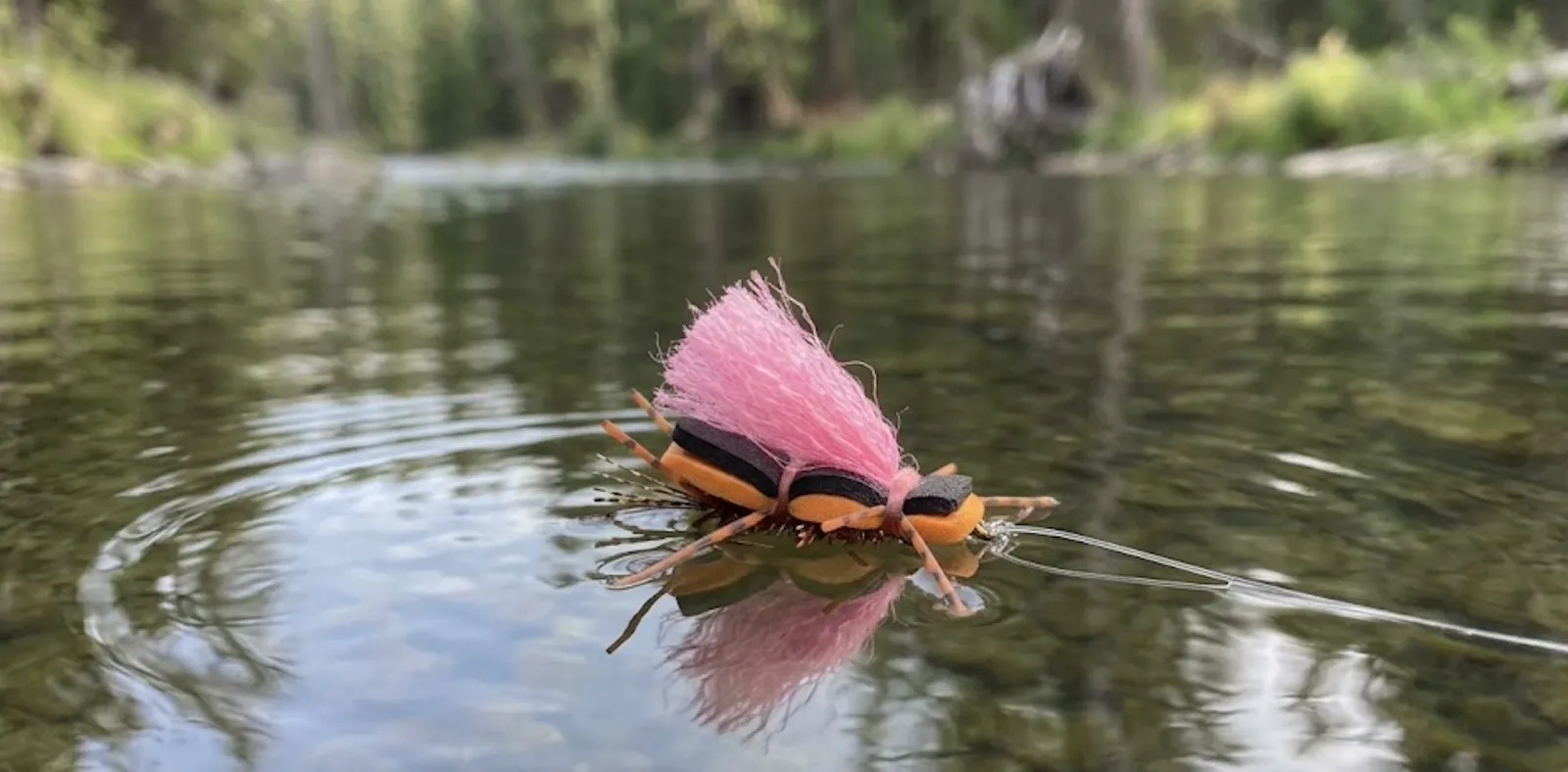
Written by Cameron Spanos
The PMDs are done. You're knee-deep in a run that was full of fish two weeks ago on a parachute Adams over a size 16 pheasant tail, and you're getting nothing. The water is warm, the air is hotter, and the fish that did look at your size 14 caddis just drifted back without committing. That's the signal. The hopper season setup isn't an option in mid-July. It's the rig the river is asking for.
This is not the terrestrial primer or the dry-dropper fundamentals piece. Those exist. This is the specific transition: when to retire the PMD-and-pheasant-tail dry-dropper, how to rig three flies instead of two without making a tangled disaster, and how to fish that rig along grassy banks versus midstream seams where most anglers never put a hopper.
When do you actually switch from dry-dropper to hopper rig?
The calendar lies. Latitude and elevation lie even harder. The honest triggers are three.
Water temp pushes past 60-62°F by mid-morning. Field & Stream's trout temperature guide pegs the active feeding window at 40-67°F, with terrestrial activity climbing as water warms into the low 60s. PMD and caddis emergences thin out at the top of that range. The bugs that take over are the ones falling off the bank.
The grass is brown and tall. Hoppers need adult-stage insects in the riparian zone. If you wade in and the cheatgrass is past your knee, hoppers are flying. If it's still green and ankle-high, you're early.
Your dry-dropper starts getting refusals. Fish drifting up to a PMD comparadun and turning off it is the loudest signal. They're not seeing what they expect on the surface anymore, and the nymph below isn't drifting in the column where they're holding now (closer to the bank and tighter to structure than it was a month ago).
On Rocky Mountain freestones like the Gunnison, Yellowstone, and Madison, that combination usually lands in the first 10 days of July. On Eastern tailwaters and spring creeks where water stays cold, you might be running a PMD dry-dropper into August. Don't switch by date. Switch by what the water and the bank tell you.
The three-fly rig, exactly
Here is what goes on the end of the line. No filler.
-
Leader: 7.5 feet, 2X tapered. Stiffer butt section. You will be turning over a wind-resistant foam fly with two beadhead droppers below, and a 9-foot 5X dry-fly leader will collapse on you. Build it yourself or buy a hopper-specific tapered leader.
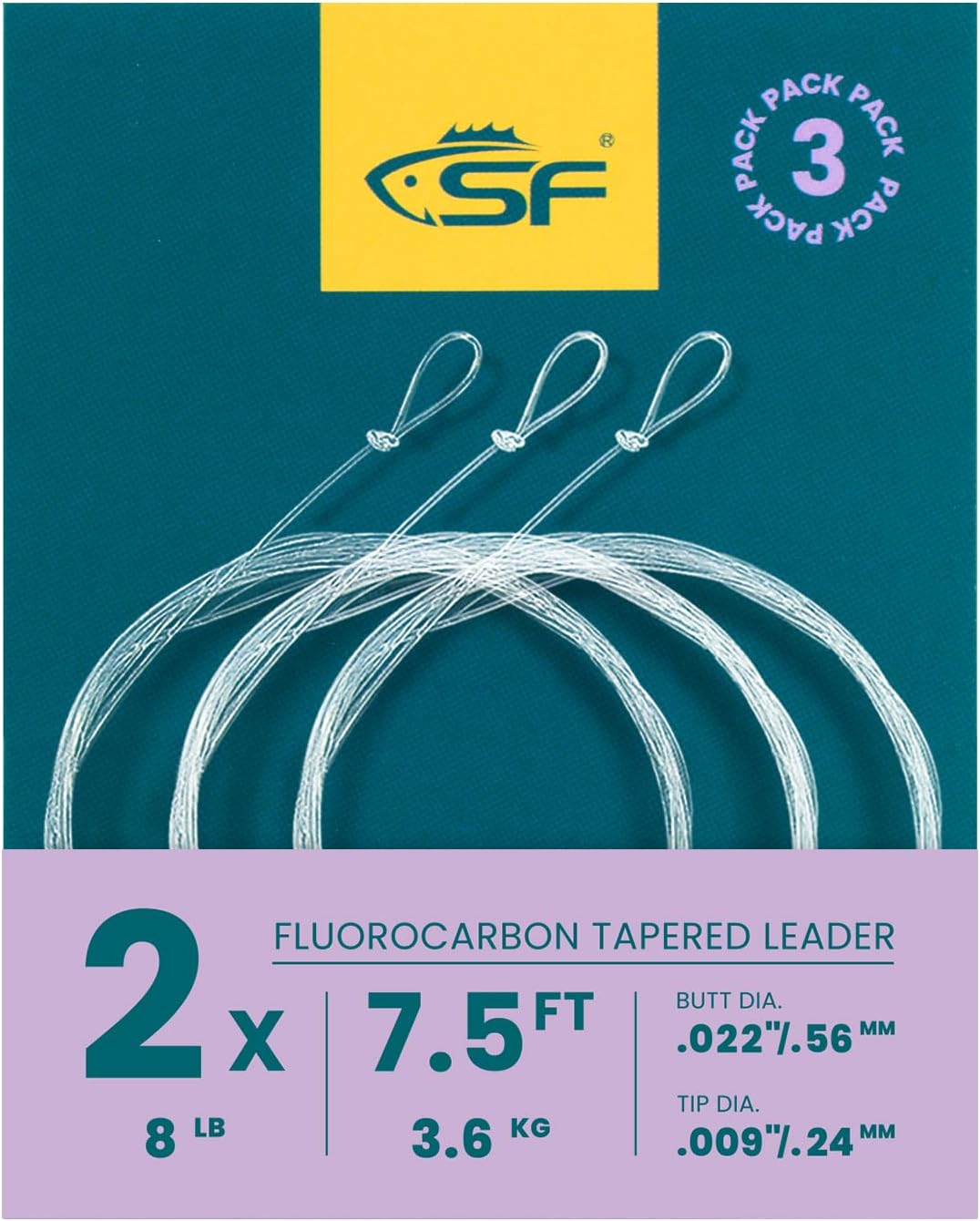 Shop the SF pre-tied 7.5ft 2X tapered leader (3-pack) on Amazon
-
Hopper (point fly): Size 8-12 foam pattern. Morrish Hopper, Chubby Chernobyl, or a Fat Frank. Tan or olive in the morning, switch to pink or purple if the water is overcast or off-color. The hopper sits on top, holds two beadheads, and acts as your indicator.
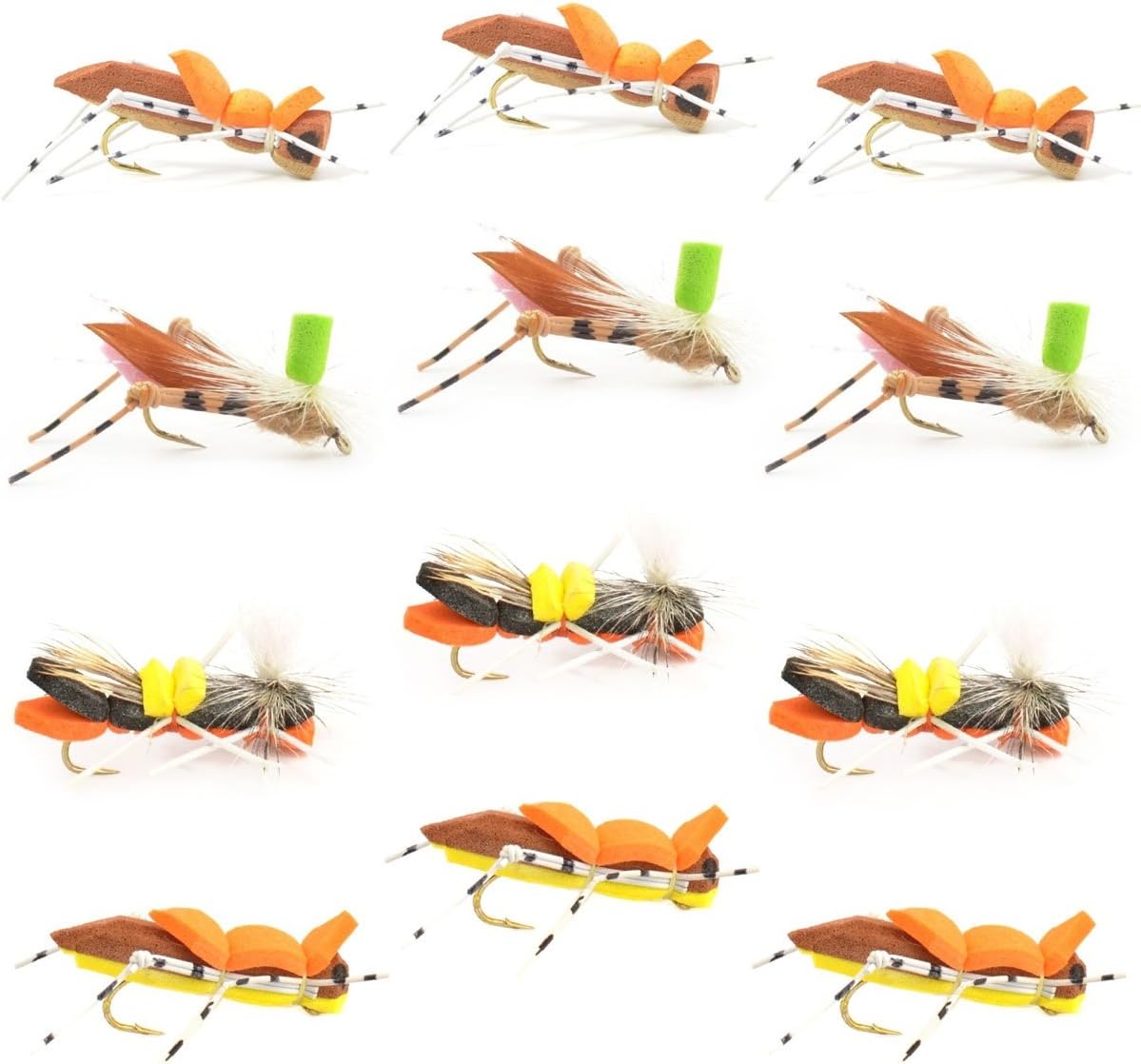 Shop a Chubby Chernobyl / foam hopper assortment on Amazon
-
First dropper (mid-column): 3-4 feet of 4X fluorocarbon off the hopper's bend. Tungsten jig nymph, size 14-16. Perdigon, Frenchie, or a tungsten Pheasant Tail Jig. The weight matters: this fly is doing the work of getting the rig down.
 Shop tungsten Frenchie jig nymphs on Amazon
-
Second dropper (emerger): 18-24 inches of 5X fluorocarbon off the bend of the first dropper. Soft-hackle emerger, size 16-18. Drowned PMD spinner, partridge-and-orange, or a CDC pupa. This is the fly that catches fish nobody else does.
 Shop partridge-and-orange soft-hackles on Amazon
Three Rivers Resort runs essentially the same template in the Gunnison Valley: 7-foot 2X leader, size 8-14 hopper, 3-6 feet to a tungsten jig, 1-2 feet to a flutter emerger. The principle is the same anywhere: let the heaviest fly set the depth and let the unweighted emerger ride above it on a short tag.
Tie the droppers off the bend of the hook, not with tags off a knot. Less hinging. Fewer tangles when the wind kicks up at noon.
Why two droppers instead of one
A standard dry-dropper covers two depths: the surface and one specific point in the column. The third fly is not redundancy. It's a different fish. The heavy jig is hunting the trout sulking on bottom that won't move three feet up for a soft-hackle. The emerger is hunting the trout suspended a foot under the surface looking for crippled mayflies that haven't finished the swim up. You are not covering two depths plus one. You are presenting two distinct food shapes at two distinct depths.
Is the hopper actually an indicator, or is it a fly that catches fish?
Both, and the ratio shifts through the day.
You might also enjoy: How to Fly Cast in the Wind: 5 Adjustments That Actually Work (Without a Single Haul Lesson)
Early in July, the hopper itself draws strikes. Fish haven't been pounded yet, terrestrials are a novelty on the menu, and a size 10 foam bug landing with a splat next to an undercut is a confident eat. By August on pressured water, the same fish that ate the hopper in week one will short-strike it or refuse it entirely. The hopper becomes a sighter. You're still going to get one ate every twenty casts, but the droppers are doing the work.
That's a feature, not a problem. A foam hopper holds two beadheads better than any Thingamabobber, mends with the fly line, and doesn't telegraph wariness to fish the way a pink bobber does. The strikes on the droppers are subtle: the hopper hesitates, twitches sideways, sinks a quarter inch. Set on anything that isn't a clean drift.
Ant, beetle, or hopper?
This is where most anglers get lazy. They tie on the biggest foam thing in the box and assume size = better.
Hoppers win when the water has texture (riffles, broken seams, current breaks) and when fish are aggressive. The big silhouette and splash trigger reaction eats.
Beetles win on glassy flats, tailouts, and pools where a hopper looks fake. Jackson Hole Fly Company makes the point well: splashy hoppers belong in riffles and pocket water, beetles and ants belong in slicks. A size 14 foam beetle drifting drag-free over a tailout will get eaten when a hopper gets followed and refused.
Ants are the cleanup hitter. They don't get top billing because they don't look exciting in a fly box, but trout see them constantly and rarely refuse them. If you're getting refusals on the hopper, your second dropper can be a size 16 sunken ant on 5X instead of a soft-hackle and you'll fish your way back into the run.
Practical move: carry one box that's hoppers only (sizes 8, 10, 12, three colors), and one smaller box of ants and beetles in sizes 14-18. Swap the point fly when the water surface changes. Most July water on a wading day moves between both kinds of structure within 200 yards.
Dead drift or twitch?
The internet acts like this is a religious question. It isn't. The water tells you which to do.
Dead drift on choppy riffles. The surface chop does the action for you, and any twitch on a broken surface looks unnatural. Cast tight to the seam, mend hard upstream, let the rig swing through.
Twitch on flat water, tailouts, slicks, and float-fishing scenarios where the surface is smooth enough that a motionless fly reads as dead. Montana Angler's guides recommend small inches-long strips with the rod held parallel to the water, alternating twitches and dead drifts on the same drift. Don't strip the fly like a streamer. Two short pulls then a five-second dead drift. The pulse is the take trigger.
One thing nobody tells you: a hopper twitched after it lands disrupts your droppers. The jig nymph that was tracking three feet down kicks up and resets. So if you twitch, do it within the first second after the cast lands, then let the rig settle and dead-drift the rest. Repeated twitching through the whole drift is what tangles three-fly rigs into bird's nests.
You might also enjoy: Fly Fishing Utah for Beginners: 5 Forgiving Rivers
Banks or midstream?
Everyone fishes the banks. Cast within a foot of the cutbank, drift along the grass line, repeat. It works. It's what the fish-population of any river with grassy banks expects to be hit with from July 1 to September 30.
The contrarian play that catches better fish through July is fishing midstream structure with the hopper rig. As flows drop through summer, trout move off the bank-edge holding lies and stack on midstream rocks, boulder seams, and current creases that hold cool oxygenated water. These fish see fewer hoppers per day, and a size 10 Chubby drifted along a midstream foam line is something they will move three feet for. Troutbitten has written extensively about the holding water around midstream boulders: the soft cushion in front of the rock, the eddy line behind, and the seam where fast water meets slow on either side. Each of those is a target for the three-fly rig.
The other underused water: midstream gravel bars where the current splits and creates two shallow seams. Trout slide up into these to feed in the morning and after a cloud bank rolls through. Most anglers walk past them looking for deeper water.
The honest split for a July wade day: spend 60% of your time on banks, 40% on midstream structure, and don't burn the whole afternoon on one or the other. The banks are most productive in mid-morning when hoppers are warming up and beginning to fly. Midstream gets better through midday as fish slide to where the oxygen is.
When the rig stops working
Two patterns. First, water temp climbs past 67-68°F by 1 p.m. Fish stop eating, your hopper goes ignored, and continuing to fish is bad for the resource. That's the Virginia DWR threshold for ethical catch-and-release. Second, the wind dies completely. No wind means no hoppers in the water, and trout know it within hours.
The first problem you fix by being off the water by noon. The second you fix by walking the bank and kicking grass for ten minutes before you fish. Sounds dumb. Works.
If you want to keep the data on which water temperature and time of day actually correlates to your hopper takes on your home water, Bushwhack logs weather and water conditions alongside every fish. Over a season you stop guessing about when the switch should happen and start knowing.
What's actually in my rig in July
For anyone who wants the cheat sheet: 7.5-foot 2X leader, size 10 tan Chubby Chernobyl, 3.5 feet of 4X fluoro to a size 14 tungsten Frenchie, 20 inches of 5X fluoro to a size 16 partridge-and-orange. I swap the Frenchie for a size 16 Perdigon when the water clears up after a high-water event, and I swap the soft-hackle for a sunken ant when fish refuse the hopper twice in a row.
That single rig has caught more July trout for me than every other setup combined. Not because it's clever. Because it solves the actual problem of mid-summer trout: surface food is sparse but available, fish are spread across three depths, and the water is too warm to fish nymphs hard with split shot and an indicator. The three-fly hopper rig threads that needle.
Tie one tonight. Fish it tomorrow.
Get fishing tips in your inbox
New guides, seasonal tactics, and gear picks — about once a month, no spam.