How to Take Your Kids Fishing This Summer: A Parent's Practical Guide
 Hudson Reed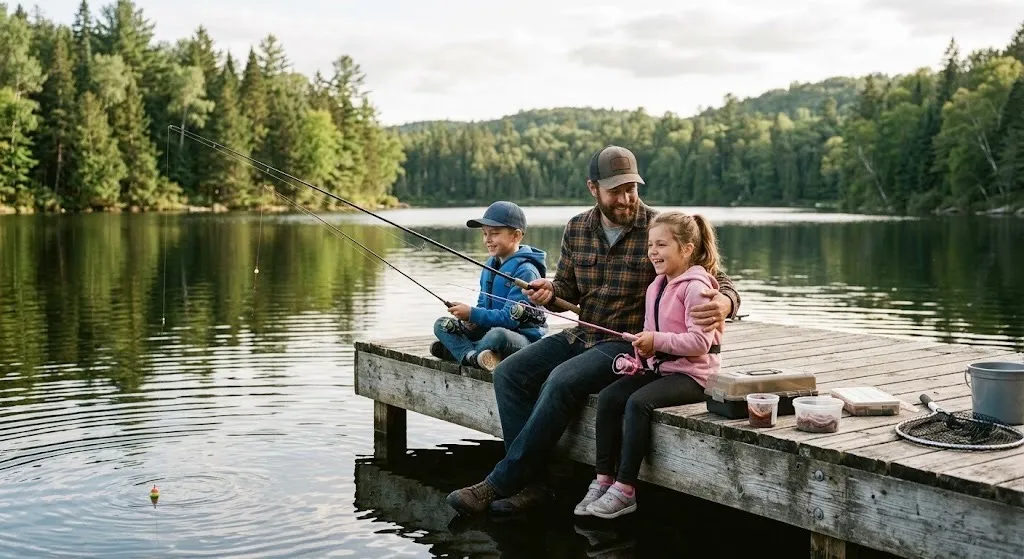
Written by Hudson Reed
Fishing with kids this summer is one of the best decisions you can make as a parent, but only if you go in with the right plan. I've watched plenty of well-intentioned fishing trips fall apart in the first 30 minutes: the wrong location, gear the kids can't operate, and a parent who gets frustrated when the bobber doesn't move. I've been there. I've also had the trips that ended with a tired, sunburned kid asking "can we come back tomorrow?" The difference usually comes down to a handful of decisions made before you ever leave the driveway.
Here's what I've learned about fishing with kids, and what the numbers back up. According to the American Sportfishing Association, 88% of current adult anglers started fishing before age 12. That means the window you have right now, this summer, matters more than you might think.
What Age Should You Start Taking Kids Fishing?
You can start earlier than you probably think. Most kids around 3 or 4 years old have enough coordination and attention to enjoy a short session at the water's edge, especially with a simple bobber setup. That said, the sweet spot for a genuinely productive first trip is usually somewhere between 5 and 8 years old. At that age, they can hold a rod, watch a bobber, and react when something bites without needing constant physical assistance.
For toddlers under 4, I'd call it a "fishing-adjacent" trip. You're there to get them near water, let them see fish if you catch any, and plant the seed. That counts. The goal is a positive association with being outside near water, not a technical fishing lesson.
Don't skip the younger years out of impatience, but also don't put pressure on yourself to run a full session. A 20-minute visit to a pond where your 3-year-old tosses bread to the ducks and watches you catch a bluegill is a win. Build from there.
Choose the Right Location: This Is the Most Important Decision You'll Make
The single biggest factor in whether a kids' fishing trip succeeds is location. Not your technique, not the gear, not the moon phase. Location.
You want a place where the fish are plentiful, the access is easy, and you don't have to work for it. That means skipping the remote reservoir in favor of a local park pond, a stocked trout stream, or a public fishing pier. Look for bodies of water with an active stocking program from your state fish and wildlife agency. Many states stock ponds and small lakes specifically to improve youth angling opportunities, and those spots are goldmines in summer.
Practically, here's what to prioritize:
- Easy bank access with flat, stable ground, no scrambling down steep banks with a 6-year-old
- Shade nearby so you're not roasting in the July sun after 20 minutes
- Parking close to the water: the longer the walk, the shorter the attention span by the time you arrive
- Restrooms on-site: non-negotiable if you have younger kids
- Visible structure like docks, overhanging trees, and weed edges: that's where panfish stack up in summer
Many state park lakes and municipal ponds check every one of these boxes, and they're often free or very low cost to fish. Check your state wildlife agency's website (or a national resource like Take Me Fishing) for a "find a fishing spot" tool, most have them now.
The Best Fish to Target with Kids
Bluegill. Full stop. If I could only give you one piece of advice for fishing with kids, it would be to find a pond with bluegill and bring a can of worms.
Bluegill and other panfish (pumpkinseed sunfish, green sunfish, crappie, yellow perch) are the perfect kids' fish for several reasons. They're aggressive, they bite frequently, they're found in nearly every warm-water pond and lake in the country, and they put up a decent fight on light tackle that feels exciting to a child. They're also very forgiving of sloppy technique, which matters when you're fishing with a 7-year-old who just launched the bobber 3 feet to the left of where you told them to aim.
Summer is actually ideal timing here. Panfish remain active through warm weather and are often grouped up along weed edges, under docks, and around any submerged structure near shallow water. You don't need to go deep or cover water. Cast near a dock piling, watch the bobber, repeat.
Stocked trout are another excellent option if you have access to a stocked stream or pond. Many states stock trout into easily accessible public waters through the summer, and a trout hitting a worm under a bobber is hard to beat for excitement level.
You might also enjoy: Spring Crappie Fishing Tips: Ice-Out to Spawn
Leave bass, catfish, and walleye for later trips once your kid has some experience. Those species require more patience and technique, and the action is slower, which is fine for adults, but it's a recipe for a bored child.
What Gear Do Kids Actually Need?
Simple. Light. Kid-sized. That's your gear checklist.
For the rod and reel, a spincast combo (the push-button type) is the right call for kids under about 10. It's easy to cast, hard to backlash, and cheap to replace if it gets stepped on or thrown in the lake. Look for something in the 5- to 5.5-foot range: a full adult rod is too long and too heavy for a small child to control. Brands like Zebco make solid starter combos in the $20-$40 range that come pre-spooled and ready to fish.
Spool the reel with 6-pound monofilament if it isn't already. That weight covers virtually every fish a kid is likely to catch from shore and is forgiving enough to handle the tangles and wind knots that are coming.
For terminal tackle, keep it simple:
- Hook: Size #6 or #8 baitholder hook, small enough for panfish, sturdy enough for a wiggling worm
- Bobber: A round clip-on bobber about the size of a golf ball, kids can see it clearly and the visual of it going under is genuinely exciting
- Split shot sinker: One or two small ones above the hook to keep the bait down
- Bait: Nightcrawlers or red wrigglers from a gas station bait fridge. Live worms catch everything.
Set the bobber so the bait hangs about 18 to 24 inches below the surface. Cast near structure, wait, and watch. That's it. You don't need a tackle box full of plastics on a first trip.
One more note on gear: consider bending down the barb on the hook with needle-nose pliers. Barbless hooks are much easier to remove from fish (and from fingers) when you're fumbling around with an excited kid.
How Long Should a Kids' Fishing Trip Actually Be?
Shorter than you think. My honest recommendation is 60 to 90 minutes maximum for kids under 8, and even that should include breaks. You can push to 2 hours with older kids if the fishing is active and they're still engaged, but resist the urge to milk the trip just because you're having fun.
The goal of any kids' fishing trip is to end while everyone still wants more. Leaving when the mood is still positive, even if you could squeeze out another 30 minutes, means your kid asks to go again. Staying until someone is melting down means you're fighting an uphill battle next time.
Structure helps. I like to alternate: fish for 20-30 minutes, take a snack break, fish another 20-30 minutes, then explore the shoreline for a few minutes before heading out. Build the wrap-up into the plan so it doesn't feel abrupt.
According to the Recreational Boating & Fishing Foundation's 2022 Special Report on Fishing, children ages 6-12 logged 108 million total fishing outings in 2022, a record high, which suggests that short, frequent trips are exactly what's working for families right now.
How Do You Keep Kids Engaged When the Fish Aren't Biting?
This is the real skill in fishing with kids, and it's less about fishing than you'd think.
You might also enjoy: How to Catch More Fish After a Bad Trip: Turn Slow Days Into Data
First, pick spots where bites are likely to come every 5-10 minutes, not every 45. If you've been waiting 20 minutes with no action, move. Kids don't have the context to understand why a slow bite happens, and "just wait, they're here" doesn't land the same way it does with an adult. Move to another spot and reset.
Second, keep them active. Let your kid bait the hook if they're old enough (or willing). Let them work the bobber watch duties seriously. I've seen kids light up when you tell them their job is to yell "FISH!" the second the bobber goes under. Give them ownership.
Third, expand the scope. The water doesn't have to be the only interesting thing happening. Point out turtles, birds, interesting bugs. Explain what a dragonfly does near the water. If a crayfish shows up under a rock, that's a 10-minute side quest right there. Fishing is a wrapper for being outside, so lean into that.
And pack the snacks. I'm serious about this. A bag of pretzels and some fruit snacks can buy you 20 extra minutes of focused fishing every time.
Safety Basics You Can't Skip
You don't need to turn the trip into a safety lecture, but a few things need to happen before anyone makes a cast.
Run a quick "casting zone" check: make sure your kid knows to look behind them before they cast and that nobody walks through the casting area without warning. Hook awareness is important too. I demonstrate once on a worm, slowly, so they understand what a hook does. Most kids take it seriously once they see it.
For kids near open water, life jacket rules depend on your state and the specific location, but my default when bank fishing with young kids is to have one on or immediately accessible, especially on piers and docks. It's not worth the negotiation on a bad day.
Sunscreen, a hat, and water are non-optional in summer. Apply sunscreen before you leave the car, not at the water's edge, because by then everyone's already distracted.
Building the Habit: Making Fishing with Kids a Summer Ritual
The first trip is about planting the seed. What happens in the following weeks determines whether fishing becomes a real part of your family's life or a one-time memory.
My advice is to go again within two weeks while the first experience is still fresh. Keep it the same format: same location, same simple setup, same short window. Consistency matters more than variety early on. Let the location and the routine become familiar before you start introducing new species, new gear, or new techniques.
As your kid's confidence grows, layer in new things one at a time. Try letting them tie a knot (the improved clinch knot is a great starter, check out our beginner fishing guides for a step-by-step breakdown). Move from worms to a small soft plastic. Graduate from panfish to bass. Let progression happen naturally and follow their lead on pacing.
The 13.5 million youth anglers fishing in the US right now all started somewhere simple: a local pond, a can of worms, and an adult who made it feel worth coming back for. You don't need the perfect setup or the perfect location. You just need to go.
Get fishing tips in your inbox
New guides, seasonal tactics, and gear picks — about once a month, no spam.