How to Release Fish in Summer Heat So They Survive
 Cameron Spanos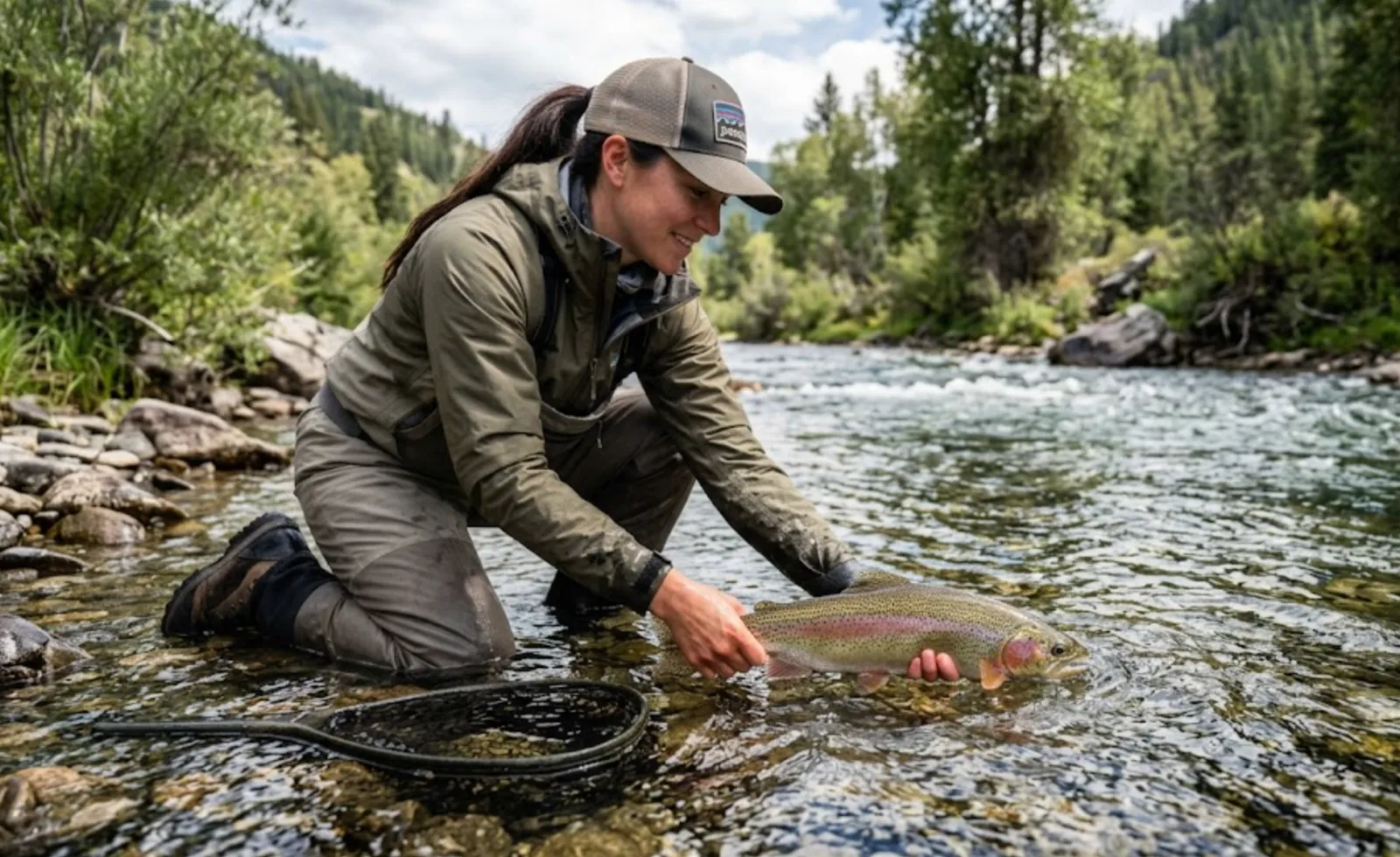
Written by Cameron Spanos
A fish that swims away is not the same thing as a fish that lived. That gap is where summer catch-and-release goes wrong. You unhook a bass, it kicks off your hands looking strong, and you feel good about it. Then it dies three hours later in the shallows from lactic acid you never saw building. Biologists call it delayed mortality, and in warm water it accounts for a huge share of the fish we think we let go. If you want to release fish in summer heat and actually have them survive, the swim-away moment is the least useful thing to judge by.
Here's the uncomfortable part. Most of what kills a released fish in July isn't the hook. It's the clock, the air, and the water temperature you chose to fish in.
Why does summer heat kill released fish?
Warm water holds less dissolved oxygen. That's the whole problem in one sentence. A fish that just fought your line is oxygen-starved and loaded with lactic acid, and it needs to pull hard through its gills to recover. Drop it back into 74-degree water that's already thin on oxygen and you've asked it to sprint a mile and then breathe through a straw.
The numbers back this up hard. Fish released in water below 68°F show survival rates over 90%, according to summaries of catch-and-release research compiled by the Wild Trout Trust. Push above that and the curve falls off a cliff, because the same fight that a fish shrugs off at 60 degrees becomes a lethal event at 75.
Then there's air. Every second a fish is out of the water, its gill lamellae collapse and it can't oxygenate its blood. A study summary cited by fisheries researchers found that just 10 seconds of air exposure doubles lactate accumulation in rainbow trout. It compounds fast in bigger fish: tagging work on white marlin recorded post-release mortality climbing from 1.7% for fish never lifted from the water, to 17% at one minute of air, to 40% at three minutes. Small fish tolerate air better than big ones, but the direction is always the same. Out of water is a countdown.
What is the 10-second air-exposure rule?
The rule is simple and you should treat it like a hard cap: from the moment the fish leaves the water to the moment it's back in, you get about 10 seconds. Fifteen to twenty on the absolute outside during a clumsy unhooking. That's the window for the hook, the photo, and the release combined, not for each one.
One field comparison makes the case better than any lecture. A trained angler group using science-backed release techniques recorded 94.2% survival after 14 days. The control group, using standard practices that included 20 to 30 seconds of air exposure for photos, came in at 76.8%. Same fish, same fishery. The only real difference was the grip-and-grin.
So here's my hot take, and I'll die on this hill: the hero shot is what's killing your summer fish, not your barbless-versus-barbed hook debate. Anglers agonize over hook style and then hold a trout up in the sun turning it different directions for their buddy to find the phone. Pinch your barbs if you want, it helps a little. But if you cut your photo time in half you'd save more fish than switching every hook in your box.
If you want the picture, keep the fish in the net in the water, get the camera ready and focused first, then lift for a two-count and put it back. A wet fish over water photographs fine. A dead one doesn't photograph at all after tomorrow.
Wet hands and the slime coat you can't see
Fish wear a slime coat, a thin mucus layer that's their first defense against fungus, bacteria, and parasites. Dry hands, a dry rag, a boat deck, the knee of your waders, all of it strips that coat off in patches. Days later those bare spots turn into infections the fish can't fight.
You might also enjoy: Trico Spinner Falls in July: The 7 AM Window Every Tailwater Angler Should Plan Around
Wet your hands before you touch anything. Every state agency that publishes handling guidance says the same, and the Oregon Department of Fish and Wildlife puts it plainly: wetting your hands protects the delicate membrane on the fish's skin. A rubber-coated mesh net does the same job even better, which is why it's the one piece of gear I'd never fish summer without.
Skip the towel. Skip the lip-grip-and-dangle. And keep the fish off the rocks.
Cradle it horizontal, never vertical
Hold a fish vertically by the jaw and its whole body weight hangs off its spine and internal organs, which evolved to be supported by water on all sides, not by a hook of jaw bone. For a big trout, pike, or bass, that vertical hang can cause internal damage you'll never see.
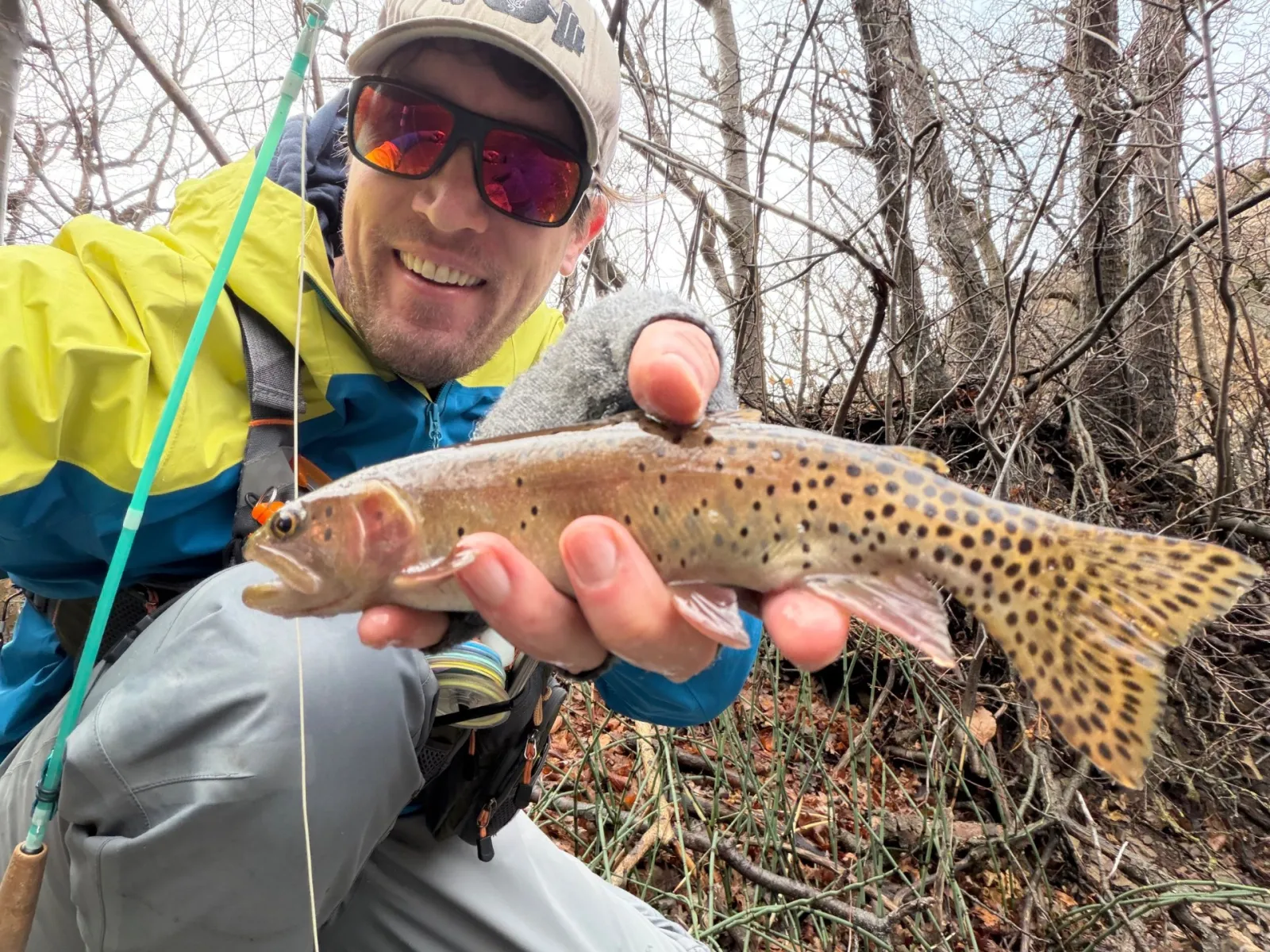
Cradle it instead. One wet hand gently around the wrist of the tail, the other supporting under the belly, fish held horizontal and low over the water or the net. Keep it flat, keep it level, keep it close enough that a flip lands it back home instead of on the ground.
The fast release sequence I use in warm water:
- Land the fish quickly on the heaviest tackle you're comfortable with, then keep it submerged in a rubber net while you get set up, because a long fight is what loads a fish with lactic acid in the first place.
- Wet your hands, back the hook out with forceps or pliers while the fish stays in the water, and don't dig if it's set deep.
- If you're taking a photo, have the camera framed and ready before you lift, then lift horizontally for no more than a two or three count.
- Face the fish into the current or gently move it forward in still water until it kicks and swims off under its own power, and never toss or drop it.
Should you ever remove a gut hook?
No. If a fish is hooked deep in the throat or the gut, cut the leader as close to the hook as you can and let the fish go with the hook still in it. This feels wrong to everyone the first time. Do it anyway, because the research is not close.
Florida's Fish and Wildlife Research Institute examined 24 deeply hooked snook. On 12 of them, researchers removed the hook and four fish died. On the other 12, they simply cut the leader and left the hook in place, and none died. Zero. A separate study on deeply hooked bluegill found line-cut fish had 8% mortality at 48 hours versus 33% for fish that had the hook pulled out. Other work on ingested hooks has shown removal driving mortality as high as 73 to 88%, against roughly 2 to 16% for fish left alone.
Fish are surprisingly good at dealing with a left-behind hook. They reject it, expel it, or wall it off in calcified tissue over time. A hook they can outlive. A torn esophagus or a punctured liver from you yanking a treble out of their throat, they cannot. Carry a pair of side-cutters and use them without guilt.
"If the fish is hooked deep in the throat or gut, research shows that it is best to cut the leader at the hook and leave the hook in the fish."
Source: Florida Fish and Wildlife Conservation Commission
You might also enjoy: Hopper Season Setup: The Three-Fly Rig That Replaces Your Dry-Dropper in July
One caveat worth knowing: this is exactly why live bait deserves a hard look in summer. Fish inhale bait deep, and gut-hooking goes way up compared to actively worked lures and flies. If you're committed to releasing everything on a hot day, artificials that hook in the mouth stack the odds in the fish's favor before you ever set the hook.
When should you stop trying to release fish in summer heat?
There's a temperature where the kindest thing you can do is leave the rod in the truck. For trout, that line sits right around 68°F, and plenty of anglers now draw it earlier. Research summarized by Orvis and others suggests stress starts mattering at 61°F for rainbow, steelhead, cutthroat, and brook trout, 66°F for brown trout, and as low as 54°F for bull trout. Once water is holding above 68, a released trout's odds drop fast no matter how clean your handling is, because you can't add oxygen back to the water with good technique.
Warmwater species like bass and panfish tolerate more heat, but they're not immune. The same rules apply on a sliding scale: the warmer it gets, the shorter your fight and air time need to be, and the more a mid-afternoon session in a shallow, low-oxygen pond turns into a fish-killing exercise no matter your intentions.
Buy a stream thermometer. It costs less than a box of flies and it's the single most useful summer purchase you can make, more than any rod. Clip it on, check the water when you arrive, and check it again in the afternoon. If you want the full breakdown of exactly where those thresholds sit and how to time your summer trips around them, our water-temperature decision tree for when to stop fishing for trout in summer walks through it species by species.
A quick summer do and don't
Do: fish dawn and the cool early morning, land fish fast on stout tackle, keep them wet, wet your hands, cradle horizontal, cut deep hooks off, and revive until they kick away on their own.
Don't: fish the warm afternoon slot, drag out the fight for the fun of it, lift a fish for more than a few seconds, hang it vertically by the jaw, dig at a gut hook, or fish for release at all once the water's above the threshold for your target species.
What about reviving a fish that won't swim off?
Hold it upright, facing into current or gently gliding it forward in still water so oxygenated water moves over the gills. Don't crank it back and forth like a hand pump. That old figure-eight sawing motion actually damages the gills and forces water the wrong way. Steady forward movement, or just steady in the current, until the fish grips the water and pulls away from your hand. If it takes a minute, give it a minute.
If a fish absolutely will not stay upright after real effort, and you're above the temperature threshold, that's the water telling you something. It's not a handling problem you can fix in the moment. It's a decision you should've made before you tied on.
Log the water temps you find over a season and you start to see your own home water clearly: which stretches stay cold enough to fish safely in August, which go dead by July. You can try Bushwhack to track your catches alongside conditions and build that picture over time. The anglers who release the most fish successfully aren't the ones with the fanciest nets. They're the ones who know when the water quit being fishable and went home instead.
Get fishing tips in your inbox
New guides, seasonal tactics, and gear picks — about once a month, no spam.