Deer Creek Reservoir Fishing Guide: Walleye, Smallmouth, and Trout From Ice-Off to Ice-Up
 Cameron Spanos
Written by Cameron Spanos
Most Utah anglers treat Deer Creek as scenery on the drive to Strawberry. That's a mistake. Deer Creek Reservoir fishing offers a species mix almost nothing else on the Wasatch Front can match: walleye, smallmouth bass, rainbow trout, brown trout, and yellow perch in one lake of roughly 3,000 acres sitting half an hour up Provo Canyon from Orem.
The catch is timing. By noon on a July Saturday the lake belongs to wakeboats and canyon wind, and the bite usually dies with the calm water. Fish the right months at the right hours and Deer Creek quietly outproduces lakes with far bigger reputations.
This guide runs the whole calendar, ice-off through ice-up, plus shore access, ramps, fees, and the 2026 regulations that actually apply here.
What's actually swimming in Deer Creek?
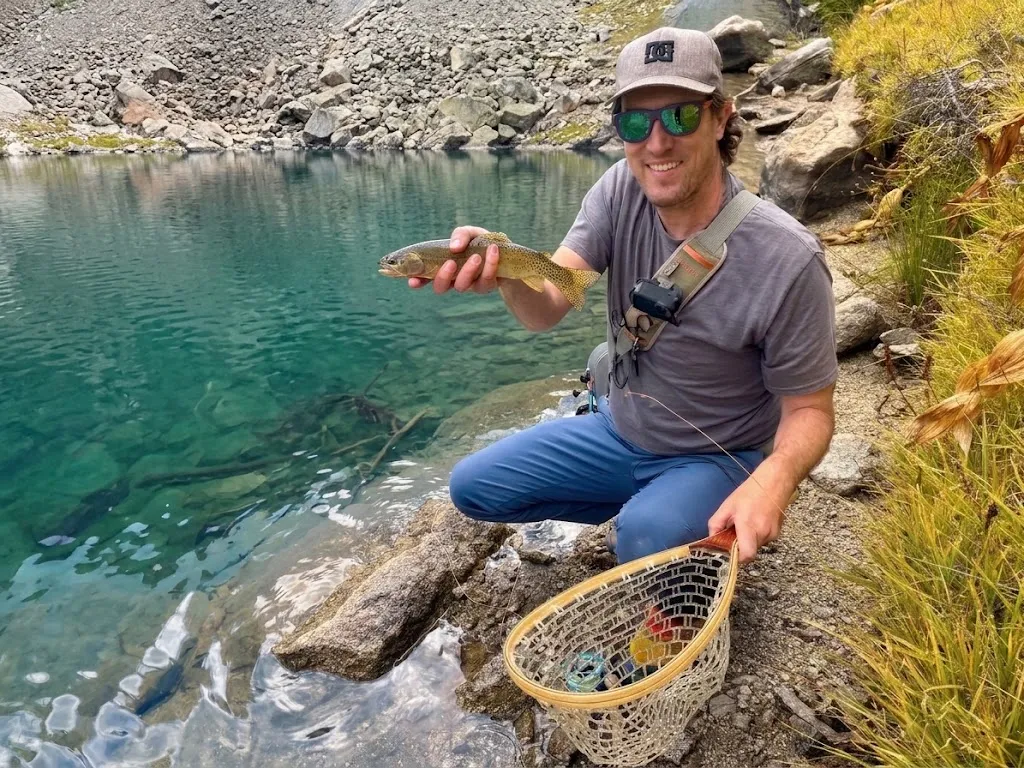
Deer Creek holds walleye, smallmouth bass, rainbow trout, brown trout, yellow perch, largemouth bass, white bass, and black bullhead catfish. It fishes like two lakes stacked on top of each other: a stocked trout fishery up top and a warmwater predator lake underneath.
The trout side is heavily supported. The Utah Division of Wildlife Resources plants tens of thousands of catchable rainbows here every year, with fall plants in October and November carrying the winter bite. You can check exactly what went in and when on the DWR fish stocking report.
The walleye are the ignored half of the story. Deer Creek's walleye eat well on the perch population, they get a fraction of the pressure that Starvation or Utah Lake walleye see, and hardly anyone targets them on purpose. Temper your size expectations, though. This isn't a trophy factory; treat a 19 inch fish as a good one and anything over 24 inches as rare. What Deer Creek offers is numbers close to home, not wall-hangers.
Smallmouth are the most reliable fish in the lake. Rock is everywhere here (the dam face, the steep US 189 shoreline, the points around the Island area), and the smallmouth use all of it.
Ice-off through the walleye spawn: March into May
Deer Creek sheds its ice early for a mountain reservoir. Some winters it never fully caps, and even after a cold January the lake typically shows a mix of ice and open water by early February, with open fishing well before most Utah ice lakes have melted out.
That early open water matters because walleye spawn first. Utah walleye spawn from late winter into May depending on elevation, and at Deer Creek the push onto rocky, gravelly banks in 1 to 20 feet of water generally happens through April. There's no closed season and no spawning closure for anglers, so this is the best window of the year to catch one on purpose.
Work steep, rocky banks at dawn and dusk with a jig tipped with half a nightcrawler, or slow-roll a suspending stickbait parallel to shore after dark. A DWR Central Region forecast for Deer Creek recommended exactly this: finesse jigs with nightcrawler and stickbaits along steep banks, early morning and late evening. Green pumpkin, orange and yellow, and white with chartreuse all get mentioned in agency reports, but low light matters more than color.
Ice-off is also the easiest trout fishing of the year. Rainbows cruise the warming shallows within casting distance of shore, and a slip bobber with a nightcrawler or a slow-retrieved spoon will find them without a boat.
May and June belong to the smallmouth
As the water climbs through the 50s, smallmouth stage on gravel and rock and then spawn, and for about six weeks they're the easiest gamefish in the lake. Drag a Ned rig or a green pumpkin tube down any rocky bank and you'll get bit. The dam-side riprap and the rocky points near the Island day use area are the classic stretches, but honestly, if you're standing on broken rock anywhere on this lake in late May, you're in the game.
One regulation quirk worth knowing: the 2026 Utah Fishing Guidebook closes Deer Creek to the possession of largemouth and smallmouth bass while underwater spearfishing from April 1 through June 27, 2026. That rule is aimed at spearfishers, not rod-and-reel anglers. Hook-and-line fishing for bass stays open year-round, with the statewide combined limit of six.
You might also enjoy: Trico Spinner Falls in July: The 7 AM Window Every Tailwater Angler Should Plan Around
Walleye don't disappear in this stretch either. Post-spawn fish slide out to the 15 to 25 foot range to feed back up, which puts them on the deep ends of the same points the smallmouth are using. A bottom-bouncer and crawler harness trolled along those breaks at first light is the highest-percentage walleye presentation on the lake from late May on.
Summer: beat the wind, then beat the wakeboats
Deer Creek in July and August is two different lakes. From first light until mid-morning it's a fishery. After that it's a wind sports and wakeboat venue, and there's no point pretending otherwise.
The afternoon wind here isn't bad luck; it's geography. Provo Canyon funnels a reliable afternoon blow up the lake, which is exactly why sailboarders and sailboat owners love Deer Creek. The DWR's own summer forecast for this water tells anglers to fish early mornings, late evenings, and weekdays to dodge the recreational congestion, and it noted the smallmouth bite going slack from about 10:30 a.m. until mid-afternoon.
So plan around it. Launch at dawn, fish hard until the boat traffic builds, and be loading the trailer when the wakeboats line up at the ramp.
Tactically, summer pushes everything deeper. Trout hold below the warm surface layer, and trollers switch to downriggers or leadcore to get spoons and small crankbaits down to them. Walleye feed in low light on the deep edges of points and steep banks; nighttime trolling with deep-diving stickbaits takes some of the biggest fish of the year. Smallmouth stay catchable all day if you follow them down the rock with a drop shot, but the morning topwater window over the same banks is a lot more fun.
Fall is the sleeper season
After Labor Day the wakeboats vanish, the wind windows shorten, and Deer Creek turns back into a fishing lake. September through November might be the best all-around stretch of the year, and almost nobody is on the water.
Smallmouth gorge on young-of-year perch over the rocks, so upsize to swimbaits and jerkbaits. Walleye move back onto the steep banks at dusk, and the same jig-and-crawler program from April starts working again. Brown trout get aggressive ahead of winter, and the DWR's October and November rainbow plants mean fresh, willing trout for shore anglers right when everything else is winding down.
Fall is also when a season of notes pays off. If you've been keeping a fishing log all year, the pattern (wind, water level, time of day, depth) is sitting right there in your own data. If you haven't, try Bushwhack and start logging trips before next season.
When does Deer Creek freeze?
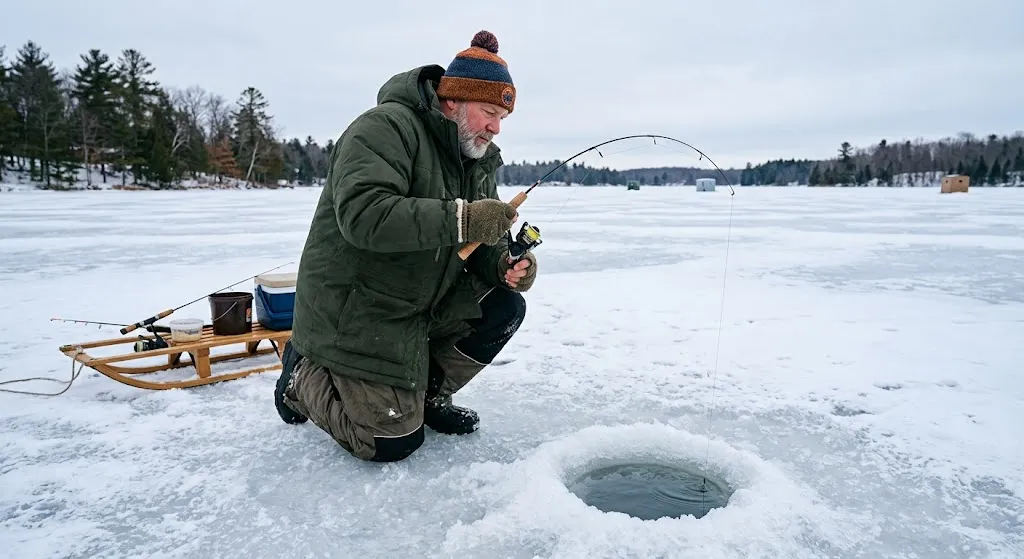
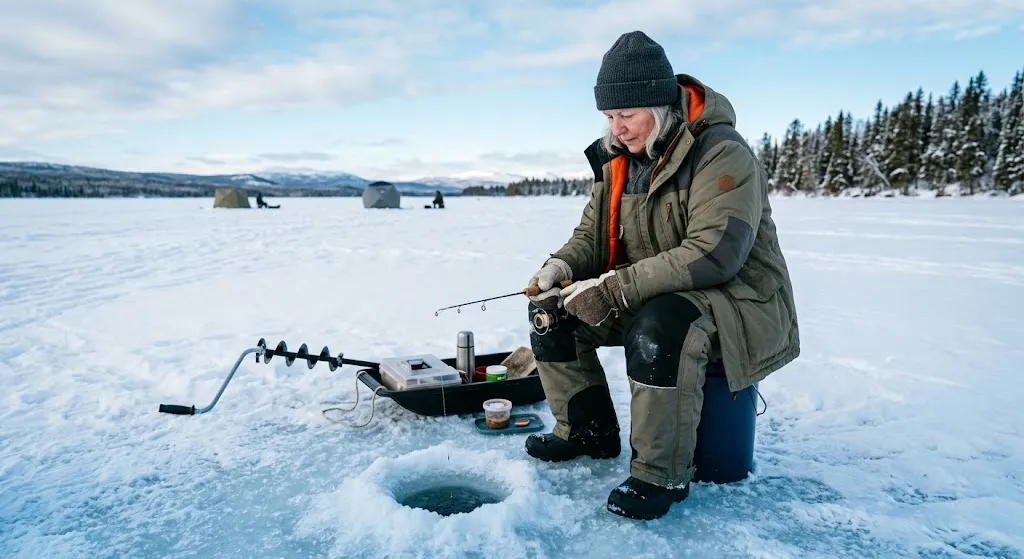
Late, and not always completely. Thin ice usually starts forming in the first half of January, the lake may not cap until late January, and some winters parts of it never lock up at all. KSL Outdoors' late-season ice reports describe fishable ice of 4 inches or more setting up from the Island day use area north toward the Provo River inlet while other sections stay open.
If you want dependable early ice, Deer Creek is the wrong lake. But when it does cap, it's worth the drive: perch fishing can be fast in early January (the fish run small), stocked rainbows bite all winter on spoons tipped with wax worms or PowerBait, and a walleye through the ice is a genuine possibility on the same rocky structure that produces in April.
Two winter-specific notes. First, dead yellow perch are legal bait at Deer Creek under the 2026 guidebook, so tipping a spoon with perch meat is both effective and lawful here (it isn't on every Utah water, so don't carry that habit elsewhere). Second, treat 4 inches of clear ice as the absolute minimum, and check current conditions with the state park before walking out. This lake freezes unevenly, and open water is often a few hundred yards from the ice you're standing on.
Can you fish from shore at Deer Creek?
Yes, and shore access is genuinely good: roughly 18 miles of shoreline, with US 189 running right along the western side and multiple pulloffs within a short walk of the water. You don't need a boat to fish this lake well.
The productive shore zones are the rocky banks below the highway pulloffs, the dam area, the Island day use area on the northeast side (which also has the sandy beach), the Charleston side near the upper end, and Wallsburg Bay at the southwest corner. The Provo River inlet area at the top of the lake draws cruising trout in spring and fall.
You might also enjoy: Mousing at Night for Big Brown Trout in Summer
Match your shore spot to the season: gravel banks at ice-off for trout, steep rock at dusk in April and May for walleye, any broken-rock stretch in early summer for smallmouth, and the fresh October trout plants near the developed areas in late fall.
Ramps, fees, and getting on the water
Deer Creek State Park runs two paved launch ramps, the main ramp near the dam end and the ramp at the Island area on the northeast side, and each is paired with a marina offering fuel and rentals in summer. There's a fish cleaning station in the park, and kayak rentals operate out of Wallsburg Bay in season.
Day use fees as posted by Utah State Parks: $20 per vehicle in the summer season (March 19 through October 20), $15 per vehicle in winter (October 21 through March 18), and $10 for Utah seniors 65 and up. Self-pay stations cover the entrances when booths aren't staffed.
Motorized boaters should expect aquatic invasive species screening. Utah requires mussel-aware certification and decontamination compliance for boats moving between waters, and Deer Creek staffs inspection during the boating season. Show up with a clean, drained, dry boat and it's a two-minute stop.
Deer Creek Reservoir fishing regulations for 2026
Is there a special walleye limit at Deer Creek? No. The statewide limit applies: 10 walleye, with only one over 24 inches, per the 2026 Utah Fishing Guidebook. Deer Creek carries no water-specific walleye rule.
The other statewide limits you'll care about here: six largemouth and smallmouth bass in combination, four trout, 50 yellow perch, and no limit on white bass.
Deer Creek's own listing in the guidebook adds one hard rule: there's no limit on black bullhead catfish, and you must not release them. Every black bullhead caught has to be killed immediately. Combine that with the spearfishing bass-possession closure (April 1 through June 27, 2026) and the dead-perch bait allowance, and that's the full set of water-specific rules.
One bonus for trout anglers: the Provo River directly below Deer Creek Dam is a separate, special-regulation fishery. From the dam down to the Olmstead Diversion it's artificial flies and lures only, with a limit of two trout under 15 inches. Different water, different rules; don't carry your reservoir bait rig down there.
Regulations change, so verify against the current guidebook before you keep fish.
The honest verdict on Deer Creek
Deer Creek won't out-glamour Strawberry and it won't grow the walleye Starvation does. What it will do is put five or six species within reach of a shore angler 30 minutes from the Provo bench, twelve months a year, on water that most of the fishing crowd drives straight past.
Fish it before the wind does.
And whatever you catch, write it down. Deer Creek rewards pattern-keepers more than most lakes because the wind, the traffic, and the water level shift so much through the year; a season of logged trips in Bushwhack will tell you exactly which windows are yours.
Get fishing tips in your inbox
New guides, seasonal tactics, and gear picks — about once a month, no spam.