Green River in Fall: BWOs, Low Crowds, and Big Browns Below Flaming Gorge
 Cameron Spanos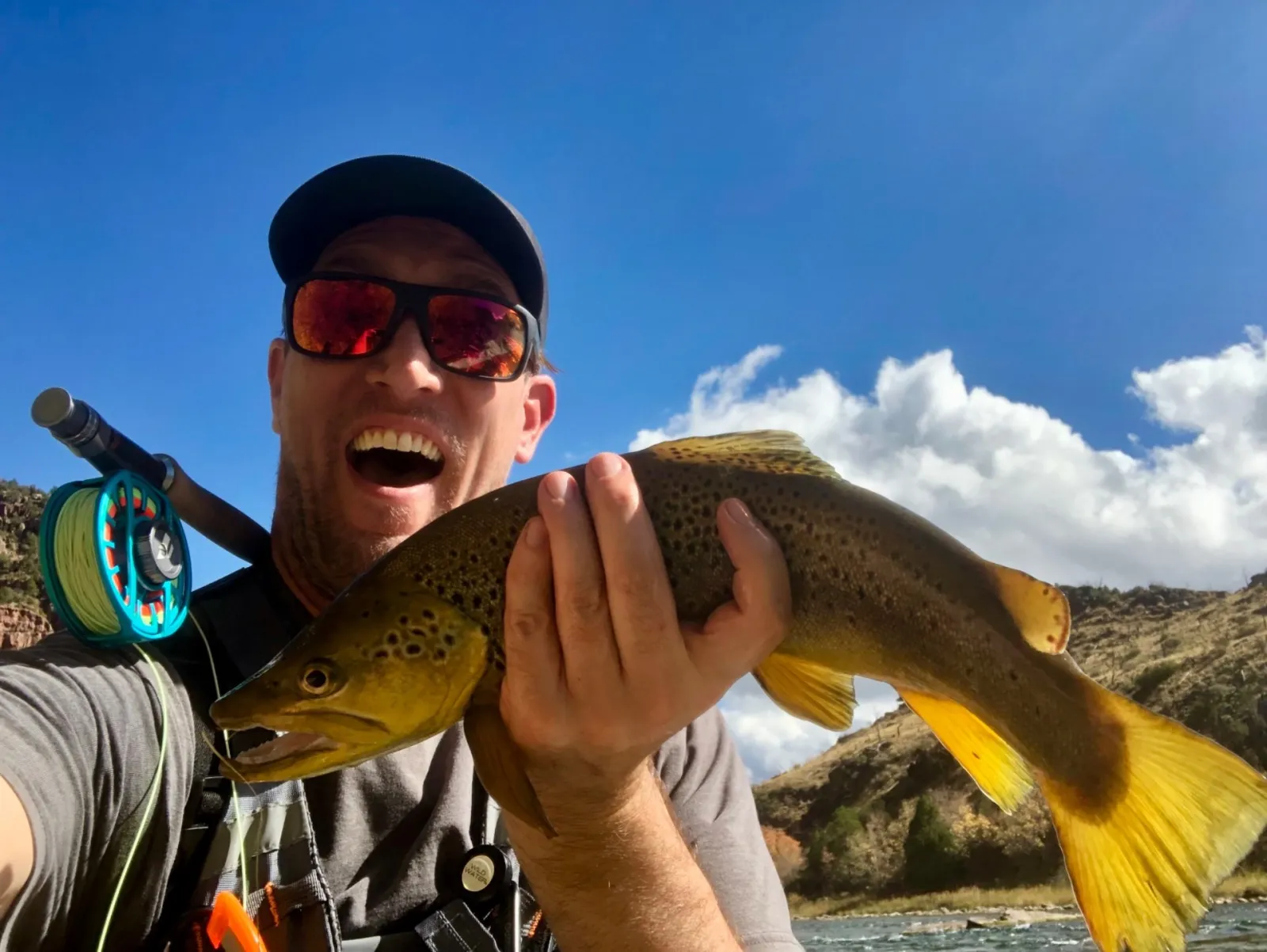
Written by Cameron Spanos
The Green River in fall is the best version of the Green River, and most anglers never see it. The rafts thin out after Labor Day. The cicada circus is a four-month-old memory. What's left is low, gin-clear tailwater, pods of trout eating size 20 Baetis for a three-hour window most afternoons, and brown trout in full pre-spawn paint chasing anything that swims through their zone.
Utah DWR electrofishing surveys have counted 8,000 to 14,000 trout per mile in the upper river below Flaming Gorge Dam. Those fish don't leave in September.
The people do.
This is the fall layer for a river you may already know from the May and June cicada hatch or a summer float. Here's how September, October, and November actually fish on the Green: the hatch calendar, the flows you'll wade, where the browns go, and why October is the month I'd burn a vacation day on.
Why is the Green River in fall so empty?
Because most of the summer crowd was never there for the fishing. A big share of the A section's July traffic is scenic rafters and vacation floats, and both evaporate when school starts. Shuttle traffic dries up, guide calendars open, and by the third week of September you can float the river's most famous seven miles and count the other boats on one hand.
Writing for KSL, outdoors columnist Spencer Durrant described a fall Saturday float where he didn't see another angler until the Little Hole boat ramp, just after noon. On a Saturday. On one of the most heavily fished trout rivers in the West.
That solitude isn't just pleasant. It changes the fishing. Fish that get rowed over forty times a day in July spread back out into the soft water by October. Bank feeders return. The inside seams that get pounded all summer hold risers again, and you can take your time working a pod instead of racing the boat behind you.
Late-season guide trips are also easier to book on short notice, which matters on a river where the best fall days are the overcast ones you can't schedule three months out.
When do the fall BWOs actually get going?
The fall Blue Winged Olive hatch on the Green builds through September, peaks from roughly late September through October, and hangs on into early November until the first hard cold snap. On hatch days the reliable window runs from about 10 a.m. to 1 p.m., and cloud cover matters more than the calendar. A gray, drizzly 45-degree afternoon will out-fish a bluebird 70-degree one every time.
These aren't big bugs. Carry your BWO patterns in #18-22 and lean on emergers. The Green's fish watch perfect duns drift over their heads all day, and the eat rate on a soft-hackle emerger or an RS2 trailed 18 inches behind a visible parachute runs consistently better than the dry alone. When a pod gets working on a flat, that trailing emerger is the fly earning its keep.
You might also enjoy: Streamers for Pre-Spawn Brown Trout: A Water Temperature Playbook
One more fall reality: the fish group up. September Trico and tiny-Baetis activity draws trout into dense pods on the flats, per The Perfect Fly Store's Green River hatch notes, and the October BWO fish do the same thing. Find one riser and you've usually found fifteen. Approach from below, pick the closest fish, and don't line the pod.
The September to November hatch calendar
Three months, three different rivers. The short version, month by month.
September: terrestrials still matter
Early fall is a two-rig month. Tricos and small Olives bring pod feeding in the mornings and on cloudy afternoons, while hoppers, ants, and beetles still pull fish to the bank on warm days. Flying ant falls in particular can turn an ordinary September afternoon into the best dry-fly hour of your year, and the Green gets them. Spinner Fall Guide Service's river calendar lists terrestrials from #8 hoppers down to #18 ants alongside #18-22 Olives this month. Fish the hopper tight to the bank until the clouds roll in, then re-rig for the small stuff.
October: the main event
October is peak fall BWO, peak brown trout aggression, and peak color, with the cottonwoods along the canyon going gold while the browns turn butter-yellow and orange. It's also the most volatile weather month: 70 degrees one day, snow squalls the next. Pack layers and fish through the ugly weather. The worse the sky looks, the better the Baetis will be.
November: midges, streamers, and empty water
By November the river belongs to midges in #22-24, the last straggler Olives on warm afternoons, and streamers. Utah's Indian summer stretches are real, and a 60-degree November day can still produce terrestrial eats, which sounds wrong until you see it. Solitude is total. If your hands can take the cold, this is the loneliest good fishing of the year.
What flows should you expect in fall?
Plan on stable baseflows somewhere in the 800 to 1,200 CFS range by early fall. Releases through the Flaming Gorge powerplant vary across the year, so treat that range as a planning estimate and confirm the current release on the Greendale gauge before you drive out, and once the reservoir's summer obligations wind down, the dam typically settles into the low, steady end of that band.
Low, stable water is the quiet reason fall wading is so good here. Crossings that are dicey at 2,500 CFS become routine at 900. The wadeable water along the Little Hole National Recreation Trail expands, fish concentrate in defined runs, and sight fishing in that famous emerald clarity gets almost unfair.
Check the USGS Greendale gauge (Green River near Greendale, directly below the dam) the week before your trip rather than trusting a report from three weeks ago. Dam operations can change on short notice, and drought-response releases have scrambled the usual script in recent years.
Pre-spawn browns, and the redd problem
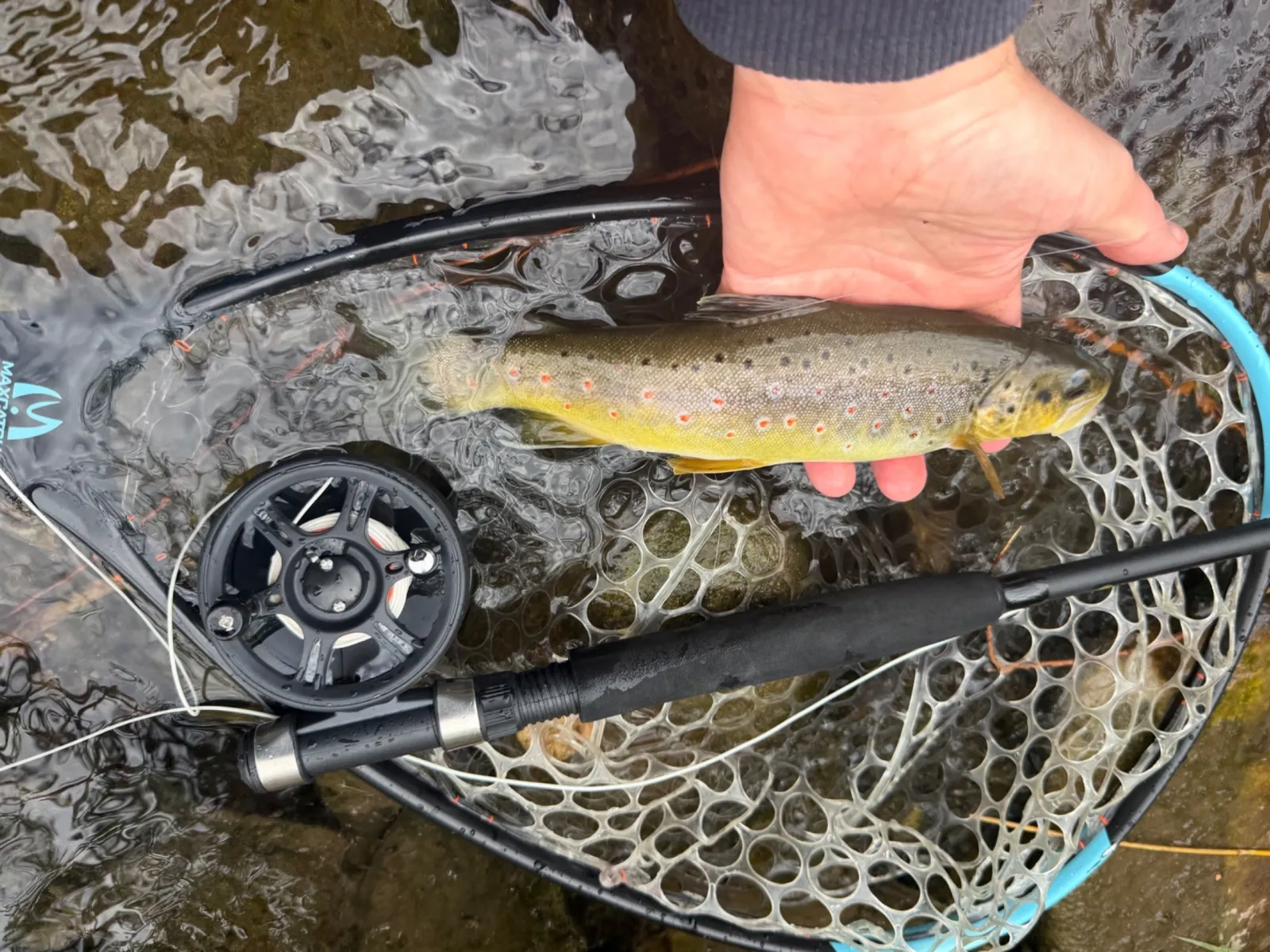
Brown trout in the Green spawn between September and December, with the peak in October and November, according to Dutch John Resort's spawning guide. The stretch right before that peak is the window worth traveling for. Pre-spawn browns are territorial, aggressive, and visible, and they'll move farther to hit a streamer in October than in any other month.
Fish streamers on the move. Sculpin and baitfish patterns on a sink tip, banged tight to structure and stripped away, pull the kind of slashing follows that make you forget dry flies exist. Dark flies on dark days is an old rule that holds up here. You don't need a two-hander either; a 6-weight with a 200-grain tip covers the A and B sections fine.
You might also enjoy: Best Vacuum Sealer for Fish Fillets (2026): What Survives Wet Fish
Now the part that matters more than fly choice. Once browns are actually paired up on redds, leave them alone. Redds are the clean, bright patches of freshly turned gravel in shallow tailouts, and by November there are hundreds of fish working them. Don't wade through clean gravel, don't sight-cast to paired fish, and don't celebrate a fish you dragged off a bed. Fall fishing targets the aggressive fish staging in the buckets and runs adjacent to spawning water, not the spawners themselves. There's a real difference, and the fishery depends on anglers knowing it.
Where the fall bite lives on A, B, and C
The full geography of section A vs B vs C, with ramps, access points, and float logistics, is its own subject. The fall-specific version looks like this.
Section A (the dam down to Little Hole) is where the hatch is. Highest fish density on the river, the clearest water, and the flats where BWO pods set up like clockwork. It's also where wade anglers win in fall: lower flows open up miles of trail-accessible water, and the sight fishing is the best it gets all year. If you're coming for dry flies, fish A.
Section B (Little Hole to Indian Crossing) is the streamer float. Fewer fish per mile than A but a bigger average brown, more bank structure, and in October you can have entire miles of it to yourself.
Section C is the solitude bet. It carries the lowest fish counts of the three, but it's brown trout water at heart, and the fall fish that eat down there tend to be the ones you tell people about. Low fall flows make the rowing slow, so budget a long day.
My honest take: float B with streamer rods in the morning, then drive back up and be on A's wade water when the clouds build after lunch. That's the whole fall program in one day.
Regulations worth rereading before you go
The Green below Flaming Gorge is artificial flies and lures only, with a three-trout limit: two under 15 inches and one over 22 inches, and everything from 15 to 22 inches goes straight back. That slot is a big part of why the river still grows the fish it does. Check the current guidebook on the Utah DWR fishing page before your trip, since special regulations get reviewed annually, and buy your license before you drive to Dutch John, where cell service is a rumor.
One last pitch for keeping notes. Fall on the Green is condition-driven fishing: the difference between a banner BWO day and a slow one comes down to cloud cover, flow, and a two-week window that shifts year to year. If you log the conditions on every trip (flow, sky, water temp, what they ate), you walk into next October knowing exactly which week to book. That's the kind of pattern Bushwhack was built to catch.
The cicada hatch gets the magazine covers. Fall gets the fish. Go see for yourself.
Get fishing tips in your inbox
New guides, seasonal tactics, and gear picks — about once a month, no spam.