Euro Nymphing vs. Indicator Nymphing: Which to Learn First?
 Cameron Spanos
Written by Cameron Spanos
If you've spent any time reading about fly fishing for trout, you've probably come across two camps that argue passionately about the best way to fish a nymph: the indicator crowd and the euro nymphing crowd. Both catch fish. Both require skill. But when you're just getting started, the euro nymphing vs indicator nymphing debate can feel overwhelming.
This guide cuts through the noise. Here's what each style actually is, where each one excels, and, most importantly, a straight answer on which one to learn first.
What Is Traditional (Indicator) Nymphing?
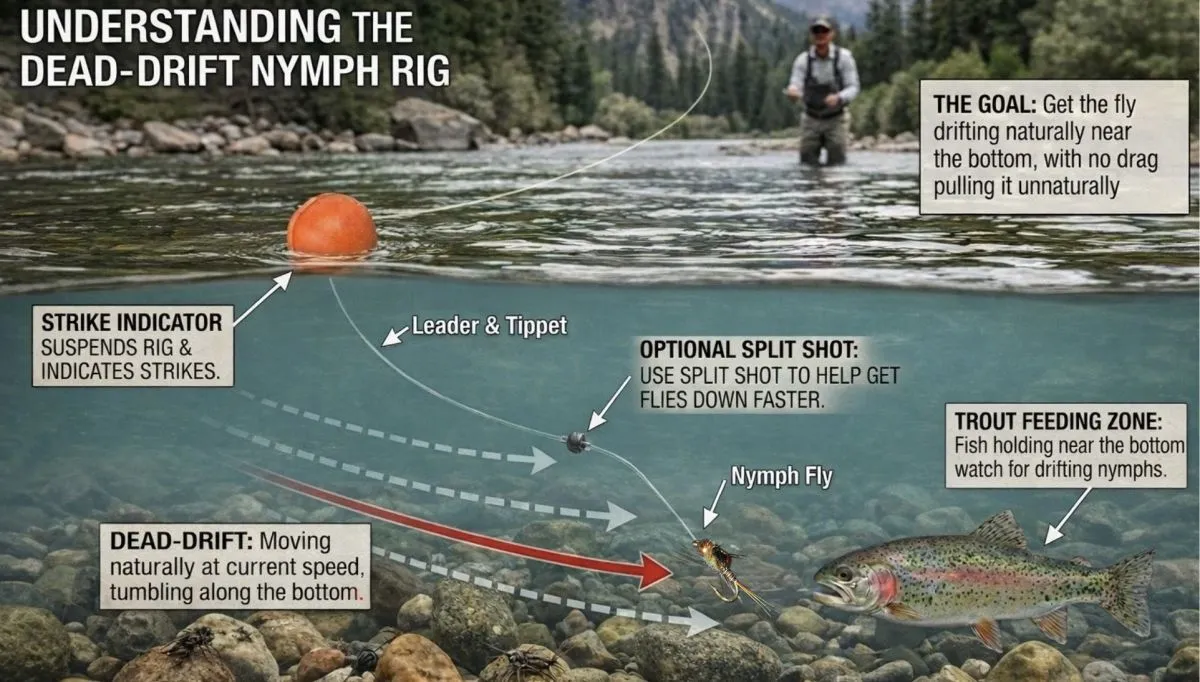
Traditional nymphing is what most beginners encounter first. You attach a strike indicator (essentially a small float) to your leader at a depth that positions your fly just above the riverbed. Split shot adds weight to get the nymph down quickly, and your job is to cast upstream, mend your line to control drag, and watch for the indicator to pause, dip, or dart sideways.
The gear is simple: your standard fly rod, a floating line, a strike indicator, some split shot, and a beadhead nymph. There's virtually no specialized equipment needed, which is one reason beginners are often taught this method first.
What Is Euro Nymphing?
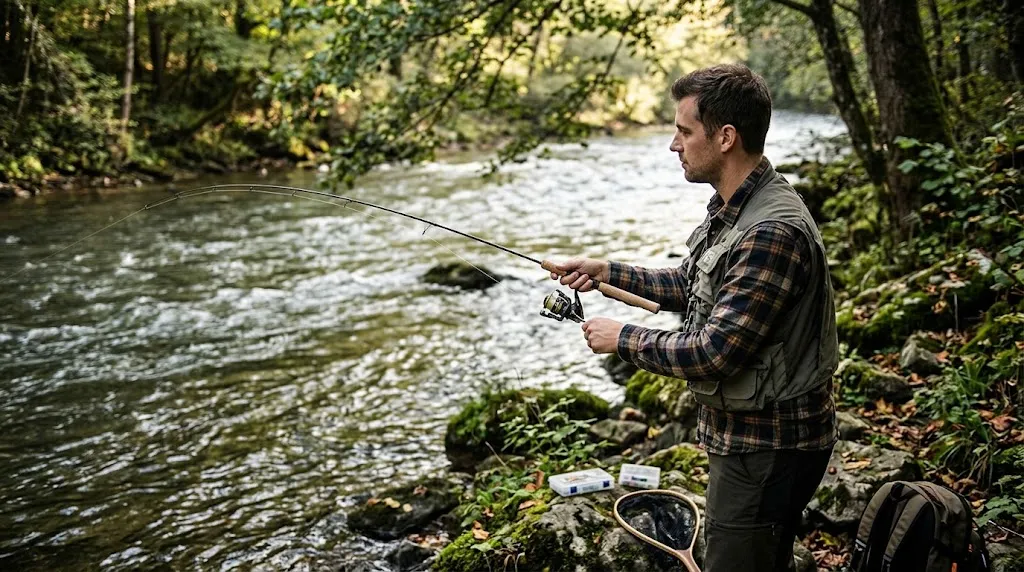
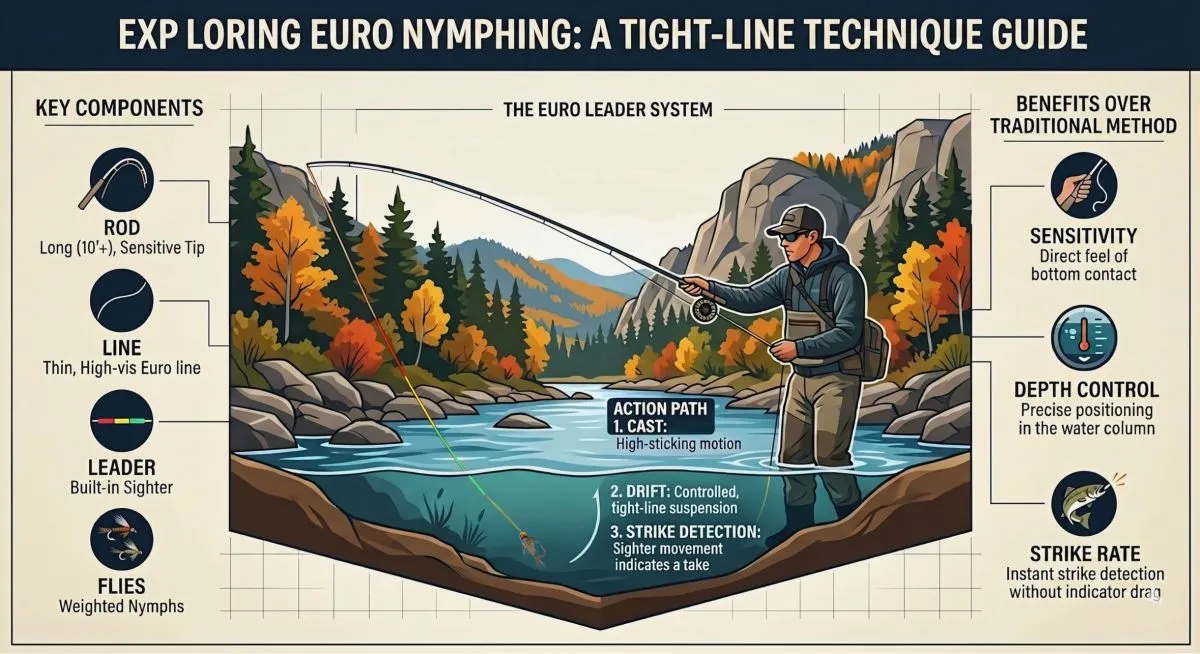
Euro nymphing, also called tight line nymphing, takes a completely different approach. There's no indicator and no traditional fly line in the water at all. Instead, you use a long, lightweight rod (typically 10–11 feet), a thin monofilament leader, and a short section of brightly colored sighter material that acts as your visual strike detector.
The technique originated from European competitive fly fishing, particularly from Czech, Polish, French, and Spanish competitors who refined it in international tournaments to maximize catch rates. The core principle: maintain a direct, tight connection between your rod tip and your flies throughout the entire drift. No slack, no indicator, no guesswork.
Weighted jig-hook nymphs with tungsten beads do the sinking. You lob them upstream at close range, let them drop to the bottom, and track the sighter with your eyes while feeling for any bump or hesitation through the rod tip.
Euro Nymphing vs Indicator Nymphing: Key Differences
Here's how the two styles compare across the factors that matter most to beginners:
You might also enjoy: Nymphing for Trout: A Beginner's Guide to Subsurface Fly Fishing
You might also enjoy: Where Do Crappie Go After the Spawn? A Summer Brush Pile Depth Guide
- Strike detection: Euro nymphing wins. Direct contact means you feel and see strikes that an indicator would never transmit. Trout can inhale and spit a nymph in under a second. Tight line catches those fish; indicators often don't.
- Drag control: Euro nymphing wins in complex current. Only tippet touches the water, so conflicting surface currents don't pull your fly off course the way an indicator and fly line do.
- Presentation distance: Indicator nymphing wins. You can fish 40+ feet away. Euro nymphing requires you to stay within a rod length or two of your target; you lose the tight line connection at distance.
- Gear cost to start: Indicator nymphing wins. You can adapt almost any fly rod. Euro nymphing is doable on existing gear with a leader modification, but dedicated euro rods perform significantly better.
- Best water: Euro nymphing dominates in fast riffles and runs under 3–4 feet deep. Indicator nymphing excels in deeper, slower pools and when fish are holding far from the bank.
Which Style Should You Learn First?
Here's the honest answer most guides won't give you: it depends on where you fish and what gear you have, but euro nymphing is more beginner-friendly than its reputation suggests.
Start with indicator nymphing if:
- You mostly fish large, slow, or deep rivers where distance presentation matters
- You're brand new to fly casting and want to focus on fundamentals before adding technique complexity
- You're working with a 9-foot, 5-weight setup and don't want to invest in new gear yet
Start with (or jump straight to) euro nymphing if:
- You primarily fish freestone streams, fast riffles, and shallow pocket water
- You want to catch more fish sooner: euro nymphing's tight-line detection translates quickly into more hookups
- You're willing to adapt your leader or invest in a dedicated rod down the line
The learning curve on euro nymphing is real, mainly in keeping that tight line connection and reading the sighter, but it's not as steep as most people think. Many beginners report hooking up quickly once the tight-line feel clicks; even on a standard rod with an adapted euro-style leader, the technique can produce fish on the first outing. The technique rewards you quickly.
Can You Start Euro Nymphing Without Buying New Gear?
Yes, and this is the most underrated beginner path. You don't need a dedicated 10-foot euro rod to get started. Here's what to do with your existing setup:
- Replace your standard tapered leader with a longer mono setup: roughly 9 feet of tapered leader, then 18–24 inches of bicolor sighter material (Amnesia or pre-made sighter mono).
- Add a tippet ring at the end of the sighter, then attach 2–3 feet of 5x or 6x tippet to your fly.
- Use tungsten jig nymphs: they sink fast and stay down without needing split shot.
- Cast short. The most common beginner mistake is casting too far. At 40 feet, you've already lost the tight line. Start at 15–20 feet until the technique clicks.
When you're ready to invest in a dedicated rod, entry-level euro rods start around $250 (the Echo Carbon XL is a popular choice). Premium options like the Sage ESN run around $900, but you don't need to start there.
Flies to Use for Each Style
Your fly selection changes depending on which technique you're using:
Indicator nymphing flies: Standard beadhead patterns work great: pheasant tail, hare's ear, prince nymph, zebra midge, San Juan worm. You can add split shot to get unweighted patterns down to depth.
You might also enjoy: Chatterbait vs Swim Jig for Summer Grass: Which One to Tie On and When
You might also enjoy: How to Read Water for Fishing Without Electronics
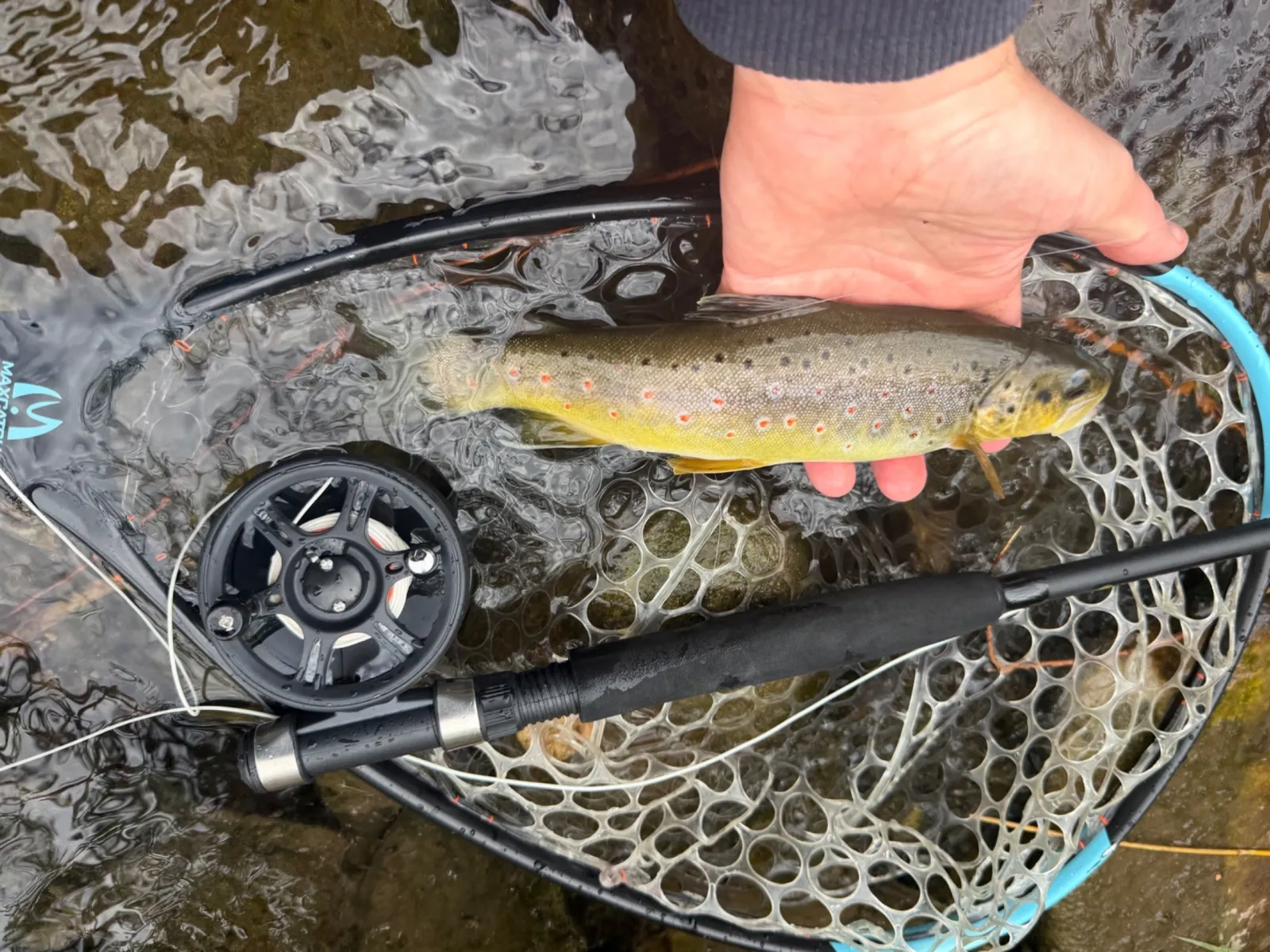
Euro nymphing flies: You want heavier, faster-sinking patterns: tungsten jig nymphs are the standard. Top patterns include jig pheasant tail, rainbow warrior, squirmy wormy, and classic Czech nymphs. The jig hook rides point-up, which also reduces snags on the bottom.
Track What Works with a Fishing Log
Whichever style you start with, the fastest way to improve is to track your outings. Log the water type (riffle, run, pool), depth, current speed, fly pattern, technique, and how many fish you moved versus landed. Over even a handful of trips, patterns emerge: you'll see clearly which technique is producing on your home water.
The Bushwhack fishing log makes this easy to track on your phone right from the river. You can also use your dashboard to review trends across sessions over time.
The Bottom Line
Both euro nymphing and indicator nymphing are legitimate, proven techniques. The best nymphing style for beginners isn't a universal answer: it's the one that matches your water, your gear, and your goals.
If you fish fast, shallow trout streams and want the most direct feedback from the river, euro nymphing is worth learning from day one. If you're on bigger, slower water or just want to simplify your setup while you build casting skills, start with indicators and add euro nymphing to your toolkit later.
Most serious nymphers end up using both. The goal isn't to pick a side: it's to match the right tool to the water in front of you.
Get fishing tips in your inbox
New guides, seasonal tactics, and gear picks — about once a month, no spam.