Bank Fishing Tips: Catch More Fish From Shore This Spring
 Hudson Reed
Written by Hudson Reed
Spring is the single best season for bank fishing, and if you've been sitting on the sideline waiting to buy a boat, here's some good news: you don't need one. When water temperatures climb into the 55-75°F range, bass, bluegill, crappie, and trout all push shallow to spawn and feed aggressively, putting them squarely within casting distance of the bank. This guide breaks down exactly how to catch more fish from shore this spring, species by species, with practical tactics that work whether you're brand new to fishing or just working with a tight budget.
Why Spring Is the Best Season for Bank Fishing
Most of the year, the fish you want to catch live in water that's tough to reach without a boat. Spring changes that. As temperatures rise, fish move into the shallows to spawn and feed, often in just 2-8 feet of water right along the bank. Bass start their pre-spawn staging when water temps hit the upper 50s, and crappie and bluegill follow shortly after. Stocked trout are active and hungry near the surface in early spring before warm weather pushes them deep.
One insider tip: on cold early-spring days, start on the south-facing bank of any pond or cove. That side absorbs more sunlight and can run 3-5°F warmer than the north bank, and that temperature difference is enough to concentrate fish days or even weeks earlier than the rest of the water.
The #1 Bank Fishing Tip: Cast Parallel, Not Perpendicular
Most beginners wade to the water's edge and cast straight out, perpendicular to the bank. That's one of the most common mistakes in shore fishing. The better move is to cast parallel to the shoreline, so your lure travels along the bank rather than away from it. Fish holding tight to the bank, a dock, a weed edge, or a fallen tree are most likely to strike a lure that runs right past them, not one that cuts briefly through their zone and then heads into open water.
If a purely parallel cast isn't possible due to cover or obstacles, try a 45-degree angle. This approach lets you cover both shallow and slightly deeper water in the same retrieve, which is especially effective for pre-spawn bass staging along drop-offs.
One more thing: stay back from the edge of the water. Staying at least 5 feet from the bank helps you avoid casting a shadow or sending vibrations through the ground that can spook fish in the shallows.
How Do You Read the Bank to Find Productive Spots?
Not every stretch of bank holds fish. The spots that consistently produce share a few key features:
- Fallen trees and woody debris: Bass and panfish love to hide in root systems and branches.
- Riprap and rock banks: Rock absorbs heat and holds baitfish, which brings larger fish in close.
- Dock pilings and bridge supports: Shade, structure, and depth changes in one place.
- Weed edges: The boundary between vegetation and open water is a natural ambush lane.
- Creek mouths and coves: Funnel points that concentrate baitfish and the predators that follow them.
- Small ponds: Underrated and often uncrowded. A half-acre pond can hold plenty of bass, bluegill, and crappie in spring.
In rivers, focus on eddies, the tailouts below dams, and undercut banks, anywhere the current slows and fish can hold without fighting the flow.
Spring Bank Fishing for Bass
Bass are aggressive in spring, and they're catchable from shore throughout the entire pre-spawn and spawn period. Here's how to approach each phase:
You might also enjoy: Spring Crappie Fishing Tips: Ice-Out to Spawn
Pre-Spawn (Water Temp 48-62°F)
Bass are feeding hard to build energy for the spawn. A lipless crankbait like a Rat-L-Trap or Strike King Red Eye Shad is one of the best bank fishing lures at this stage: burn it through shallow flats and along the first drop-off you can reach. A 4-inch finesse worm on a light spinning setup is a reliable backup when bass are less aggressive.
Spawn (Water Temp 62-75°F)
Bass move into 2-6 feet of water to build beds. Walk the bank slowly, look for dark circular patches on the bottom, and stay low and quiet. A Texas-rigged worm or creature bait dropped right on the bed and left nearly motionless is the classic approach. A Senko fished on a wacky rig is equally effective and beginner-friendly.
Gear: a 6-7 foot medium spinning rod with 10-15 lb braid and a fluorocarbon leader covers most bank bass situations.
Shore Fishing for Panfish: Bluegill and Crappie
If you want fast action from the bank this spring, go after panfish. Bluegill and crappie both move shallow to spawn, and a simple setup is all you need to put a lot of fish on the bank.
Crappie
Spring crappie school up in 3-6 feet of water near brush piles, standing timber, and dock pilings. A small jig (1/32 to 1/8 oz) suspended under a slip bobber is the go-to setup. Pink and white or chartreuse colors are reliable starters. Tip the jig with a small minnow for extra action when the bite is slow.
Bluegill
Bluegill gather in shallow, weedy coves and around docks when water temps hit the mid-60s. A small hook with a piece of worm under a small bobber is all you need. Fish in 2-4 feet of water and keep your rig moving slowly. Bluegill are curious but can be quick to drop a bait that doesn't feel right.
Gear: a 6-7 foot light spinning rod with 4-6 lb monofilament is perfect. Keep your tackle box simple: small jigs, a pack of hooks, split shot weights, and a bobber. Add a pair from our best polarized fishing sunglasses under $50 roundup so you can read the drop-offs and spot fish from the bank.
Catching Trout From the Bank in Spring
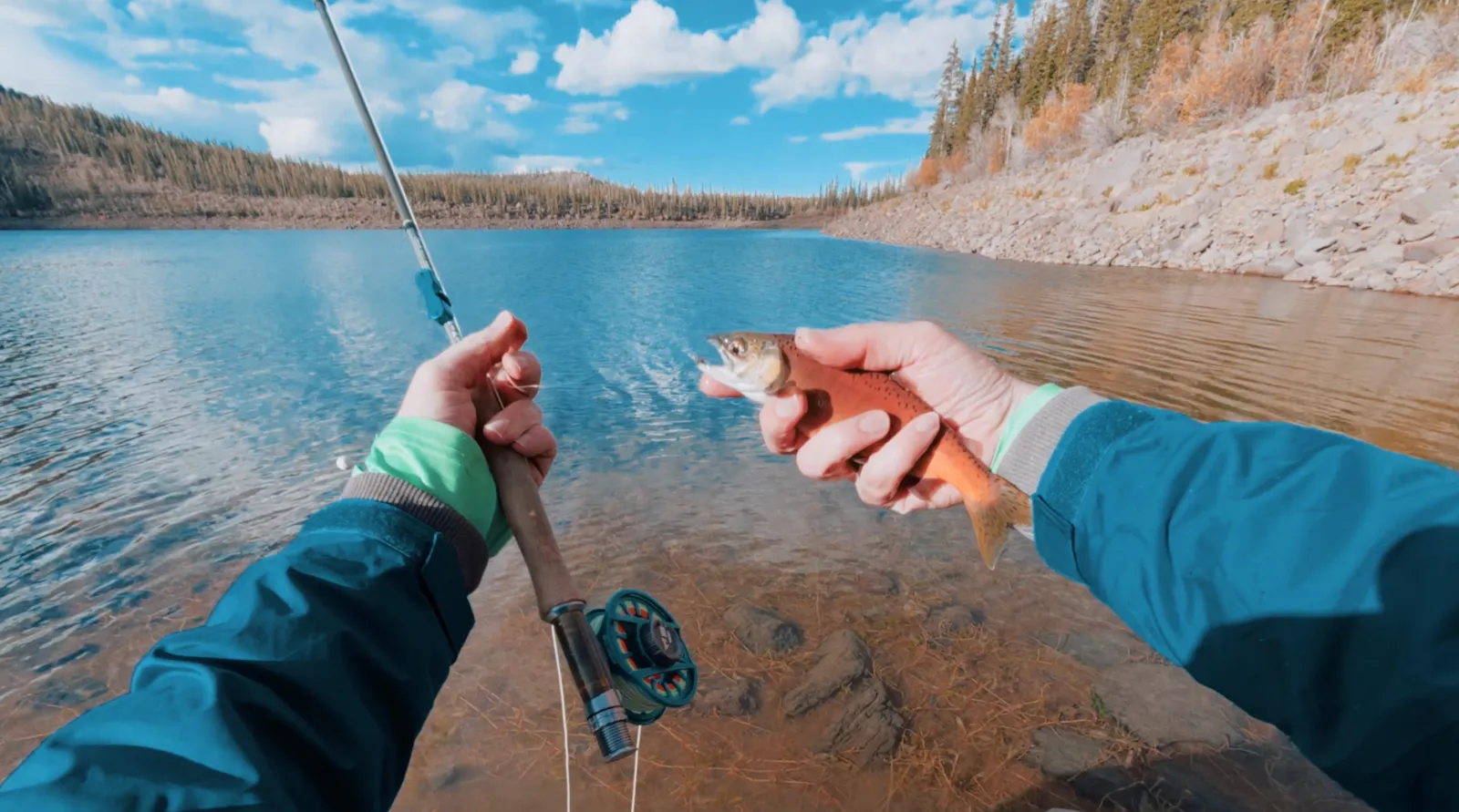
If your local lake or stream gets stocked in late winter or early spring, shore fishing for trout can be exceptional. Stocked trout are active near the surface and tend to cruise the shoreline in groups, making them very accessible without a boat.
You might also enjoy: Spring Striped Bass Migration: A Week-by-Week Location Guide
The most consistent setup for beginners is a small inline spinner like a Rooster Tail or Kastmaster. Cast along the bank, retrieve at a slow-to-medium pace, and vary your depth until you find where the fish are holding. PowerBait molded onto a small treble hook on a simple slip-sinker rig is another great option: let it sit on the bottom near the bank and wait for a tap.
Trout are most active in early morning, especially in spring when afternoons can get warm fast. If you're not getting bites in 15-20 minutes, move down the bank. Stocked trout school, so if you find one you'll often find a dozen.
Gear: a 6 foot light or ultralight spinning rod with 4-6 lb mono or light braid keeps things fun on trout. Our best ultralight spinning reel roundup covers the reel side of that setup.
Budget Gear: What You Actually Need
You don't need expensive equipment to fish effectively from the bank. Here's a simple, versatile setup that covers bass, panfish, and trout:
- Rod: 6-7 foot medium-light spinning rod (under $50 combos work fine)
- Line: 8-10 lb braid main line with a 6-8 lb fluorocarbon leader, or 8 lb monofilament for simplicity
- Terminal tackle: 1/8 and 1/4 oz jig heads, Texas rig hooks (2/0), split shot weights, small bobbers
- Lures: Soft plastic worms, small inline spinners, a lipless crankbait, and a small topwater popper
- Live bait basics: Night crawlers or red worms for panfish and trout
Pack light and stay mobile. That's the single biggest gear advantage you have as a bank angler. You can cover far more ground on foot than most boat anglers realize.
Putting It All Together This Spring
The key to consistent bank fishing success is combining good location selection, the right casting angle, and the right presentation for the species you're targeting. Hit the south-facing banks early in spring, cast parallel to the shore, focus on visible cover, and stay mobile until you find active fish.
Use the Bushwhack fishing log to track which spots produce, what lures work, and what water temps trigger the best bites. Over time, those notes become your personal bank fishing playbook. You can also explore local fish species on Bushwhack to understand behavior patterns that will help you put more fish in front of you from the bank. Log your catches in your Bushwhack dashboard to build a record of your most productive spring sessions.
No boat, no problem. Spring is your season.
Get fishing tips in your inbox
New guides, seasonal tactics, and gear picks — about once a month, no spam.