Best Topwater Frog for Bass in 2026: SPRO Bronzeye vs Booyah Pad Crasher vs Lunkerhunt Prop
 Hudson Reed
Written by Hudson Reed
Three blowups, zero fish. That's how a Saturday morning on a pad-choked farm pond went the first time I fished a SPRO Bronzeye out of the package without bending the hooks. The bass crushed it. The hooks never reached them. By the time I figured out what was happening, the sun was up and the frog bite was over. The best topwater frog for bass, it turns out, is not always the one with the prettiest paint job.
That ratio (giant boil, no hookup) is why this category exists in three flavors. Every hollow-body frog is a tradeoff between weedlessness and hook gap, and every angler argues about it on the dock. This is a head-to-head of the three frogs that actually hook fish in real cover: the SPRO Bronzeye 65, the Booyah Pad Crasher, and the Lunkerhunt Prop Frog. Figure out which belongs in your box if you can only buy one.
If you've read the Bushwhack summer bass and night fishing guides, this pairs with both.
Quick Picks: The Best Topwater Frog for Bass in 2026
| Frog | Best For | Price | Rating |
|---|---|---|---|
| Booyah Pad Crasher | Best overall hookup ratio under $15 | $10.30 | 4.7 / 5 |
| SPRO Bronzeye Frog 65 | Best walking action and pad-skipping | $11.02 | 4.6 / 5 |
| Lunkerhunt Prop Frog | Best for open pockets and pond edges | $21.84 | 4.3 / 5 |
| Booyah Poppin' Pad Crasher | Best popping variant for windy days | $9.99 | 4.6 / 5 |
What actually matters in a hollow body frog
Three things. Hook gap, body collapse, and weedlessness in the slop. Everything else (skirt color, eye paint, body shape) is downstream of those three.
Hook gap is the distance between the upturned hook points and the frog's back. If the gap is too tight, a bass crushes the bait but the hook never reaches the roof of its mouth. If it's too wide, the frog hangs up on every lily pad. Tackle Warehouse's hollow body frog gear guide is blunt about why this matters: "Most frog hook points are inline with the back of the frog, which makes the bait really weedless, but it also means the bass will need to smack down on the frog really well to compress the body enough for the hook to reach the fish."
Body collapse is what happens when a fish bites. The hollow body has to compress around those hooks fast enough for the points to clear before the bass spits. A stiff body acts like a bumper.
Weedlessness is the third leg. A frog that hooks every fish but also every pad is unfishable. The whole point of a frog is fishing places you can't fish anything else.
Now here's where it gets opinionated. The Booyah Pad Crasher has the best body collapse of the three out of the package. The SPRO Bronzeye has the best walking action and the most precise hook geometry once you bend the points. The Lunkerhunt Prop is a different category entirely (more on that below). If you're new to frogs and want to skip the hook-bending ritual, get the Pad Crasher. Done.
Booyah Pad Crasher: the best topwater frog for bass under $15
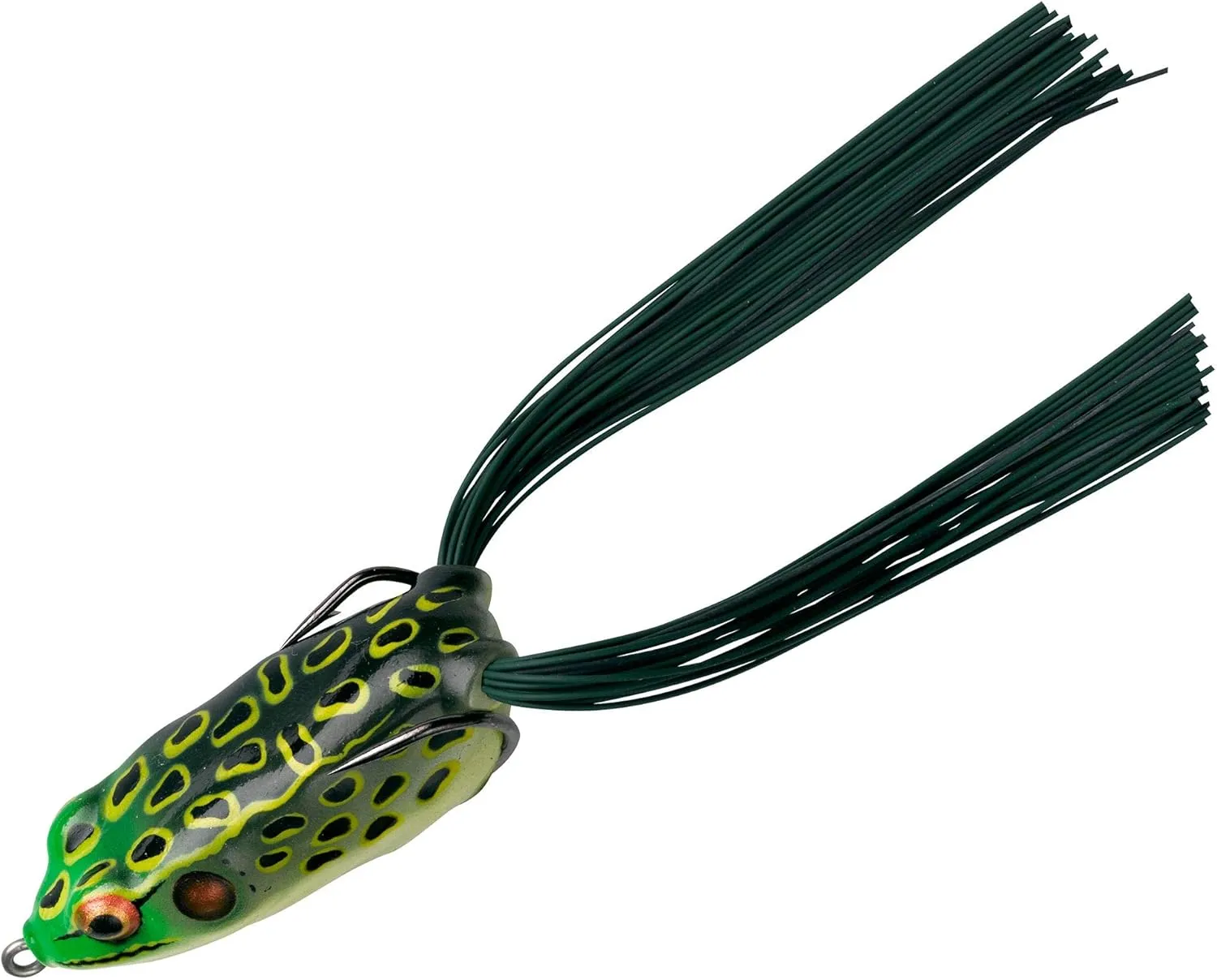
The Booyah Pad Crasher is the frog most working anglers actually have tied on. There's a reason. Multiple anglers in the In-Depth Outdoors comparison thread reported hookup ratios in the 75-80% range with the Pad Crasher straight out of the package, which is wildly above what you'd expect from a hollow body frog without modifications. Wired2Fish's gear team called out the same thing: the soft body "collapses and exposes the hooks," which is exactly the geometry you want. Sizes and colors are on the official Pad Crasher page.
Who it's for
- Anglers who want a frog that works without hook modifications
- Pond, river, and small-water fishermen on a budget
- People who fish frogs less than 20 days a year and want one go-to
Pros and cons
- Pro: Best body collapse in this test, by a noticeable margin
- Pro: $10 means you can lose three to pike and not cry
- Pro: Walks fine, pops fine, drags through slop fine. A true generalist.
- Con: The body tears up after 8-10 fish; you'll buy two a season
- Con: Walking action isn't as crisp as the SPRO 65 in open water
At $10.30 on the Pad Crasher's Amazon listing it's the cheapest of the three by a wide margin and the one I tell beginners to start with.
You might also enjoy: Best Summer Bass Lures for 2026: Topwater, Prop Baits, and Vibrating Jigs
Why the SPRO Bronzeye 65 still has a cult following
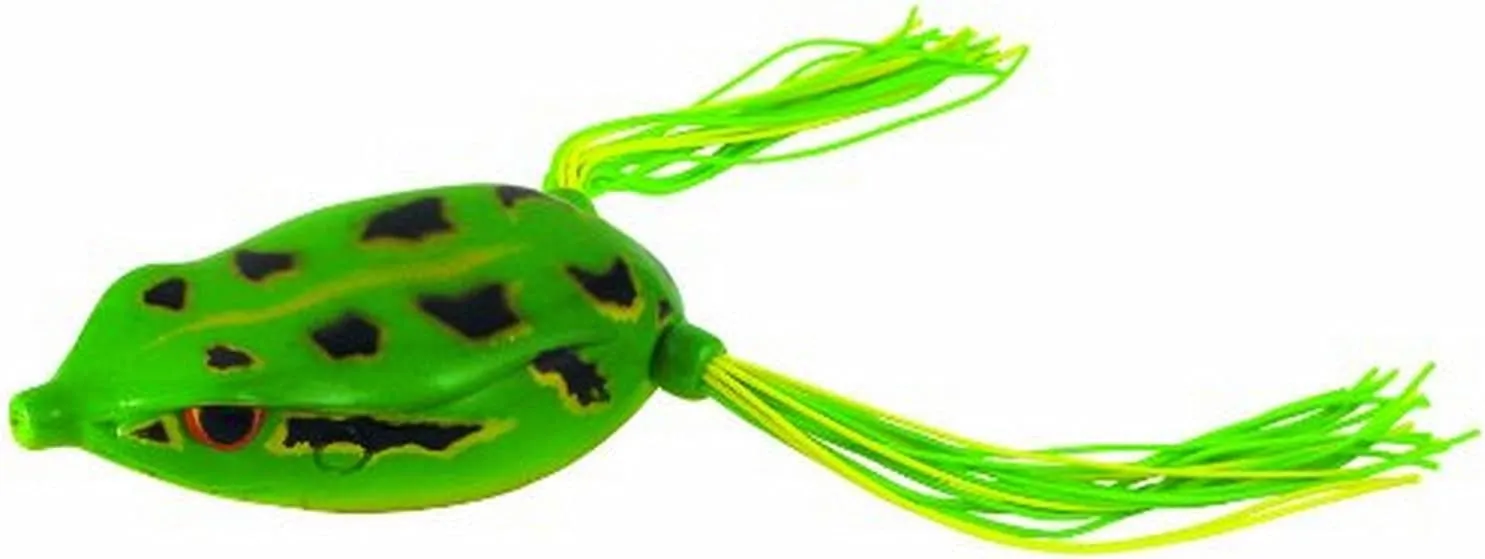
The SPRO Bronzeye Frog 65 is the frog you graduate to. Designed by tournament pro Dean Rojas, it's been in production since the late 2000s and still earns shelf space at every serious bass shop in the country. The body is firmer than the Pad Crasher's. The Gamakatsu hooks are sharper than anything Booyah ships. And the walk-the-dog action in open water is genuinely better. Quicker side-to-side, tighter pivot, less waddle. Full specs are on SPRO's Bronzeye Frog 65 page.
So why doesn't it take the overall pick? That firmer body. Standard advice across forums (and the Tackle Warehouse rigging guide) is to bend the hook points up slightly out of the package: "open it up just a little so that the hook point is angled up slightly, and no longer inline with the back of the bait." Done correctly, the Bronzeye 65 has the best hook geometry in this test. Done incorrectly, it loses fish.
Who it's for
- Tournament anglers and frog-fishing diehards who'll spend 10 seconds bending hooks
- People fishing pads and lily fields where pinpoint walking matters
- Anglers who want premium hooks without paying $25
Pros and cons
- Pro: Premium Gamakatsu hooks; sharpness is on a different tier
- Pro: Best walking cadence in this group, especially on slack-line twitches
- Pro: Body lasts longer than the Pad Crasher's per fish
- Con: Out-of-package hookup ratio is genuinely worse than the Pad Crasher
- Con: The body is firm enough that small bass (under 14") miss it more often
Buy it if you're past the beginner phase. Skip it if you're not going to bend the hooks.
Where the Lunkerhunt Prop Frog fits
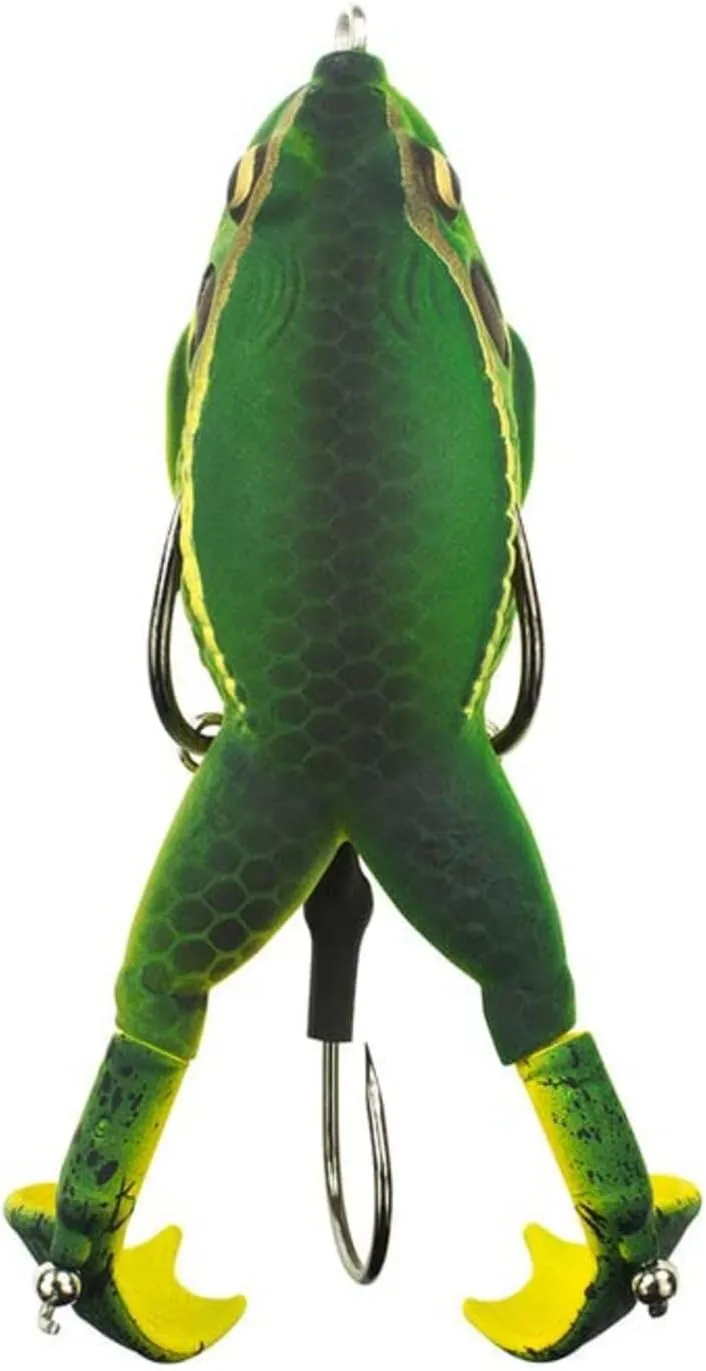
This one's the odd frog out. The Lunkerhunt Prop Frog isn't really competing with the other two. It's a different lure pretending to be the same category. The propeller feet are why. Spin them on a steady retrieve and the frog throws a wake and a tiny audible ripple, somewhere between a buzzbait and a wake bait. In open water along pond edges, weed lines, and the outside of pad fields, the Prop Frog gets bit when the other two get ignored. Lunkerhunt's product page shows the full color range.
The catch (literally): hookup ratio is genuinely worse than either the Pad Crasher or a properly-tuned Bronzeye. Field-and-Stream-style reviews agree, and the Bass Junkies Frog Pond review noted the same drift. The prop legs catch on the trailing stinger hook and pin themselves shut. You'll spend more time clearing the props than you do with the other two combined.
So why include it? In the right water nothing else matches it. Pond edges, calm summer mornings, that 30-minute window at first light, a glassy backwater with bluegill flicking the surface. That's Prop Frog water. The 1,024 Amazon reviews and 4.5 average aren't a fluke.
Who it's for
- Pond and farm-water anglers who fish open pockets, not pure slop
- Anglers who already own a Pad Crasher and want a second tool
- Calm-morning, glassy-water specialists
Pros and cons
- Pro: Triggers fish in calm water that ignore a quiet walking frog
- Pro: Great for cruising bank fish and pond edges
- Con: Worst hookup ratio of the three; legs jam
- Con: $21 is basically twice the Pad Crasher's price
- Con: Useless in true matted slop; the props won't spin
What rod, reel, and line do you need?
A frog hooks fish only if the rest of your tackle drives the hooks home. Here's the working setup, drawn from Tackle Warehouse's gear guide.
Rod: 7'0" to 7'6", heavy or extra-heavy power, fast or extra-fast tip. The tip needs to load on the cast for accuracy; the backbone needs to drive the hooks through a closed jaw. A medium-heavy rod will lose you fish on heavy cover.
Reel: Baitcaster, 8.0:1 gear ratio or higher. You're picking up slack on a hookset, not winching fish. The Tackle Warehouse guide flags 150-200 size as the right capacity.
Line: 50-pound braid, no exceptions. Mono and fluoro stretch, and you can't drive a hook through a frog body and a bass jaw with stretch in the system. 65-pound braid is fine if you're fishing thick mats.
You might also enjoy: Best All-Around Trout Fly Rod 2026: Sage R8 Core vs Orvis Helios vs Scott Centric vs Douglas Sky G
Should you bend the hooks before fishing?
Yes on the SPRO Bronzeye. Probably no on the Pad Crasher. Definitely no on the Lunkerhunt Prop.
Pinch each hook in the bend with pliers and angle the point up about 5 degrees, so it's no longer flush with the frog's back. You lose maybe 10% of your weedlessness and gain maybe 25% in hookup percentage. On the Bronzeye the math favors bending. On the Pad Crasher the body is soft enough that you don't need to. On the Prop, the propeller mechanics foul if you change the angle.
How do you fish a topwater frog correctly?
Cast past the target. Bass spook on a splash. Land the frog two feet beyond the pad and walk it back into the strike zone.
Pause longer than feels right. Three seconds. Five. A frog that twitches every half-second looks suspicious; one that sits still and only occasionally pops looks injured.
And on the strike: count to one. The Bassmaster archives have 87 frog tips and the most repeated one is some version of "don't set on the splash." Wait until you feel weight, then drive it.
Our pick: the best topwater frog for bass right now
If you can only buy one, get the Booyah Pad Crasher. The body collapse is right, the hooks set without modification, and at $10 the math is impossible to argue with. It is the frog the highest percentage of working bass anglers I know actually carry.
If you fish frogs more than 30 days a year, add a SPRO Bronzeye Frog 65, bend the hooks, and use it for pads and walking situations where the Pad Crasher's slightly looser action gives up bites.
If you fish a lot of pond edges and open pockets (calm summer mornings, glassy farm ponds, bluegill-flicking backwaters), round it out with a Lunkerhunt Prop Frog. It does something neither of the others do. Just don't try to throw it in true matted slop.
Whatever you pick, log the conditions when fish hit. Time, water temp, cloud cover, what cover you found them on. After a season of frog fishing the patterns get obvious, and that data is the difference between a good year and a great one. Try Bushwhack if you want a faster way to track it than a notes app.
Get fishing tips in your inbox
New guides, seasonal tactics, and gear picks — about once a month, no spam.