Best Lipless and Squarebill Crankbaits for Fall Bass 2026
 Hudson Reed
Written by Hudson Reed
Every fall the same thing happens on my home lake. The shad pull back into the creeks, the bass follow them in, and for about six weeks the best lipless and squarebill crankbaits for fall bass catch more fish than everything else in the box combined. Two crankbaits, really. A lipless and a squarebill. If you only carry those two shapes from late September through the first hard frost, you'll be fine.
The trouble is most anglers grab whichever one is on top of the tray and cover the wrong water with it. A squarebill dredged over an open grass flat is a waste of casts. A lipless bounced through a nasty laydown is a snag machine. They're not interchangeable. They're two tools for two jobs, and the whole point of this guide is telling you which is which.
Below are four crankbaits I'd actually tie on for fall bass, split evenly between the two styles, plus a decision matrix so you stop guessing. Every product here was checked for current availability and price before it made the list.
Quick Picks: Lipless and Squarebill Crankbaits for Fall Bass
| Crankbait | Style | Best For | Price | Rating |
|---|---|---|---|---|
| Bill Lewis Rat-L-Trap | Lipless | All-around, covering water | ~$10.99 | 4.7 / 5 |
| Strike King Red Eye Shad | Lipless | Grass flats, yo-yo retrieve | ~$7.53 | 4.7 / 5 |
| Strike King KVD 1.5 Squarebill | Squarebill | Deflecting off wood and rock | ~$9.99 | 4.7 / 5 |
| Rapala BX Brat | Squarebill | Pressured, clear-water fish | ~$11.29 | 4.5 / 5 |
Lipless or squarebill: which one, and when?
Here's the short version. Reach for the lipless crankbait when you're covering open water and looking for fish, and reach for the squarebill when you've found cover and want to grind it.
A lipless has no bill, so it sinks. That means you control the depth by how fast you reel and how long you let it fall. You can burn it just under the surface over a two-foot flat or count it down to twelve feet over a channel edge with the same bait. It excels at searching, big scattered grass beds, the backs of creeks, and any time fish are roaming and chasing bait in a big area. The tradeoff is you can't crawl it slowly through wood without hanging up, because those two trebles hang everywhere.
A squarebill is the opposite animal. That wide plastic lip does one thing brilliantly: it slams into cover and kicks sideways instead of snagging. Rocks, stumps, laydowns, dock posts, riprap. The deflection is the whole trigger. And unlike a lipless, you can slow a squarebill way down and still keep it working, which matters a lot when a cold front drops the water temp overnight and the shallow fish get sluggish. That slow-and-bump ability is the squarebill's real edge in fall.
So the decision usually makes itself once you look at what's in front of you.
| Condition | Throw lipless | Throw squarebill |
|---|---|---|
| Cover type | Open flats, scattered / dying grass | Wood, rock, laydowns, riprap, stumps |
| Depth | 0 to 12 ft (you set it) | 1 to 6 ft, fixed by the bill |
| Water clarity | Works in stained to clear | Shines in stained around cover |
| Water temp / mood | Fish active, chasing bait | Fish sluggish, need it slow and bumped |
| Job | Cover water, find the school | Pick apart a piece of cover you trust |
My contrarian take: most people fish the lipless too slow and the squarebill too fast. The lipless wants to be moving and flashing to draw a reaction. The squarebill wants to be crawling and deflecting. Speed them up and slow them down respectively and you'll get bit more.
Bill Lewis Rat-L-Trap: Best All-Around Lipless
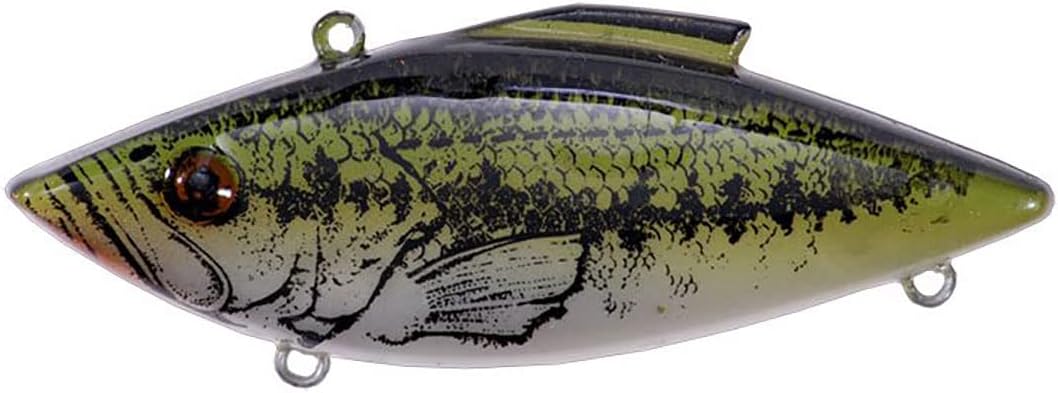
The original. Bill Lewis built the first Rat-L-Trap back in the late 1960s, and it's still the bait every other lipless gets compared to. The half-ounce is the fall workhorse: tight wobble, a rattle you can practically hear on the retrieve, and a shad profile that's been catching bass for over fifty years.
What I like about the Trap in fall is that it's loud. When the water's got a little color and fish are hunting by sound and vibration, that hard knock pulls them off cover from a distance. It's also cheap, which matters, because you will lose lipless cranks in grass and you don't want to flinch every time you rip one free.
Who it's for
Anyone covering water on stained lakes and rivers, and anyone who wants one lipless that does everything competently. It's the safe default.
Pros and cons
- Pro: The benchmark rattle, unmatched at calling fish in dirty water.
- Pro: Dirt cheap and available in more colors than you'll ever fish.
- Con: The stock trebles are just okay; a lot of anglers swap them.
- Con: Falls fairly straight on slack line, so it shimmies less than the Red Eye Shad below.
Price runs around $10.99 on Amazon, and it holds a 4.7-star rating across more than 700 reviews.
You might also enjoy: Forward-Facing Sonar for Weekend Anglers: A No-Pressure Setup Guide
Strike King Red Eye Shad: Best Lipless for Grass

If you fish grass, this is the one. The Red Eye Shad's trick is what it does on the fall. Most lipless baits drop like a stone when you pause them. The Red Eye rocks and shimmies on slack line, and that fluttering fall is exactly what triggers a bass sitting in dying hydrilla or milfoil. Rip it out of the grass, kill it, let it shimmy back down. That's the fall grass bite in one sentence.
It comes with sharp premium hooks and 3D eyes, so it's ready to fish out of the pack, which the Trap isn't quite. Strike King's National Pro Staff had a hand in the design and it's become a standard on tour for a reason.
Who it's for
Grass-lake anglers, and anyone who wants to work the yo-yo retrieve (more on that below) as their primary fall tactic.
Pros and cons
- Pro: Shimmies on the fall instead of dropping straight, which is the whole game in grass.
- Pro: Premium hooks and finish right out of the box.
- Con: Rattle is a touch quieter than a Rat-L-Trap in really muddy water.
- Con: The bargain color selection isn't as deep.
At around $7.53 it's the cheapest bait on this list, carries a 4.7-star rating, and you can grab it on Amazon.
Strike King KVD 1.5 Squarebill: Best Squarebill for Deflection

The KVD 1.5 is the squarebill most tournament anglers reach for first, and the reason is its hunting action. Instead of tracking dead straight, it wanders and hunts side to side, then when it clips a stump or a rock it kicks out hard. That erratic deflection is what convinces a bass to eat. It dives roughly 3 to 6 feet and it's a 3/8-ounce bait, so it casts a mile on baitcasting gear.
Strike King offers it in both a rattling version and a silent one. The silent KVD is my pick for clear water and fish that have seen a lot of noisy baits, which brings us to the BX Brat in a second.
Who it's for
Anyone grinding shallow wood and rock, and the angler who wants a squarebill that runs true without needing to be tuned first.
Pros and cons
- Pro: Hunting action wanders and deflects harder than most plastic squarebills.
- Pro: Runs true out of the box, no tuning tab bending.
- Con: The plastic body dents up over time when you crash it into hard rock.
- Con: Like most baits, the hooks are worth upgrading eventually.
Around $9.99 with a 4.7-star rating on Amazon. You can read the balsa alternative's spec page to see how the next bait differs.
Rapala BX Brat: Best Squarebill for Pressured Fish

The BX Brat is the one I tie on when the plastic squarebills stop getting bit. It's built on a balsa core wrapped in a hard copolymer shell, so you get the livelier, tighter, more buoyant action of balsa but with a body tough enough to bang into rock without cracking, which raw balsa never was. Per Rapala's spec, the size 03 runs about 3 feet and weighs 3/8 ounce.
That balsa buoyancy matters more in fall than people think. It backs out of cover and floats up over a snag, and the tighter, faster hunt reads as a fleeing shad rather than a lure. On clear, pressured water where every bass has seen a KVD, the different action is worth the extra couple of bucks.
Who it's for
Clear-water and heavily-fished lakes, and anyone who wants a squarebill with a distinct action the fish haven't been trained on.
You might also enjoy: Best Rubber Mesh Landing Net for Bass and Boat Fishing (2026)
Pros and cons
- Pro: Balsa core gives a livelier, tighter kick than injection-molded squarebills.
- Pro: Copolymer shell survives rock contact far better than plain balsa.
- Con: Runs a couple dollars more than the plastic options.
- Con: The light balsa body is harder to cast into a stiff wind.
It's about $11.29, holds a 4.5-star rating, and it's on Amazon. Rapala's own BX Brat page lists the full size and color lineup.
Picking crankbait color by water clarity
Color matters less than location and retrieve, but it isn't nothing, and fall makes it simple because the whole show revolves around shad. Adult largemouth feed almost exclusively on other fish and crayfish, according to Texas Parks and Wildlife, and in fall that fish is overwhelmingly shad. So match the shad and adjust for how far the bass can see.
- Clear water: Natural, translucent shad patterns. Sexy shad, natural shad, anything that looks like the real thing, because clear-water bass get a good look and reject fakes.
- Stained water: Chrome and blue, or a shad body with a hint of chartreuse. The flash and contrast help fish find it.
- Muddy water: Chartreuse with a black or blue back. There've probably been more dirty-water bass caught on chartreuse-and-blue than any other color, and it's still a tournament staple. When the water's the color of chocolate milk, forget subtlety.
If you saw dead shad flickering on the surface, throw a shad color. If the lake's loaded with crawfish and the grass is gone, a red or craw pattern lipless in early fall can be dynamite. The Missouri Department of Conservation notes crayfish are a core part of the largemouth diet, and a red Rat-L-Trap fished around rock plays right into that.
How do you fish each one in the fall?
Different baits, different hands.
The lipless, yo-yo style, over grass. This is the money technique for fall lipless fishing. Cast out and let the bait sink until it ticks the top of the grass. When it catches, rip it free with a sharp snap of the rod, then drop your tip and let it flutter back down on slack line. Most of your bites come on that fall, so stay ready. Pro angler Matt Sprague, in a Major League Fishing piece, recommends a 7 to 7-foot-3 medium-heavy rod with a soft tip and a fast 7.5:1 reel so you can pick up slack in a hurry when a fish eats it on the drop. The tight vibration when you rip it free is what forces the reaction.
The lipless, straight, to cover water. When you're just searching, cast long and reel it back at a steady clip, keeping it just over the tops of grass or through open pockets. Vary the speed until they tell you what they want. This is how you find the school. Once you get bit, slow down and pick that area apart.
The squarebill, deflection style, on wood and rock. The whole game is contact. You want that bait smashing into the cover. Cast past your target, then reel it into the stump or the rock and let it deflect. That erratic kick-out is the trigger, so a bait that runs clean over open bottom is a bait that isn't working. Slow way down in cold water and grind it, because in fall a squarebill lets you keep constant cover contact at a crawl in a way a lipless never can.
One rig tip that applies to both: keep a rod for each rather than retying all day. Fall fishing is about efficiency, moving fast, and covering water, so if you're logging where and when the bites come, you'll pattern the fall migration a lot faster. I keep my catches and conditions in Bushwhack so I can see which crankbait, which color, and which stretch of bank actually produced year over year. Patterns repeat in fall, and the log is what lets you cash in on them.
Our pick
If you're buying one bait and one only, get the Bill Lewis Rat-L-Trap. It covers the most water in the most conditions and it's the cheapest way to get on the fall shad bite.
But this is a two-bait game, and if you can swing a second, make it a squarebill and match it to your water. Grinding shallow wood and rock on a normal fishery? The Strike King KVD 1.5. Fishing pressured, clear lakes where the bass have seen it all? Spend the extra couple of bucks on the Rapala BX Brat. And if grass is your whole world, the Strike King Red Eye Shad and its shimmying fall belongs on your deck all autumn. Track what works, and next fall you'll already know.
Get fishing tips in your inbox
New guides, seasonal tactics, and gear picks — about once a month, no spam.