Best Base Layers for Cold Weather Fishing Under $75: Merino vs Synthetic vs Grid Fleece
 Hudson Reed
Written by Hudson Reed
Cold-weather fishing isn't a continuous-effort sport, and that's why most layering advice falls apart at the water. You stand still for two hours watching a tip-up. Then you walk a sled a quarter mile, drill four holes, and go right back to standing still. Ski and backpacking roundups are written for people whose furnace never shuts off, so they optimize for constant output. The best base layers for cold weather fishing have to pass a narrower test: what happens to the fabric in the ninety minutes after a burst of work leaves you damp.
That's the one thing I sorted these five picks on. All under $75, at the prices Amazon showed when this was written.
| Product | Best for | Price | Amazon rating |
|---|---|---|---|
| M-Tac Delta Level 2 Thermal Shirt | Standing still, then working, then standing still | $38.21 (Prime) | 4.6 (1,082 ratings) |
| Iguana 100% Merino Active Thermal Top | Multi-day trips and odor control | $68.99 | 4.6 (72 ratings) |
| Runhit Thermal Compression Shirt | Hiking in hot, fishing cold | $18.99 | 4.6 (456 ratings) |
| LEADHALO 250gsm Merino Set (women's) | Top and bottom in a single buy | $72.99 | 4.6 (123 ratings) |
| Sailwind Wool Blend Crewneck | Kitting out a group without spending much | $19.99 | 4.7 (343 ratings) |
Damp Beats Cold as the Thing That Ruins Your Day
Nobody gets cold because the air is 22 degrees. People get cold because they sweated through a layer during ten minutes of work, then stopped moving while that moisture sat against their skin. The National Weather Service says it plainly in its extreme cold guidance: dress in layers, keep your skin dry, change into dry clothing if you get wet. At first light on a lake, that last one isn't available, so the layer against your skin handles the moisture alone.
My reasoning, not a lab result: wool pulls moisture into the fiber and keeps some structure while damp, so it feels less clammy but dries slowly. Synthetics hold less water and shed it faster, then transmit the chill directly while wet. Grid fleece splits the difference with geometry instead of chemistry, using raised ridges to hold most of the fabric off your skin and channels to move vapor sideways. Cotton does none of this, which is why a cotton hoodie under a bib ends so many days early.
What Weight Base Layer Do You Need for How You Fish?
Match the fabric weight to your work rate, not the air temperature. Three brackets cover nearly all cold-weather fishing:
- Mostly stationary (shelter, bank sitting, tip-ups): 250 to 260 gsm. You generate almost no heat, so the layer supplies it.
- Mixed effort (walking sleds, drilling, moving between runs): 190 to 220 gsm. Heavy enough to sit in, light enough that a ten-minute walk doesn't soak it.
- Hard approach (a real hike, then hours of standing): 190 gsm or a thin synthetic, then add a mid-layer when you arrive.
Four of these five publish an actual fabric weight, which makes them easy to slot in, though M-Tac's only appears on its own site rather than the Amazon listing. Sailwind is the one that publishes none.
M-Tac Delta Level 2: Best Overall for Standing Still

This is the grid fleece, and it's the one I'd hand most anglers first. M-Tac's own product page lists 92% polyester and 8% elastane at 250 g/m2. The Amazon listing adds the grid fleece face, a half-zip collar and thumbholes. The collar zip matters more than it sounds: it's the only pick here you can vent from the neck without pulling anything over your head, which is how you bleed off heat while drilling instead of soaking the shirt.
One buyer note. Amazon's spec block for this listing reports the fabric as 65% cotton and 35% polyester, flatly contradicting the manufacturer's page. For a base layer that difference would be disqualifying. The listing also contradicts itself: its Materials and Care block reads "Material Type Polyester" directly beside "Fabric Type 65% Cotton, 35% Polyester." Trust the M-Tac spec and treat the Amazon attribute as the data-entry error it looks like.
Who it's for
Anglers whose day is mostly sitting with short bursts of hard work, and the most forgiving pick if you run warm.
Pros and cons
- Pro: published 250 g/m2 weight and a full material breakdown from the manufacturer
- Pro: collar zip and thumbholes, the two features that get used in a shelter
- Pro: the deepest review history here at 1,082 ratings
- Con: Amazon's fabric field disagrees with the manufacturer
- Con: the Amazon listing publishes no fabric weight, so the 250 g/m2 figure only exists on M-Tac's own site
Price: $38.21 with Prime when this was written, against a typical price of $44.95. M-Tac's site lists 30-day returns. Check current price on Amazon.
Iguana Merino Active Thermal Top: Best Merino Pick

The merino case for fishing usually gets argued on warmth-when-wet. That's the weaker half. The stronger half is odor: you can fish a three-day trip in one merino shirt and it stays civil, and the synthetics here make no odor claim at all. Iguana's listing specifies 18.5-micron wool and offers the shirt in either 190 gsm or 260 gsm, and that choice is the whole decision. Buy the 260 for tip-ups and shelter days, the 190 if you walk in. The listing also claims the wool absorbs up to 30% of its weight in moisture while still feeling dry, which is the manufacturer's number, not mine.
You might also enjoy: Best Fishing Rain Jacket Under $100: 3 Picks and 1 to Skip
Who it's for
Multi-day trips, anyone who hates polyester against skin, and anglers who want one shirt covering fall through ice season.
Pros and cons
- Pro: 100% merino at $68.99, competitive for the fiber
- Pro: two published weights so you can match it to your work rate
- Pro: the only men's 100% merino top on this list
- Con: 72 ratings is a thin track record next to the others
- Con: wool dries slower than the synthetics here
Price: $68.99. Check current price on Amazon.
Runhit Thermal Compression Shirt: Best for Hiking In

At $18.99 this is the cheapest pick here, and for one job it's the best. If your fishing starts with a sweaty twenty-minute walk, you want the layer that dumps moisture fastest, and 88% polyester with 12% spandex at a published 220 g/m2 does that better than wool will. The compression fit helps on the walk and hurts once you stop, because a snug layer traps less air than a slightly loose one. Add a mid-layer the moment you arrive.
Skip it if your day is all sitting.
Who it's for
Walk-in trout anglers, anyone layering under waders, and people who'd rather own three cheap shirts than one good one.
Pros and cons
- Pro: all-synthetic at a published 220 g/m2, so it sheds water faster than the wool picks
- Pro: cheap enough to keep a dry spare in the truck
- Con: compression fit works against long stationary stretches
- Con: holds odor, which matters past day one
Price: $18.99. Check current price on Amazon.
LEADHALO 250gsm Merino Set: Best Women's Set

Most gear roundups quietly assume a men's fit, and base layers are the worst category for that, because fit decides whether the trapped-air layer works at all. This is the only pick here sold as a matched top and bottom, and at $72.99 for both pieces in 100% merino it's the best dollar-per-fiber buy on the page. The listing specifies 250gsm and 17.5-micron wool, finer than the other merino pick here.
Legs get overlooked and then ruin days.
Who it's for
Women who want a complete merino setup in one order, and gift buyers guessing one size instead of two.
Pros and cons
- Pro: top and bottom together for $72.99 in 100% merino
- Pro: published 250gsm weight and 17.5-micron fiber
- Con: 123 ratings, less feedback than the synthetics here
- Con: a lot of wool for a mild fall morning
Price: $72.99. Check current price on Amazon.
You might also enjoy: Best Sand Spikes for Surf Fishing Under $50: What Holds a Loaded Rod in a Nor'easter
Sailwind Wool Blend Crewneck: Best Budget Buy
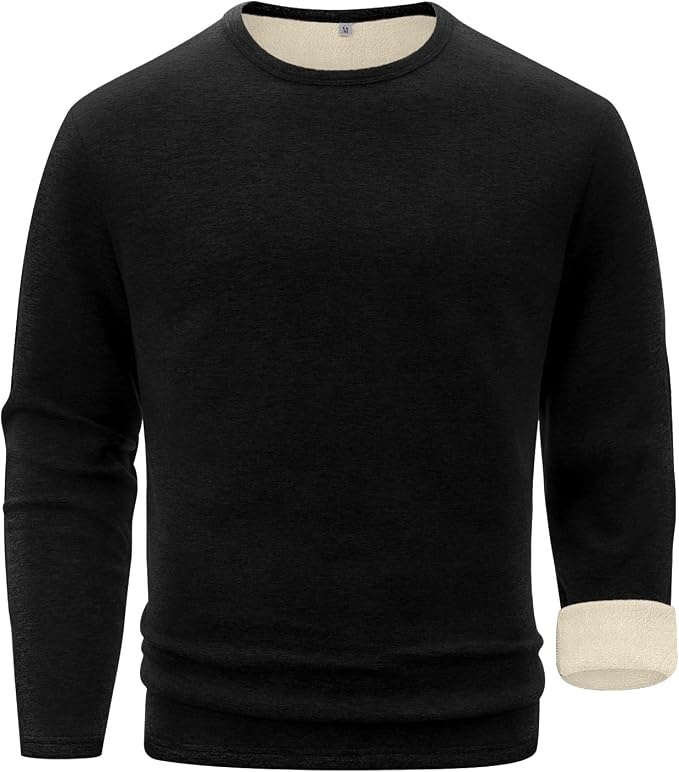
Twenty dollars, 4.7 stars across 343 ratings, and a fleece-lined interior you can see at the cuffs. It's 70% polyester, 20% wool, and 10% viscose, so treat it as a synthetic with a little wool in it. At 20%, the wool helps hand-feel and does little for the damp test. I'm recommending it anyway, because the realistic alternative for most people isn't merino. It's the cotton thermal already in the drawer, and this beats that for the price of lunch.
Who it's for
First-timers, kids who'll outgrow it, and anyone kitting out a group.
Pros and cons
- Pro: $19.99 with the highest star rating of the five
- Pro: fleece-lined and warm for the money
- Con: the only pick here that doesn't publish a fabric weight
- Con: 20% wool is a marketing number more than a performance one
Price: $19.99. Check current price on Amazon.
Is Merino Worth the Extra Money for Fishing?
For a single day, no. I would bet a $19 synthetic plus a good mid-layer keeps you as warm as a $69 merino shirt, and it dries faster if you overcook the approach. Merino earns its money on trips of two days or more, where odor and next-to-skin comfort compound, and in the specific case where you know you'll get damp and then sit for hours. Real fishing scenario, just not most people's Saturday.
If you only buy one, buy the grid fleece and put the difference toward cold weather fishing gloves.
What to Look For in Base Layers for Cold Weather Fishing
- A published fabric weight. If a listing won't give you the gsm, it's asking you to buy warmth on vibes, and 190 to 260 gsm is the range that covers fishing.
- Fit that isn't compression, unless you're moving. Snug enough to stay against skin, loose enough to hold a film of air, because compression is a running feature that costs you warmth while stationary.
- A neck zip or an opening collar. Venting from the top is how you avoid sweating through the layer at all, and it beats stripping a layer off in the wind.
- Cuffs that stay put. Thumbholes sound like a gimmick until a sleeve rides up inside a glove and you lose the wrist.
Two things that don't belong in the decision: color, and any temperature rating. None of these publish one, and anyone printing a number is guessing on your behalf.
What I'd Actually Buy
The M-Tac Delta Level 2 at $38.21 is the pick for most cold-weather anglers, because a published 250 g/m2 grid fleece with a vent zip matches the stop-start rhythm of fishing better than anything else here. Fish multi-day trips or hate synthetics? Spend $68.99 on the Iguana merino top in the 260 gsm version. Hiking in, Runhit at $18.99 plus a mid-layer in the pack.
Then finish the system, because a base layer only pays off under a windproof shell and your extremities quit before your torso does, which is where neck gaiters and ice cleats come in. On ice, read your state's guidance first: Minnesota's DNR keeps a plain ice safety page worth five minutes before any early-season trip.
One last thing that costs nothing. Write down what you wore and what the conditions were, because two winters of that is how you stop guessing. I keep mine in Bushwhack next to the catch data, where the weather side fills itself in and the only thing you log is the clothing call.
Get fishing tips in your inbox
New guides, seasonal tactics, and gear picks — about once a month, no spam.