Walleye Opener Beginner Guide: How to Catch Fish on Opening Day in Minnesota, Wisconsin, and Michigan
 Hudson Reed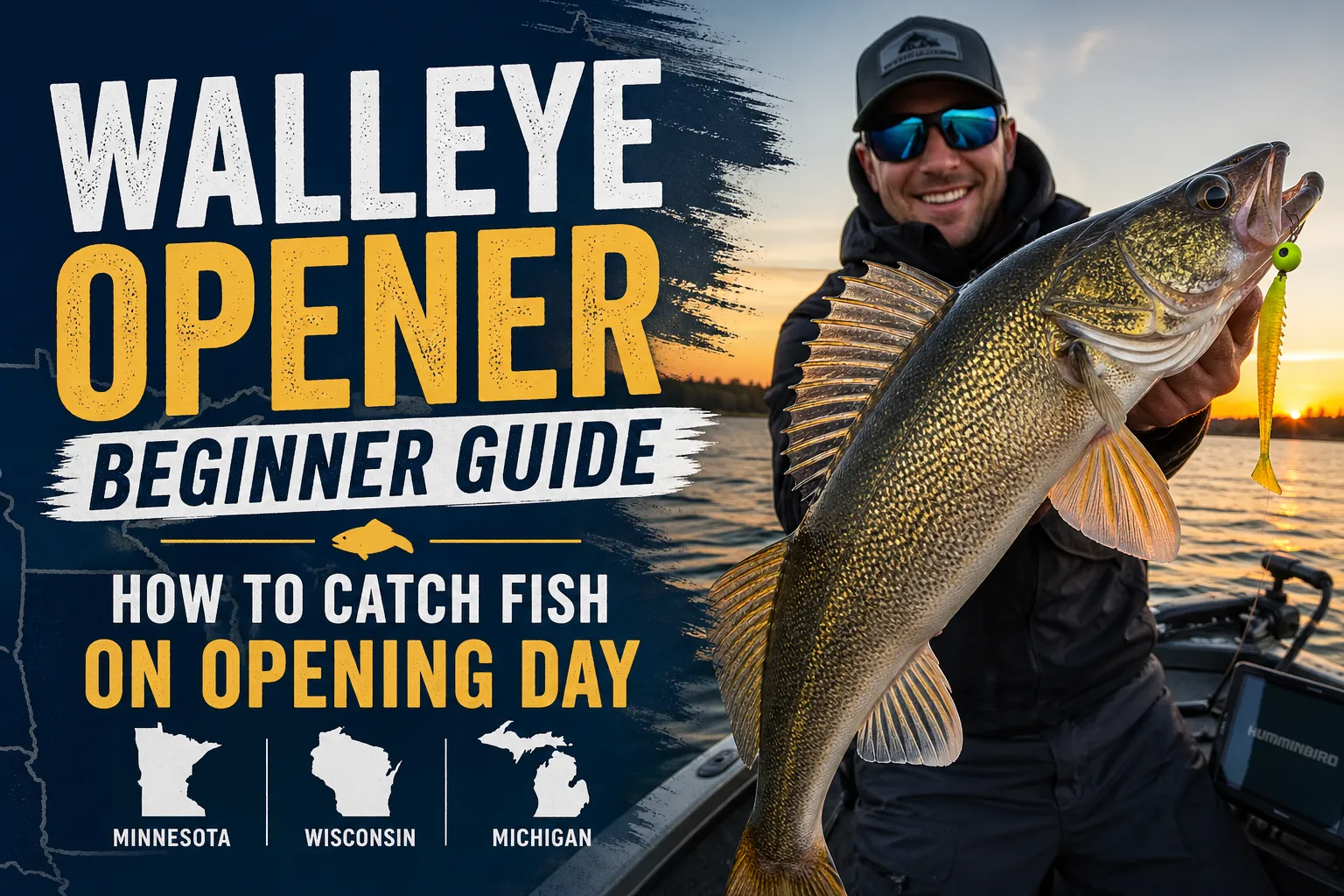
Written by Hudson Reed
Few fishing events in North America generate as much excitement as the walleye opener in Minnesota, Wisconsin, and Michigan. Every May, millions of anglers launch boats, crowd boat ramps, and chase the most beloved table-fare fish in the Midwest. If it's your first opener, or you've gone a few times and come home empty-handed, this guide covers everything you need to know to actually catch fish.
When Is the Walleye Opener?
Each state sets its own date, but they all fall in early to mid-May:
- Minnesota: Second Saturday in May, and in 2026, that's May 9. The opener is a statewide cultural event, often aligned with Mother's Day weekend.
- Wisconsin: First Saturday in May, and in 2026, that's May 2. Walleye, bass, and northern pike all open on most inland waters simultaneously.
- Michigan: Walleye season is open year-round on most waters, but the traditional early-May window coincides with post-spawn fish moving into catchable locations.
Always verify current regulations on your state DNR website before heading out. Slot limits, minimum sizes, and daily bag limits vary by lake and water body.
Where Walleye Are Right After Opener
Opener timing is intentional. By early May, walleye have typically just finished spawning in gravel shallows and are transitioning toward their spring feeding patterns. That makes them highly catchable if you look in the right places.
The first drop-off is your starting point. Where the shoreline flat breaks into deeper water, typically 8-15 feet, is where post-spawn walleye stage to recover and feed. Look for subtle details along that break: a small point, a change from sandy to rocky bottom, or the first visible patch of emerging weeds. Those irregularities concentrate baitfish, and walleye follow.
- Rocky points and windswept shores: walleye spawn on wave-washed gravel and stay nearby post-spawn
- Sand and gravel flats, 6-12 feet: especially at dusk and dawn when walleye move up to feed
- Weed edges: early coontail and cabbage patches draw baitfish and attract feeding walleye by mid-May
- River mouths and narrows: on natural lakes, these current-influenced areas are always worth checking in spring
Log productive spots in Bushwhack as you find them, because walleye use the same structure year after year, so your notes from May become valuable for every opener to come.
You might also enjoy: Spring Crappie Fishing Tips: Ice-Out to Spawn
Best Walleye Tactics for Beginners on Opener Day
Jig and Minnow (The Standard, For Good Reason)
If you only learn one walleye technique, make it the jig and minnow. A 1/8 to 3/8 oz round-ball jig tipped with a 3-4 inch fathead or shiner minnow is the most consistently productive walleye presentation across all three states. Cast it toward structure, let it hit bottom, then lift and drop slowly, using 12-inch lifts with a pause on the fall. Walleye almost always bite on the pause as the jig descends.
Match your jig weight to depth: 1/8 oz for 6-10 feet, 1/4 oz for 10-15 feet, 3/8 oz for deeper. Hook the minnow through the lips to keep it lively.
Slip Bobber and Leech
When walleye are finicky, which opener day often brings, a slip bobber rig with a leech is nearly impossible to ignore. Set the bobber so your leech hangs 6-18 inches off bottom in 8-15 feet of water. Cast it out, let the wind drift it along a break or point, and wait. The leech's wriggling action triggers bites from fish that won't chase a moving jig.
This is also the easiest setup for kids and newer anglers: set it and watch the bobber.
Trolling Crankbaits
If you have a boat and want to cover water to find active fish, trolling natural-colored crankbaits at 1.5-2.5 mph along the 8-15 foot contour is extremely effective on opener day. Choose shad-colored or perch-colored baits in the 2-3 inch range. Once you mark fish on your depth finder or get a hit, note the exact depth and location, then switch to a jig or slip bobber to work the area thoroughly.
Gear Setup for the Walleye Opener
You don't need expensive equipment to catch walleye on opener day, but the right setup matters:
You might also enjoy: How to Catch More Fish After a Bad Trip: Turn Slow Days Into Data
- Rod: 6'6" to 7' medium-light spinning rod, sensitive enough to feel bottom and detect subtle bites
- Reel: 2500-3000 size spinning reel with a smooth drag
- Line: 10 lb braid mainline with a 6-8 lb fluorocarbon leader, where the braid gives sensitivity and the fluoro is nearly invisible underwater
- Hooks: Size 4-6 live bait hooks for slip bobber rigs, 1/0-2/0 jig hooks for tipping minnows or leeches
- Tackle: Assorted jigs in chartreuse, white, and natural colors; a handful of slip bobbers; split shot weights; and swivels
Track your rod and reel setup in Bushwhack so you always know exactly what worked on opener day.
The Best Times to Fish on Opener Day
Walleye have a reflective layer in their eyes called the tapetum lucidum that gives them a massive vision advantage in low light, which is exactly why they're most active at the edges of the day. Plan your opener around these windows:
- Early morning (first light to 9 AM): The single best window. Walleye are up shallow and aggressive.
- Evening (2 hours before sunset): A strong second window, especially as May progresses and days get warmer.
- Midday: Slower, but productive in cloudy or overcast conditions. Fish slightly deeper and slower.
Regulations Snapshot (Always Verify)
Limits and slot sizes vary by body of water, but as a general baseline heading into 2026:
- Minnesota: 6 walleye daily limit on most waters; slot limits apply on specific lakes (check the DNR booklet for your lake)
- Wisconsin: 5 walleye daily; no more than 3 from a single lake; 15-inch minimum on most waters
- Michigan: 5 walleye daily on most inland waters; 15-inch minimum size
Make the Most of Your First Opener
The walleye opener can be crowded, cold, and humbling, or it can be one of the best fishing memories of your life. The difference usually comes down to preparation: knowing the structure, fishing the right hours, and keeping your presentation slow and close to the bottom. Start shallow, fish the breaks, and be on the water at first light.
Use Bushwhack to log every fish you catch with depth, location, bait, and time. Even a slow opener day gives you data that pays off for years of openers to come.
Get fishing tips in your inbox
New guides, seasonal tactics, and gear picks — about once a month, no spam.