Fry-Guarding Bass in May: How to Target Post-Spawn Males Right Now
 Hudson Reed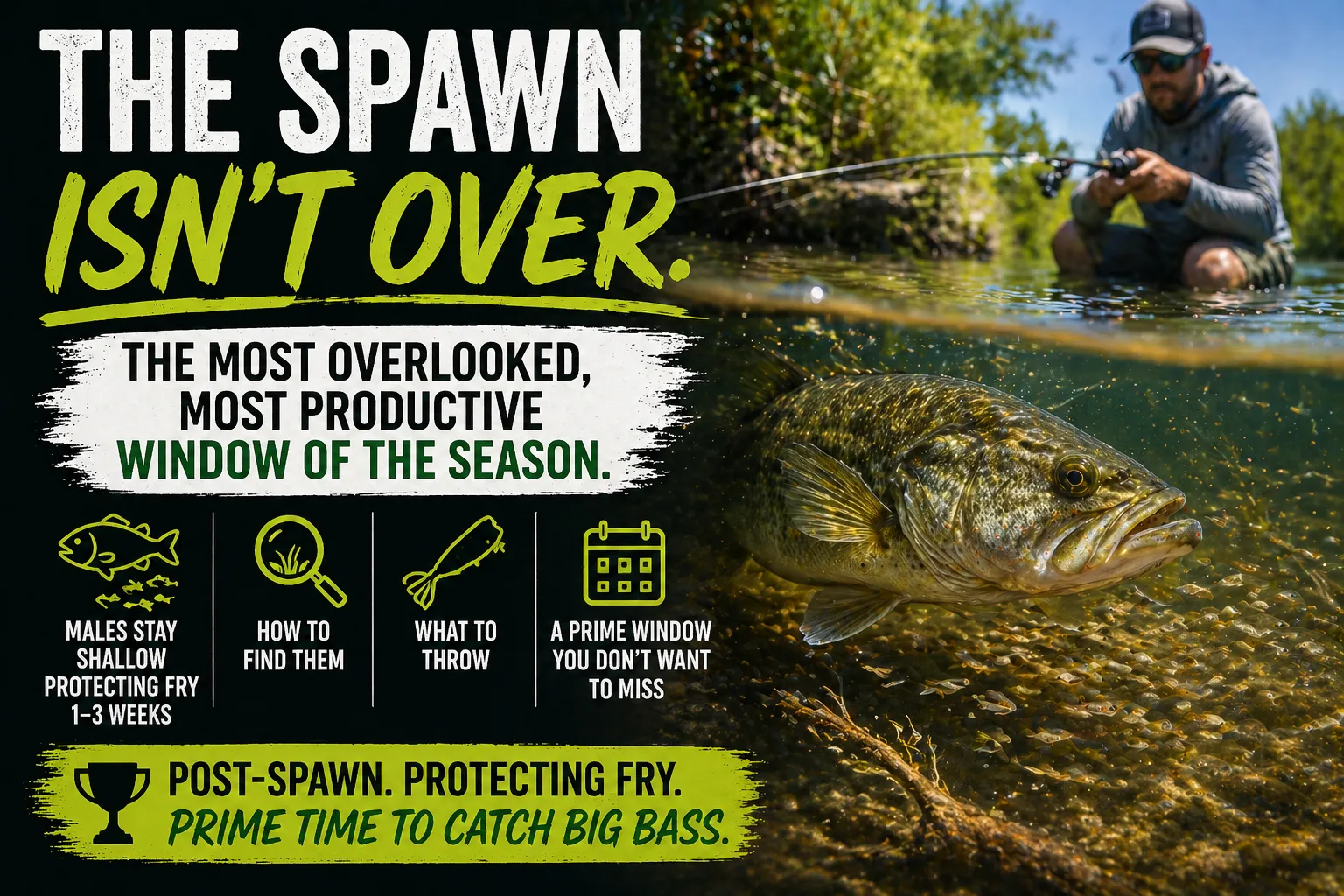
Written by Hudson Reed
Most anglers think the bass bite dies after the spawn. They pack up the bed-fishing gear and wait for summer. That's a mistake, because while female bass are recovering in deep water, male bass are still shallow, aggressive, and very catchable. They're guarding fry, and if you know what to look for, the next few weeks can be some of the best fishing of your year.
What Is Fry-Guarding Bass Behavior?
After eggs hatch, male largemouth and smallmouth bass don't just swim away. They stick around to protect the newly hatched fry, dense, dark clouds of baby bass that look like a slowly moving ball of pepper floating near the surface. The male positions himself just beneath the cloud, attacking anything that comes close.
This window typically opens when water temperatures climb past 65-68°F and lasts until the water hits about 75°F, at which point the male finally abandons the fry. In most of the country, that's a 1-3 week window in May. In northern states like Minnesota, Wisconsin, and Michigan, it can extend into early June.
How to Find Fry Guarders
You're looking for fry clouds first, bass second. The fry instinctively stay extremely shallow, often just inches below the surface, near cover that provides protection. Think dock pilings, laydowns, flooded brush, milfoil edges, and chunk rock. The male is almost always beneath or beside the cloud, not visible until you spook him.
- Scan the shallows slowly: polarized glasses are essential here. The fry cloud looks like a dark smudge or shadow just under the surface.
- Check spawning pockets first: bass don't wander far from where they spawned. Start in the backs and sides of protected coves.
- Cast a spinnerbait past the area: if fry are there, they'll scatter in a visible burst when the bait passes through.
- Mark active clouds in Bushwhack: if you find fry today and get pushed off by weather, you can return to the exact spot tomorrow.
Best Lures for Fry-Guarding Bass in May
The key principle: present something that looks like a threat to the fry. The male doesn't strike because he's hungry. He's protecting. That means reaction triggers matter more than matching the hatch. Keep your presentation in or near the fry cloud as long as possible.
Weightless Soft Plastics (Top Pick)
A weightless 4-inch Fluke or Senko is probably the single best fry-guarder bait. Cast it into the cloud, let it sink slowly on a slack line, twitch it once, and let it fall again. The slow, dying-baitfish action is irresistible to a male that's been watching his fry get picked off all morning. Rig it on a 3/0 offset worm hook with 12-15 lb fluorocarbon.
You might also enjoy: Spring Crappie Fishing Tips: Ice-Out to Spawn
Wacky Rig
A wacky-rigged 5-inch Senko sinking through the fry cloud gets a reaction nearly every time. The slow, undulating fall on both ends mimics a dying baitfish dropping right through the nursery. This is especially effective in clear water where the male can see the bait coming from a distance. Log your productive wacky setups in Bushwhack for next year.
Small Topwater Lures
Don't ignore the surface. A small walking bait (Zara Spook Jr.), popper, or hollow-body frog walked slowly across the fry cloud triggers explosive surface blows. Cloudy days in May are prime topwater conditions, and fry-guarding males are some of the most violent strikers you'll encounter all year. Keep the cadence slow. This isn't a speed game.
Buzzbait and Toad
For covering water to locate new fry clouds, burn a buzzbait or toad along the bank. You'll often see fry scatter ahead of the bait right before the hit. Once you've located a productive area, slow down and work it thoroughly with the soft plastics above.
Presentation Tips That Matter
Fry-guarding bass are keyed on position, not depth. They're high in the water column, often 0-2 feet down even when the water is 10 feet deep nearby. That means your typical bottom-dragging presentations (Texas rigs with heavy weights, shaky heads, football jigs) won't get many bites. Keep your lure in the upper third of the water column.
Make repeated casts to the same spot. The male often won't commit on the first cast but will demolish the bait on the third or fourth. Stay patient and stay accurate. Skip casts under docks, flip to brush piles, and target the shadowed side of any visible cover.
You might also enjoy: How to Catch More Fish After a Bad Trip: Turn Slow Days Into Data
Targeting Recovering Females Simultaneously
While males guard the fry, females are heading toward deeper structure: the first significant drop, submerged points, or secondary channel edges near the spawning pocket. You can fish both patterns in the same morning: work fry clouds in the shallows, then fan-cast a medium-diving crankbait or swimbait over the 8-15 foot transition zones for the big females that are just starting to feed again after the spawn.
Use Bushwhack to log each catch with depth and location so you can see exactly where the post-spawn transition is happening on your water.
Ethics and Handling
Fry-guarding males are one of the most catchable bass you'll ever target, but also among the most important to handle well. Quick, careful releases matter here. The male will return to the fry if you release him nearby, but if you delay or stress the fish, the fry cloud disperses and the young bass are left vulnerable. Wet your hands, support the fish horizontally, and get him back in the water fast. A healthy release keeps that micro-population intact for future seasons.
The Window Is Short, So Fish It Now
Fry-guarding bass in May is a narrow opportunity. Once water temperatures push past 75°F, the male abandons the fry and moves toward summer habitat. You've got a few good weeks at most, and in some regions even less. Get out early, scan the banks with polarized glasses, and throw a weightless Fluke at every dark smudge you see near the surface. The strikes will remind you why this is one of the most exciting phases of the bass fishing calendar.
Get fishing tips in your inbox
New guides, seasonal tactics, and gear picks — about once a month, no spam.