Terrestrial Fly Fishing for Beginners: How to Fish Hoppers, Ants, and Beetles All Summer
 Cameron Spanos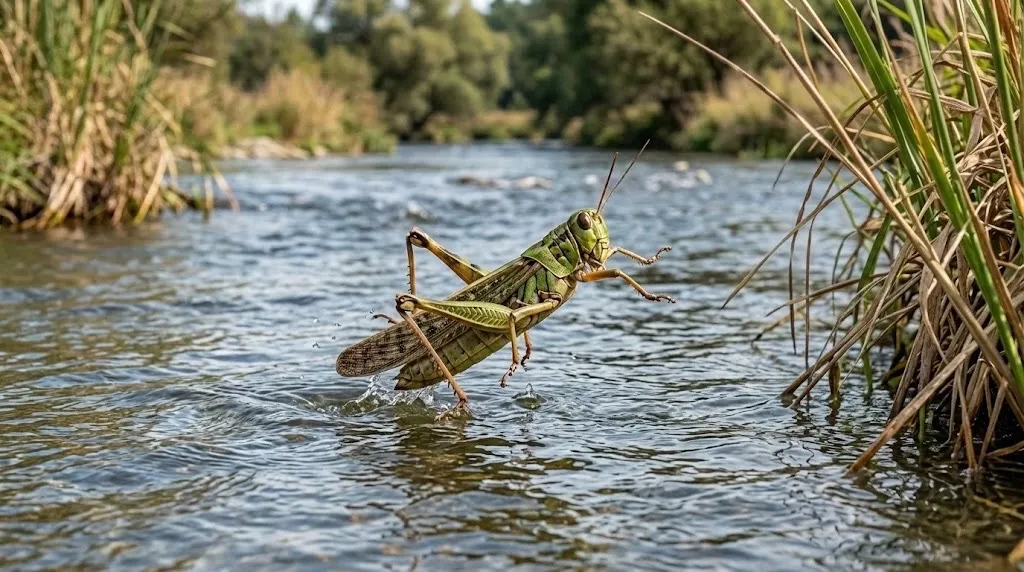
Written by Cameron Spanos
Terrestrial fly fishing is the closest thing to cheating that dry fly fishing has to offer. From mid-June through September, trout stack up along grassy banks waiting for land-based insects to fall in, and they eat them aggressively, without the slow-sipping pickiness that drives nymph anglers crazy during a technical hatch. If you've struggled to connect on dry flies, terrestrials are your answer.
I want to walk you through the three insects every beginner needs to understand (hoppers, ants, and beetles) plus the techniques, gear, and timing that make this the most fun you'll have fly fishing all year.
Why Terrestrials Work So Well for Trout
Land insects outnumber aquatic insects by 20 to 1. Trout know it, too. Research using stable isotopes has found that terrestrial insects account for roughly 50% of trout biomass during summer months, even though aquatic insects dominate the frequency of feeding events. In plain terms: when a trout eats a terrestrial, it's eating something substantial.
This is the tactical advantage. Trout positioned near banks aren't casually sipping. They're ambushing. I've seen brown trout blast hoppers with the same aggression you'd expect from a largemouth bass. These fish are actively hunting the banks, and your fly is landing exactly where they're looking.
The other advantage over traditional dry fly fishing: you don't need a hatch. No matching the hatch, no timing your cast to a specific rise window. Pick a warm afternoon in July, walk to a grassy bank, and start casting. That's the whole plan.
When Is Terrestrial Fly Fishing Season?
Terrestrial season runs from mid-June through late September, with the peak from late July through August. Here's how to think about the season month by month.
| Month | Primary Bug | What to Expect |
|---|---|---|
| Mid-June - Early July | Flying ants, small beetles | Season warming up; trout less conditioned to terrestrials; good prospecting |
| Late July - August | Grasshoppers, ants, beetles | Peak season; hoppers fully mature; fish willing and aggressive |
| September | Hoppers, crickets, ants | Hopper fishing still strong early in month; trout feeding heavily before fall |
The best time of day is 1-5 PM when air temperatures exceed 75°F and insects are most active. A light wind helps even more: it knocks bugs off streamside grass and into the water, setting up exactly the feeding behavior you want to imitate.
Grasshopper Patterns: The Big-Fish Fly of Summer
The hopper is the anchor of summer terrestrial fishing. It's big, it's loud when it hits the water, and it draws some of the most violent strikes you'll see on a dry fly. Trout aren't delicate about hoppers. They explode on them.
For beginners, I recommend two patterns that cover almost every situation:
- Chubby Chernobyl (size 6-8): Foam body, high visibility, floats in fast water, and doubles as a strike indicator in a hopper-dropper setup. This is the pattern I hand beginners first.
- Parachute Hopper (size 10-12): More realistic silhouette for slower, clearer water where trout get a longer look at your fly.
The key technique with hoppers is the plop cast. Real grasshoppers don't land softly. They hit the water with a smack and immediately start struggling. Most anglers make the mistake of trying to land their fly gently. Do the opposite. Aim your cast to slap the surface about 12-18 inches from the bank and let the fly sit for a count of three before beginning your drift.
Cast tight to the bank. I mean tight, within 6 inches of the grass edge if you can manage it. Most hopper takes come within the first foot of water along the bank. If you're casting 3 feet out, you're fishing the wrong lane.
Ant Patterns: The Secret Weapon on Pressured Water
Ants are what I fish when the hoppers aren't producing or when I'm on a stretch of water that sees a lot of anglers. They're subtle, they sit low in the film, and they work on trout that have seen every hopper pattern in the shop.
Flying ant falls, when winged ants swarm and land on the water by the hundreds, are some of the most memorable dry fly events in trout fishing. They happen unpredictably on warm, humid afternoons, often in July and August. If you show up to the river and see a carpet of small dark insects on the surface and rising fish everywhere, you've hit a flying ant fall. Tie on a size 14-16 Flying Ant pattern immediately.
Outside of ant falls, ants without wings are available to trout year-round any time one tumbles off a streamside log or bank. Keep two ant patterns in your box:
- Foam Ant (size 14-16): Easy to see on the water, good for all-day prospecting.
- Fur Ant (size 16-18): More realistic, better for slower water and educated fish. Can also be fished as a dropper 12-18 inches below a hopper.
Presentation is everything with ants. Unlike hoppers, you don't want a splashy landing. Aim for a soft, accurate cast along the bank edge and fish a dead drift. Trout inspect ants before eating: if you see a fish rise under your fly and reject it, switch to a smaller size before changing patterns entirely.
Beetle Patterns: The Most Overlooked Fly in the Box
There are over 30,000 beetle species in North America. Trout know this. You probably don't, which is why your beetle box is likely empty.
Beetles are the ultimate bank-fishing pattern in summer because they're everywhere: falling from overhanging trees, tumbling off logs, getting knocked off grass by wind. One Virginia DWR study found a single brown trout with seven different beetle species in its stomach. They're not selective. They just eat beetles.
The best beetle pattern for beginners is a Foam Beetle in size 14-16. Black or dark brown covers most situations. Fish it exactly like a hopper (tight to the bank, close to overhanging vegetation) but with a slightly softer landing and a small twitch every few seconds to imitate a struggling insect. That twitch triggers strikes from trout that have been watching your fly drift past unmoved.
Beetles also work exceptionally well after rain. A downpour knocks beetles off every leaf and branch within reach of the stream. If you can get on the water within an hour of a summer rain ending, fish a beetle along every stretch of overhanging brush you can find.
How to Set Up the Hopper-Dropper Rig
The hopper-dropper is the most productive terrestrial rig in fly fishing, and it's simple enough for a complete beginner to rig in five minutes. The concept: your hopper floats on the surface and acts as a strike indicator, while a nymph or smaller terrestrial hangs 18-24 inches below it in the water column.
Here's how to set it up:
- Tie your hopper to your leader with an improved clinch knot.
- Cut a 18-24 inch piece of 4X or 5X fluorocarbon tippet.
- Tie one end to the bend of your hopper hook (not the eye, the bend).
- Tie your dropper fly (a Pheasant Tail nymph, Hare's Ear, or small Fur Ant) to the other end.
You're now fishing two flies at once. If the hopper twitches, dips, or disappears, set the hook: it could be a strike on either fly. During high summer when trout are reluctant to break the surface, I'll often catch 60-70% of my fish on the dropper while the hopper does the work of keeping it suspended at exactly the right depth.
Gear: What Do You Actually Need?
One of the things I like most about terrestrial season is that the gear requirements are forgiving. You don't need a specialty rod or a specific line. What you do need:
- Rod: A 9-foot 5-weight is the standard recommendation for good reason: it handles hoppers, casts into wind, and gives you enough backbone for a hopper-dropper rig. If you already own a 4-weight or 6-weight, it'll work fine.
- Tippet: Use 2X or 3X for hoppers. These are big flies that don't require a fine presentation, and heavier tippet gives you better turnover and more strength. Drop to 4X for ants and beetles in slow, clear water.
- Leader: A standard 9-foot 3X or 4X tapered leader works for everything here. No specialty leaders needed.
- Flies: Keep it simple. A Chubby Chernobyl or similar hopper in size 6-10, a Foam Ant in size 14-16, a Beetle in size 14-16, and a few nymph droppers (Pheasant Tail, Copper John). That's a complete terrestrial box.
If you're still putting together your setup, you can see the gear we recommend on Bushwhack for getting started without overcomplicating it.
Where to Find Trout During Terrestrial Season?
Location during terrestrial season is straightforward: fish the banks. This is one of the few times in fly fishing where the best strategy is also the most obvious one.
Trout move from their mid-stream lie positions into shallow, near-bank water specifically to intercept terrestrials. They're not randomly distributed across the river. They're where the food is falling. That means:
You might also enjoy: How to Catch More Fish After a Bad Trip: Turn Slow Days Into Data
- Grassy meadow banks: Prime hopper water. The more grass, the more hoppers. Look for undercut banks and any point where the grass overhangs the water edge.
- Tree and shrub canopy: Best beetle and ant water. Overhanging branches drop beetles constantly in summer. A shaded bank with a willow or alder hanging over the water is almost always worth a cast.
- Transition zones: Where a grassy bank gives way to a brushy section. Both hopper and ant/beetle trout hold here, and you can fish all three patterns through the same run.
One mental shift that helps beginners: stop wading to the middle of the river. During terrestrial season, your best water is the first 2 feet from the bank. Wade softly, stay low, and make short accurate casts rather than long heroic ones.
Common Mistakes Beginners Make With Terrestrials
I've watched a lot of new anglers fish terrestrials incorrectly. Here are the patterns I see most often:
Casting too far from the bank. This is the single biggest mistake. If your fly is landing 3 feet from the bank, you're fishing the wrong water. Get closer, even if it means a shorter, sloppier cast.
Setting the hook too fast on hopper strikes. Trout exploding on a big hopper is exciting, and the instinct is to yank immediately. Wait. Count "one thousand one" before lifting the rod tip. The trout needs a moment to close its mouth around the fly, and early hook sets pull it right out.
Fishing the same drift repeatedly. If a trout is going to eat a terrestrial, it usually eats the first or second time the fly passes over it. Trout keying on terrestrials are aggressive: if they're not eating after two good drifts, move on rather than lining the fish with repeated casts.
Ignoring ants and beetles. Most beginners fish hoppers exclusively because they're easy to see and exciting. But on heavily fished water, or on bright-sky days when fish are cautious, a size 16 ant or beetle will out-fish a hopper four-to-one. Carry all three.
Want help tracking which patterns and conditions are producing on your local water? The Bushwhack fishing log makes it easy to connect the dots across a season so you know exactly when to switch from hoppers to ants, and when to stay on the banks.
Is Terrestrial Fly Fishing Good for Bass and Bluegill Too?
Absolutely, and this is an underrated application. Bass and bluegill eat the same terrestrial insects that trout do, and often with even less hesitation. A large foam hopper or beetle pattern worked slowly along a weedy bank will draw strikes from largemouth bass all summer. Bluegill, in particular, are suckers for a small beetle or ant: a size 14 Foam Beetle on a bluegill bed is one of the most fun sessions in freshwater fishing.
The approach is the same: cast tight to structure, let the fly sit, give it a twitch, and hang on. The only difference is that with bass and bluegill, you can afford to be even more aggressive with the twitch. Panfish especially respond to a fly that looks like it's trying to escape.
If you want to put together a full summer strategy that covers both trout and warmwater species, check out the Bushwhack trip planner. It's built around exactly these kinds of seasonal transitions.
The Short Version
If I had to give a beginner one afternoon of terrestrial fly fishing, here's what I'd hand them: a 9-foot 5-weight, a 9-foot leader tapered to 3X, a Chubby Chernobyl in size 8, and a Pheasant Tail nymph dropper 20 inches below it. I'd walk them to the first grassy bank I could find, tell them to cast within 6 inches of the edge, and let the rig drift. That's a fish-catching setup with no hatch timing, no complex entomology, and no special technique required.
Terrestrial season is July through September. The fish are on the banks. Go find them.
Get fishing tips in your inbox
New guides, seasonal tactics, and gear picks — about once a month, no spam.