Summer Walleye in July: The Deep-Water Playbook
 Hudson Reed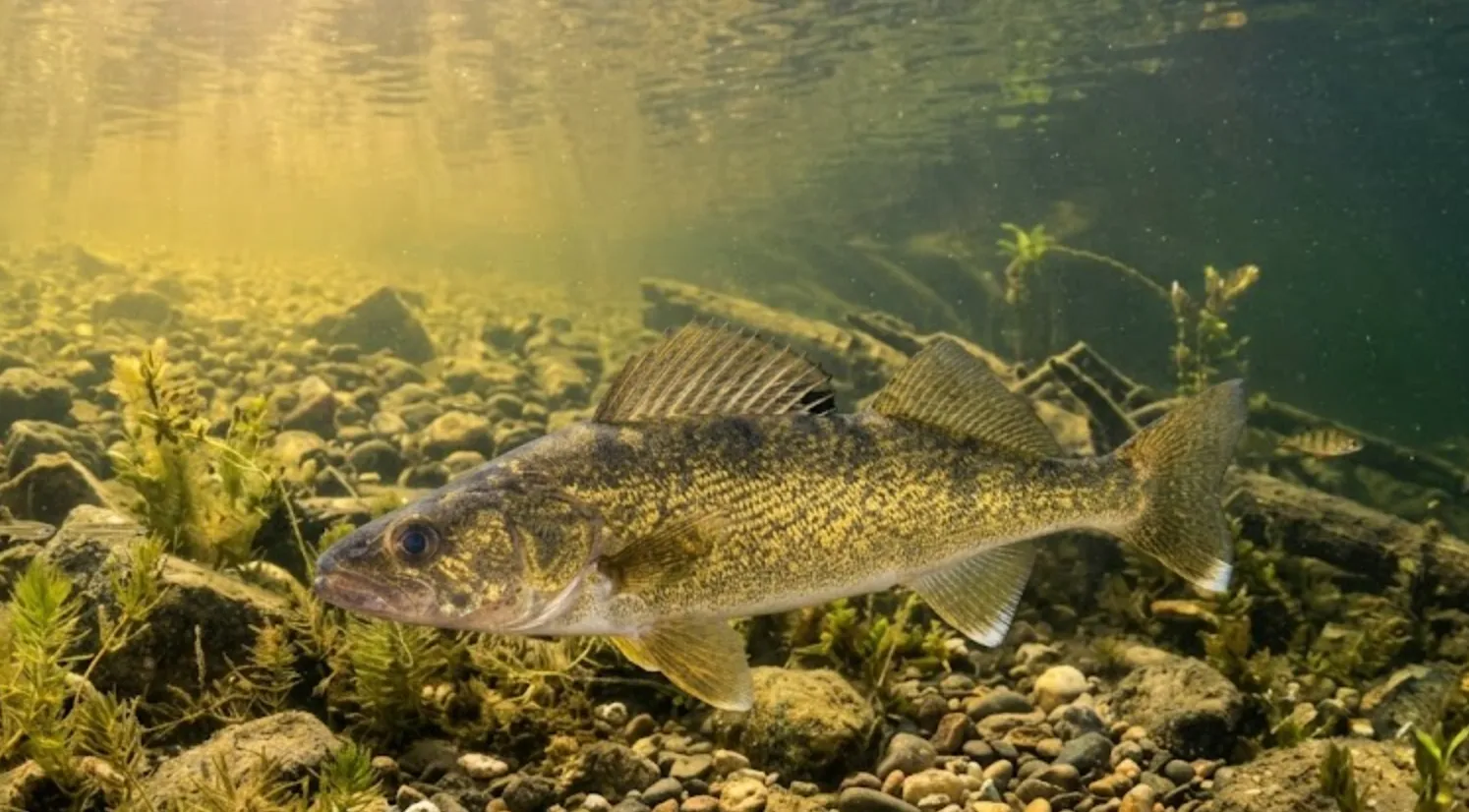
Written by Hudson Reed
The biggest mistake I see once the calendar flips to July is anglers grinding the same shoreline weeds that lit up in May, wondering where the fish went. They didn't leave. They dropped. Catching summer walleye in July is mostly a game of finding the depth where the water is still comfortable and then putting the right bait in front of them, and that depth is almost never where you left them in spring.
Once surface temps climb into the 70s, walleye reorganize the whole lake around two things: temperature and oxygen. Get those two right and the structure part gets easy. Get them wrong and you'll mark bait all day without a bite.
Where do walleye go when the water hits the 70s?
They slide out to the first band of water that stays cool and oxygenated, which in most stratified lakes means 15 to 35 feet down along the edge of main-lake structure. Some fish go deeper. In clear northern lakes they'll hold as deep as 46 feet by mid-summer.
Here's the science behind it. A three-year acoustic telemetry study on Lake Ontario's Hamilton Harbour tracked walleye holding in water of 18 to 23 degrees C (roughly 64 to 73 F) through the summer. That's their comfort zone. But temperature isn't the whole story. The same study found walleye actively avoided dissolved oxygen levels of 3, 4, and 5 mg/L, and lose equilibrium below 1.5 mg/L. Optimal habitat, the researchers concluded, needs oxygen above 5 mg/L combined with that temperature band.
Why does that matter to a weekend angler? Because in a lot of lakes the deep, cold water below the thermocline runs low on oxygen by late July. The fish get squeezed into a narrow shelf: too warm above it, too little oxygen below it. That study measured the suitable habitat shrinking to just 17 percent of the water column during a hot August stretch. Walleye pile into that shelf. Find its depth and you've found the fish.
The practical read: if your thermocline sits at 22 feet, the money zone is usually the 18-to-26-foot band right around it, not the 40-foot basin floor where the water's dead.
Reading the map before you leave the ramp
Three structure types carry July walleye, and each fishes a little differently.
Basin edges. The transition where a flat rolls off into the main basin is a highway. Fish cruise it, following bait. These are often the least-pressured spots on the lake because they don't look like anything from the surface. You need a map or good electronics to fish them.
Breaklines. The classic. Any sharp contour change, a point that drops from 12 to 25 feet, an inside turn, a saddle between two humps. Walleye stack on the break and use it as an ambush edge. When in doubt, fish the spot on the break where the contour lines pinch tightest.
You might also enjoy: How to Fish a New Lake: A First-Trip Playbook for Breaking Down Unfamiliar Water
Mid-lake humps. My favorite July target, and the one most weekend anglers drive right past. An offshore hump that tops out at 15 feet and falls into 30 is a self-contained buffet. Baitfish relate to it, walleye follow, and because it sits away from shore it gets a fraction of the traffic. On a lake I'd never fished before, an isolated hump is the first waypoint I'd punch in.
The July depth-by-structure cheat sheet
Rough starting points to save you some trolling-motor time. Adjust to where your thermocline actually sits.
- Inside weed edge: 8 to 14 feet. Low-light and night only in high summer. Dead in the middle of a bright day.
- Main breakline / point: 18 to 28 feet. The workhorse zone all day long.
- Mid-lake hump top and edges: 15 to 30 feet. Best when the top brushes the thermocline.
- Basin edge and suspended fish: 25 to 35 feet, sometimes with fish hanging in open water within 20 feet of the surface over deep water, chasing bait.
One thing worth burning into memory: suspended walleye over the basin are catchable, and a lot of anglers ignore them because they're not on bottom. If you're marking hooks halfway down over 40 feet of water, that's not a mark to skip. That's dinner.
Jig-and-plastic on the breakline
When fish are pinned to a defined break or hump edge, nothing beats a jig and a plastic worked vertically. It's precise, it's cheap, and it lets you stay on a spot the electronics say holds fish.
I'd start heavier than feels natural. In 20-plus feet you want a 3/8 or 1/2 ounce head so you stay vertical and keep bottom contact. A light jig belled out behind the boat is a recipe for missed bites you never even feel. Pair it with a 3 to 4 inch paddle-tail or ringworm, drop it to bottom, and work it with short lifts and long pauses. Most bites come on the fall or the dead-stick.
Snap-jigging a glide bait counts here too, and it's a proven July basin tactic for covering water when fish are spread out rather than bunched on one rock.
Slow-death rigs for combing the flats
When walleye are scattered across a big flat or a broad basin edge rather than stacked on a point, you need to cover water. That's slow-death territory. A slow-death rig is a bottom bouncer or sliding weight, a leader, and a specially bent long-shank hook that makes half a nightcrawler spin in a slow, hypnotic corkscrew.
Getting it right isn't complicated:
- Tie on the hook most guides swear by, the Mustad 33682 slow-death Aberdeen in a #2. Inventor Dave Spaid specifically recommends the #2 over the smaller #4 and #6 sizes.
- Thread on about two-thirds of a nightcrawler, running the hook through the nose and down the shank, then pinch the tail so roughly a third trails behind the bend. That trailing bit is what spins.
- Pull it slow. The sweet spot runs 0.7 to 1.0 mph, and while you can push to 1.2, slower usually wins because it gives following fish time to catch up and commit.
- Watch your line angle and add weight until the rig ticks bottom without dragging. Contact is everything.
Add a small spinner blade like a Smile Blade ahead of the crawler and you've got a rig that turns even at that crawling speed. That flash-plus-spin combo is quietly one of the deadliest midsummer walleye presentations going.
You might also enjoy: The Best Time of Day to Fish in Summer (By Species)
Jigging Rap or Shiver Minnow: which glide bait wins?
Both are hard-bodied glide baits that dart out to the side on a rip and flutter back, and both flat-out catch July walleye over deep structure. But they aren't interchangeable, and the forums argue about this endlessly.
The clean way to split them: a Jigging Rap is a vertical tool, a Shiver Minnow is a casting tool. Sit on top of a hump or a tight school on the break and jig a Rap straight down. When you want to fan-cast a flat and cover water, throw a Shiver Minnow, let it hit bottom, and sweep the rod up aggressively about three feet before letting it glide back on slack line. The strike almost always comes on the drop.
My contrarian take: most guys fish both too gently. These are reaction baits. In warm water walleye have a fast metabolism and will chase, so a sharper, more erratic snap usually draws more strikes than a timid lift. If a soft cadence isn't producing, get violent with it before you change lures. Cadence matters more than color with these baits, full stop.
What's the best time of day to catch summer walleye in July?
Low light is prime, so the first and last two hours of daylight and after dark will almost always be your best bites. Walleye eyes are built for dim conditions, and in summer they'll push shallower to feed when the sun's off the water.
That said, don't write off midday. Fish that are pinned deep on a breakline or hump are often more aggressive in bright sun than people expect, because down at 25 feet it's already dim and cool. If you can only fish banker's hours, stay deep and stay vertical. The shallow bite dies at midday, but the deep-structure bite hangs on.
Putting a July milk run together
The anglers who consistently catch summer walleye in July aren't guessing. They've got a rotation of four or five deep spots and they know which one fired last time, in what wind, at what depth. That kind of pattern only shows up when you write it down.
This is exactly the sort of thing worth logging. If you track your spots with depth, water temp, and what triggered the bite, by your third July on a lake you'll stop hunting and start running a route. Bushwhack exists to make that history searchable instead of scattered across a dozen notes apps and a memory that fades by next season.
Start with an isolated hump, work the tightest breakline you can find, and match the tool to how the fish are set up: jig-and-plastic when they're stacked, slow-death when they're scattered, a glide bait when you want to trigger a reaction. Find the shelf where temperature and oxygen line up, and July walleye are a lot more predictable than they get credit for.
Get fishing tips in your inbox
New guides, seasonal tactics, and gear picks — about once a month, no spam.