Summer Trout Fishing: How to Find Fish When the Water Warms Up
 Cameron Spanos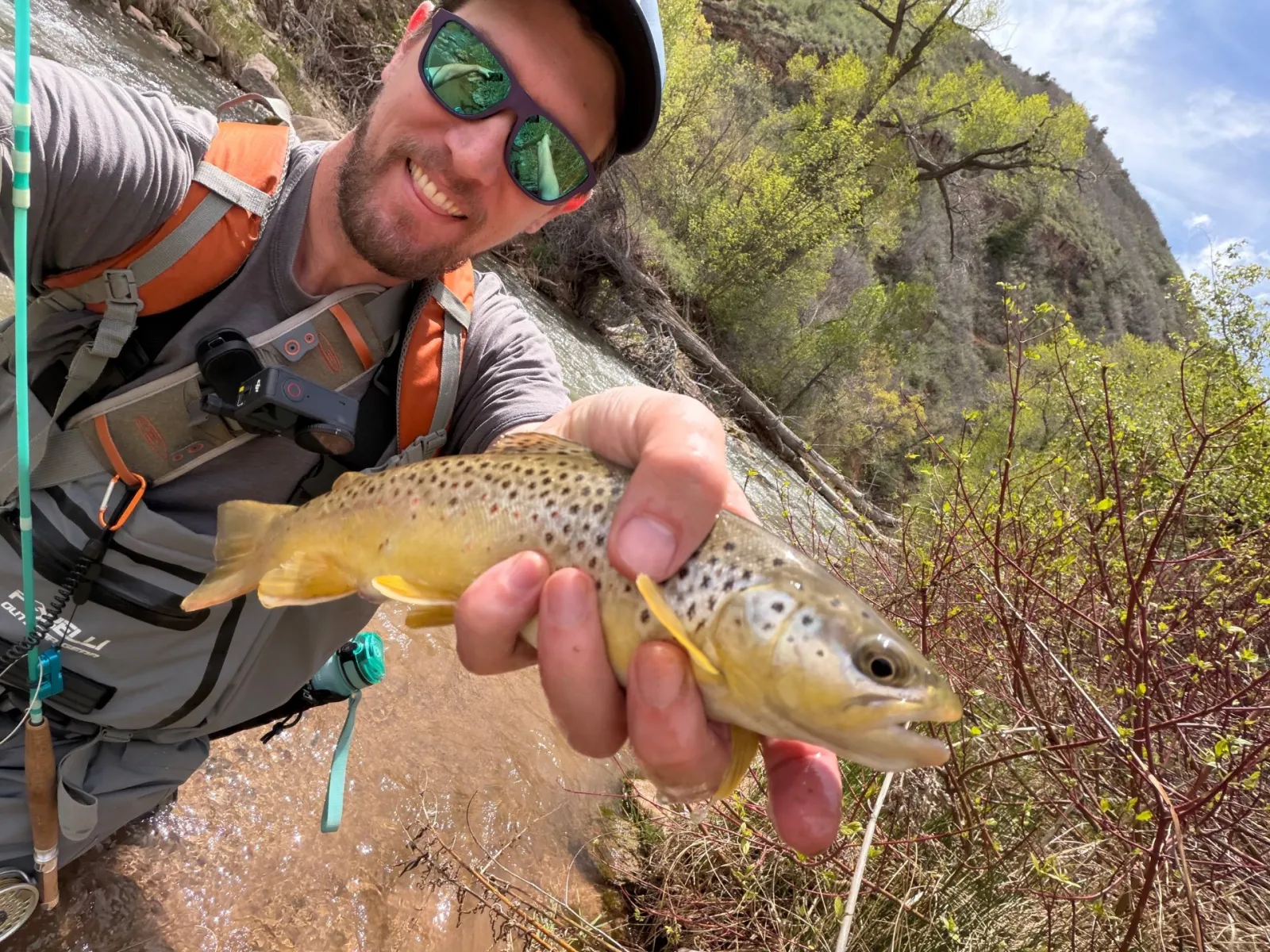
Written by Cameron Spanos
Why Summer Trout Fishing Gets Hard, and How to Beat It
Summer trout fishing is a puzzle. The season is in full swing, the days are long, and you have time to fish, but the trout you found stacked up in May seem to have vanished. I've stood in rivers in late July wondering where every fish went, and the answer almost always comes down to one thing: water temperature. Once you understand what warm water does to trout, and where they go to escape it, summer stops being a dead zone and starts being one of the most interesting times of year to be on the water.
The Temperature Numbers Every Trout Angler Needs to Know
Trout are cold-blooded, which means their body temperature matches the water around them. That makes water temperature the single biggest factor controlling their behavior, metabolism, and survival in summer. Here are the numbers that matter.
Trout feed most aggressively in the 50-65°F range. Rainbow trout have an even tighter sweet spot: 52-64°F. Once temperatures climb into the upper 60s, feeding slows dramatically. At 68°F, trout begin actively seeking thermal refuges: cold tributaries, deep pools, spring seeps. At 70°F and above, trout become lethargic, stop eating, and are under serious physiological stress. Sustained temperatures above 77°F can be lethal (Virginia DWR).
Here's the double-edged sword that makes warm water so dangerous: warmer water holds less dissolved oxygen, but simultaneously increases the trout's metabolic demand for it. A trout sitting in 72°F water is already gasping. You hook it, fight it for two minutes, and take a photo, and you may have just killed a fish that swam away looking fine.
Carry a stream thermometer. Take readings throughout the day. If the water hits 68°F, move upstream or go home. If it hits 70°F, go find bass.
Where Do Trout Go When the Water Warms Up?
Trout don't just sit there and suffer. They move, sometimes dramatically, to find cold water. Research on trout migration has documented fish traveling more than 20 miles upstream in summer to access cold headwater reaches (troutandsteelhead.net). Your job is to think like a fish and find those cold-water patches before you wet a line.
Cold Tributaries and Spring Seeps
The single most reliable summer trout holding spot is the mouth of a cold tributary. Smaller feeder streams that originate from springs or run through dense, shaded forest often stay in the low 50s to low 60s year-round. When a cold trib dumps into a warmer main river, it creates a visible plume of cold water. Trout stack up at that confluence like they're lined up at a buffet. Walk the banks of any big summer river with a thermometer and probe every tributary mouth. A 5°F difference is enough to hold dozens of fish.
Spring seeps are trickier to find but just as valuable. Look for areas with unusually lush aquatic vegetation, subtle temperature differences you can feel on your wading boots, or sections of riverbank that stay wet even in drought. Trout are remarkably good at locating groundwater upwellings through porous gravel, better than most anglers, honestly.
Deep Pools and Undercut Banks
Deep pools are a summer staple. The deeper water column stays cooler longer and stratifies, giving trout a temperature gradient to hold in. But don't sleep on undercut banks: they offer shade, ambush cover, and a microclimate that can be 2-3°F cooler than the open river. Big brown trout in particular are notorious for tucking under cut banks in summer and barely moving until dark.
Riffles and Pocket Water
This one surprises people. When temperatures spike, fast aerated water (riffles, pocket water, the base of small waterfalls) actually holds more dissolved oxygen than slow, warm pools. A trout in a summer riffle isn't necessarily feeding; it may just be breathing. But an oxygenated riffle that dumps into a shaded plunge pool? That's prime real estate.
You might also enjoy: Spring Crappie Fishing Tips: Ice-Out to Spawn
Tailwaters and High-Elevation Streams
If your local streams are simply cooked, tailwater fisheries are your best friend. Water released from the bottom of a dam stays cold and consistent year-round, often in the mid-50s even during August heat waves. High-elevation headwater streams are another option: the higher the elevation, the shorter the season they've had to warm up, and the cooler the overnight temperatures keeping them cold.
When to Fish: Matching Your Schedule to the Temperature Window
Timing is everything in summer. I've fished the same stretch of river at 7 a.m. and 1 p.m. on a hot July day and caught a dozen fish in the morning and zero by midday. The difference was 8°F of water temperature.
| Air Temperature (°F) | Best Fishing Window | Strategy |
|---|---|---|
| 61-70 | All day | Normal tactics, full day if you want |
| 71-75 | 6 a.m. - Noon | Morning focus, watch water temp |
| 76-80 | 7 a.m. - 11 a.m. | Early-only; consider evening if temps drop |
| 81-85 | Dawn - 11 a.m. | Be on water at first light, off by 10:30 |
| 86-89 | Dawn - 9 a.m. | Consider skipping entirely; find tailwater |
Water temperature typically peaks in late July and early August (Virginia DWR), and afternoon readings are almost always the worst. Overnight cooling can drop a stream 5-8°F by dawn, which is exactly why the first two hours of daylight are so productive in summer. If your stream hits 68°F by 9 a.m., pack it in. The fish aren't going to bite anyway.
Summer storms are a gift. A good rainstorm drops air temperature, cools the water, and flushes new food into the river. Some of my best summer trout fishing has happened in the first hour after a thunderstorm passes. The fish flip from lethargic to aggressive almost instantly.
What Flies and Lures Actually Work in Summer
Presentation in summer is about matching the trout's low-energy mindset and fishing where food is actually coming to them. Here's what consistently works.
Terrestrials for Fly Anglers
July and August are terrestrial season. Grasshoppers, beetles, and ants make up a massive percentage of a summer trout's diet, and they fall off streamside vegetation all day long. A size 10-14 hopper pattern along a grassy bank is one of the deadliest summer presentations there is, and it works when air temps have trout tucked tight to shade. Ants and beetles are the sneaky option; trout eat them so quietly you'll miss the take if you're not watching.
Nymphs in Pocket Water
Dead-drift nymphing through pocket water and plunge pools continues to produce all summer. Go small (size 16-20) with a single fly and a light tippet in low, clear water. Trout in summer have seen a lot of pressure and have all the time in the world to refuse a bad drift. A tight, drag-free drift through a narrow seam beats covering a lot of water with sloppy casts.
Spinners and Small Streamers
For spin anglers, small inline spinners cast upstream into fast water and retrieved downstream are incredibly effective in summer riffles. Keep it small (size 0-1 Panther Martin or Mepps), keep it moving, and target the transition zones where fast water slows into a pool. Small streamers worked in pulses through deep shadow lines will draw aggressive strikes from the browns that hold there.
Is It Ethical to Fish for Trout in Summer Heat?
This question matters. The honest answer is: it depends on the water temperature and how you handle fish.
At water temperatures below 65°F, normal catch-and-release practices are fine. Between 65-68°F, you can still fish responsibly if you upsize your gear to land fish quickly, keep them in the net and in the water, and limit air exposure to under 20 seconds. A fish fought to exhaustion at 67°F and held up for a 45-second photo is a dead fish that swam away. It will die later from lactic acid buildup even if it looks fine at the moment of release (UConn research, 2023).
You might also enjoy: How to Catch More Fish After a Bad Trip: Turn Slow Days Into Data
At 68°F and above, I don't fish for trout. I switch species, find a tailwater, or wait for conditions to change. I know that's a hard line for some anglers. But the compounding stress of multiple hook-ups during a heat wave can crash a pool of fish. The trout stacked into a cold thermal refuge during a heat event are already under stress. Adding angling pressure to that pile is genuinely harmful.
If you're on a managed stream that has posted voluntary closures or emergency restrictions during heat events, respect them. Those restrictions exist because fish are dying.
How to Read a Summer River Before You Cast
The biggest skill shift in summer trout fishing is slowing down your approach. In spring you can be sloppy: fish are aggressive and spread out. In summer, all the catchable trout are compressed into a fraction of the available water. If you blow through a thermal refuge without identifying it, you'll spook every fish in the pool before your first cast lands.
Here's how I approach a new summer stretch:
- Take a temperature reading at the access point. This sets your baseline for the day.
- Walk the bank before fishing. Look for incoming tributaries, seeps, shaded undercuts, and plunge pools from riffles. These are your targets.
- Probe every tributary mouth. Stick your thermometer in the trib and in the main river. A cold trib in warm main stem? Fish the seam between them.
- Watch for subtle signs of trout activity. In summer, trout in thermal refuges often rise lazily to surface film insects in the very early morning. A soft rise near a shaded undercut at 7 a.m. tells you exactly where to present your fly.
- Work upstream. Moving upstream to cooler water is always a valid summer strategy. Headwater reaches stay cold longer, see less pressure, and hold fish that haven't been pounded all season.
Should You Stop Trout Fishing in Summer Entirely?
No, but you need to fish smarter. There are plenty of streams and rivers that hold fish well below stress thresholds all summer long: spring creeks, limestone streams, high-elevation freestone rivers, and tailwaters. I keep a short list of three or four streams I know stay cold through July and August. Those get the bulk of my summer trout fishing hours.
For everything else, I fish the morning window, carry a thermometer, and don't feel guilty about leaving early when the numbers say to leave. There's always bass to chase at noon.
The anglers who stay dialed in all summer are the ones who've done the homework: they know where the cold water lives, they're on the water before most people are awake, and they make clean, fast releases when they do hook up. That's the whole game. Bushwhack has a fishing log that makes it easy to track water temps and time-of-day patterns across your favorite streams. A summer of good notes turns into a serious edge next year.
Summer Trout Fishing: The Short Version
If you're short on time, here's everything that matters:
- Fish early: the water is 5-8°F cooler at dawn than at 2 p.m.
- Stop fishing when water temps hit 68°F.
- Find the cold water: tributary mouths, spring seeps, deep shaded pools, tailwaters.
- Match the summer menu: terrestrials, small nymphs, inline spinners.
- Handle fish fast. Under 20 seconds out of water. Period.
- When it's too hot, switch species or drive to a tailwater.
Summer trout fishing rewards preparation over persistence. The angler who spends 20 minutes finding the cold water before making a single cast will always outfish the one who wades straight in and starts covering water. Take the temperature, find the refuge, fish the window. The trout are in there. You just have to meet them on their terms.
Get fishing tips in your inbox
New guides, seasonal tactics, and gear picks — about once a month, no spam.