Strawberry River Utah Fly Fishing: The Tailwater Most Anglers Skip
 Cameron Spanos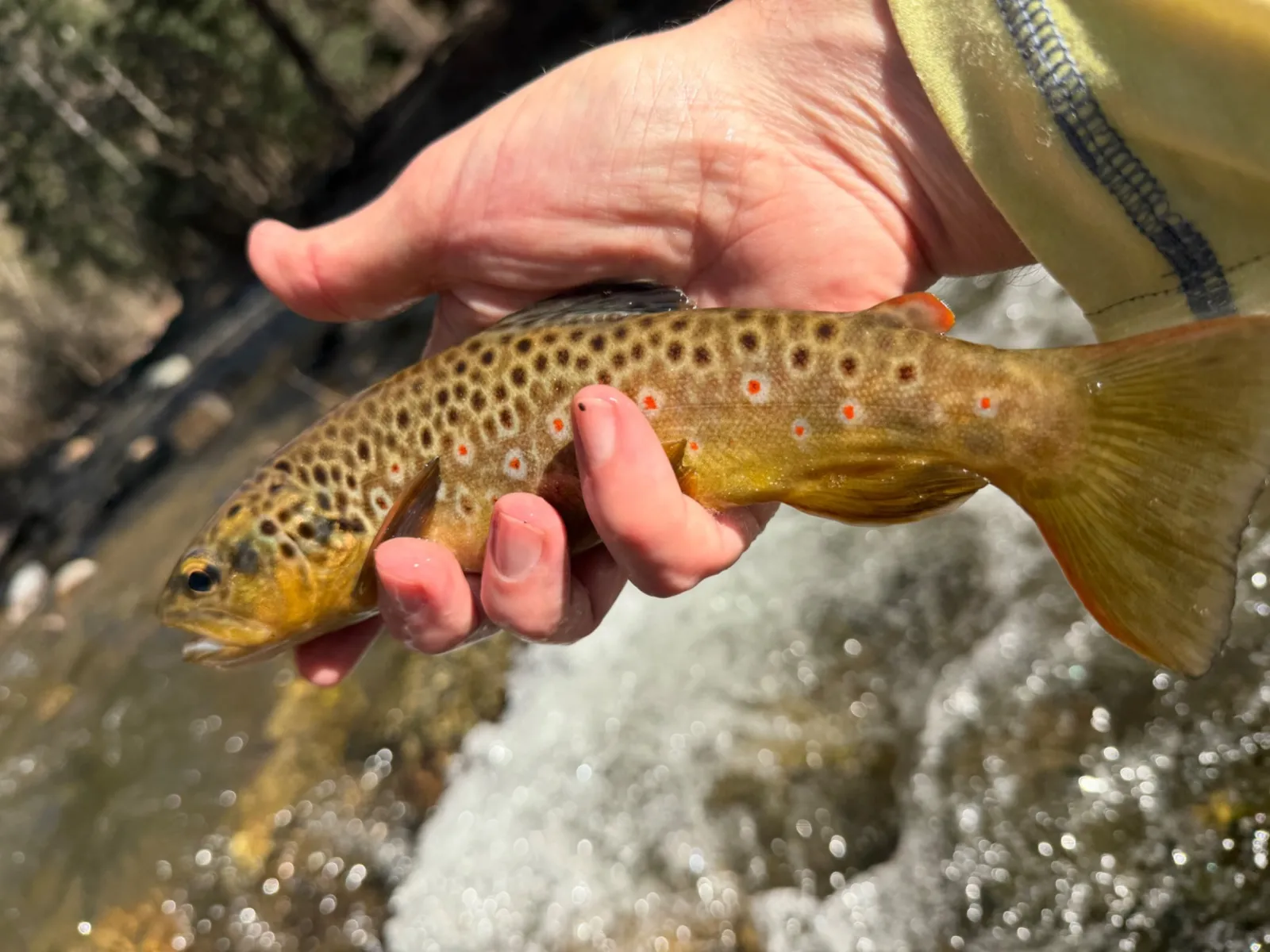
Written by Cameron Spanos
Most anglers who drive east out of Heber on Highway 40 are pointed at the Green. They blow past the Strawberry River on the way, and that's the whole reason Strawberry River Utah fly fishing still feels overlooked: this Blue Ribbon tailwater fishes the way famous water used to.
The river below Soldier Creek Dam is the quiet middle child of the state's tailwaters. The Green gets the magazine spreads. The Provo gets the wade-fishing crowds. The Strawberry gets the people who already fished both and got tired of seeing the same six trucks at every pullout. It's a smaller water, a tighter canyon, and it holds a brown trout population that hasn't been pounded into PhD status the way the Provo browns have.
Here's the contrarian read most Utah fly shops won't tell you straight: the Strawberry rewards anglers who can hike. The first eight miles of BLM-managed water below the dam are a foot-access fishery, and that's the whole reason the fish are still catchable on standard patterns.
Where Strawberry River Utah fly fishing starts
The river below Soldier Creek Dam runs southeast and then east, roughly paralleling Highway 40 through a sedimentary canyon. The Blue Ribbon section runs from the dam down to the confluence with Red Creek near the Strawberry Pinnacles. That's the stretch with the artificial-flies-and-lures-only regulation, and it's the stretch worth planning a trip around.
Two access realities to know before you go:
- From the dam, a foot trail follows the north bank east. Public access on this trail runs roughly eight miles, ending about a quarter mile west of Beaver Canyon.
- From the downstream end, a vehicle road comes up from the Pinnacles area and gives you about six miles before a locked gate stops cars.
The Strawberry Pinnacles themselves, the eroded rock spires above the lower canyon, are the landmark that tells you where the special-regulation water ends. Fishing near the Pinnacles means you're at the bottom of the good stretch, working upstream from the vehicle access.
So you have a wadeable corridor sandwiched between two trailheads, with most of the water reached by walking. That's the friction that keeps it lightly pressured. People drive to a pullout, fish 200 yards in either direction, and call it a day.
Don't be those people.
What lives in there
The standing population is brown trout, with Bear Lake cutthroat trout in the mix and the occasional rainbow. The browns in the canyon section run thirteen to eighteen inches as the working class, and there are deeper holes that hold fish over twenty. The cutthroat are Bear Lake cutthroat, which the 2026 Utah Fishing Guidebook describes as "a lake-dwelling form of the Bonneville cutthroat trout." They're seeded by the stocking program in Strawberry Reservoir upstream, and some of those fish end up in the river system.
One heads-up before anyone plans a checklist trip: these Bear Lake cutthroat do not count toward the Utah Cutthroat Slam. The Slam requires fish caught in their historic native range, and it explicitly excludes cutthroat from the Strawberry drainage, where they're stocked. Catch them because they're beautiful; the browns are why most people return.
Why does the Strawberry get skipped?
Three reasons, and they're all good news for you.
One: it doesn't fit a guide trip well. The canyon is narrow. There's no float. A guide can take you, but they're walking the same trail you'd walk solo, so the value-add is smaller than a Green River drift boat day. Outfitters point clients at water where the boat does the work.
Two: the flows are smaller and more variable. The Strawberry Aqueduct and Collection System diverts a meaningful amount of water out of the basin to the Bonneville side via the Central Utah Project. What's left in the river is what makes it past the dam. In late August 2026 the Pinnacles gauge was reading in the mid 30s cfs, skinny even by this river's standards. People who learned to fish on big tailwaters look at numbers like that and write the whole river off. At normal flows, it's plenty of water.
You might also enjoy: Best Inline Spinners for Fall Stocked Trout Under $20 (2026): Buy or Skip on 4 Classics
Three: moss and beaver dams. The lower stretches especially get clogged with filamentous algae and beaver-built impoundments that make indicator nymphing frustrating. This is where most anglers give up on the river. It's also where the technique pivots that make the difference.
The technique pivot nobody talks about
Stop indicator nymphing the Strawberry. The moss eats your flies, your indicator drag is wrong on the slow water above beaver dams, and the depth changes too fast around woody structure to keep a Thingamabobber rigged honestly.
Three rigs that actually work in this canyon:
- Dry-dropper with a buoyant hopper or Chubby up top. Fish a beadhead Pheasant Tail or Hare's Ear 18 to 30 inches below. Short leashes. The hopper rides over the moss and lets you cover slow seams without fouling.
- Tight-line or short-line nymph rig. A 10-foot 3-weight with a competition leader picks pockets above and below beaver structure where a bobber rig would be a tangled mess.
- Streamers, swung small. A size 8 olive Sculpzilla or a Mini Dungeon worked across and down through the deeper bend pools moves the bigger browns. Don't fish baseball-bat streamers here. The water's too small.
If you only bring one of those, bring the dry-dropper. It's the rig that solves the moss problem without forcing you to learn euro nymphing on the trip.
What hatches matter on the Strawberry River?
The Strawberry doesn't have a famous, bus-tour hatch. No Green River cicada. No salmonfly stretch. What it has is steady, predictable mayfly and caddis activity through the season, with a midge dependency in the cold months.
The pattern roughly tracks other Wasatch tailwaters, which makes life easier:
- March through April: Blue-winged olives. BWOs show on Utah rivers in early spring and typically peak in April. Size 18 to 20 sparkle duns and RS2 emergers. Overcast afternoons are when this happens.
- May into June: Caddis show up. Caddis activity on Utah rivers stretches from spring into fall. Elk-hair caddis and X-caddis size 14 to 16. Mornings can be slow until water warms; the bite tends to back-load into the afternoon.
- June through August: PMDs come on. Pale Morning Duns run roughly June through August in the Wasatch system. Size 16 sparkle duns, comparaduns, and a Barr Emerger as the dropper.
- July through September: Terrestrials. The canyon's grasshoppers are unpressured. A size 10 Morrish Hopper or a Chubby drifted along grass banks gets eaten with no apology. This is the highest-quality dry fishing on the river.
- October into November: Browns get aggressive ahead of the spawn, and streamer fishing for pre-spawn brown trout becomes the best big-fish window of the year here. Don't sight-fish to spawning fish on redds. It's not illegal; it's just bad form, and the river has been beat up enough by historical land-use without anglers stepping on eggs.
Is the Strawberry River good for beginners?
Yes and no. The river's small enough that reading water is intuitive (every seam, plunge, and undercut bank is obvious), and the fish aren't selective the way Provo browns are. That part is friendly to a newer angler.
The hike, the lack of cell service in much of the canyon, and the tendency for the moss to wreck inexperienced rigging are not friendly. If you've fished the Provo a half-dozen times and built any kind of rigging fluency, you'll be fine. Day one of fly fishing? Pick a different water.
What are the fishing regulations on the Strawberry River?
Everything in this section is quoted from the 2026 Utah Fishing Guidebook, word for word. Rules change year to year, and the guidebook wins every argument, so check the current edition before you drive out.
For the tailwater this post covers, the guidebook's Rules for Specific Waters entry for "Strawberry River, Duchesne and Wasatch counties" applies "from the confluence with Red Creek, near Pinnacles, upstream to Soldier Creek Dam, including all flowing water, standing water, and instream lakes and ponds." It lists exactly two special rules for that reach: "Artificial flies and lures only" and "No overnight camping on division land."
That "standing water" language matters here. The beaver ponds and instream impoundments along the canyon fall under the fly-and-lure rule, not just the moving channel. And plan to fish in, fish out, and sleep at a developed campground or in town.
The entry lists no special trout limit for this reach, so the statewide daily limit applies. The guidebook's statewide limits table (page 7) sets that at 4 for "Trout, kokanee salmon and Arctic grayling (a combined total)."
You might also enjoy: Tenkara Fishing Utah's Uinta Mountains: Brook Trout Water Built for a Fixed Line
What counts as a legal fly or lure isn't a judgment call either. The guidebook's definitions section says "Artificial fly means a fly made by the method known as fly tying. Artificial fly does not mean a weighted jig, lure, spinner, attractor blade or bait," and "Artificial lure means a device made of rubber, wood, metal, glass, fiber, feathers, hair or plastic with a hook or hooks attached." The lure definition goes on to exclude anything "treated with a natural or artificial fish attractant or feeding stimulant." Leave the scented eggs at home.
Don't confuse this reach with the upper river
A search for Strawberry River fishing regulations pulls up two very different rule sets, because the river above Strawberry Reservoir is managed under the guidebook's separate "Strawberry Reservoir tributaries" entry. Per that entry, "the Strawberry River from Strawberry Reservoir upstream to USFS Road 124 (Bull Springs Road)" is "CLOSED TO FISHING YEAR ROUND." From Bull Springs Road up to the headwaters, the rules are "Catch and release only," "Artificial flies and lures only," and "CLOSED May 15 through 6 a.m. on the second Saturday of July."
None of that applies below Soldier Creek Dam. But if you're planning to fish your way around the drainage, know which reach you're standing in before you rig up.
One more boundary to respect: below the Strawberry Pinnacles, especially around Duchesne, parts of the river run through the Uintah and Ouray Reservation. Those waters aren't covered by the state guidebook at all, and you need a tribal fishing permit to fish them. The boundary isn't signed everywhere. Use OnX or a current land-status map. Don't guess.
If you're tracking which permits and which regulations apply to which water across a season, this is the kind of thing a fishing log earns its keep on. Try Bushwhack if you've ever stood on a riverbank trying to remember which DWR rule applied where.
What flows actually fish well
Watch USGS gauge 09285900 (Strawberry River at Pinnacles near Fruitland) and 09285000 (Strawberry River near Soldier Springs). Anything in the 50 to 120 cfs range is in the prime window for the canyon. Higher than 150 cfs and the river starts to push you out of the seams that hold fish; lower than 40 and the moss problem gets brutal and water temps push trout into stress in midsummer.
That's exactly where the river sits as of late August 2026, with the Pinnacles gauge in the mid 30s. Fish it at first light or give the trout a break until the October cool-down, when dropping temps put the pre-spawn browns back on the feed. If the gauge is ugly, shore fishing at Strawberry Reservoir is a short drive back up the hill and doesn't care what the river is doing.
Spring runoff blows the river out the way it does every Utah tailwater. The Strawberry recovers a little faster than the freestone tributaries because of the dam, but it's not immune. If the gauge is spiking and the color is chocolate, fish a different water that day.
The hot take on whether it's worth the drive
If you live on the Wasatch Front and you're choosing between the Provo and the Strawberry on a Saturday, drive past the Provo. The Provo isn't a bad river; it's a crowded one. (Fall fly fishing on the lower Provo is the one exception; that river in October earns its crowd.) The Strawberry's worst day is solitude and a couple of decent browns. The Provo's worst day is six other anglers in your run.
If you live closer to Vernal or you're already pointed at the Green, the calculation flips. The Green out-fishes the Strawberry on volume of fish per hour and on average size. It just doesn't out-fish it on the experience of fishing alone in a canyon nobody else bothered with.
Bring a 9-foot 4-weight or a 10-foot 3-weight. Bring more 5X and 6X tippet than you think. Bring the patience to walk past the first three pullouts and find water that doesn't have boot tracks in the mud. Log what you catch and where, because the Strawberry is the kind of river where the difference between an okay day and a great one is one specific run that you'll only find by fishing it three times. Bushwhack exists for exactly that kind of pattern-finding.
Now stop reading and look at the gauge.
Get fishing tips in your inbox
New guides, seasonal tactics, and gear picks — about once a month, no spam.