Spring Wacky Rig Bass Fishing Guide: Setup, Techniques & Seasonal Timing
 Hudson Reed
Written by Hudson Reed
Why the Wacky Rig Rules Spring Bass
When spring arrives and bass get finicky, most anglers throw bigger lures and heavier presentations. That's exactly when you should do the opposite. The wacky rig bass fishing technique is your secret weapon during the pre-spawn, spawn, and post-spawn windows (roughly March through May) when traditional approaches fall flat.
Here's why: spawning bass are incredibly selective. They're not chasing baitfish with the aggression of summer; they're protecting territory or positioning for the spawn. A weightless plastic worm drifting down with a natural, fluttering action? That's hard for them to ignore. The wacky rig's subtle presentation mimics vulnerable prey and triggers bites when everything else fails.
What Is a Wacky Rig and How Does It Work?
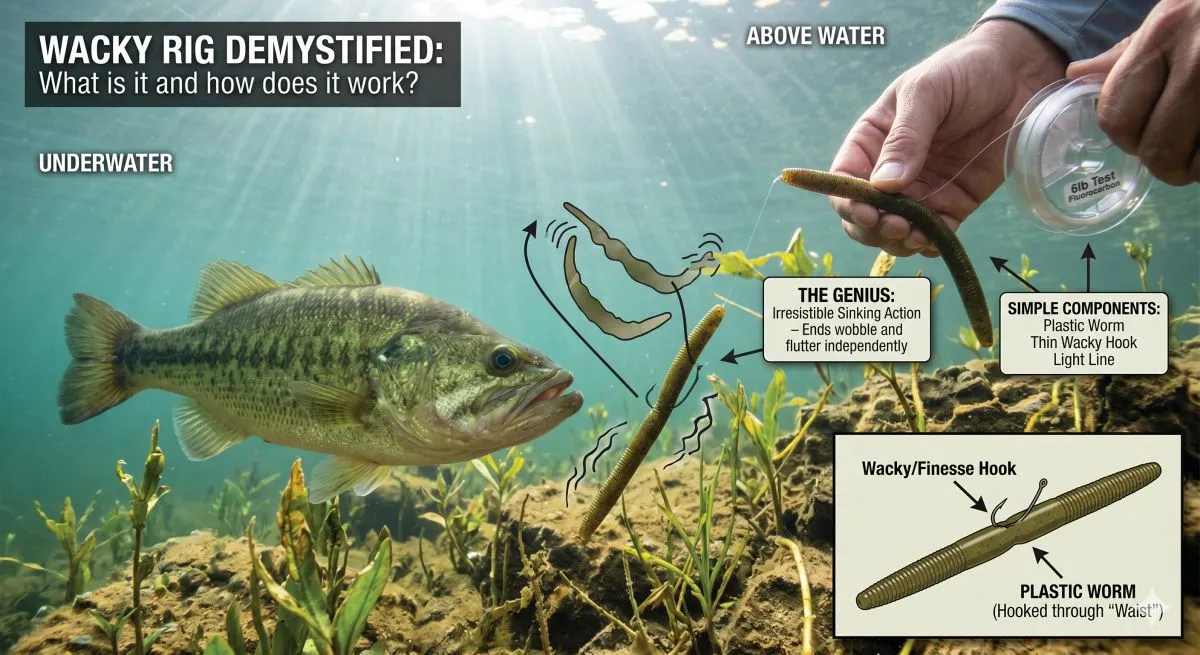
A wacky rig is beautifully simple: you hook a plastic worm through its middle (the "waist"), typically with no weight, using a thin finesse hook and light line. That's it. The genius is in the result: as the worm sinks, both ends wobble and flutter independently, creating an irresistible action that finicky spring bass fishing demands.
Traditional Weightless Wacky Rig
This is the purest version and works best in water under 4 feet deep. Use a size 1 or 1/0 finesse hook with a thin wire diameter. Thread the hook through the middle of a 4- to 5-inch plastic worm (wacky rig Senko-style baits work great). Many anglers use O-rings (rubber bands that slide over the worm at the hook point) to protect the bait and let you fish a single worm for hours, even after catching multiple fish.
Tie 8- to 10-pound fluorocarbon directly to your hook. The weightless design means maximum flutter on the fall and minimal snags. Fish it by pitching near cover, letting it sink on slack line, and working it with short pops and pauses.
Weighted Wacky Rig (Flick Shake)
When depth increases beyond 4 feet (docks, grass edges, and channel drops), add a 3/32 or 1/8 ounce weight to the hook shank. This is sometimes called the "Flick Shake." The weight keeps your bait in the strike zone longer. The fluttering action remains, but now you can access bass that have moved to deeper spring structure. A weedless wacky rig setup with a light wire weed guard works perfectly in heavy cover.
Neko Rig Variation
The Neko rig takes the concept further. Hook the worm 1/3 of the way from the nose, then insert a small nail weight into the worm's nose. This creates a spiraling, nose-down fall that's devastating in 5+ feet of water or when targeting bottom-hugging bass. It's perfect for deeper brush piles, timber, and offshore structure during post-spawn.
Seasonal Timing: When Spring Bass Hit the Wacky Rig
March (Pre-Spawn): Bass are transitioning from winter to spawning areas, moving toward shallow flats and cover. A weightless wacky rig bass fishing spring presentation covering these zones draws bites from bass that are aggressive but still selective.
You might also enjoy: Spring Crappie Fishing Tips: Ice-Out to Spawn
April (Spawn): Bass are locked in shallow spawning areas. This is peak wacky rig season. Fish are territorial and will bite to defend their nest, but they're incredibly finicky about lure size and action. The subtle presentation is money.
May (Post-Spawn): As bass recover and disperse, they move deeper and become less aggressive. Switch to weighted variations and deeper presentations. Many anglers give up during post-spawn, but wacky rigs still catch fish if you adjust depth and location.
Where and How to Fish It
Location matters as much as technique. Target shallow spawning flats in 2 to 4 feet of water, docks and their shadows, laydown timber, brush piles, grass edges, and points near deep water. The wacky rigging technique excels at dock skipping: pitching it tight under docks where bass are holding.
Technique is simple but deliberate:
- Pitch your rig to cover and let it sink for 3 seconds on slack line. This fall is where most bites happen.
- Give it a short 6- to 8-inch pop, then pause and let it flutter back down.
- Repeat on slack line. Don't overthink it. Short, subtle movements.
- Fish every inch of water on the fall. Many bass bite during the sink, not on the jig.
- If you're not getting bit in 2 to 3 minutes, move to the next spot.
Gear Setup: Rod, Reel, Line
A 7-foot medium-light spinning rod gives you finesse sensitivity and enough backbone for hooksets. Pair it with a 2500-series spinning reel.
Line choice: 8- to 10-pound fluorocarbon is the traditional choice. Fluorocarbon sinks, stays invisible to bass, and handles light hooks well. Alternatively, use 20-pound braid main line with a 10-pound fluorocarbon leader (2-3 feet). This combo gives you braid's sensitivity with fluorocarbon's stealth. Knowing how to fish a wacky rig effectively starts with the right line.
Frequently Asked Questions
What is a wacky rig? A plastic worm hooked through the middle with a thin finesse hook, typically weightless. The setup creates a natural fluttering action that appeals to finicky spring bass.
You might also enjoy: How to Catch More Fish After a Bad Trip: Turn Slow Days Into Data
When is the best time to fish a wacky rig? Spring, from pre-spawn (March) through spawn (April) and early post-spawn (May), is prime time. The finicky behavior of spawning bass makes this subtle presentation perfect.
What bait works best for wacky rigging? Senko-style straight-tailed plastics in 4- to 5-inch lengths are the gold standard. Colors like green pumpkin, watermelon, and natural shades work well.
What are the variations? Weightless for shallow water (under 4 ft), weighted Flick Shake for 4-8 ft, and Neko Rig for deep structure (5+ ft) and bottom presentations.
How do you fish it? Pitch to cover, let it sink on slack line (this is where most bites happen), give short pops with pauses, and work it slowly. Patience and subtle movements trigger bites.
Log Your Wacky Rig Catches with Bushwhack
Spring is the perfect time to dial in your wacky rig technique, and the best way to improve is to track what works. Use Bushwhack to log your wacky rig catches: note the rig variation, depth, color, location type, and water temperature. Over a few weeks, you'll see patterns emerge: which rigs produce at certain depths, which colors work in stained vs. clear water, and when bass are most active.
That data turns casual fishing into deliberate improvement. By May, you'll be a wacky rig expert with a journal of what actually works on your home water.
Get fishing tips in your inbox
New guides, seasonal tactics, and gear picks — about once a month, no spam.