Little Buddy vs Portable Buddy vs Big Buddy: The Right Propane Heater for Ice Fishing Shelters
 Hudson Reed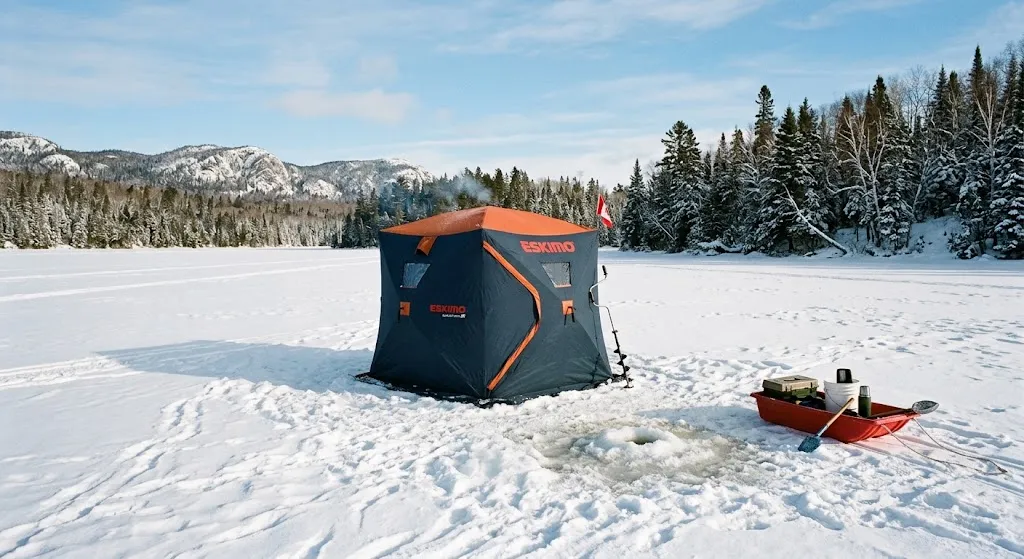
Written by Hudson Reed
A Little Buddy puts out 3,800 BTU an hour. A Big Buddy wide open puts out 18,000. That's nearly a five-to-one spread inside one product family, and it's why choosing a propane heater for ice fishing shelters goes sideways so often: people buy on price, or on whatever the guy parked next to them runs, instead of on the volume of fabric they need to keep above freezing.
Three questions settle it. How big is the shelter, honestly? One-pound cylinders or a 20 lb tank on the sled? And how high does the lake sit? That last one disqualifies more western anglers than they expect.
Quick picks at a glance
| Product | Best for | Price | Rating |
|---|---|---|---|
| Mr. Heater Little Buddy | One-man flip-over sleds | ~$70 | 4.0 / 5 |
| Mr. Heater Portable Buddy | 2 to 4 person hubs, most anglers | ~$90 | 4.5 / 5 |
| Mr. Heater Big Buddy NF | 6-man hubs, wheelhouses, deep cold | ~$159 | 4.0 / 5 |
| Mr. Heater F273704 Buddy Hose | Running any Buddy off a 20 lb tank | ~$18 | 4.5 / 5 |
| Kidde Portable CO Alarm | Every heated shelter, no exceptions | ~$23 | 4.5 / 5 |
Mr. Heater Little Buddy: Best for One-Man Flip-Overs
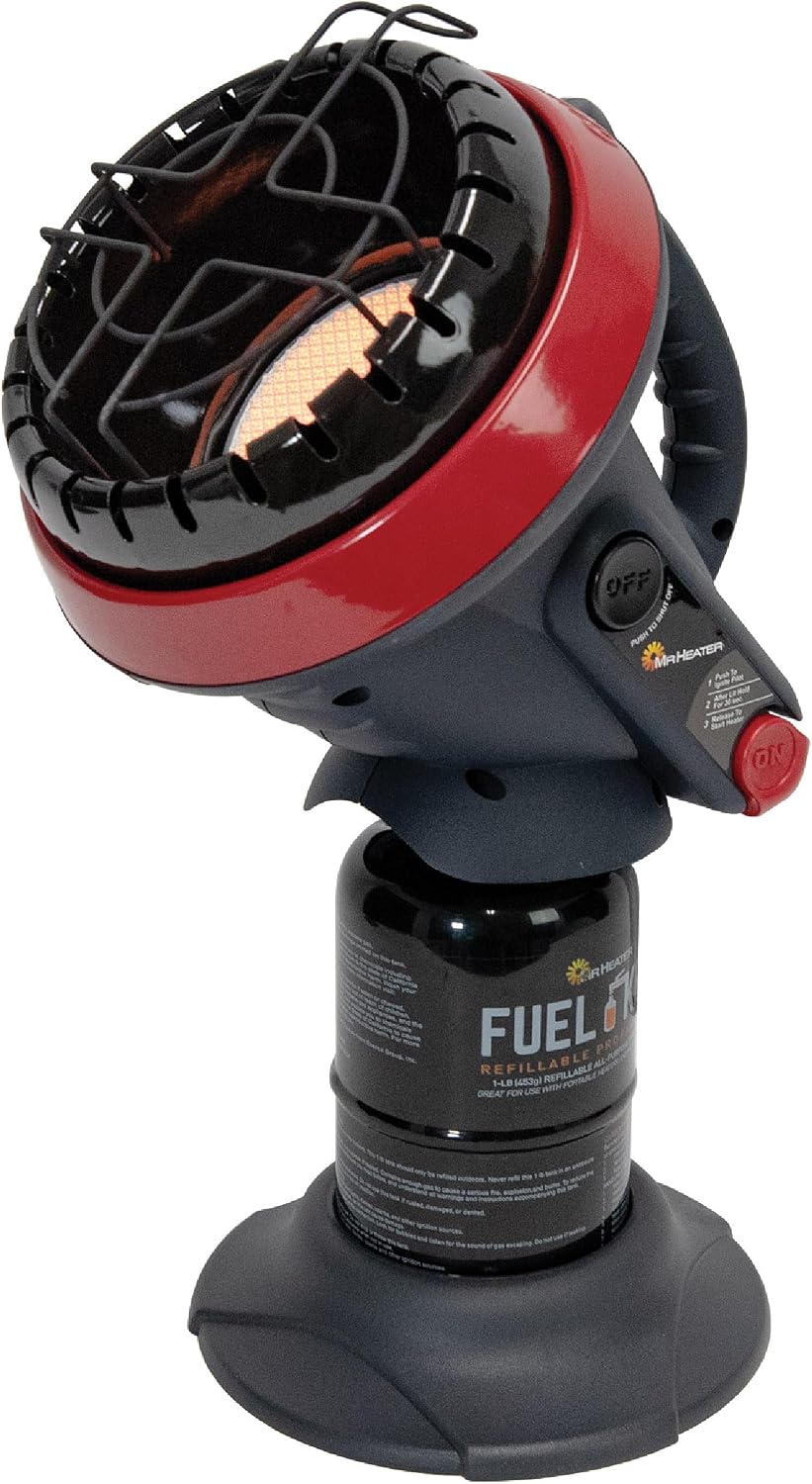
3,800 BTU, 5.85 pounds, one cylinder screwed into the back. Mr. Heater rates it for 95 square feet and lists 5.6 hours of run time at both minimum and maximum output, which is their polite way of saying there is no minimum and maximum. One button, one flame, done.
In a one-man flip-over that's the right amount of heat. A sled-style flip with the hood down gives you 12 to 18 square feet of floor and a ceiling you can touch sitting down, closer to a phone booth than a room.
Who it's for
Run-and-gun anglers on a one-man flip, or anyone knocking the chill off a two-man hub on a mild day without dragging a tank out.
The base problem, and the two-dollar fix
The Little Buddy ships with an 8-inch round stand, and that stand is why people get frustrated with this heater. The element sits at a fixed downward angle, so radiant heat aimed at bare ice melts a saucer under the base within the hour. The heater leans, the tip-over switch does its job, and you're relighting with cold hands. Set it on half-inch plywood, a bucket lid, or the flat bottom of your sled. Any rigid platform that isn't ice fixes it permanently.
Pros and cons
- Pro: under six pounds, so it disappears into a sled
- Pro: ODS and tip-over shutoff, the same safety hardware as the bigger models
- Con: no heat adjustment at all, which matters more than you'd think once the sun comes out
- Con: the one Buddy Mr. Heater doesn't list for a remote 20 lb supply, so you're buying disposables forever
- Con: the stock base is a genuine liability on bare ice
Price: about $69.99 at the time of writing. Check the current price on Amazon.
Mr. Heater Portable Buddy: Best for 2 to 4 Person Hubs

The Portable Buddy is the heater most ice anglers should own.
Two settings, 4,000 or 9,000 BTU, rated for 225 square feet, 10.6 pounds with the handle folded. The numbers that matter are on Mr. Heater's own spec sheet: 0.044 gallons per hour on low, 0.099 on high, with published run times of 6 and 3 hours off a single one-pound cylinder. A six-by-six hub is 36 square feet, and a three-man usually lands between 30 and 40. You're nowhere near this heater's ceiling, and that headroom is the point on a windy day.
Who it's for
Anyone running a 2 to 4 person hub, a two-man flip-over, or a portable they sometimes share. It's also the right second heater for a big hub when you want warmth at both ends.
Pros and cons
- Pro: two settings, so you can run 4,000 BTU for six hours instead of cooking yourself for three
- Pro: the swivel regulator takes the Buddy hose, so one heater covers cylinders and tanks
- Con: 10.6 pounds is noticeably more to carry than the Little Buddy
- Con: the piezo igniter is the part that eventually fails on old ones
Price: about $89.97 at the time of writing. Check the current price on Amazon.
Mr. Heater Big Buddy NF: Best for 6-Man Hubs and Deep Cold

Three settings instead of two: 4,000, 9,000, or 18,000 BTU, rated for 450 square feet, and it's the only one of the three with a medium. Two one-pound cylinders at once, or a 20 lb tank through a hose. 17.1 pounds empty, a real load once both cylinders are hanging off it.
One thing to know before you shop. Mr. Heater's product page carries a notice that tariff changes led them to drop the fan from some MH18B units, and the model sold as the Big Buddy NF is that no-fan version. You lose the fan and the batteries it needed, which matters less in a hub than in a garage: a fabric shelter is small enough that radiant heat fills it anyway.
You might also enjoy: Fall Bass Fishing for Beginners: Follow the Bait, Not the Map
Here's where I'll be unpopular: most people who buy a Big Buddy didn't need one. Two one-pound cylinders hold roughly 43,200 BTU, so at 18,000 BTU an hour that's about 2.4 hours of wide-open burn. You'll turn it down to medium twenty minutes in anyway, at which point you're running a Portable Buddy that cost seventy dollars more and weighs seven pounds more. Buy this for a 6-man hub, a wheelhouse, or genuine sub-zero days, not because bigger sounds safer.
Who it's for
6-man hubs, permanent shacks, wheelhouses, and anglers who fish when the daily high is below zero. In every one of those, the heater goes out before anyone sleeps. The MH9BX owner's manual puts it in capitals: "NEVER OPERATE THE HEATER WHILE SLEEPING!"
Pros and cons
- Pro: three heat settings, the only model here with a middle option
- Pro: dual regulators run two cylinders at once, rated 11 hours on low
- Con: the NF version has no fan, so distribution is pure radiant
- Con: 17.1 pounds plus fuel is the heaviest sled load of the three
- Con: on high it eats a pair of one-pounders faster than most people expect
Price: about $159.00 at the time of writing. Check the current price on Amazon.
Mr. Heater F273704 Buddy Hose: Best Fuel Upgrade

Ten feet of hose connecting a Portable Buddy or Big Buddy to a 5 to 20 lb tank. Cheapest thing on this list, biggest change to your season.
The swivel regulator is what makes it work. The Portable Buddy has one, the Big Buddy has two, the Little Buddy has neither, which is why this hose is useless to a Little Buddy owner whatever a third-party listing claims.
Who it's for
Anyone sitting in a hub more than a couple of hours. Skip it if the Little Buddy is your only heater.
Pros and cons
- Pro: turns a three-hour sit into an all-weekend one
- Pro: ten feet lets the tank sit outside the door, which the Minnesota DNR asks for anyway
- Con: one more hose to keep out of the auger and the slush
- Con: the tank needs a stable base on ice, so bring a milk crate
Price: about $17.99 at the time of writing. Check the current price on Amazon.
Kidde Portable CO Alarm: Best Safety Add-On
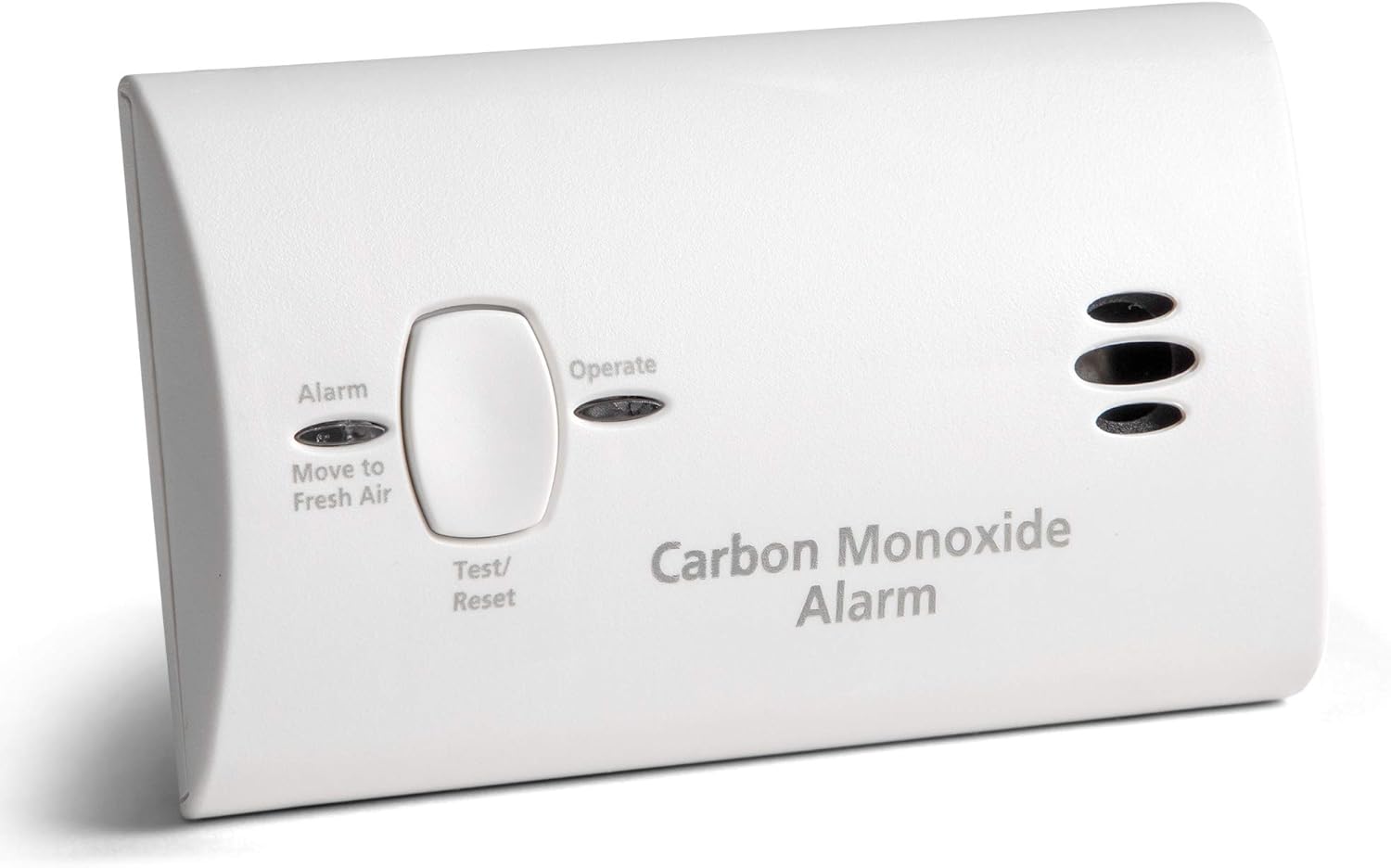
A battery-powered CO alarm costs about twenty-three dollars. That's the whole price of the answer to the question nobody wants to ask out loud.
Who it's for
Every angler who heats a shelter. No trip is short enough to skip it.
Every heater here carries an oxygen depletion sensor, and an ODS is not a CO detector. It cuts the heater when room oxygen drops below a threshold, which is a different failure mode from carbon monoxide building up while there's still plenty of oxygen to breathe. A partly blocked burner, a heater tipped toward a wall, a snowdrift over your vent: all of those make CO without tripping an ODS.
The Minnesota DNR's guidance on CO in ice shelters is short and worth following to the letter. Two vents, one within a foot of the ground for fresh air and one near the top so CO can rise out, both kept clear of drifted snow. Cylinders stay outside unless they're the one-pound kind screwed into the heater. No sunflower-style heaters inside, ever. And the DNR notes CO sensors average about a five-year lifespan, so the detector rattling around your ice box since 2019 is decoration.
Symptoms: headache, nausea, shortness of breath, fatigue, dizziness, confusion. They read like the flu, which is what makes them dangerous in a warm shelter at the end of a long day.
And the rule that outranks every other line here: the heater gets shut off before anyone sleeps. Mr. Heater's manual says it in capitals, because nobody asleep is going to notice a drifted-over vent or the headache that starts an hour before the alarm would sound. A detector is a backup for a mistake you make awake. It isn't permission to run a heater overnight in a shack.
You might also enjoy: Best Spinning Reel Under $100 for Drop Shot and Finesse Bass (2026)
Pros and cons
- Pro: AA batteries, no cord and no wiring
- Pro: 85 dB alarm, loud enough to hear over wind on the shelter walls
- Con: a home alarm, not a ruggedized unit, so it lives in a dry bag
- Con: no digital ppm readout
Price: about $23.47 at the time of writing. Check the current price on Amazon.
How do you size a propane heater for ice fishing shelters?
Match the heater to the shelter's floor area, then halve the manufacturer's square-foot rating. Treat Mr. Heater's coverage numbers (95, 225, and 450 square feet) as insulated-room figures and cut them for nylon on ice, because a hub is a heat sink with a door. My working number for the Portable Buddy is closer to 100 square feet than 225.
Run your own numbers. A six-by-six hub is 36 square feet, an eight-by-eight is 64, a one-man flip is under 20. That puts the Little Buddy ahead of a flip-over, the Portable Buddy ahead of either hub size, and leaves the Big Buddy for the genuinely big stuff. A quilted thermal hub holds heat well enough to bump you down a size.
The propane math nobody runs before the first trip
A one-pound cylinder holds about 21,600 BTU, and that number explains most of the run times here. Little Buddy at 3,800 BTU an hour gets the 5.6 hours Mr. Heater publishes. Big Buddy wide open at 18,000 gets about 2.4 hours on a pair.
The Portable Buddy is where the published run times run optimistic against Mr. Heater's own consumption spec. A one-pound cylinder is about 0.236 gallons, so at the listed 0.099 gallons per hour on high that's 2.4 hours, not 3. On low, 0.044 gallons per hour gives 5.4 hours rather than 6. Plan on 2.4 and 5.4 and you won't be relighting in the dark.
Now the tank. A 20 lb barbecue tank filled to the standard 80 percent holds about 4.7 gallons, so at 0.099 gallons per hour on high that's roughly 47 hours of full-output heat. On low it about doubles.
Twenty pounds of propane bought as disposables means buying twenty bottles. A 20 lb refill costs a fraction of that, so the hose pays for itself in roughly one weekend.
The tradeoff is portability. Walk a mile hunting fish and a tank on the sled is a real penalty. Set up once and sit, and the tank wins easily. Most anglers do both across a season, which argues for a Portable Buddy plus a hose over either extreme. Log each trip with the air temp and the shelter you used, and a season of entries tells you more about your fuel needs than any spec sheet.
Does a Buddy heater still work above 7,000 feet?
Not reliably, and this is the spec that catches western anglers off guard. All three list a maximum elevation of 7,000 feet. Above that, thinner air means less oxygen, and the sensor that makes these heaters indoor-safe starts reading ambient air as depleted. It shuts off, you relight it, it shuts off again.
Strawberry Reservoir in Utah sits at roughly 7,600 feet, and plenty of Colorado and Wyoming ice sits higher. If that's your water, expect ODS cycling and plan on a different heat source. Anglers on Mille Lacs, Devils Lake, or Lake Erie never hit this at all, which is why it rarely comes up in reviews written from the upper Midwest.
Buy this one if
One-man flip-over, or a two-man hub on mild days only: Little Buddy. Put it on a board.
Two to four person hub, a two-man flip, or you don't know yet: Portable Buddy, plus the F273704 hose the first time you plan to sit longer than three hours. Best value in ice fishing heat, and it isn't close.
Six-man hub, wheelhouse, permanent shack, or you fish when the forecast leads with a minus sign: Big Buddy NF. Run it on medium and pretend high doesn't exist except when warming a cold shelter.
Whichever one you pick, the CO alarm goes in the bag first, the vents stay open, and the heater goes out before anyone sleeps. Ice fishing has plenty of ways to go wrong that you can't buy your way out of. This happens to be one you can, for twenty-three dollars.
Get fishing tips in your inbox
New guides, seasonal tactics, and gear picks — about once a month, no spam.