Fly Fishing for Kokanee in Utah's Alpine Lakes: Salmon at 10,000 Feet
 Cameron Spanos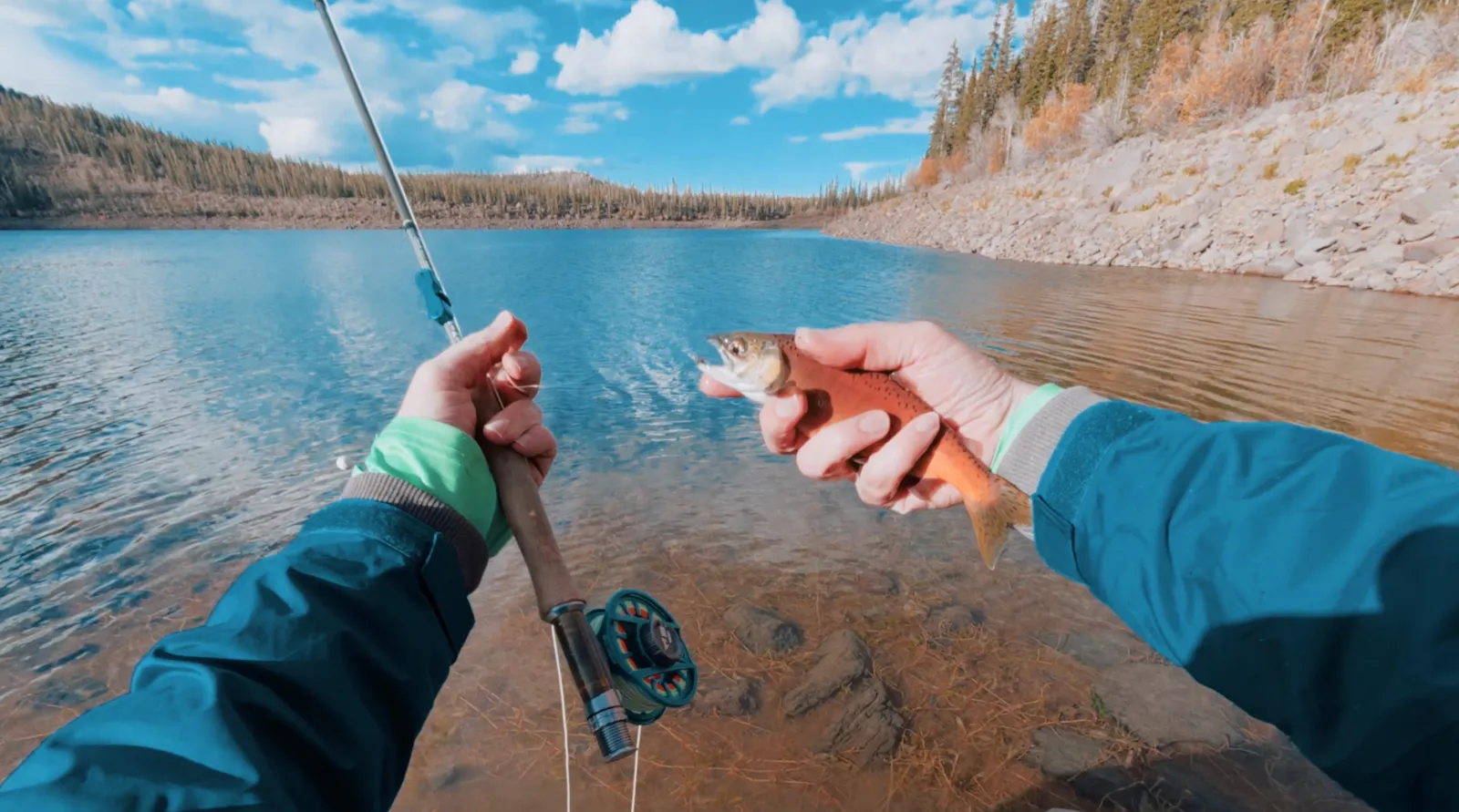
Written by Cameron Spanos
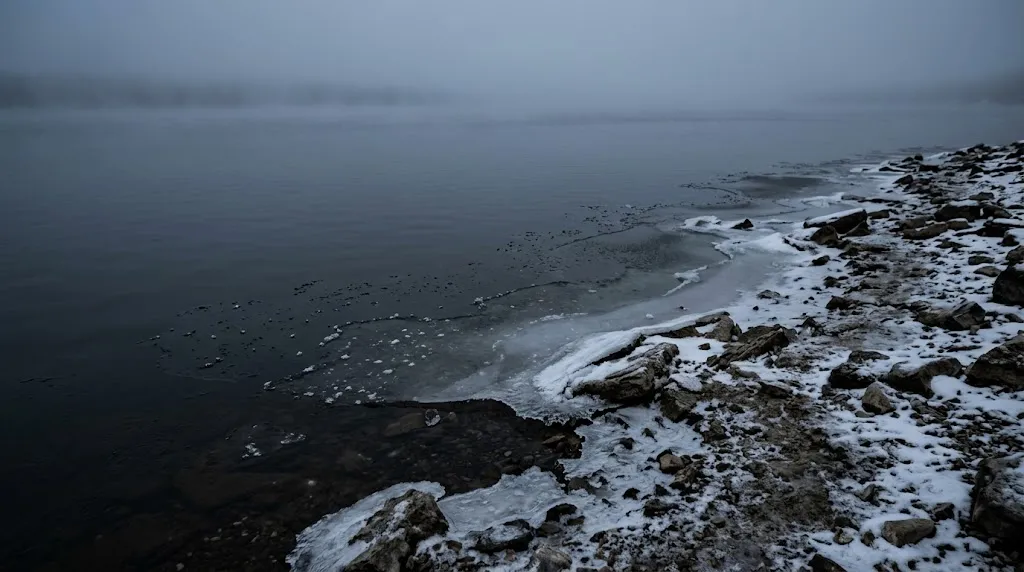
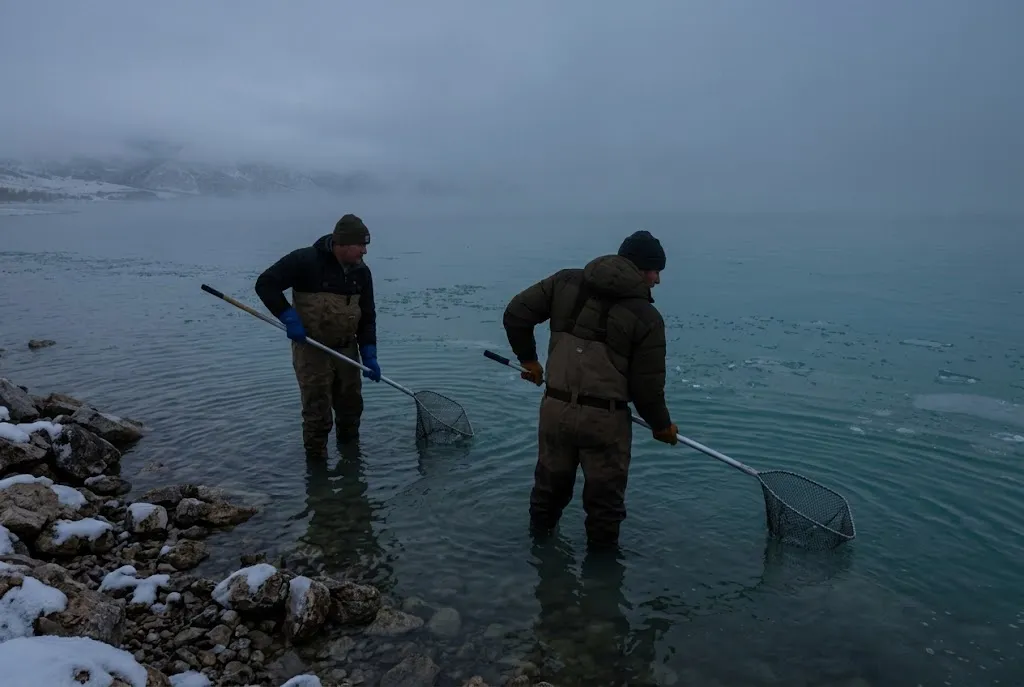
I fished a high lake on Utah's Boulder Mountain in early October 2026 to chase brook trout and tiger trout, with a box of small nymphs and zero thoughts about salmon. Kokanee were there anyway, colored up red and green in spawning dress and cruising the banks, and I caught some on those nymphs. That trip is why this post exists. Fly fishing for kokanee usually gets filed under "can't really be done," because kokanee live out in open water eating plankton, and the standard Utah playbook is a boat, a dodger and a downrigger. Up high, the rules bend.
The lake was Blind Lake, and I'm comfortable naming it because nothing else in Utah looks like it. More on that below. One thing up front: that was an accident, not a plan. If you want to go after these fish on purpose, the time is right after ice-off, and this post will tell you why.
Here's the video from that trip.
Why are there kokanee in a lake at 10,000 feet?
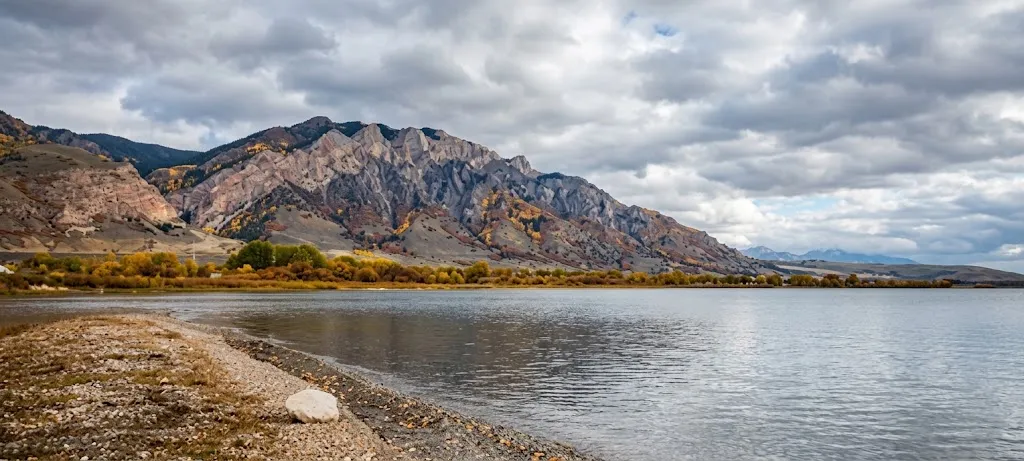
Because the Utah Division of Wildlife Resources put them there, on purpose, recently. Blind Lake sits at roughly 10,250 feet on the North Boulder Slope, covers about 52 acres and runs about 52 feet at its deepest, which makes it the biggest and deepest lake on the mountain. It was built up as a reservoir in the early 1900s and has long held splake, brook trout, cutthroat, rainbows and grayling.
Kokanee are the new arrival. DWR's public fish stocking reports list "Blind L NBS" in Wayne County getting kokanee every year since 2022:
- 2022: about 4,000 fish averaging 2.3 inches
- 2023: about 2,700 at 3.3 inches
- 2024: about 7,900 at 3.2 inches
- 2025: about 4,000 at 4 inches
- 2026: two loads totaling about 8,200 at 3.5 inches
The angling site kokanee.fish, which interviewed DWR biologists when the program started, reports that the first fish went in by horseback. Its account of the revised Boulder Mountain management plan says kokanee were picked to add a unique fishery, and that biologists expected Blind Lake to give shore anglers the best shot in the state at a kokanee from the bank (normally a tough ask with this species). The same piece quotes DWR biologists on the plan for the lake: "We'll stock it for 4-5 years and then stop stocking and let the population persist naturally."
Here's why I'm naming it. DWR's kokanee stocking records for 2022 through 2026 tell the story. Blind Lake is the only Boulder Mountain water on the list, and nothing else stocked with kokanee comes close to its elevation. The next highest kokanee water I could find in Utah is Stateline Reservoir on the Uintas' north slope, roughly 9,200 feet and big enough to troll. Fish Lake sits at roughly 8,800 feet and Strawberry at roughly 7,600. If you want a kokanee on a fly rod above 10,000 feet in this state, this is the lake.
How big do kokanee get in alpine lakes?
Small. The ones I caught were about 10 inches, and that's roughly what you should expect up high.
The early data from Blind Lake backs that up. According to a write-up on kokanee.fish that relays DWR survey results, a DWR employee ice fishing in December 2023 caught ten kokanee in the 7 to 8 inch range, and a July 2024 netting survey turned up two at 8 to 9 inches with body condition slightly below average. A 10-inch fish in October 2026, from a lake first stocked four years earlier, fits that growth curve. Stateline, the other high kokanee water, follows the same script: kokanee.fish, relaying DWR, describes its kokanee as numerous but small.
Compare that to the big reservoirs. According to kokanee.fish, George Sharman's 25.25-inch, 6.31-pound kokanee from Flaming Gorge is recognized as both the Wyoming and Utah record. That's an outlier, sure. But big-reservoir kokanee live in a different world from a 52-acre lake on top of a plateau.
Why the gap? Mostly food per fish. Kokanee eat almost nothing but zooplankton, and Idaho Fish and Game puts it bluntly in a piece on Coeur d'Alene Lake's spawners: kokanee size depends heavily on how many kokanee are in the lake. Lots of fish means each one gets less plankton and grows slower. Fewer fish, bigger fish. That year's Coeur d'Alene spawners averaged 15.4 inches for males and 14.8 for females, near record size, because abundance was down. Now put a few thousand new kokanee into a small lake every spring, on top of a growing season squeezed between a late ice-off and an early freeze. Small fish are the predictable result.
My take: don't hike to a high lake for a trophy kokanee. Go because it's one of the few places in Utah where a kokanee is within reach of a light trout rod from the bank, which you can't really say about Strawberry.
You might also enjoy: Fly Fishing Gifts Under $100: 5 Step-Up Picks for Anglers Past the Basics (2026)
What I saw in October, and why you should leave spawners alone
By October, the mature fish in Blind Lake were doing what kokanee do at the end of their lives. Kokanee typically mature at 3 to 5 years, spawn once and die. The 2026 Utah Fishing Guidebook describes what that looks like: the fish shift from silver to orange to deep red as spawning nears, and males grow the hump and hooked jaw. The ones I saw were red and green, the classic spawning look.
I want to be careful here. I don't know whether Blind Lake's kokanee spawn in the lake's inlet, on the shoreline, or successfully at all yet. kokanee.fish reports that DWR's data showed the inlet could support spawning, and DWR is still stocking the lake every year, which fits the plan above: hatchery fish first, natural reproduction later if it takes.
What I do know is that fall isn't the time to go looking for them. Spawning kokanee mostly stop feeding as their bodies break down, so the ones that ate my nymphs were most likely reacting, not feeding. They're in the last weeks of their lives, you can't keep them anyway (more on the closure below), and if natural reproduction is ever going to take hold at Blind Lake, it needs those fish left to finish the job. If you run into colored-up kokanee in the shallows while you're fishing for trout, let them be. Don't cast to them, don't drag them around, and never foul-hook them. Fish for the brook trout and tigers instead.
Fly fishing for kokanee: what actually works
Start with what kokanee eat. They're plankton feeders that live suspended in open water, which is exactly why trollers own this fishery and fly anglers mostly don't bother. That shapes everything about the fly approach.
Flies
Think small and subsurface. Small nymphs, midge larvae and chironomid patterns are the logical starting point for a fish that eats tiny stuff drifting in the water column. Wet flies make more sense than dries. Bright colors are worth carrying too. Pink, orange, purple and green are the kokanee standards on trolling gear, so a bead head with a little flash or a pink-tinged pattern earns a spot in the box.
The small nymphs I had on for brook trout were enough. I wasn't fishing anything special for them, and one of the heavier fish took a chironomid. In the moment I took them for splake, and you'll hear me call them that in the video.
Lines and depth
This is where the season matters most. Right after ice-off, while a lake is cold from the surface down, kokanee can feed within a few feet of the top. That's the window for a fly rod, and the easiest time for a floating line or a long leader. Once summer warms the top layer, kokanee drop to the thermocline, and a floating line is basically useless for them. An intermediate or full-sink line, counted down and retrieved slowly, is the only real fly option then, and in a lake as deep as 50-plus feet the fish can sit below where you can comfortably fish from shore. A float tube helps.
Retrieve and rod
Slow. Then slower. A long, slow hand-twist or a dead-still fly under an indicator, letting the fish come to it. Kokanee have soft mouths, so set gently and play them on a soft rod.
You don't need a heavy rod for 10-inch fish in a 52-acre mountain lake. I was fishing a 9-foot 5-weight at Blind Lake, and for this kind of water a 4- or 5-weight is plenty.
The high-lake season: when to go
A 10,000-foot lake runs on a compressed calendar compared to the reservoirs below it. Ice-off comes later than at the big reservoirs lower down, and the stretch from ice-off into early summer, when the water is cold top to bottom, is the time to look for feeding kokanee near the surface with a floating or intermediate line. If you want a kokanee on a fly rod, plan around that window.
You might also enjoy: Middle Provo Winter Fly Fishing: Midges, the Midday Window, and Snow-Day Access
Midsummer is the tough stretch. The fish slide deep and suspend, and from shore you're mostly fishing for trout. A float tube and a sinking line give you a shot at suspended fish if you want to work for it.
Fall belongs to the spawners. Fish for trout and leave the kokanee alone. The lake ices again after that, and the December 2023 kokanee mentioned above came through the ice, so winter is an option for anyone willing to make the trek once possession reopens.
Can you keep kokanee in Utah in the fall?
No. The 2026 Utah Fishing Guidebook says anglers may not possess kokanee salmon at any waterbody statewide from Sept. 10 through Nov. 30, to protect spawning fish. That covers every method, spearfishing included. Early October sits squarely inside that closure, so any kokanee caught in that window, at Blind Lake or anywhere else in Utah, has to be released by law. Better still, don't target them in the first place.
The rest of the year, kokanee count toward your trout limit. Statewide, that's 4 trout, kokanee and grayling combined. Blind Lake doesn't have its own entry in the guidebook's rules for specific waters, so statewide limits apply there, along with the Boulder Mountain rule that fishing from a boat with a motor is unlawful on most of the mountain's lakes (Wide Hollow, Pine Lake and Lower Bowns are the exceptions).
Several reservoir waters carry their own kokanee limits. Flaming Gorge allows 4 trout or kokanee combined (excluding lake trout), with no more than 3 kokanee. Porcupine allows 12, only 4 of which can be rainbow, cutthroat or brown, and you need at least 8 kokanee to take the full 12. Stateline adds a bonus 4 kokanee on top of the standard 4. Sheep Creek at Flaming Gorge closes to all fishing from Aug. 15 through 6 a.m. on the last Saturday of November. Twin Creek at Fish Lake is closed to fishing, and several Strawberry tributaries are closed year-round. Read the current Utah Fishing Guidebook before every trip.
Other ways to catch Utah kokanee (if you've got a boat)
If you came here wanting a limit of 16-inch kokanee for the smoker, the high country isn't your answer. Strawberry, Flaming Gorge and Fish Lake are, and they're trolling fisheries.
The basics, from Idaho Fish and Game's kokanee tips: troll slow, 0.9 to 1.5 mph. Use a dodger with a leader about 1.5 times the dodger length for a hoochie, and three times the dodger length or more for a spinner. Have something pink. Early in the season you can present gear within 5 to 10 feet of the surface and may not need a downrigger at all. Later in summer, fish often hold at 30 to 60 feet, and a cannonball weight can get you there without a downrigger.
First ice is the other good window, and possession reopens Dec. 1. Jigging a small spoon tipped with bait over deep water is the standard approach, and kokanee can hold anywhere from just under the ice to well down the water column.
Log the oddballs
A kokanee on a brook trout nymph at 10,000 feet is exactly the kind of catch whose details fade. Which bank, what time, how deep, what fly. That's what Bushwhack is for, so next spring you know where to start. You can try Bushwhack with a demo account and see how a few seasons of logs turn into patterns, or browse Bushwhack's features first.
Go for the brook trout. If you want a kokanee on the fly, come back right after ice-off.
Get fishing tips in your inbox
New guides, seasonal tactics, and gear picks — about once a month, no spam.