Bear Lake Cisco Dipnetting: When the Run Starts, Ice vs Open-Water Years, and How to Fill Your Limit
 Hudson Reed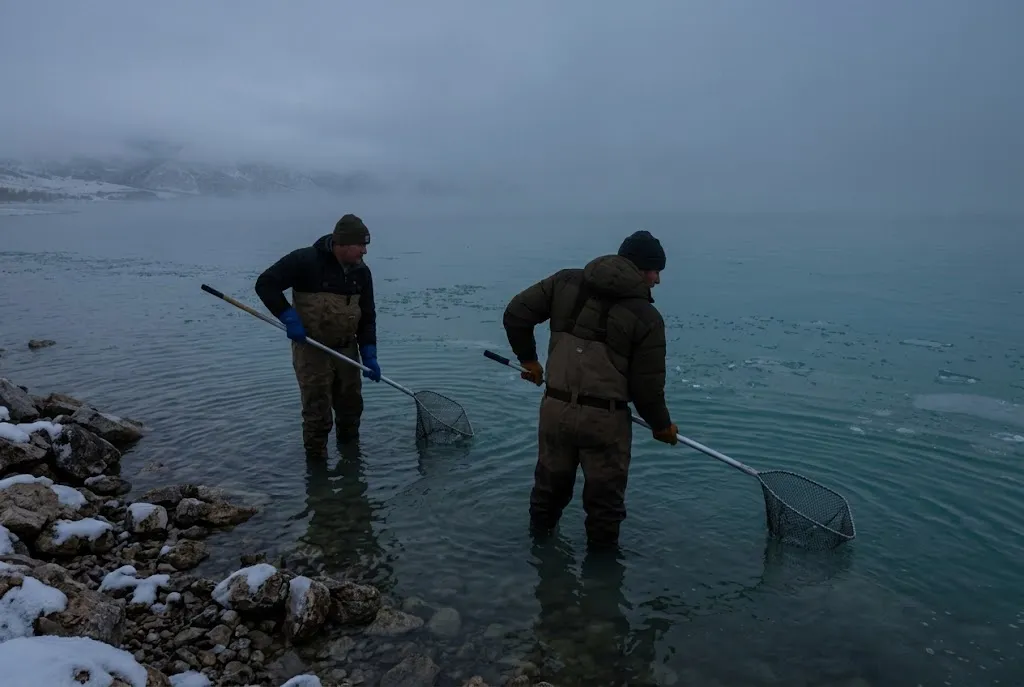
Written by Hudson Reed
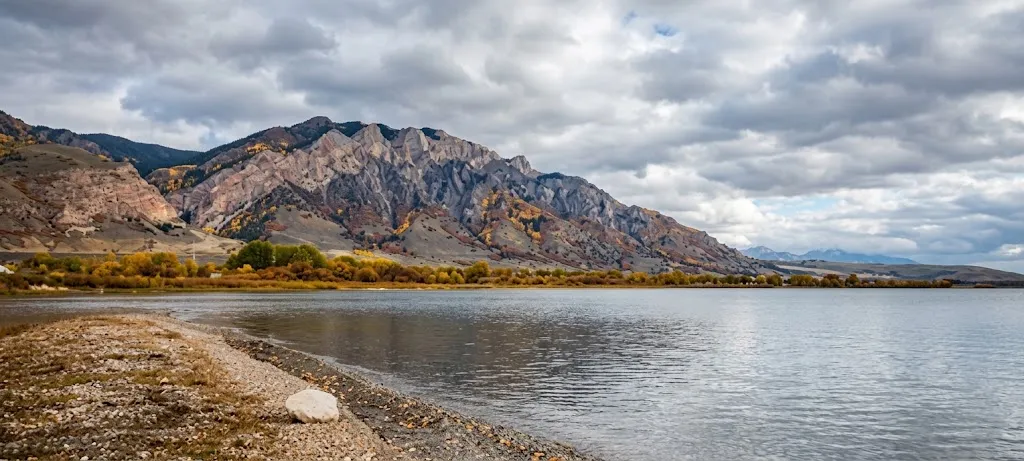
Don't plan your Bear Lake cisco dipnetting trip around a date on the calendar. Plan it around a fish report. The Bonneville cisco run at Cisco Beach happens every winter, but nobody can tell you in December which week it'll hit. Book a cabin for Winterfest weekend and hope, and you might nail it. Or you might stand in waders at dawn staring at empty cobble.
When does the Bear Lake cisco run start?
Typically the second half of January, give or take a week, with the peak lasting somewhere around one to two weeks. That's the honest answer. The 2026 Utah Fishing Guidebook describes the Bonneville cisco as "noted for its mid-January spawning concentrations along a rocky beach on the east side of Bear Lake." Utah State Parks has long pitched it as a 10-day to two-week window at the end of January. The Division of Wildlife Resources' December 4, 2025 fish report put dipnetting "around the end of January" and called it weather dependent, which is DWR-speak for "we'll tell you when it starts."
Recent years back that up. DWR's January 25, 2024 report announced the run had started that day, with the lake completely open, and said it should last at least a week and possibly longer.
So: watch the reports from roughly mid-January on.
Follow the DWR fishing reports on fish.utah.gov and call Bear Lake State Park before you drive. When the first boats pick up cisco on the rockpile, the word goes out fast. Then go. A run that starts on a Tuesday doesn't care that your trip was booked for Saturday.
What the fish are actually doing
Bonneville cisco live nowhere on Earth except Bear Lake. They're small, slender, pearly-silver whitefish relatives. Utah's guidebook says they rarely grow past seven inches, and Idaho's species guide says they're typically under eight. In winter they move onto the rocky, cobbled shoreline on the east side of the lake to spawn, and that's when they're stacked close enough to scoop. Spawning fish show a brassy band along the flanks, which is how you know you're seeing the run and not a few strays.
Bear Lake cisco dipnetting: ice years vs open-water years
Bear Lake doesn't freeze on schedule, and that single fact decides what your trip looks like. DWR's December 2025 report said the lake typically freezes near the end of January (right when the cisco show up), but plenty of winters it stays open through the whole run. The 2024 run happened on wide-open water.
Frozen year: netting through the ice
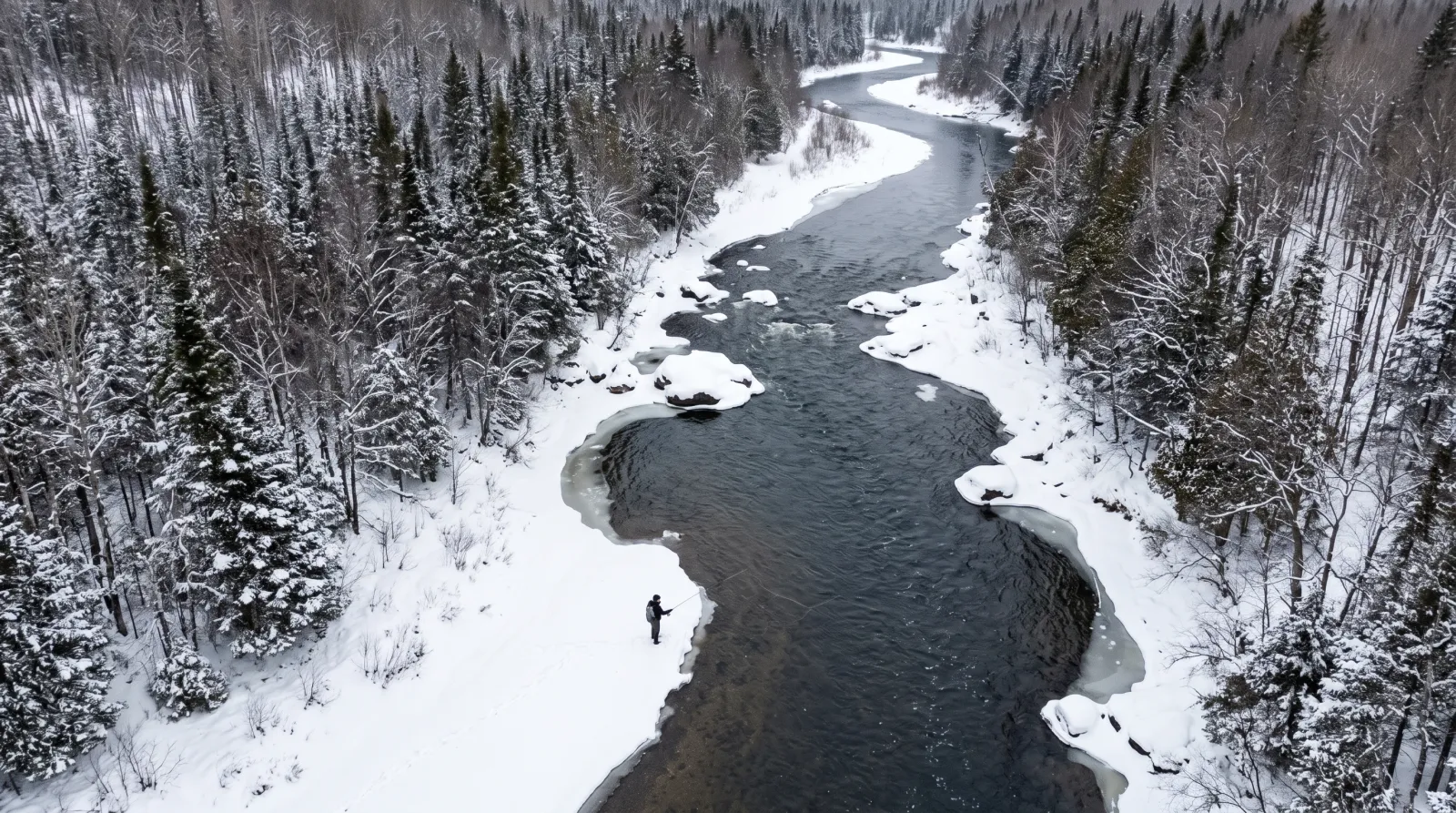
When there's safe ice, you walk out off Cisco Beach, cut a hole, and dip the net down to where the fish are moving along the cobble. Both states give cisco netters a break here that nobody else on the lake gets. Utah's guidebook says that when you're dipnetting through the ice at Bear Lake, the size of the hole is unrestricted (ice fishing for anything other than cisco, the hole can't exceed 18 inches). Idaho's rules say any size hole may be cut through the ice to catch cisco, an exception to Idaho's statewide 10-inch cap on ice holes.
That doesn't mean a bigger hole is better. A wide opening near shore on a lake with this reputation is a bad idea for you and the next guy who walks past it after dark. Cut what you need to work the net and no more.
And be skeptical of the ice itself. Big, deep lakes like Bear Lake don't freeze evenly, and a sheet that looks solid can hide thin spots. Four inches of new, clear ice is the commonly cited minimum for one person walking and drilling. On Bear Lake, I'd treat that as a floor, not a green light, and I'd want a spud bar tapping ahead of me the whole walk out.
Open-water year: waders and patience
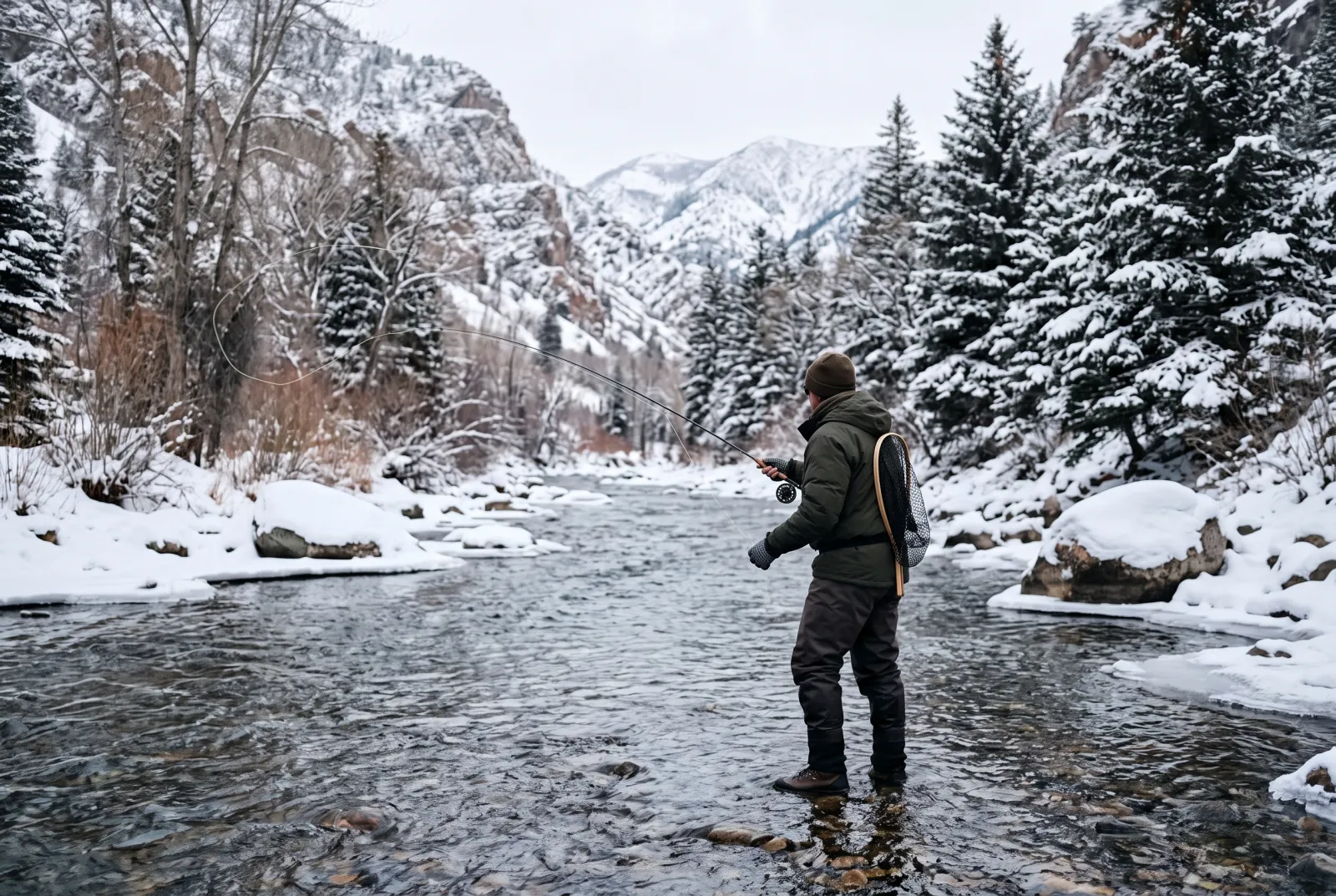
No ice? Then you wade. DWR's December 2025 report suggests waders and dipnetting from shore at Cisco Beach or around the Bear Lake State Park Marina. The same report has the most useful line in any cisco write-up: in open-water years the fish can see you, so they're "very wary." Keep a low profile and stay close to shore.
You might also enjoy: Ice Fishing Gifts Under $100: 8 Picks Sorted by What He Already Owns (2026)
That runs against instinct. Most people wade out to where they think the fish are. Don't. Ease in, stand still, let the school slide past along the rocks, and make short scoops instead of chasing fish with the net. A crowd stomping through knee-deep water pushes fish off the cobble, and then everyone's netting nothing together.
It's January in Rich County, so good waders, a dry change of clothes in the truck, and rubber gloves for handling wet nets in below-freezing air will matter more to your morning than any piece of fishing gear.
The jigging option most visitors skip
Here's my take, and some netters won't love it. In an open-water year, a boat and a jigging spoon will usually put more cisco in the cooler than a net from shore, and it'll do it with less standing around.
Utah's rules make this legal in a way that isn't legal almost anywhere else. Normally a snagged fish has to go back immediately. Bear Lake is the named exception: the 2026 guidebook says anglers may keep snagged Bonneville cisco taken through normal, legal fishing activities. DWR's December 2025 report recommends a larger jigging spoon, roughly 3/8 to 1 ounce, worked aggressively right on the rocky bottom in 40 to 60 feet of water, or near weed beds in 20 to 35 feet. That report put jigging action from mid-January through the first part of February, a longer window than the shore netting peak.
The 2024 run started with boat anglers catching cisco on the rockpile before shore netting picked up, according to DWR's report from that day, and State Parks staff were steering boat anglers to the east-side launches at First Point and Rainbow Cove. If the ramps and courtesy docks are open, the boat is a real option.
One gear note for Utah water. The guidebook bans a multipoint hook with a weight rigidly attached to the shank, or a weight hanging below it, unless the hook sits on an unweighted dropper line at least three inches long. Read that line before you build a cisco snagging rig.
Net size, licenses, and which state's rules apply
Bear Lake straddles the Utah-Idaho line, and the two states have a reciprocal deal. Under both states' current rules, a valid Utah or Idaho fishing (or combination) license lets you fish the whole lake, resident or nonresident. The catch: you follow the regulations of the state you're actually fishing in, and Utah's guidebook adds that even if you're licensed in both states, you may only take one daily limit each day. Cisco Beach sits on the Utah side of the east shore, so most dipnetters are fishing under Utah rules.
Net size is identical on both sides. Utah: the net opening may not exceed 18 inches in any dimension. Idaho: dip nets may not exceed 18 inches in any dimension. Measure the hoop yourself across its widest point. An 18-inch round hoop is fine. A 16 by 20 oval isn't.
Season is where they differ. Idaho's rules list dipnetting for cisco as permitted January 1 through February 15. Utah's guidebook allows cisco dipnetting at Bear Lake without listing a separate date window in the Bear Lake entry. If you plan to work the Idaho end of the lake, the calendar matters.
Kids, quickly. In Utah, anglers under 12 don't need a license and can take a full daily limit. In Idaho, children under 14 don't need a license, but nonresident kids under 14 have to be with a licensed adult and their fish count toward that adult's limit unless they buy their own license.
You might also enjoy: Best Ice Fishing Bibs Under $300 (2026): The Float Two-Piece, and Why This List Is Short
How many cisco can you keep?
Thirty a day, on either side. Both rulebooks list 30. Utah's statewide daily limits table lists Bonneville cisco at 30. Idaho's Southeast Region rules list the cisco limit at 30 for Bear Lake.
Possession is different in each state, so this is where people get sloppy:
- Utah: the guidebook defines a possession limit as two daily limits, but you only get the second limit in the field on an overnight or multiday trip where at least one limit was caught on a previous day, and a few more conditions apply. Fish stored at your permanent residence don't count. Read the "Additional limit in the field" section before you stack coolers.
- Idaho: the Southeast Region rules set the possession limit at three times the daily bag limit.
Thirty fish that rarely top seven inches is not a mountain of meat. It's a good fry, or a bag of bait. Which brings up the best reason to fill your limit: Utah's guidebook says dead Bonneville cisco may be used as bait only in Bear Lake. If you're staying a few days, a cooler of cisco turns into tipping meat for cutthroat on the same trip.
Can you keep a Bear Lake cutthroat without a clipped fin?
Yes. This trips people up more than anything else on the trip, because the old rule is still floating around in fish reports and forum posts. For years Utah only let anglers keep Bear Lake cutthroat with a healed fin clip, and fish with all fins intact had to go back. That changed. The 2022 Utah Fishing Guidebook announced that starting January 1, 2022, anglers may keep a daily limit of up to two cutthroat trout at Bear Lake even if the fins aren't clipped. The current 2026 Bear Lake entry simply reads "Limit 2 trout," with no clip requirement, and Idaho's Bear Lake rule is also a trout limit of 2.
So the clipped-fin and adipose-fin rule you may have heard about is history. It's still a two-trout lake on both sides, and that limit covers all trout combined, so a lake trout in the cooler counts against it too.
For cutthroat during cisco season, DWR's December 2025 report calls jigging the most popular winter method: 1/2 to 3/4 ounce tube jigs tipped with cisco or sucker meat. Fish range from 30 to more than 100 feet deep, but most anglers work 50 to 80 feet. The rock pile in front of Ideal Beach Resort, Second Point, Cisco Beach itself, and the four artificial rock piles just north of the State Park Marina were the spots that report named. If you're chasing the Utah Cutthroat Slam, the Bear Lake cutthroat is a lake-dwelling form of the Bonneville cutthroat, so check the Slam's own rules for which waters count before you assume this one checks a box.
Line count differs by state, and it's an easy ticket. Utah lets you fish up to two poles on any open area of the Utah portion of the lake. Idaho's Bear Lake rule is one line when ice fishing, or two with a two-pole permit, and no more than two baited hooks, flies, or lures per line.
A short game plan for run week
Watch DWR reports from mid-January. Once the run's confirmed, let the ice decide: frozen and safe means a spud bar, an auger, and an 18-inch net. Open water means waders and a low profile at Cisco Beach, or better, a boat and a spoon on the rocky bottom. Fill your 30, keep a few for bait, and spend the afternoon jigging cutthroat.
Then write it down. The run date, ice or no ice, which method produced, how deep. One season of notes is trivia, but five seasons will start to tell you whether the run tends to come early, late, or right on the DWR estimate, and that's the kind of pattern Bushwhack is built to track. Log conditions with each catch (you can try Bushwhack without an account) so next January's guess has some data behind it.
Last thing: rules change between guidebook editions. Before you go, pull the current Utah Fishing Guidebook and Idaho's fishing seasons and rules and read the Bear Lake entries yourself. They're short, and they're the final word, not this post.
Get fishing tips in your inbox
New guides, seasonal tactics, and gear picks — about once a month, no spam.