How to Start a Fishing Log: Complete Guide for 2026
 Cameron Spanos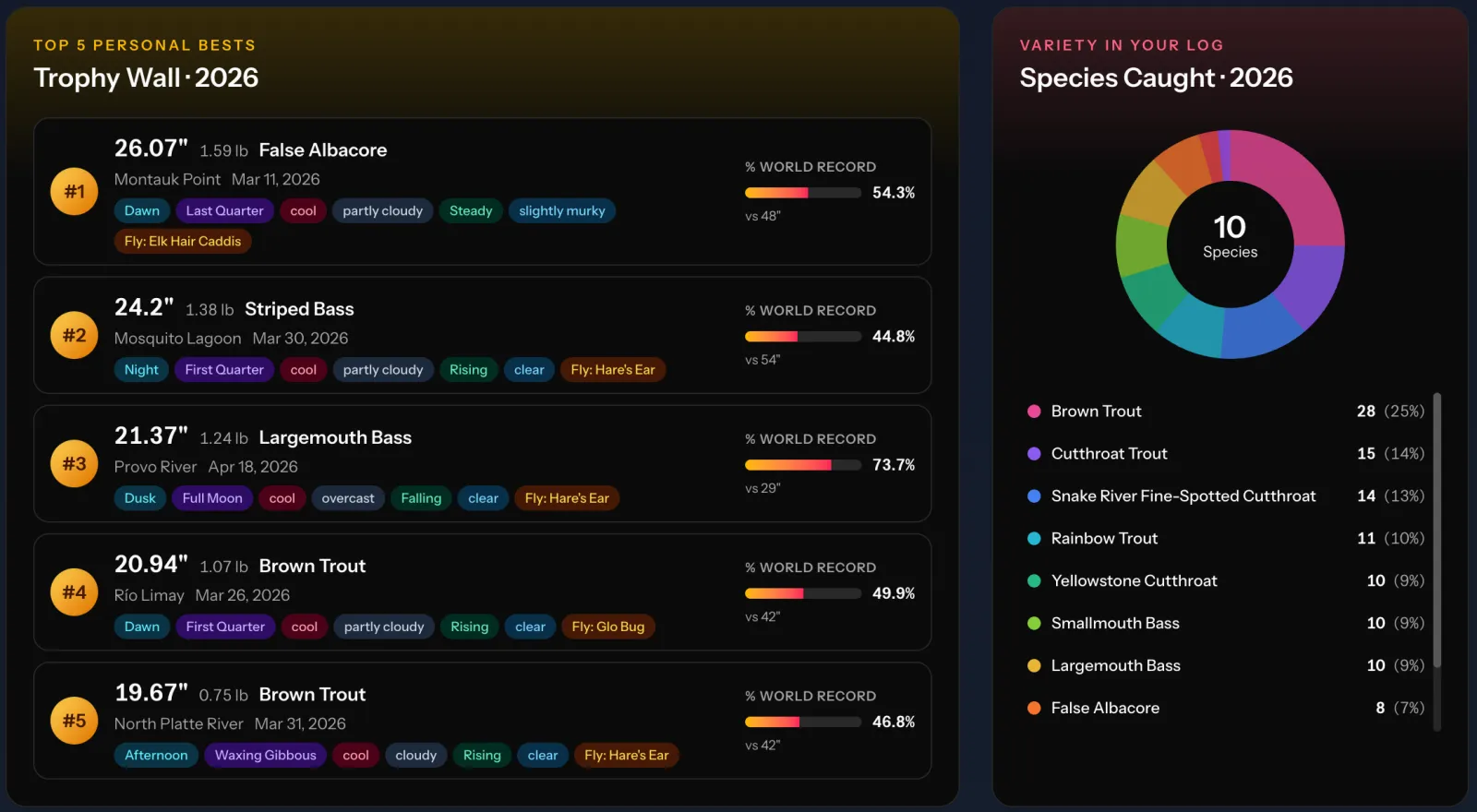
Written by Cameron Spanos
I didn't start keeping a fishing log because I'm organized. I started because I kept making the same mistake: I'd have an incredible morning on a river, tell myself "I'll remember this, the flow, the bug that was hatching, the run where every fish sat" and then three weeks later I'd stand in that same spot with no idea what I'd done right. The water looked different, the fish weren't where I left them, and the memory had gone fuzzy.
A fishing log fixes that. It turns a season of scattered good days into a pattern you can actually fish on purpose. This is how I keep mine, what's worth tracking, what isn't, and how to start one today without it becoming a chore you abandon by July.
Why Keep a Fishing Log?
The honest answer: your memory is worse than you think, and fishing is a game of small correlations. One trip tells you almost nothing. Forty trips tell you that the brown trout on your home water turn on the hour before a pressure drop, that you've never had a good day there in bright sun, and that the fly you swear by has actually only produced twice. You can't see any of that from inside a single outing. Only the log sees it.
Concretely, a log helps you:
- Spot the patterns you'd never notice trip-to-trip (time of day, flow, weather, moon, season) because they only show up across dozens of entries.
- Return to a spot and actually fish it right instead of re-learning it from scratch every visit.
- Find out which gear and flies genuinely produce versus the ones you just like tying on.
- Build a private map of your own water that no guidebook or app can give you, because it's yours.
- Measure whether you're actually getting better, not just whether last Saturday was good.
I'm not going to quote you a statistic about how much logging improves your catch rate. You'll see the studies thrown around with suspiciously precise numbers, and none of them hold up. The real case is simpler: fishing rewards people who pay attention, and a log is just attention you can read back later.
You might also enjoy: Pike Fishing for Beginners: The Freshwater Predator Most Anglers Overlook
What Should You Track?
The trap here is tracking everything, hating it, and quitting. The goal is the least you can record that still surfaces patterns. Start with the core, add conditions if you want, and treat the rest as optional.
The core (don't skip these)
- Date and time: and roughly when fish were active, not just when you arrived.
- Location: specific enough to return to: the access point, the run, the side of the river.
- Species and size: what you caught and how big, even a rough length.
- What worked: the fly or lure that actually produced, and the one that didn't.
Conditions (the part that pays off later)
- Weather and pressure: temperature, sky, wind, and whether the barometer was rising or falling.
- Water: flow (CFS), clarity, and temperature if you carry a thermometer.
- Moon phase: easy to dismiss, but it correlates with feeding windows more than most anglers admit.
- Time of day: dawn, midday, the last hour of light. Patterns cluster here hard.
Optional but nice to have
- Photos: a quick shot of the fish, the rig, or the run jogs the memory better than any note.
- Who you fished with and a line or two of notes: the "why" behind a great or terrible day.
The conditions are where logging earns its keep. Anyone can remember they caught a nice fish. Almost nobody remembers the flow was 180 CFS and falling under a waning moon, and that's exactly the combination you'll want to recognize next time.
Digital vs. Paper: What Actually Sticks
I kept a paper log for one season. It's romantic and it's a great way to lose a season of data to a wet vest pocket. The problem isn't writing things down. It's that paper can't read itself back. You can record a hundred trips by hand and still never see the pattern, because flipping through pages isn't the same as filtering and sorting.
Digital wins for one reason: it turns entries into answers. "Show me every trout I caught on a falling barometer" is a question paper can't answer and a database answers instantly. You also get GPS, photos attached to entries, and a backup so a lost notebook doesn't erase your year.
How I Log a Trip in Bushwhack
Full disclosure: I built Bushwhack because I wanted this exact workflow and couldn't find it. So this is the part where I tell you how I actually use it. Take the principles even if you log somewhere else.
You might also enjoy: How to Take Your Kids Fishing This Summer: A Parent's Practical Guide
When I get off the water, I log the catch: species, size, location, the fly that worked. The thing I'd been doing by hand and getting wrong, Bushwhack fills in automatically: it pulls the weather, water-relevant conditions, moon phase, season, and time of day for that spot and time, so every entry is enriched without me typing it. That matters, because the enrichment is the data I'd never bother to record manually and the data that turns out to predict the most.
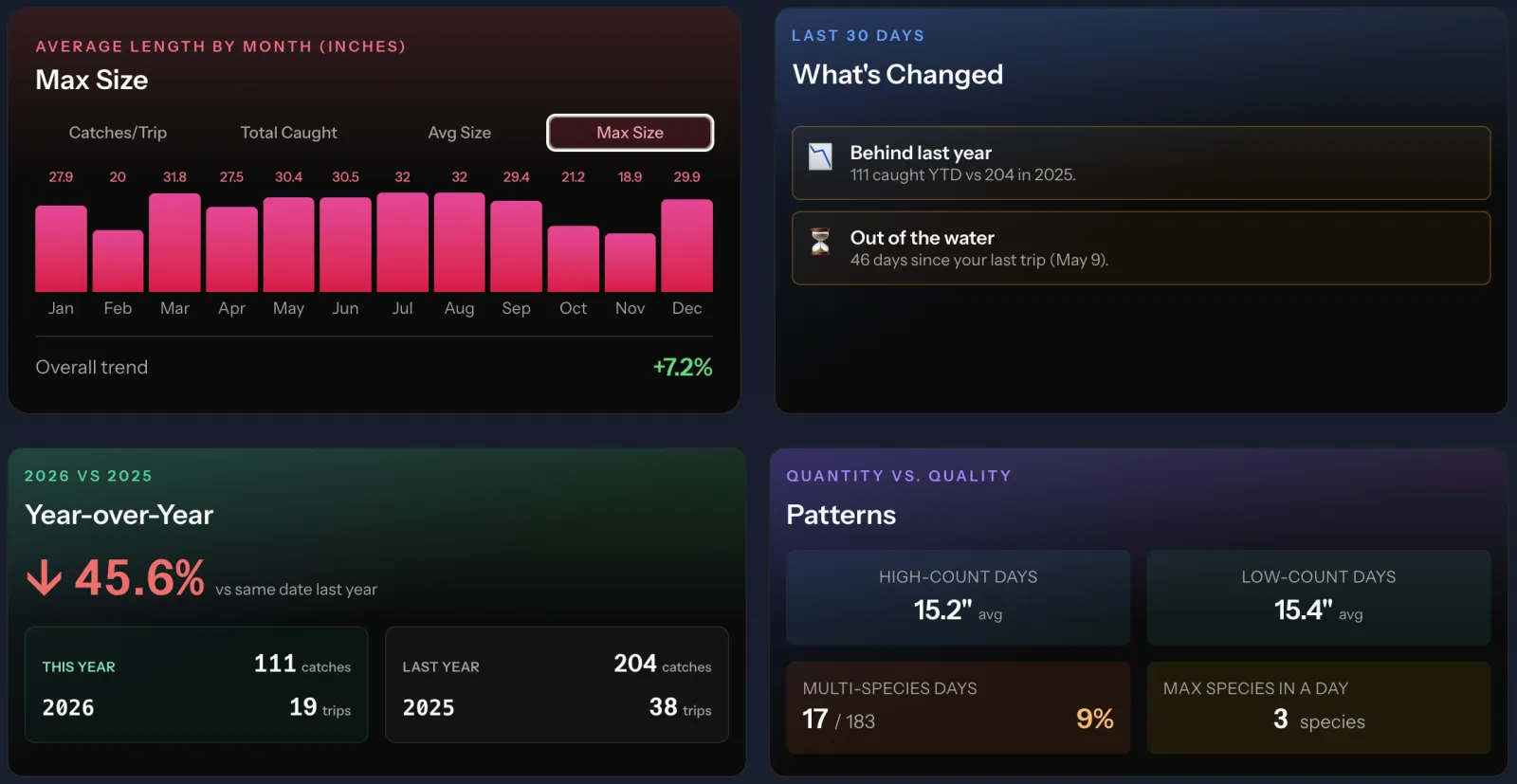
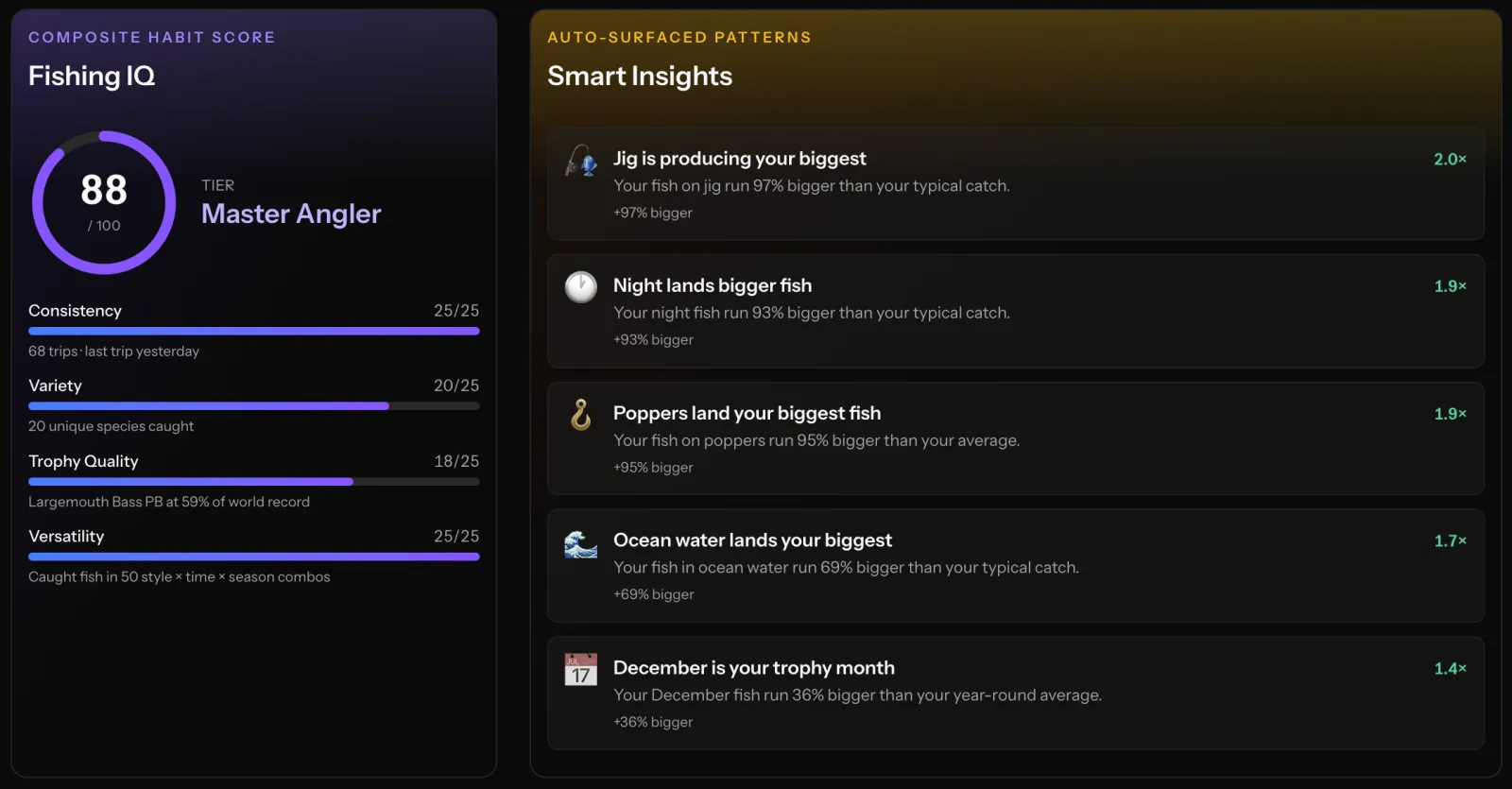
Then the part that actually changes how I fish: the dashboard reads it all back. Instead of a list of trips, I get my patterns: which conditions produce, which species turn on when, where I'm consistently doing well and where I just keep showing up out of habit. I set a couple of goals each season to keep me honest, and the app nudges me toward the species and water I keep neglecting. After enough trips, it stops being a journal and starts being a second opinion.
How to Start Today
Don't architect the perfect system. Start small enough that you'll still be doing it in three months:
- Log your very next trip: even one line. The hardest entry is the first.
- Track the core four (date, location, species/size, what worked) and nothing else until the habit sticks.
- Add conditions once it's automatic, or let a tool capture them for you so it's never a chore.
- Log the skunked days too. "Nothing, 2pm, bright sun, 90 CFS" is one of the most useful entries you'll ever write, because patterns are built from the misses as much as the fish.
Common Mistakes to Avoid
- Tracking too much. The most detailed log is the one you quit. Start minimal.
- Only logging good days. You'll learn more from the blanks once you have enough of them to compare.
- Writing it down but never reading it back. A log you don't review is a diary. The review is the whole point.
- Being vague about location. "The Provo" won't help you in a year. "Middle Provo, Bunny Farm, lower braid" will.
The Bottom Line
A fishing log doesn't make you a better caster or buy you better water. What it does is stop you from throwing away what you already learned. Every angler who's noticeably better than you is, in some form, keeping track, even if it's all in their head. Writing it down just makes that edge available to the rest of us. Start with your next trip, keep it small, and let the patterns find you.
Get fishing tips in your inbox
New guides, seasonal tactics, and gear picks — about once a month, no spam.