Egg Patterns for the Brown Trout Spawn: Fish Behind the Redds, Not On Them
 Cameron Spanos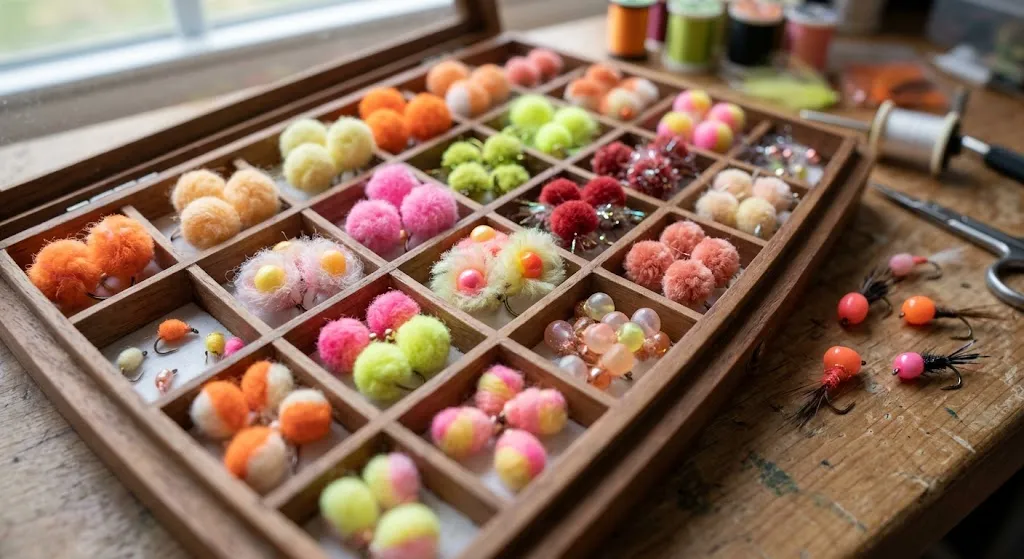
Written by Cameron Spanos
The best egg patterns for the brown trout spawn get fished in water most anglers walk straight past. Not the clean pale gravel where a hen is fanning out a redd. The dark trough forty feet below it, where half the fish in the run have lined up to eat whatever washes down.
That's the whole play, and it happens to be better fishing than standing on top of the spawners anyway.
Browns on gravel in October and November aren't feeding. The fish stacked behind them are feeding harder than they will at any other point in the year. One group is worth casting to and the other isn't, and I went through the research on that question in Should You Fish Near Spawning Trout Redds? An Evidence-Based Answer, so I won't relitigate it here. The two-line version: spawning fish get pulled off the nest, the redd gets abandoned or dug over by the next pair, and you've traded next spring's year class for a mediocre photo.
What follows is the part that post doesn't cover. Where the eating fish actually sit, what a brown trout egg really looks like at different points in the run, and how to rig so your drift stays in the bottom couple of inches while your boots never touch gravel.
The fish behind the gravel are the ones worth casting to
Find the redd first, then don't fish it. A redd reads as an oval of scrubbed-clean gravel, noticeably lighter than the bottom around it, usually sitting in shallow water at the head of a riffle or in the tailout of a pool. Once you've spotted one, turn and look downstream.
Below every active redd there's a soft seam where the tailspill dumps into deeper water, and that's the buffet line. Eggs that don't get buried roll along the riverbed, catch in the first depression they find, and collect in the slow water at the bottom of the drop. Rainbows, cutthroat, smaller browns and mountain whitefish will queue up in there in numbers that don't make sense until you understand what they're eating.
Whitefish deserve a word, because most anglers curse them. In November they're the most honest indicator you have that the drift is right. No whitefish usually means your fly isn't on the bottom.
The holding water you want is the first real trough, bucket or ledge below the gravel that you can cover without wading anywhere near it. Sometimes that's twenty feet down. Sometimes it's the next pool entirely. The exact distance matters less than the fact that you can fish it from a bank, or from water you've already confirmed is bare cobble.
What color are brown trout eggs, actually?
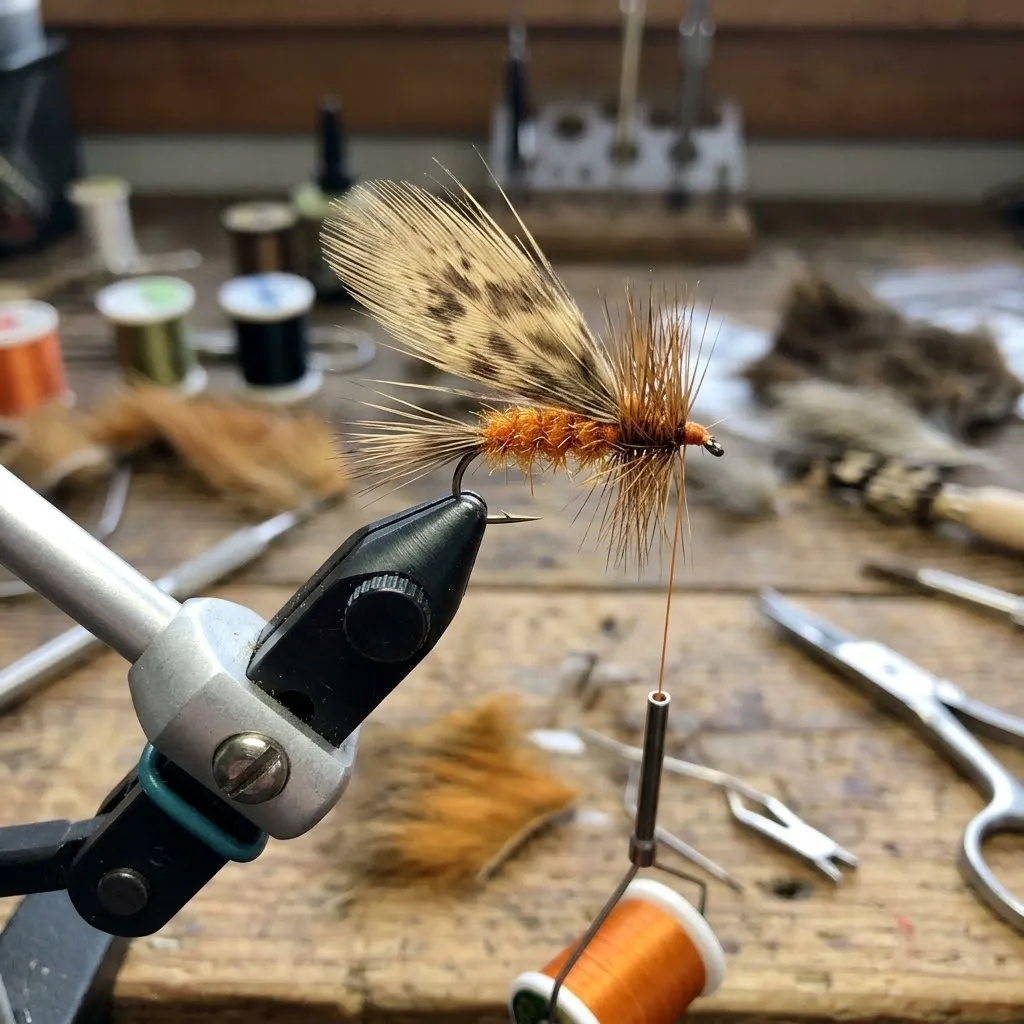
A fresh brown trout egg runs deep orange to reddish-orange, a shade under a quarter inch across, and it doesn't stay that color for long. Within a day or so of drifting it fades toward a cloudy apricot. An egg that's died and gone opaque turns pale cream or dull white. Those three stages are the entire color range you need in the box.
Carry fresh orange for the peak of the run, apricot or pale peach for the week or two after, and a cream or dead-egg white for the back half. Blood-dot versions of any of the three are worth having, because a real egg develops a visible eye spot as it sits.
Unpopular opinion: most anglers fish far too much hot pink. Pink is a carryover from steelhead and rainbow egg fishing, where it works as an attractor in colored water. On a clear November tailwater, in front of fish that have been watching real brown eggs tumble past for three weeks, apricot and dead-egg cream beat it most days. Pink earns its spot in high, off-color flows and not much else.
Sizing egg patterns for the brown trout spawn
A real brown trout egg is about four to five millimeters. That's a size 14 or 16 egg fly, near enough. Most of what sits in shop bins labeled as trout eggs is tied on size 8 and 10 hooks, which is closer to a salmon egg and functions as an attractor rather than an imitation.
You might also enjoy: Streamers for Pre-Spawn Brown Trout: A Water Temperature Playbook
Both have a job. On a big freestone running high and pushy, a size 8 with a chartreuse core is a flag, and you want the flag. On a clear tailwater in the third week of the spawn, that same fly is a beach ball and every fish in the run has already refused four of them.
I'd start at 14, drop to 16 when the drifts go quiet, and keep a few 18s for water that gets hammered. Going smaller has rescued more slow afternoons than changing color ever has. Note the size that produced alongside the flow and water temp when it did, because the size-to-flow relationship is the one that repeats, and it only becomes visible across two or three seasons of the same run.
Build the rig around the drift, not the fly
Eggs drift slower than nymphs. They're slightly negatively buoyant, heavy enough to stay down on the bed but not heavy enough to anchor, so they roll along the bottom instead of swimming through the water column. A weighted egg pattern fights all of that: it sinks on its own line rather than the current's, and it snags more. Fish unweighted eggs and move the weight up the leader instead.
- Run a standard 9-foot leader tapered to 4X, add roughly 20 inches of 5X fluorocarbon tippet, and tie an unweighted egg to the end of it.
- Off the egg's hook bend, drop an 18-inch tag with a small dark nymph on it (a size 18 zebra midge or a pheasant tail both work), because a surprising number of fish move toward the egg and then eat the little bug instead.
- Pinch your split shot about five inches above the egg rather than crimping it right at the fly, which leaves the egg free to roll with the current instead of getting dragged around by the lead.
- Set your indicator or sighter at roughly one and a half to two times the water depth, then adjust in small increments until you're ticking bottom every third or fourth drift.
Ticking bottom is the target, not a mistake. Eggs live in the last two inches of the column. If you never find a rock, you're fishing over the top of every fish in the run.
Then drift it dead. Genuinely dead. No mend that tugs the fly, no swing at the tail of the drift. An egg that accelerates or lifts off the bottom is doing the one thing a real egg never does, and fish that have watched a few thousand of them go by this month will notice.
How far below a redd should you fish?
Far enough that nothing you own crosses the gravel. Not your boots, not your fly line, not your split shot, and not a hooked fish. On most trout rivers that works out to the next piece of holding water downstream, somewhere between thirty and a hundred feet.
The fly line is the part people forget. You can stand well clear of a redd and still lay eight feet of line and a pair of BB shot straight across it on every single cast, dragging lead through incubating eggs at a rate that would embarrass you if the gravel were see-through.
Then there's the hooked fish. A brown you stick in that trough is going to run upstream, because that's what browns do, and if the only thing between you and the redd is open water you're about to walk a thrashing 18-incher straight through the nest. Set up so the fight happens downstream or across from you, never up into the gravel.
The wading is the part that actually hurts
Fly shop arguments about the spawn usually circle around whether an egg counts as a real fly. That's a hobby argument and it has nothing to do with fish welfare. Where you put your feet is the part with a body count.
Roberts and White, writing in the North American Journal of Fisheries Management in 1992, walked anglers over artificial redds and found that a single wading event shortly before hatching killed up to 43 percent of the eggs, and wading twice daily across the full incubation period killed up to 96 percent of eggs and pre-emergent fry. The effect ran about the same for brown, rainbow and cutthroat trout. One pass. Up to 43 percent.
Trampling does not have to be an angler to do damage, and the scale of the effect shows up in the livestock literature. US Forest Service modeling of cattle trampling on westslope cutthroat redds found that trampling rates as low as 25 percent of redds could lead to negative population growth. Different animal, same gravel: the number of redds that get stepped on is what moves the population, not who did the stepping.
You might also enjoy: Best Vacuum Sealer for Fish Fillets (2026): What Survives Wet Fish
Here's the piece almost nothing written about fall ethics mentions. The eggs stay in the gravel long after the fish leave. The Montana Field Guide puts brown trout spawning in October through December, with eggs hatching the following February through April and an incubation clock of about 50 days at 50 degrees, which stretches out a long way at real winter water temps. So the redd you carefully avoided in November is still a live redd in March, sitting in the same gravel with no fish standing over it and no visual cue that anything's down there. Fall spawning ethics are really winter wading ethics.
The practical version is simple. Cross rivers on dark cobble and in water over knee deep, never on pale shallow gravel, from October right through fry emergence in spring. If you can't tell whether a shallow bar has redds on it, walk around it.
Closures change, so read the current book
Some states protect spawning water directly with seasonal closures on tributaries and specific reaches. Others leave the whole question to the angler. Those rules also get revised, so a closure a forum post described three seasons ago may or may not still be on the books.
Pull up your state agency's current regulations before a fall trip, the way you'd check Montana FWP's fishing regulations or New York DEC's freshwater fishing regulations, and look specifically for tributary closures, reach-specific dates and gear restrictions. Four minutes of reading.
If you fish Utah, this is worth thinking about on the crowded tailwaters. Lower Provo River fly fishing in fall draws real pressure at exactly the time browns are on gravel, and heavy traffic plus shallow spawning water is how accidental trampling happens even among anglers who'd never cast at a fish on a redd.
When to leave the eggs in the box
Before there are eggs in the water, an egg fly is just an orange dot. Early fall, when browns are staging and moving but nothing has been dropped on gravel yet, a streamer is the better tool by a wide margin. Streamers for Pre-Spawn Brown Trout: A Water Temperature Playbook covers that window and the temperatures that open it.
The egg bite has a back edge too. Once the run winds down and the last eggs have washed out or been eaten, usually a couple of weeks after the final redds go quiet, fish switch back to midges and small mayfly nymphs and the egg stops earning its place. Trailing one behind an anchor fly through December is fine. Leading with one isn't.
And on water with no spawning population upstream of you, an egg is an attractor and nothing else. That's fine, it'll still catch fish, just don't fish it like an imitation and don't expect the color stages to matter.
One habit worth building this fall: mark the gravel bars where you actually see redds. Log the spot, log the date, note the flow. Next October you'll know which shallow crossings to skip before you're standing in one, and that note keeps paying every year after. It's what a fishing log is genuinely good for.
The frustrating thing about the brown trout spawn is that the ethical version of it is also the more productive version. Fish behind the redd eat. Fish on the redd don't. Every angler wading onto the gravel to swing a fly at a locked-up hen is working harder for worse fishing and pulling eggs out of the river to do it.
Find the trough. Fish it slow. Stay off the light gravel until spring.
Get fishing tips in your inbox
New guides, seasonal tactics, and gear picks — about once a month, no spam.