Diamond Fork Fly Fishing: The Sixth Water Drainage
 Cameron Spanos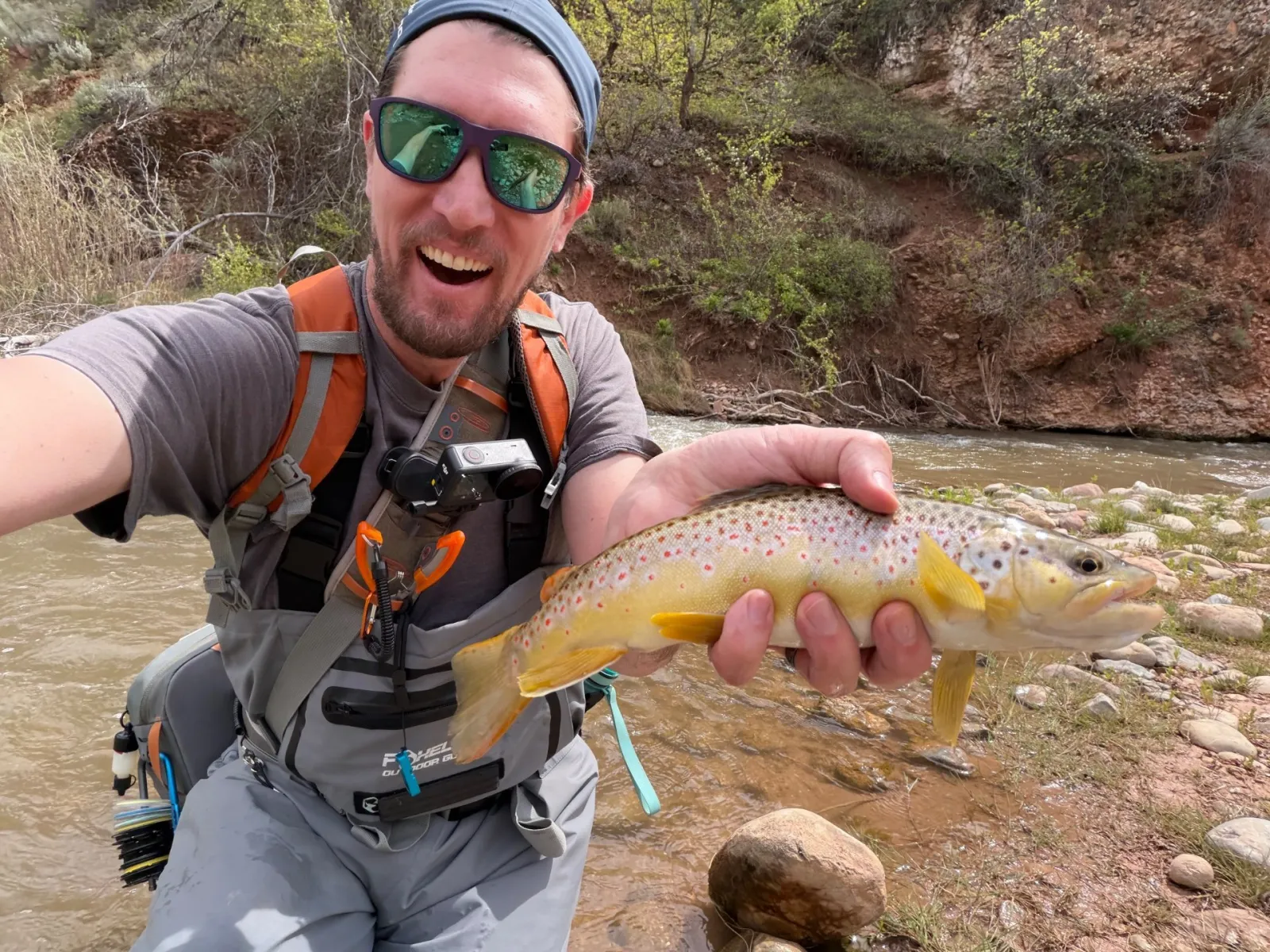
Written by Cameron Spanos
The Diamond Fork was running high and the color of chocolate milk when I pulled into the canyon. Snowmelt had hammered the upper drainages all week, and the river looked like it had swallowed half the mountain on the way down. Most anglers would have turned around. I almost did.
Instead, I rigged up. What followed was one of the strangest, most frustrating, most fun afternoons I've had on Utah water this year. The fish were hungry. Aggressively hungry. They hammered everything I drifted past them. The problem wasn't getting bites. The problem was that every single one of them seemed to have read a book on lockpicking. I started calling them Houdini fish after the fifth nice brown shook free before I could get a net under it.
By the time I drove out, I had a half-dozen browns to hand, one beautiful Bonneville cutthroat that made the whole trip worth it, and a working theory about why Diamond Fork fishes better blown out than most anglers think.
Why Diamond Fork Fly Fishing Got Better After the Pipeline
The hydrology here is engineered. The U.S. Department of the Interior's Central Utah Project Completion Act office runs a system that conveys an annual average of 101,900 acre-feet of CUP water through the drainage. The crucial number for anglers: roughly 50 cfs is released through the Strawberry Tunnel to maintain a 60 cfs winter minimum on Diamond Fork Creek, with summer flows near Three Forks holding around 45 cfs and winter flows near 35 cfs, according to CUPCA documentation.
That stability is the whole story. A small tailwater-style stream that does not blow out in July is a rare thing in this part of Utah. Strawberry Reservoir water comes through cold. The lower drainage stays fishable when freestone neighbors like Hobble Creek are running like chocolate milk in spring runoff.
One thing the agency reports do not say loudly enough: the trout density in the upper Diamond Fork and Sixth Water sections is meaningfully higher than the lower river. If you only ever fish near the campgrounds, you are fishing the worst water in the system.
Sixth Water vs. Diamond Fork proper
People mix these up constantly. Diamond Fork Creek is the main stem that flows down into Spanish Fork Canyon. Sixth Water Creek is a tributary that joins it at Three Forks, named because it was the sixth drainage counted up from the canyon mouth in old Forest Service mapping. Fifth Water is the other tributary at Three Forks, the one with the hot springs.
Most fishing pressure piles onto Fifth Water because of the hot springs hike. Sixth Water, hiking the opposite direction from Three Forks, sees a fraction of the foot traffic. That is the entire game.
How Do You Access Diamond Fork and Sixth Water?
Take I-15 to exit 258 and head east into Spanish Fork Canyon on US-6. Drive about nine miles up the canyon to Forest Road 029, signed Diamond Fork Canyon Road. Turn left.
From there you have decisions to make.
- The lower stretch (first three miles up FR-029): roadside pullouts, easy walk-down access, mostly stocked rainbows and a few wild browns. Fine for kids. Crowded on summer weekends.
- Diamond Campground area: more wild fish, still drive-up access, decent pocket water.
- Three Forks trailhead: the parking lot at the end of the maintained road, about 10 miles up. This is where the actual fishing starts. From here you can hike up Sixth Water (left at the confluence) or up Diamond Fork proper toward Ray's Valley.
- Ray's Valley Bridge: above and below this bridge is the spot anglers chasing Bonneville cutthroat target, per the Utah Cutthroat Slam program. Long drive on dirt to get there.
The Forest Service closes the upper portion of the road in winter and after major storms. Check current status before you drive up. If the gate at Diamond Campground is shut, you are walking the rest. Some seasons that adds six miles each way.
The hike-in distance that matters
From Three Forks, the productive water on Sixth Water is the first quarter to half mile. After that the trail climbs away from the creek and access gets technical. Plenty of anglers blow past the lowest pools because they look small from the trail. Those pools hold fish. Slow down.
You might also enjoy: Best All-Around Trout Fly Rod 2026: Sage R8 Core vs Orvis Helios vs Scott Centric vs Douglas Sky G
The Regulation Most Anglers Get Wrong
From Springville Crossing upstream to the headwaters (which covers basically every stretch worth fishing), Diamond Fork is artificial flies and lures only per the Utah Division of Wildlife Resources guidebook. No bait. The same section is closed to the possession of cutthroat trout. All other trout have an aggregate limit of 8.
I see this missed constantly in online posts. People show up with PowerBait expecting stocker rainbows and find out at the truck that they have been fishing illegally all morning. Read the eRegulations page for Diamond Fork before your trip. Print the page if you have to.
The cutthroat closure is the one that matters most. The Utah DWR and Trout Unlimited have invested heavily in restoring Bonneville cutthroat to this drainage, particularly after the 2018 wildfires reset the fishery. Releasing every cutthroat you catch is not optional and not a suggestion.
What Are the Best Hatches on Diamond Fork?
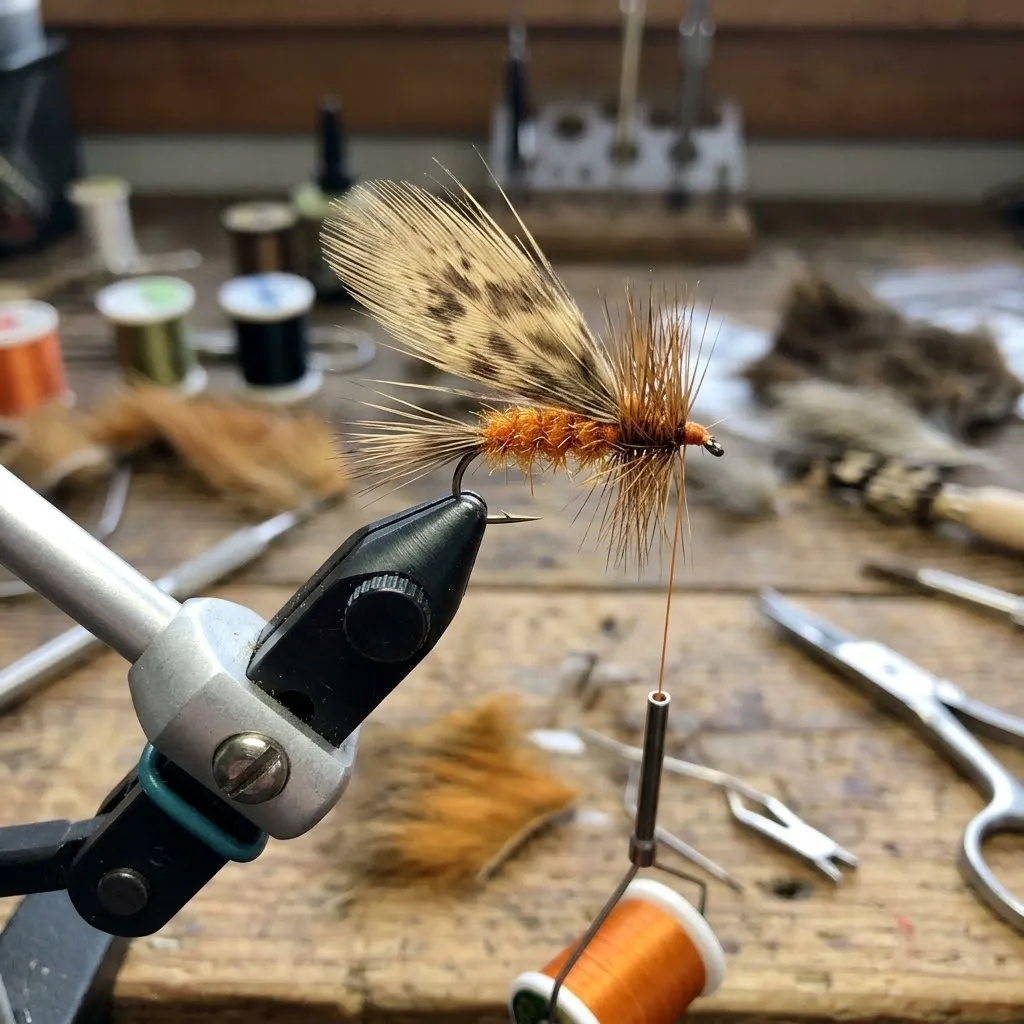
Diamond Fork is not a hatch-of-the-century river. It is a generalist's river. The Utah DWR's regional reports describe reliable caddis, mayflies, and midges from late spring through fall, with terrestrials taking over in summer. October Caddis fish well from mid-September into mid-October: bigger than most caddis you will throw, size 8 or 10 in a burnt orange body.
Practical fly box for the drainage:
- Size 14-16 elk hair caddis, tan and olive
- Size 16-18 parachute Adams
- Size 14 hopper patterns from mid-July through first frost: Chubby Chernobyl in tan, Morrish hopper in pink
- Size 16-18 pheasant tail and hare's ear nymphs as droppers
- Size 12 stimulator for prospecting pocket water
- Size 8 October Caddis adult and pupa for fall
The hopper-dropper rig is the default for this drainage from late June through September. Big foam dry on top, beadhead nymph 18 to 24 inches below. Cast it tight to undercut banks. Move every three drifts if nothing eats.
Why the dry-dropper is overrated on the lower river
Hot take: most of the lower Diamond Fork is too shallow and too pocket-water-y for a long dropper to do its job. You spend half your time hung up on rocks. Switch to a single dry, or run a very short tag (10 inches max) when you are working the lower mile. Save the long-leader hopper-dropper for the bigger pools above Three Forks where you actually have water column to fish.
When Should You Fish Diamond Fork?
The window most anglers miss is late September through early November. Hopper bite is fading, runoff is a memory, October Caddis are popping, and the brown trout pre-spawn aggression starts kicking in. The canyon is empty. The cottonwoods light up yellow.
Summer fishing is fine but pressured. Spring is unpredictable here: even with the regulated flows, snowmelt can still color the lower stretches in May. Winter is technically open and the flows stay around 35 cfs, but the road closure usually makes it more of a snowshoe trip than a fishing trip.
Best months in order, based on consistent fishing reports across multiple Utah-specific outlets:
You might also enjoy: Best Fly Reels for Trout Under $300 (2026): 3 Picks I'd Actually Buy
- October: fall colors, pre-spawn browns, October Caddis, no crowds.
- July through August: terrestrial fishing peaks, hopper-dropper carries the day.
- June: runoff settles, cutthroat get aggressive in Sixth Water.
- September: solid all month, transitional.
- April-May: go if flows are clear, otherwise the Provo is a better bet.
The Hot Springs Problem
Fifth Water Hot Springs gets featured on every Utah travel blog with a pulse. The result is a parking lot at Three Forks that fills by 8 a.m. on weekends and a steady stream of foot traffic up the trail. Some of that traffic is anglers. Most of it is people in flip flops carrying coolers.
For your fishing, this matters in two ways. First: park early or park elsewhere. There are pullouts a mile or two below Three Forks where you can rig up and walk in along the creek. Second: the Fifth Water tributary itself fishes worse than Sixth Water specifically because of the human pressure. Skip Fifth Water unless you want to fish at dawn before the hot springs crowd shows up.
Hike up Sixth Water instead. Different drainage, different vibe, almost no foot traffic past the first half mile.
Safety Notes Most Guides Skip
Great Basin rattlesnakes are active in this canyon, and recent regional fishing forecasts from the Utah DWR have specifically called out angler encounters along riverbanks and on the trails. They are usually under sage at midday and out hunting at dusk. Wear boots, not Tevas. Look before you sit down on a rock.
The road is the other thing. FR-029 turns into a moonscape of washboard the further up you go, and after a heavy storm the upper section gets gated by the Forest Service. A 4WD is not strictly required to reach Three Forks, but a vehicle with low clearance will struggle past Diamond Campground.
Cell service dies about a mile past the canyon mouth. If you go up alone, tell someone where you parked and when you expect to be back.
Logging the Drainage
Diamond Fork rewards anglers who keep notes. The flows are stable enough that patterns repeat year over year: same pools producing in the same conditions, same hatches lighting up on roughly the same calendar window. That is exactly the kind of water where a real fishing log earns its keep. Track water temp, flow, and what you threw against what worked, and a year later you will know when to be there. Try Bushwhack if you want to log catches and conditions on small drainages like this one without flipping through a paper notebook in the wind.
For broader Utah water context, see how Bushwhack handles spot-by-spot pattern data across multiple drainages. Anglers fishing both Diamond Fork and the Provo year-round get useful crossover signal: Diamond Fork conditions often telegraph what the upper Provo will do a week later.
One More Thing
Do not skip the side channels at Three Forks. The confluence pool gets pounded. The braids and skinny side channels just upstream get walked past. A size 16 elk hair caddis, dead drift, in six inches of water against the willows, is where I have watched friends pull the brightest browns of the day while everyone else fished the obvious slot.
Read the water like the small stream it is. Diamond Fork is not the Green. You are not looking for a 200-yard run. You are looking for a refrigerator-sized rock with two feet of water behind it.
Get fishing tips in your inbox
New guides, seasonal tactics, and gear picks — about once a month, no spam.