Daytime Channel Catfish: How to Catch Cats Midday in Summer Heat
 Hudson Reed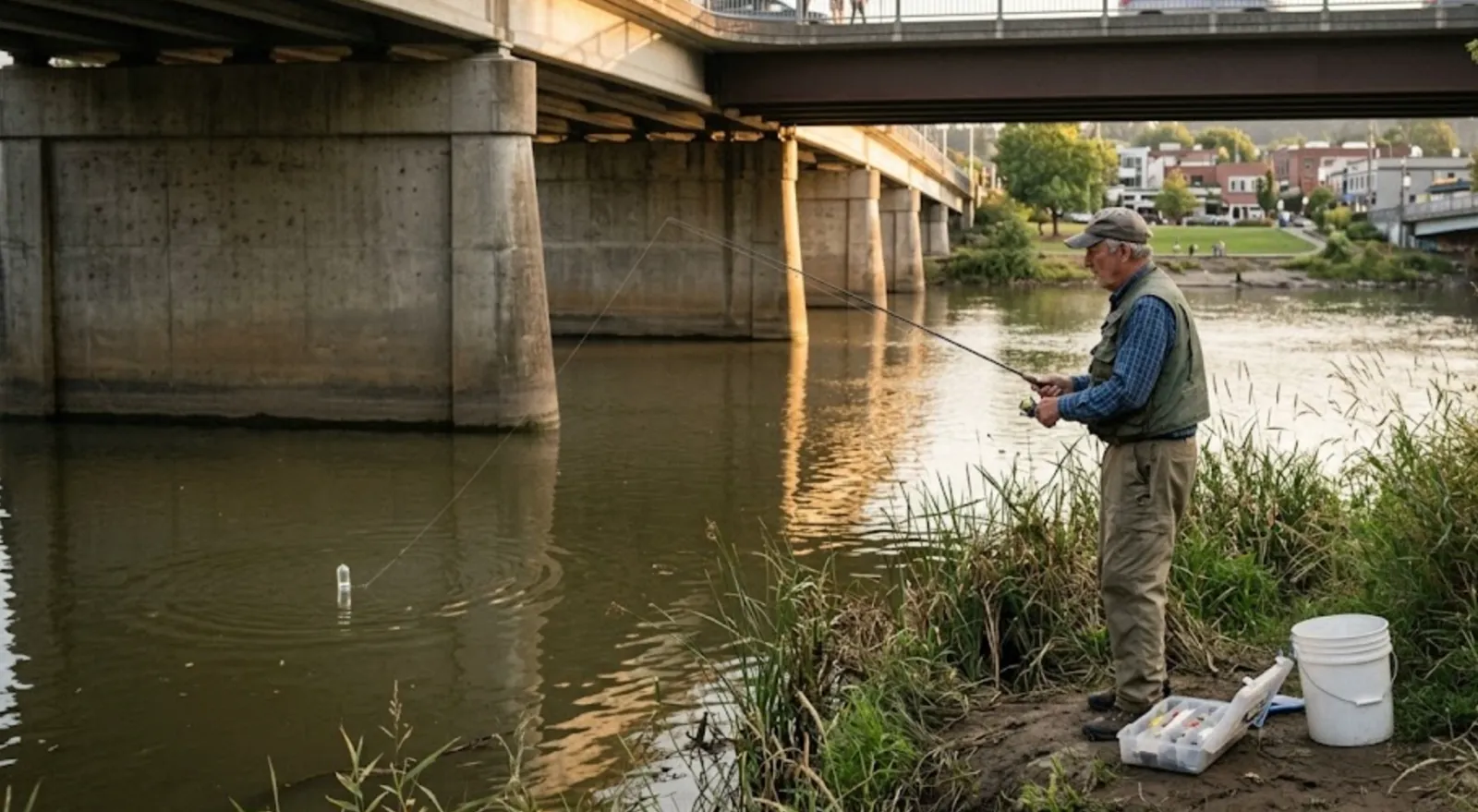
Written by Hudson Reed
The tired advice is that summer catfish are a nighttime game, that if you want a bent rod in July you'd better pack a headlamp and settle in after dark. I think that's lazy. Daytime channel catfish are absolutely catchable in the worst heat of the year, and the anglers hauling them in at noon aren't lucky, they're just fishing the right depth. Brad Durick, a well-known Red River catfish guide, fishes daylight hours almost exclusively and puts clients on fish through the middle of the day. So can you.
The catch is that a channel cat in 95-degree air lives a completely different life at 1 PM than it does at midnight. Figure out where it goes and what it'll eat while it's there, and the daytime bite opens up.
Where daytime channel catfish go when it gets hot
Come mid-morning, channel cats leave the flats and shallow feeding lanes they cruised at dawn and slide into the deepest, coolest water they can find. In most systems that means holes and channels in the 20 to 40 foot range, according to summer catfish guides at Mossy Oak and other catfishing outlets. On smaller rivers the "deep" hole might only be 12 to 20 feet, but the principle holds: they drop down, out of the sun and away from boat traffic.
They aren't gone. They're stacked.
This is the part most bank anglers miss. A daytime channel cat isn't spread out hunting, it's holding tight to a specific piece of cool, comfortable water and it'll stay there until the light drops. Find that water and you've found the whole neighborhood. Miss it by fifteen feet and you'll swear the lake is dead.
On a river, look for the outside bend of a channel where current has carved a scour hole. Below dams, where the release water runs cooler, is another daytime magnet. On a lake or reservoir, hunt the old creek channel, deep humps, and the base of steep points that fall fast into deep water. If you've got a way to track your spots and revisit the productive ones, the summer daytime pattern gets repeatable fast, because these holes hold fish year after year.
Why do channel cats go deep in the heat?
Two reasons, and they're linked: temperature and oxygen.
Channel catfish feed most aggressively in water between 70 and 85 degrees, with roughly 75 to 85 being the sweet spot for metabolism and feeding, based on the temperature ranges cited across fisheries and angling sources. Push past 90 degrees, though, and things go sideways. Warm water holds less dissolved oxygen, and once surface temps climb into the low 90s the shallows can get uncomfortable and oxygen-poor. The fish respond by dropping to cooler layers.
But here's where a lot of anglers overcorrect and fish too deep. On many lakes in summer, the water stratifies into layers, a warm top layer, a transition zone, and a cold bottom layer. That transition zone is the thermocline, and below it dissolved oxygen crashes. Catfish won't hold much below the thermocline because there's little oxygen down there to breathe.
So the money zone isn't "as deep as possible." It's the band of water right at and just above the thermocline, where it's cool but still oxygenated. On a decent sonar unit the thermocline shows up as a fuzzy horizontal line, often somewhere in the 15 to 30 foot range depending on the lake's clarity and fertility. Drop your bait to that line and hold it there. On rivers, current keeps things mixed and oxygenated, so this is far less of an issue, one more reason moving water fishes better than lakes in the dead heat.
Bridge crossings, shade, and other daytime structure
If I had to pick one daytime summer spot to fish blind, it'd be a bridge crossing.
You might also enjoy: How to Fish a New Lake: A First-Trip Playbook for Breaking Down Unfamiliar Water
Bridges stack the deck. The pilings create current breaks and hold structure, the roadbed throws a hard shade line across the water for much of the day, and the channel underneath is usually one of the deeper cuts around. Shade, depth, and cover in one spot. Channel cats will tuck against the up-current side of a piling and let the flow bring food to them.
Beyond bridges, think about anything that combines shade with depth:
- Laydowns and timber piles in deeper water, especially where a tree has fallen off a steep bank into a hole
- Undercut banks and rock ledges that shade the bottom through midday
- Deep outside bends where the current has dug in against a bluff wall
- The shaded edge of a dock or marina that sits over deeper water
The shade matters more than people give it credit for. A hard shade line is a temperature break and a comfort zone, and catfish will use its cover to sit in slightly shallower water than they'd otherwise tolerate at noon. Fish the shade side.
Stink bait or cut bait in July?
Both work. But they don't work the same way, and matching the bait to the situation is where daytime cats are won or lost.
Stink bait shines for numbers and for water with less current. Commercial dip and punch baits are formulated specifically for channel catfish and lean hard on their sense of smell, and channel cats have one of the best noses in freshwater, with something like 140 folds in each nostril packing in scent receptors. In warm, slower water, a bait that steadily leaks scent gives the fish a trail to follow to your hook. Stink baits also skew toward eating-size channels in the one to four pound range, which is exactly what most people are after for the fryer.
Cut bait earns its keep in current and for bigger fish. Fresh cut shad, skipjack, or a chunk of bluegill (where legal as bait) puts out a heavier oil-and-blood scent that holds up in moving water, and it tends to weed out some of the dinks. Plenty of experienced catmen swear off stink baits entirely and fish nothing but fresh cut bait, especially when they're hunting a better class of channel cat.
My take: in a hot, slow lake at midday, start with stink bait. In a river or below a dam with real current, start with fresh cut bait. If one rod's getting bit and the other's dead, switch them both over. Don't marry a bait out of stubbornness.
Chicken liver deserves a mention too. It's cheap, it bleeds a strong scent trail, and it flat catches channel cats. The knock on it is that it flies off the hook, so bait it on a treble and consider a small mesh bait holder if you're fishing current.
Build a scent trail so the fish come to you
Deep summer cats aren't roaming far to find food, so your job is to make your spot smell like the best restaurant in the hole.
A scent trail is the whole game in warm, still water. A few ways to build one:
You might also enjoy: The Best Time of Day to Fish in Summer (By Species)
- Pack a small mesh bag or a punched can of dog food, cheap canned fish, or soured grain and drop it right in your zone to seed the area with scent before you even cast.
- Re-bait more often than you think you need to. A stink bait's scent plume drops off after 20 to 30 minutes, and once it stops leaking, you're just soaking a dead lump. Fresh bait every half hour keeps the trail alive.
- Fan your casts around the hole for the first hour, then concentrate on whichever rod gets bit. The bites tell you where the fish are stacked.
If you're logging what worked, note the bait, the depth, and the time of the bites. Over a summer, a season's worth of that data starts to reveal a pattern you can bank on, which is the whole reason I log every trip in Bushwhack instead of trusting my memory.
Rigging for deep summer holes
You don't need anything exotic. You need to hold bottom in the right spot and feel a bite in deep water.
For still water under 20 feet, a Carolina rig (slip sinker rig) with a half-ounce egg sinker gets it done. In current or deeper holes, step up to 1.5 to 2 ounces of weight so your bait stays put instead of dragging out of the zone. In moving water, a flat no-roll sinker beats a round one, it won't tumble downstream the way an egg sinker will.
Run a 2 to 4 foot leader to a circle hook in the 2/0 to 5/0 range depending on bait size. Circle hooks matter more in deep water than shallow, because by the time you feel the bite down there and lift, a circle hook has usually already found the corner of the jaw. Just tighten into the fish, don't rear back on a hookset.
A medium or medium-heavy rod with 15 to 20 pound line covers the average channel cat and still has enough backbone to horse one out of timber. If you're fishing tight to bridge pilings or laydowns, err heavier so you can turn a fish before it wraps you.
When should you quit the daytime game and just fish deep?
There's a point where fighting the heat stops paying off, and it's worth knowing when you've hit it.
When surface temps are pushing past 90 and the shallows are baking, the shade-line and bridge tactics lose steam, and the fish commit hard to that cool, oxygenated band down deep. That's your signal to stop casting the banks and structure edges and to fish vertically over the deepest oxygenated water you can find, right at the thermocline. On a lake, that might mean anchoring over a 25-foot hole and dropping straight down instead of casting toward shore.
The other honest answer: on a brutal, flat-calm, high-sun afternoon, the best daytime water might simply be below a dam or in a river with current, where oxygen stays high and cats keep feeding. If your local lake has turned into bathwater, drive to moving water. That's not giving up on daytime fishing, that's fishing the daytime spot that's actually alive.
Does that mean night fishing is pointless in summer? No. The overnight bite is real, and the shallow feeding lanes light up after dark. But the idea that you have to wait for sundown to catch summer channel cats is a myth that keeps people off the water during perfectly good fishing hours. Read the depth, mind the oxygen, keep a scent trail going, and midday July catfishing turns from a grind into a pattern you can count on.
Get fishing tips in your inbox
New guides, seasonal tactics, and gear picks — about once a month, no spam.